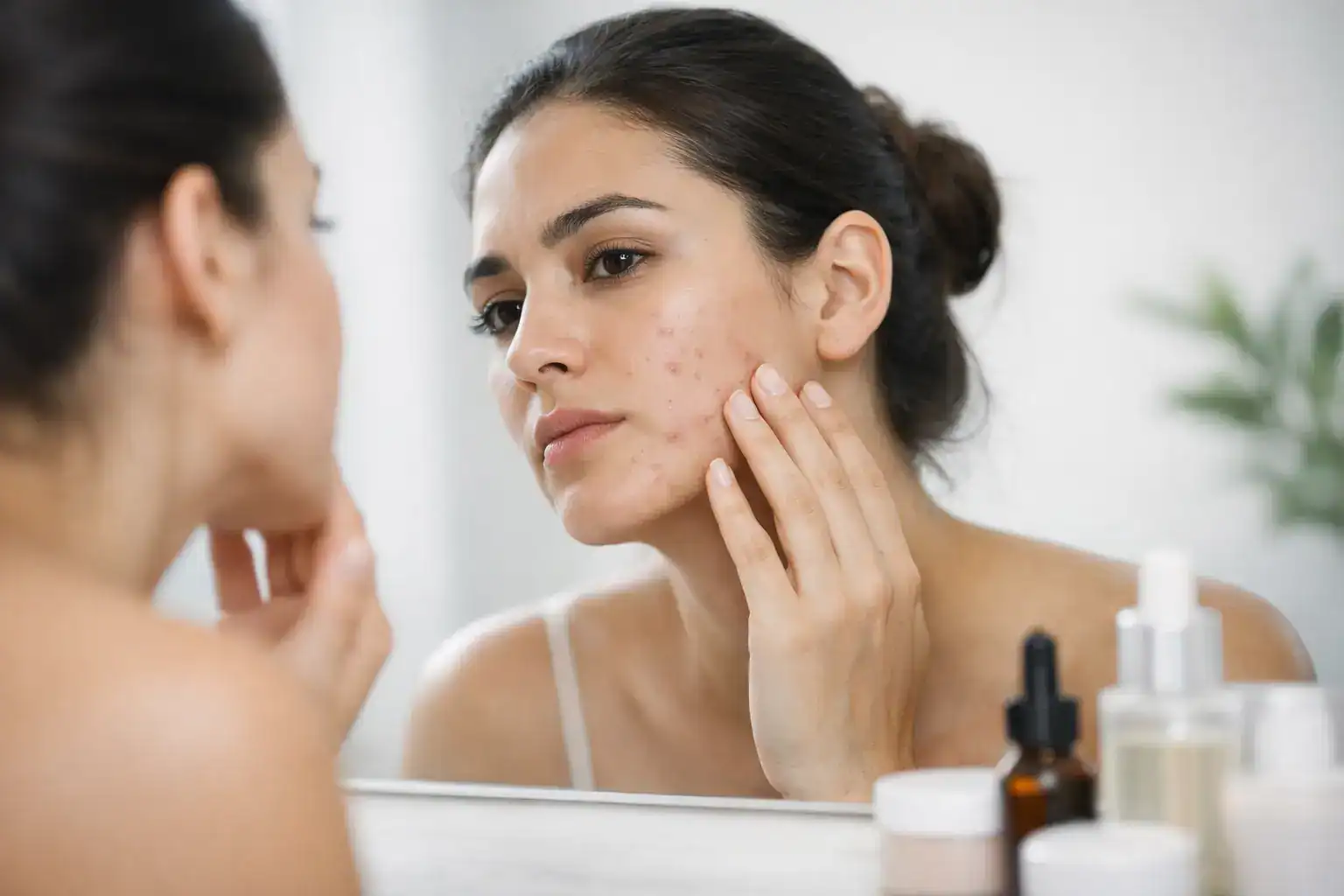
The best hormonal acne treatment for women depends on the severity of breakouts, skin sensitivity, medical history and pregnancy plans. Persistent acne may respond to prescription treatments such as spironolactone or combined oral contraceptives, while topical medicines help control clogged pores and inflammation. We can choose more effectively when we consider these factors together, rather than searching for one product that suits everyone.
A successful treatment plan should reduce new breakouts, protect the skin from scarring and remain manageable over time. The American Academy of Dermatology recommends several topical and oral options, including retinoids, benzoyl peroxide, spironolactone and combined oral contraceptives. American Academy of Dermatology
Recognising Hormonal Acne in Women
Recurring spots around the chin, jawline and lower face, particularly those that flare around menstruation, can suggest a hormonal pattern. Some women develop deep, tender bumps that return despite regular skincare. However, location alone cannot confirm the cause, and hormonal acne can occur alongside blackheads, whiteheads and other inflammatory spots.
We should also consider changes in contraception, medication and skincare products. Adult acne has several possible triggers, so treating every breakout as a hormone problem can overlook other contributing factors. aad.org
Signs That Deserve Medical Assessment
Before choosing stronger treatment, we should seek professional advice when acne occurs with:
- Irregular or absent periods, especially when this is a new pattern.
- Increased facial or body hair or noticeable scalp hair thinning.
- Persistent, painful breakouts that leave scars.
- Sudden changes in symptoms or acne that significantly affects confidence.
Menstrual changes and unusual hair growth can warrant assessment for an underlying endocrine condition. These symptoms do not establish a diagnosis by themselves. NHS
Spironolactone for Persistent Hormonal Acne
Spironolactone is a prescription medicine that can help women with stubborn acne, including deep, tender breakouts on the lower face. It reduces the effects of androgens involved in acne and may be considered when topical treatment alone has not provided adequate control.
We should assess suitability with a clinician before starting treatment. Medical history, other medicines and pregnancy plans affect whether spironolactone is appropriate. Possible side effects include irregular periods, breast tenderness, fatigue, headache and dizziness. A prescriber should also determine whether blood tests or other monitoring are needed.
Spironolactone requires consistent use and follow-up; it should not be started from someone else’s prescription. It is also unsuitable during pregnancy, so pregnancy prevention and plans to conceive must be discussed before treatment begins.
Combined Oral Contraceptives for Acne Control
Combined oral contraceptives, which contain estrogen and a progestin, can improve acne in suitable women. They may be particularly useful when contraception is also wanted, making it possible to address two needs within one treatment plan.
We should distinguish combined pills from other contraceptive methods: different formulations can affect acne differently. Choosing a pill requires a medical assessment rather than selecting one solely because it helped another person.
Potential risks include blood clots and increased blood pressure. A clinician should review relevant health conditions, smoking history and other risk factors before prescribing. Hormonal treatment may also be combined with topical medication when breakouts involve both recurring inflammation and blocked pores.
Topical Treatments for Hormonal Acne
Even when hormonal influences contribute to breakouts, medicines applied to the skin remain valuable. They target the clogged pores, bacteria and inflammation involved in acne. We should select ingredients according to the type of spots present and introduce them carefully to limit irritation.
Topical Ingredients Worth Discussing
- Topical retinoids: Medicines such as adapalene and tretinoin help treat clogged pores and acne lesions. Availability without a prescription varies by country.
- Benzoyl peroxide: This reduces acne-causing bacteria and can be useful for inflammatory pimples. It may cause dryness and can bleach fabrics.
- Azelaic acid: This treats acne and may also help fade the dark marks remaining after spots heal.
- Salicylic acid: This can help unclog pores, particularly when blackheads and whiteheads are prominent.
- Clascoterone: This prescription topical treatment addresses hormonal activity in the skin. Access and suitability require discussion with a clinician.
These ingredients have different roles, so using several at once is not automatically more effective. A planned combination may help, but an overloaded routine can become difficult to tolerate. aad.org
Choosing Treatment for Mild, Moderate or Severe Acne
For mild acne, we can begin by choosing one suitable active ingredient and using it consistently according to the product instructions. The American Academy of Dermatology advises allowing six to eight weeks before adding another product when trying a non-prescription treatment.
For more persistent acne, a dermatologist may recommend prescription topical therapy or consider hormonal medication. Treatment should reflect the pattern of breakouts and the response to previous options.
Deep, painful acne or acne that causes scarring deserves early dermatology assessment. Non-prescription products are unlikely to control these forms adequately. Severe acne may require treatments such as isotretinoin under specialist supervision, rather than repeated changes to a home skincare routine. aad.org
Antibiotics and Isotretinoin: When Other Options Are Needed
Antibiotics may form part of treatment for inflammatory acne, but they require a considered plan. We should avoid relying on antibiotic treatment without addressing other acne mechanisms.
When a topical antibiotic is prescribed, benzoyl peroxide is generally included to reduce the risk of antibiotic resistance. Oral antibiotic courses should also be managed by a clinician, with an appropriate maintenance strategy.
Isotretinoin may be recommended for severe acne, acne causing scarring or acne that has not responded adequately to other treatment. It requires medical monitoring and strict pregnancy precautions. These medicines are options for specific circumstances rather than routine starting treatments for every hormonal breakout. aad.org
A Simple Skincare Routine During Treatment
The surrounding skincare routine should support treatment rather than compete with it. We should follow prescribed directions, use gentle products and avoid increasing application amounts in an attempt to obtain faster results.
Morning Skincare Steps
- Cleanse gently without scrubbing.
- Apply a prescribed morning treatment, if included in the plan.
- Use a moisturiser suitable for acne-prone skin.
- Apply broad-spectrum SPF 30 or higher sunscreen.
Evening Skincare Steps
- Remove makeup and cleanse gently.
- Apply the selected treatment as directed.
- Moisturise to help manage dryness.
- Avoid introducing several new active ingredients simultaneously.
Dryness, peeling and burning can occur with acne medicines. Applying more than recommended does not clear acne faster. If irritation becomes persistent or uncomfortable, we should review the routine with a pharmacist or dermatologist.
Hormonal Acne Treatment During Pregnancy
Pregnancy plans can change which acne treatments are appropriate. We should discuss treatment before trying to conceive and review any existing prescriptions promptly if pregnancy occurs.
Spironolactone and oral isotretinoin must not be used during pregnancy. Topical retinoids should also be avoided. A medicine being available without a prescription does not establish that it is suitable for pregnancy.
Azelaic acid may be considered, while benzoyl peroxide may be used in limited amounts following professional advice. An obstetrician or dermatologist should assess the individual treatment plan, including product ingredients and how much skin will be treated. Breastfeeding also requires a separate medication review. aad.org
How to Assess Whether Treatment Is Working
We should judge progress by fewer new spots, less inflammation and fewer painful lesions, rather than expecting every existing mark to disappear immediately. Dark marks and scars require separate consideration, even when active acne improves.
Keeping brief notes or taking photographs under similar lighting can make changes easier to assess. At follow-up, useful questions include whether the treatment is tolerable, whether it is being used consistently and whether new scarring is occurring.
A review is particularly valuable when acne remains painful, leaves increasing marks or causes emotional distress. We should not keep extending an ineffective home routine when professional treatment is needed.
FAQs about the Best Hormonal Acne Treatment for Women
1. What is the best hormonal acne treatment for women?
The best hormonal acne treatment for women depends on acne severity, medical history, and hormone-related triggers. Common options include topical retinoids, benzoyl peroxide, certain oral contraceptives, and prescription anti-androgen medications such as spironolactone.
2. How do I know if my acne is hormonal?
Hormonal acne often appears around the chin, jawline, and lower cheeks. Breakouts may worsen before menstruation and can present as deep, painful cysts or recurring pimples.
3. Can birth control help hormonal acne?
Certain combined oral contraceptives may help reduce hormonal acne by regulating hormones that stimulate excess oil production. A healthcare professional should determine whether birth control is appropriate based on individual health factors.
4. Does spironolactone treat hormonal acne?
Spironolactone is sometimes prescribed for women with persistent hormonal acne because it reduces the effects of androgen hormones on the skin. It requires medical supervision and is not suitable for everyone.
5. What skincare ingredients are good for hormonal acne?
Helpful ingredients may include salicylic acid, benzoyl peroxide, azelaic acid, and topical retinoids. A gentle cleanser, non-comedogenic moisturiser, and daily sunscreen can also support an acne treatment routine.
6. How long does hormonal acne treatment take to work?
Improvement often takes several weeks or months, depending on the treatment and severity of the acne. Consistency is important.
7. When should women see a dermatologist for hormonal acne?
Women should consider professional care when acne is painful, persistent, causing scarring, or not improving with over-the-counter treatments. A dermatologist can recommend a personalised treatment plan and assess possible hormonal causes.
Conclusion
The best hormonal acne treatment for women combines effective medication with an approach that suits individual health needs. Spironolactone and combined oral contraceptives can help suitable women with persistent breakouts, while topical treatments address clogged pores and inflammation.
We achieve a clearer treatment direction by considering acne severity, previous responses, tolerability and pregnancy plans together. For painful, recurrent or scarring acne, a dermatology assessment can help establish a sustainable plan and reduce the cycle of trying products without adequate results.