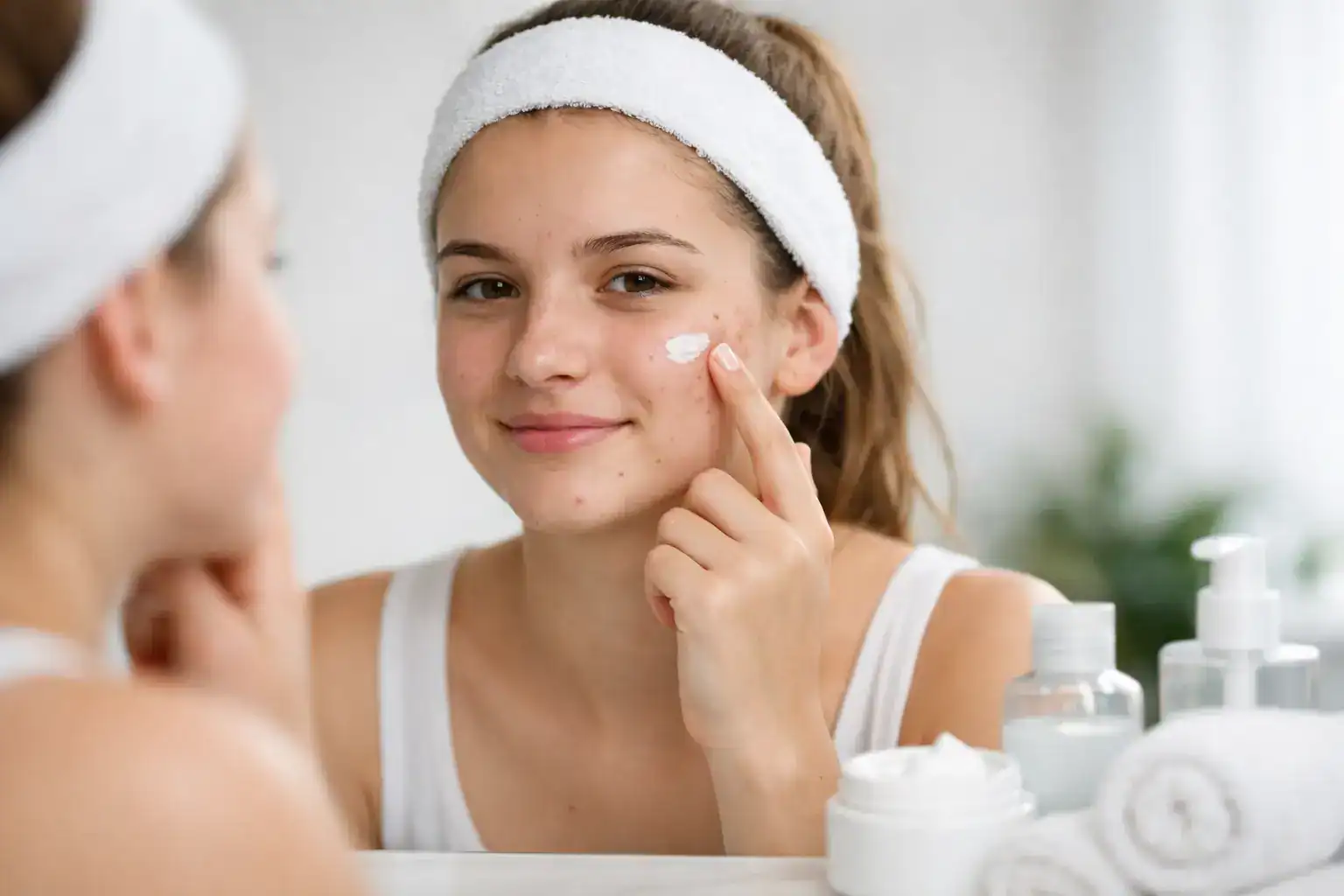
Choosing acne treatment for teenage skin starts with understanding the breakouts, checking skin sensitivity, and selecting a routine that is realistic to maintain. A product that suits occasional blackheads may be insufficient for deep, painful spots. Equally, adding several strong treatments at once can make a routine difficult to tolerate.
We recommend approaching treatment with three priorities: matching the treatment to the acne, protecting the skin, and reviewing progress consistently. The aim is to make informed choices instead of repeatedly buying products based on packaging, popularity, or promises of overnight results.
Identify the Type of Teenage Acne Before Choosing Treatment
Before comparing products, we should look at the appearance, location, and severity of the breakouts. Acne can affect the face, chest, and back, and it ranges from a few spots to deeper, painful lumps.
Common Breakouts to Recognise
- Blackheads: Small spots with a dark surface caused by blocked pores.
- Whiteheads: Small, closed bumps that remain beneath the skin’s surface.
- Inflamed pimples: Raised spots that may feel tender and sometimes contain pus.
- Deep lumps: Larger, painful spots beneath the skin that warrant medical assessment, particularly when they leave scars.
A teenager with a few superficial spots may begin by discussing pharmacy options. When acne is extensive, painful, or causing scars, we recommend seeking medical help rather than continuing to experiment with products. Acne that affects confidence or mental health also deserves attention. NHS
Compare Evidence-Based Ingredients for Teenage Acne
The active ingredient matters more than the brand name. When comparing treatments, we should check what the product contains, what it is intended to treat, and whether its instructions permit use at the teenager’s age.
Benzoyl Peroxide for Inflamed Breakouts
Benzoyl peroxide reduces acne-causing bacteria and is an established acne treatment. It may be included in washes, gels, or combination medicines. We recommend asking a pharmacist which formulation is appropriate, especially when the teenager already uses other medicated products.
Topical Retinoids for Blocked Pores
Topical retinoids, including adapalene, help unclog pores and reduce inflammation. They are useful options to discuss when blackheads, whiteheads, and recurring breakouts are prominent. An acne medicine containing a retinoid should be chosen according to its age restrictions and prescribing requirements.
Salicylic Acid for Some Mild Breakouts
Salicylic acid helps unclog pores and exfoliate the skin. It is another option for certain mild breakouts, although suitability depends on the skin and the overall treatment plan.
Azelaic Acid for Acne and Persistent Dark Marks
Azelaic acid can address acne and help fade dark spots left after pimples clear. We recommend discussing it with a pharmacist or clinician when both active breakouts and lingering marks are concerns.
These ingredients have different roles. Combination treatment can be beneficial, but we should choose combinations deliberately with professional guidance instead of layering several unrelated products. aad.org
Choose a Treatment That Fits the Teenager’s Skin Sensitivity
We should consider how the skin currently feels before introducing acne medication. Existing dryness, peeling, eczema, or a history of reactions can change which treatment is appropriate.
A useful consultation begins with specific information: which products caused discomfort, how quickly the reaction appeared, and whether it involved mild dryness or a more significant rash. Bringing the packaging or a photograph of the ingredient list can help a pharmacist assess the problem.
Questions to Ask Before Starting an Acne Product
- Is this product suitable for the teenager’s age and skin condition?
- How often should it be used initially?
- Should it be applied to individual spots or a wider affected area?
- Which existing products should be stopped or adjusted?
- What side effects should prompt medical advice?
These questions turn a purchase into a clear plan. We recommend leaving the pharmacy or consultation knowing how to use the treatment, what to expect, and when to seek help.
Check Safety, Age Restrictions, and Existing Medicines
A treatment being widely advertised does not establish that it suits every teenager. We should read the patient information and mention other medicines, allergies, and relevant health conditions before starting.
Pregnancy safety is particularly important when considering retinoids. Topical retinoids should not be used during pregnancy or when planning pregnancy. A pharmacist or clinician can help select an appropriate alternative where this is relevant. medicinesresources.nhs.uk
For younger teenagers, we recommend checking the exact product’s minimum age rather than assuming that all acne treatments share the same restrictions. Prescription products should be used only by the person for whom they were prescribed.
Build a Simple Skincare Routine Around Acne Treatment
Choosing medication is only one part of the routine. We should also choose everyday products that are easy to use consistently and compatible with the treatment.
Gentle cleansing and non-comedogenic skincare, meaning products formulated not to clog pores, are sensible foundations. Scrubbing and squeezing spots can worsen problems or cause scars. NHS
A Practical Routine to Discuss With a Pharmacist
Morning: Gentle cleansing, moisturiser as needed, and sunscreen.
Evening: Gentle cleansing, the chosen acne medicine according to its instructions, and moisturiser as advised.
We recommend choosing a broad-spectrum, water-resistant sunscreen with SPF 30 or higher. The texture also matters practically: a sunscreen that feels comfortable is easier to include in a daily routine. aad.org
Keep written instructions somewhere accessible. A short routine that fits around school, sport, and bedtime is easier to follow than one requiring several complicated steps.
Compare Acne Treatment Costs Without Buying Unnecessary Products
When choosing affordable acne treatment for teenage skin, we should assess the cost of the complete routine. A low-priced product is not good value if its instructions are unsuitable or it duplicates something already being used.
What to Compare Before Buying
- Active ingredient: Compare treatments by their contents rather than marketing claims.
- Pack size: Check how much product is supplied.
- Directions: Consider how often the product will need replacing.
- Supporting products: Include cleanser, moisturiser, and sunscreen in the budget.
- Professional advice: Ask whether a less expensive equivalent is appropriate.
We recommend buying a manageable starting routine and keeping a record of purchases. This makes it easier to identify repeated spending on products that were abandoned before they could be fairly assessed.
Allow Enough Time to Assess Teenage Acne Treatment
Frequent switching makes it difficult to judge whether a treatment is helping. Visible improvement may take six to eight weeks, and complete clearing can take longer. We should use treatment as directed and assess progress over weeks rather than after a few applications. aad.org
A simple record can include occasional photographs taken in similar lighting, notes about discomfort, and whether applications were missed. This information helps a clinician distinguish limited effectiveness from difficulties using the routine.
We recommend agreeing on a review point when treatment begins. Significant irritation, worsening pain, or emerging scars should prompt earlier advice rather than waiting for that review.
Know When Prescription Acne Treatment Is Needed
Some teenagers need treatment beyond pharmacy products. A clinician may recommend a combination medicine, an oral treatment, or specialist assessment.
When antibiotics are prescribed for acne, their use requires a structured plan. Dermatology guidance recommends using them alongside benzoyl peroxide to reduce antibiotic resistance and limiting oral antibiotic use where possible. Isotretinoin may be recommended for severe acne or acne that has not responded to standard treatment, under medical supervision. aad.org
For a useful appointment, we recommend bringing a list of previous treatments, how long each was used, and any side effects. Include the teenager’s own priorities, whether these are pain, frequent breakouts, visible marks, or difficulty maintaining a routine.
FAQs about How to Choose Acne Treatment for Teenage Skin
1. What is the best way to choose acne treatment for teenage skin?
The right treatment depends on the type and severity of acne, skin sensitivity, and whether there is scarring. Mild acne may respond to over-the-counter products, while persistent or severe acne should be assessed by a dermatologist.
2. Which ingredients are commonly used for teenage acne?
Common acne-fighting ingredients include benzoyl peroxide, salicylic acid, and topical retinoids. These may help unclog pores, reduce inflammation, and prevent new breakouts.
3. Should teenagers use strong acne products?
Not necessarily. Starting with overly strong products can cause dryness, redness, and irritation. We generally recommend introducing acne treatments gradually and following product or professional instructions carefully.
4. How important is skin type when choosing acne treatment?
Skin type is very important. Teenagers with oily skin may tolerate certain acne treatments differently from those with dry, sensitive, or combination skin.
5. How long should a teenager use an acne treatment before deciding whether it works?
Acne treatments usually require consistent use for several weeks before noticeable improvement occurs. Frequently changing products may make it difficult to determine what is effective.
6. When should a teenager see a dermatologist for acne?
Professional care is recommended when acne is painful, widespread, causing scars, affecting confidence, or failing to improve with appropriate over-the-counter treatment.
7. Can skincare habits improve teenage acne treatment results?
Yes. Gentle cleansing, using non-comedogenic moisturiser and sunscreen, avoiding excessive scrubbing, and not picking pimples can support an effective acne treatment routine.
Conclusion
The best way to choose acne treatment for teenage skin is to match the treatment to the breakouts, confirm that it is suitable, and establish clear instructions for use. We recommend a manageable routine, realistic expectations, and a planned review.
Before purchasing, ask three questions: Does this suit the acne? Can it be used safely? Can the teenager maintain the routine? Those answers provide a practical foundation for choosing treatment and knowing when professional support is needed.

