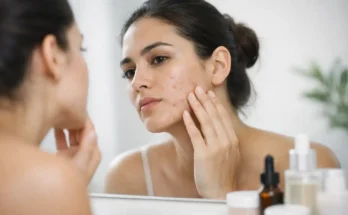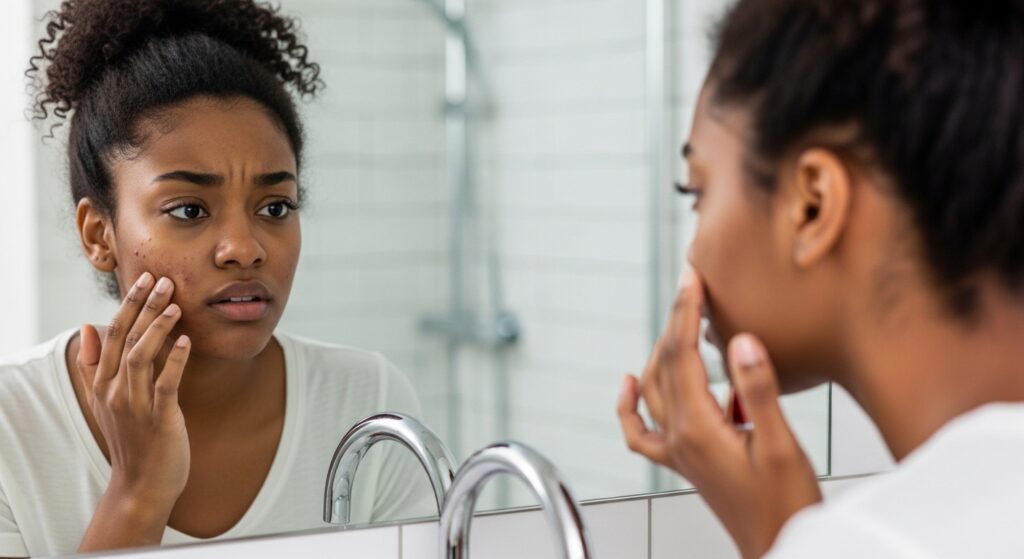
The best acne treatment for Black skin controls breakouts while reducing the risk of persistent dark marks and irritation. Effective options include topical retinoids, benzoyl peroxide, azelaic acid, and salicylic acid, but the right choice depends on the type and severity of acne, skin sensitivity, and previous treatment response.
We achieve better results by treating active acne and supporting an even complexion together. A practical plan combines an appropriate acne medication with gentle cleansing, moisturising, and daily sun protection. Deep, painful breakouts or acne that causes scarring require professional assessment rather than repeated experiments with skincare products.
Understanding Acne and Dark Marks in Black Skin
Acne can leave post-inflammatory hyperpigmentation, the flat dark marks that remain after inflammation settles. In darker complexions, these marks may become a more persistent concern than the original pimples.
Treating discolouration alone leaves the underlying problem unresolved. If new breakouts continue, new marks can develop while older ones fade. We therefore prioritise controlling acne while avoiding irritation that could trigger further pigmentation.
It also helps to distinguish dark marks from acne scars. A flat patch of discolouration differs from an indentation or raised scar that changes the skin’s texture. Scar treatment depends on the type of scar, and a dermatologist may recommend procedures or other targeted treatments rather than a dark-spot serum.
Effective Acne Treatment Ingredients for Black Skin
Topical Retinoids for Clogged Pores and Recurring Breakouts
Topical retinoids, including adapalene and prescription options such as tretinoin, are established acne treatments. They help address clogged pores and can form part of a long-term treatment plan for recurring breakouts.
We should follow the product instructions or prescribing clinician’s directions carefully. Using more medication than recommended does not make treatment work faster. Retinoids can cause dryness and irritation, so tolerability matters when choosing the formulation and frequency of application.
A dermatologist may combine a retinoid with another medication when a single treatment does not adequately control acne. The combination should address the skin’s needs without creating an unnecessarily complicated routine.
Retinoids should be avoided during pregnancy. Anyone who is pregnant or planning pregnancy should review acne products with a healthcare professional before starting treatment.
Benzoyl Peroxide for Inflamed Pimples
Benzoyl peroxide helps reduce acne-causing bacteria and is useful for inflamed breakouts. For darker skin tones, a 2.5% formulation can be a sensible starting option because stronger products may cause more dryness and flaking.
Benzoyl peroxide does not bleach the natural colour of the skin, although it can bleach towels, clothing, and bedding. We should monitor irritation and follow the directions rather than assuming a higher concentration will deliver better results.
Azelaic Acid for Acne and Uneven Skin Tone
Azelaic acid is particularly relevant when acne occurs alongside dark marks. It is included in dermatology recommendations for acne and is also used to help fade hyperpigmentation.
It may be an alternative when benzoyl peroxide or topical retinoids cause troublesome irritation. However, azelaic acid can still cause stinging, itching, or dryness. We should judge a treatment by both its effectiveness and how comfortably the skin tolerates it, rather than describing any active ingredient as universally gentle.
Salicylic Acid for Blackheads and Whiteheads
Salicylic acid helps unclog pores and may be useful for mild acne dominated by blackheads and whiteheads. It is one of several recognised topical treatment options, rather than a complete solution for every type of breakout.
A salicylic acid product should have a clear purpose within the routine. Adding multiple exfoliating products simply because they are marketed for acne can make it harder to identify what is helping and what is causing irritation.
How We Choose the Right Acne Treatment
A useful treatment decision begins with the main concern: clogged pores, inflamed pimples, persistent pigmentation, or deeper painful lesions. Skin comfort and the ability to follow the plan consistently are equally important.
Factors to Review Before Starting Treatment
- Breakout severity: Mild blemishes and deep, painful acne may need different approaches.
- Previous results: Record which products helped, failed, or caused irritation.
- Skin sensitivity: Consider dryness, burning, flaking, and existing skin conditions.
- Dark marks and scarring: Identify whether the concern involves colour, texture, or both.
- Pregnancy and medications: Check whether the proposed treatment is appropriate.
- Routine complexity: Choose a manageable plan with clear application instructions.
Dermatologists select treatment according to the individual case and may combine medications that work through different mechanisms. A product’s popularity or price does not establish whether it is the right choice for a particular person.
A Practical Skincare Routine for Acne-Prone Black Skin
Morning Care: Cleanse, Moisturise, and Protect
We can build the morning routine around three basic steps:
- Gentle cleansing: Wash without aggressive rubbing or scrubbing.
- Moisturising: Use an acne-friendly moisturiser when the skin feels dry.
- Sun protection: Apply a suitable broad-spectrum sunscreen.
A moisturiser labelled non-comedogenic, oil-free, or won’t clog pores is less likely to contribute to breakouts. Moisturising is especially helpful when acne medication causes dryness, and it belongs alongside treatment rather than replacing it.
For persistent dark marks, consider a tinted sunscreen containing iron oxides, with SPF 30 or higher and broad-spectrum protection. Iron oxides help protect against visible light, which can contribute to pigmentation. Choose a shade and texture that make regular application practical, and reapply as directed when outdoors.
Evening Care: Use Treatment Consistently
The evening routine should provide a clear place for the selected acne medication. We should cleanse gently, apply treatment according to its instructions, and use moisturiser as needed.
Consistency matters more than frequently replacing products. Starting a new treatment every week can interrupt progress before a medication has had enough time to work. It can also make the routine difficult to assess because several products may be changing simultaneously.
Prescription Treatment for Persistent or Severe Acne
Over-the-counter skincare may be insufficient for widespread inflammation, painful nodules, or acne that threatens to scar. A dermatologist can assess whether prescription topical medication, oral treatment, or a combination is appropriate.
Options a Dermatologist May Consider
- Prescription topical combinations that target several aspects of acne.
- Oral antibiotics for selected inflammatory cases.
- Hormonal treatments, including spironolactone or combined oral contraceptives, where appropriate.
- Isotretinoin for selected cases requiring more intensive treatment.
Antibiotics should be used thoughtfully. Dermatology guidance recommends limiting systemic antibiotic use and combining it with appropriate topical therapy, including benzoyl peroxide, to support treatment and reduce resistance concerns. These medications require individual assessment rather than self-prescribing.
Habits and Procedures That Need Careful Consideration
Picking or squeezing pimples increases the risk of scarring. We should also review hair products when breakouts concentrate around the forehead and temples, because oily products contacting the skin can contribute to acne in these areas.
Chemical peels, lasers, and other procedures require particular care in darker complexions. They may be helpful in experienced hands, but unsuitable treatment can cause dark or light patches. Before proceeding, ask the dermatologist about their experience treating comparable skin tones and the expected benefits and risks.
How Long Does Acne Treatment Take to Work?
Acne treatment requires patience. Improvement commonly takes six to eight weeks, and more complete clearing may take several months. We should assess progress through fewer new lesions and reduced inflammation rather than expecting immediate clearance.
Dark marks can take longer to fade than active acne. If treatment causes significant irritation, acne worsens, or painful lesions and scars develop, seek a review rather than simply applying more product.
FAQs about Best Acne Treatment for Black Skin
1. What is the best acne treatment for Black skin?
The best acne treatment for Black skin typically combines acne control with measures that reduce irritation and post-inflammatory hyperpigmentation (dark spots). Common options include salicylic acid, benzoyl peroxide, topical retinoids, and azelaic acid.
2. Is Black skin more prone to acne scars and dark spots?
Acne can leave hyperpigmentation that may remain visible after the breakout heals. Picking, squeezing, and irritating acne can increase the likelihood of persistent marks.
3. Is salicylic acid good for Black skin?
Yes. Salicylic acid can help unclog pores, reduce blackheads and whiteheads, and prevent new breakouts. Starting with a lower concentration may help minimize dryness and irritation.
4. Can benzoyl peroxide be used on darker skin?
Yes. Benzoyl peroxide can be effective for inflammatory acne. However, excessive use may cause dryness or irritation, so it is important to introduce it gradually and moisturize appropriately.
5. What acne treatment helps with dark spots?
Azelaic acid and topical retinoids may help manage acne while gradually improving post-acne discoloration. Daily broad-spectrum sunscreen is also important because UV exposure can make dark marks more noticeable.
6. Should I use sunscreen if I have Black skin?
Yes. Broad-spectrum SPF 30 or higher can help protect the skin and prevent existing acne-related hyperpigmentation from becoming darker.
7. When should I see a dermatologist?
Consider seeing a dermatologist for painful cystic acne, persistent breakouts, scarring, significant hyperpigmentation, or acne that does not improve with appropriate over-the-counter treatment. A dermatologist can recommend treatment suited to your skin type and acne severity.
Conclusion
The best acne treatment for Black skin is an effective, tolerable plan matched to the individual’s breakouts. We should combine appropriate medication with gentle skincare, moisturising, and sun protection while addressing persistent pigmentation carefully.
A manageable routine supports consistent use. Professional assessment provides the next step when acne is painful, leaves scars, or fails to improve with an appropriate treatment plan.