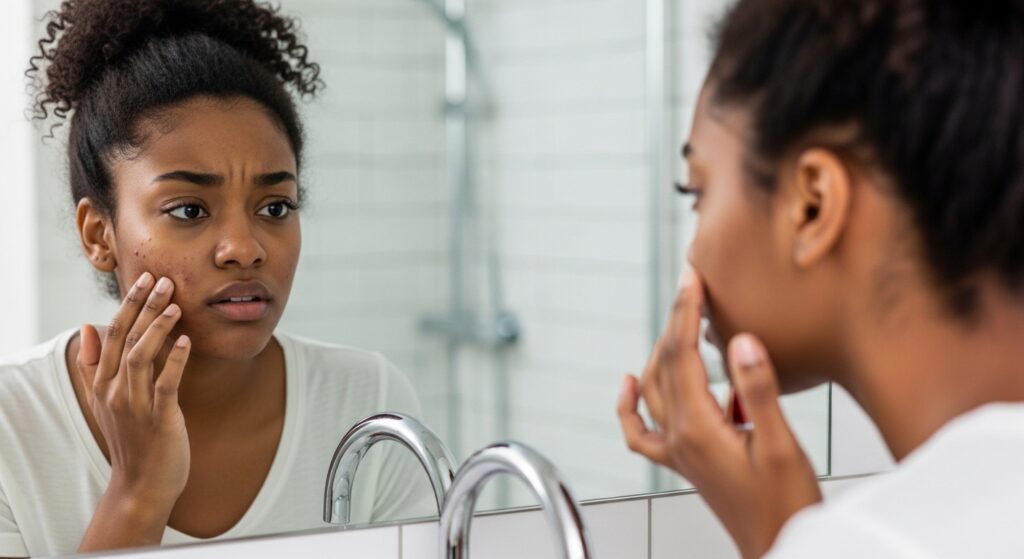
Choosing acne treatment for dry skin requires attention to both breakouts and skin comfort. A product may help reduce pimples but become difficult to use consistently if it causes persistent tightness, peeling, or irritation. We recommend choosing treatment according to the type of acne, the condition of the skin, and how well the formula fits into a gentle daily routine.
The strongest product is not automatically the most suitable. For dry, acne-prone skin, a practical approach combines an effective acne ingredient with gentle cleansing, regular moisturising, and sun protection. Moisturiser is particularly helpful when acne treatments such as benzoyl peroxide or retinoids cause dryness.
Identify Your Acne Before Choosing a Treatment
We begin by looking at the blemishes themselves. Blackheads, whiteheads, inflamed pimples, and deep painful lumps can require different treatment approaches. Choosing a product simply because its packaging says “acne control” may overlook what the skin actually needs.
Common Acne Types to Consider
- Blackheads and whiteheads: These involve clogged pores. Ingredients such as topical retinoids or salicylic acid may help.
- Small inflamed pimples: Benzoyl peroxide can be useful, although its drying effects need consideration.
- Deep, painful nodules or cysts: These warrant professional assessment because they can scar and may require prescription treatment.
- Breakouts with lingering dark marks: Treatment should address active acne while limiting irritation that can complicate skin discolouration.
Dermatologists select treatment according to acne severity and the types of blemishes present. For deeper or more persistent acne, buying progressively stronger products may delay a more appropriate treatment plan.
Assess Dryness Before Adding Acne Products
Dry skin can feel rough, tight, flaky, or uncomfortable after washing. We recommend checking whether those symptoms existed before acne treatment or appeared after introducing a new cleanser, exfoliant, or medication.
That distinction helps guide the next step. If a new product consistently leaves the skin burning or visibly irritated, increasing its frequency is unlikely to improve tolerance. Record the product name, active ingredient, and how often it is used so a pharmacist or dermatologist can assess the routine.
We also consider existing skin conditions. Someone with eczema, frequent facial irritation, or uncertainty about whether the bumps are acne may benefit from assessment before starting another active ingredient.
Choose Acne Ingredients That Match Your Skin’s Needs
There is no single best acne treatment for dry skin that suits everyone. We compare ingredients by their purpose, potential irritation, and suitability for the individual.
Azelaic Acid for Acne and Post-Acne Marks
Azelaic acid treats acne and can help fade dark spots left after blemishes clear. This makes it worth discussing when breakouts and uneven skin tone are both concerns.
However, we would not assume that every azelaic acid formula will feel comfortable on dry skin. Product strength and the overall formulation matter, and individual tolerance varies. Choose according to the label or professional advice rather than adding it alongside several other treatments immediately.
Benzoyl Peroxide for Inflamed Pimples
Benzoyl peroxide can help with mild inflammatory pimples. Because it can cause dryness and irritation, concentration matters when selecting a starting product.
The American Academy of Dermatology recommends starting with 2.5% benzoyl peroxide to reduce the likelihood of side effects. We recommend checking the percentage carefully instead of assuming that a higher concentration will produce better results for dry skin.
Topical Retinoids for Clogged Pores
Topical retinoids, including adapalene and prescription options, can treat clogged pores and acne. They may also cause irritation, particularly when first introduced.
We recommend following the product directions and discussing a gradual introduction with a healthcare professional when skin is already dry or sensitive. Moisturising can help improve tolerance; dermatologists may recommend applying moisturiser before a retinoid in some treatment plans.
Salicylic Acid for Blackheads and Whiteheads
Salicylic acid is another option for blackheads and whiteheads. For dry skin, we consider whether it is already present in a cleanser, toner, or other product before adding another source.
An acne routine can become unnecessarily complicated when several products serve the same purpose. Start with a clear treatment choice and assess tolerance before expanding the routine.
Look Beyond the Active Ingredient
When comparing acne products for dry skin, we read the whole label. The active ingredient is important, but the product’s texture, directions, and other ingredients also affect whether it is practical to use.
A treatment that fits comfortably into an existing routine is easier to use consistently than one that requires frequent adjustments. We also avoid treating marketing terms as proof that a product will suit every person.
What to Check Before Buying
- Active ingredient and strength: Confirm what the treatment contains and why it is being chosen.
- Application instructions: Check the amount, frequency, and areas where it should be applied.
- Existing routine: Identify duplicate acne ingredients before adding another product.
- Fragrance-free options: Consider these when fragrance has previously caused irritation.
- Non-comedogenic labelling: Look for products intended not to clog pores.
- Ongoing cost: Choose a routine that can be maintained rather than purchasing numerous products at once.
For moisturisers, acne-friendly labels such as non-comedogenic or won’t clog pores can help narrow the choice.
Make Moisturiser Part of Acne Treatment
We recommend treating moisturiser as a regular part of dry-skin acne care. Skipping it because the skin has pimples can make an already uncomfortable routine harder to maintain.
Choose a moisturiser that feels comfortable and does not repeatedly trigger irritation. Apply it consistently, especially when the chosen acne medication causes dryness. A more expensive formula is not automatically necessary; suitability and regular use matter more than elaborate packaging.
Moisturiser supports the skin while acne medication addresses breakouts. It should complement treatment rather than replace an effective acne ingredient when one is needed.
Build a Simple Routine for Dry, Acne-Prone Skin
We favour a manageable routine with a clear purpose for each step. This makes it easier to identify which product is helping and which may be causing discomfort.
Morning Routine
- Cleanse gently: Use a mild cleanser and avoid scrubbing.
- Apply treatment if directed: Follow the prescribed or labelled schedule.
- Moisturise: Use a product suitable for acne-prone skin.
- Apply sunscreen: Choose broad-spectrum protection with SPF 30 or higher.
Evening Routine
- Remove makeup and sunscreen gently.
- Wash with a mild cleanser.
- Apply acne medication according to its directions.
- Use moisturiser in the order recommended for that treatment.
Gentle skin care helps support acne treatment. Harsh scrubbing, picking blemishes, and repeatedly irritating the skin can interfere with progress.
Allow Enough Time to Evaluate Results
We assess progress through both fewer breakouts and improved ability to tolerate the routine. Clearer skin should not require ignoring persistent burning, cracking, or severe peeling.
Acne treatment takes time. The American Academy of Dermatology advises that fewer breakouts may become noticeable after six to eight weeks. Switching products every few days makes it difficult to judge whether a treatment is working.
Keep a simple record of new blemishes, dryness, and irritation. Photographs taken under similar lighting can help track changes without relying entirely on daily impressions.
Know When Professional Advice Is Needed
We recommend seeking a dermatologist’s assessment for deep painful acne, developing scars, persistent breakouts, or treatment that repeatedly causes significant irritation. Acne that affects confidence or daily wellbeing also deserves attention.
Pregnancy changes treatment choices. Retinoids should be avoided during pregnancy, and anyone pregnant or planning pregnancy should discuss acne medication with an obstetrician or dermatologist before starting treatment.
Professional guidance can also help simplify an overcrowded routine and identify whether prescription treatment is appropriate.
FAQs about How to Choose Acne Treatment for Dry Skin
1. How do I choose acne treatment for dry skin?
Choose gentle acne treatments that address breakouts without excessively stripping the skin. Look for products with effective acne-fighting ingredients alongside hydrating and barrier-supporting ingredients.
2. Which acne ingredients are suitable for dry skin?
Common options include salicylic acid, benzoyl peroxide, and topical retinoids. Because these ingredients can cause dryness or irritation, starting gradually and using an appropriate moisturizer may improve tolerance.
3. Should I moisturize acne-prone dry skin?
Yes. A non-comedogenic moisturizer can help maintain the skin barrier, reduce dryness, and make acne treatments easier to tolerate.
4. Can harsh cleansers make dry skin acne worse?
Harsh cleansers and excessive washing can increase dryness, irritation, and skin-barrier disruption. A mild, non-comedogenic cleanser is generally a better choice.
5. How often should I apply acne treatment?
Frequency depends on the active ingredient and your skin’s tolerance. We generally recommend starting slowly and following the product directions or a dermatologist’s instructions rather than applying more product for faster results.
6. What should I look for when buying acne products for dry skin?
Consider products that are non-comedogenic, gentle, fragrance-free where possible, and suitable for sensitive or dry skin. Moisturizing ingredients such as ceramides, glycerin, and hyaluronic acid may also be helpful.
7. When should I see a dermatologist?
Consider professional care if acne is painful, severe, persistent, causing scars, or not improving with appropriate over-the-counter treatment. A dermatologist can recommend treatment based on your acne type and skin condition.
8. Can I use multiple acne treatments together?
Sometimes, but combining several active ingredients can increase irritation. It is best to introduce products gradually and seek professional guidance when using multiple treatments.
Conclusion
When choosing acne treatment for dry skin, we prioritise the acne type, a suitable active ingredient, and a routine that keeps the skin comfortable. Begin with a clear treatment plan, moisturise regularly, and allow enough time to assess improvement. If acne is painful, scarring, persistent, or difficult to treat without irritation, seek professional guidance for a more personalised approach.