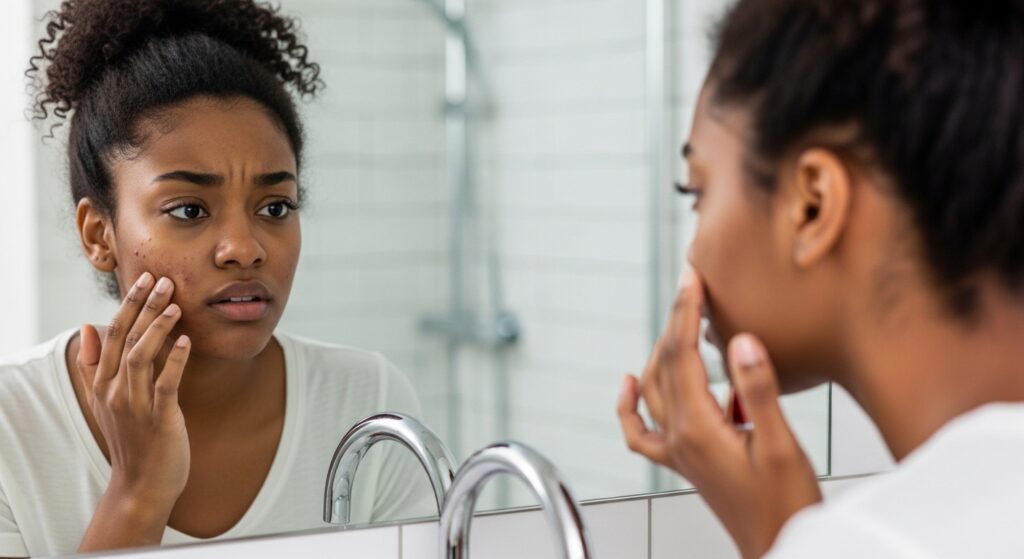
Acne treatment for Black skin should address active breakouts, reduce the risk of scarring, and manage the dark marks that often remain after pimples heal. Choosing a suitable treatment involves more than comparing product prices. We must consider acne severity, skin sensitivity, previous treatment results, and the ongoing cost of maintaining clearer skin.
There is no single price or treatment plan that suits everyone. Mild acne may respond to an affordable topical routine, while persistent inflammatory acne or deep, painful nodules may require prescription medication and specialist care. For darker skin tones, treating acne early also helps prevent additional post-inflammatory hyperpigmentation, commonly called acne marks.
Understanding Acne and Dark Marks on Black Skin
Acne develops when hair follicles become blocked with oil and dead skin cells. Inflammation and acne-associated bacteria can contribute to pimples, pustules, and deeper lesions. These underlying processes guide treatment across skin tones, but pigmentation changes deserve particular attention in melanin-rich skin.
Post-inflammatory hyperpigmentation occurs when inflammation or injury triggers increased pigment production. A flat brown or grey mark left after a breakout is different from a depressed or raised acne scar. That distinction matters because treatments for discoloration and changes in skin texture are not interchangeable.
We should also avoid assuming that Black skin is always oily or resistant to irritation. Skin can be dry, sensitive, oily, or a combination. Irritating products may create further dark marks, making tolerability an essential part of treatment selection. aad.org
Acne Treatment for Black Skin: Available Options
Topical Treatments for Mild to Moderate Acne
Topical medicines are applied directly to the skin. They may be used individually or combined to address different contributors to acne.
Common topical treatment options include:
- Benzoyl peroxide: Helps reduce acne-associated bacteria and can be useful for inflammatory breakouts.
- Topical retinoids: Medicines such as adapalene and tretinoin help prevent blocked pores and treat blackheads, whiteheads, and some pimples.
- Azelaic acid: Treats acne and can also improve the dark spots that remain after breakouts.
- Salicylic acid: May help with clogged pores and certain mild acne presentations.
- Prescription topical antibiotics: May be included in a combination regimen for inflammatory acne.
These ingredients are supported by dermatology guidance, but their suitability depends on the individual. Using several active products together without a clear plan can increase irritation rather than improve results.
Retinoids for Breakouts and Maintenance
Topical retinoids can be particularly useful when blocked pores are a major concern. They may also help lighten acne-related dark spots and maintain clearer skin after initial treatment succeeds.
However, dryness and irritation can affect adherence. We should discuss previous reactions with a dermatologist rather than assuming that every retinoid will cause the same problem. A clinician can adjust the formulation or treatment schedule to improve tolerability.
The practical cost includes more than the medicine itself. A suitable moisturiser and a manageable application routine help support continued use.
Prescription Medicines for Persistent or Severe Acne
When topical treatment is insufficient, a dermatologist may consider oral medication. Options include antibiotics, selected hormonal treatments, and isotretinoin.
Oral antibiotics are generally used for a limited period and combined with appropriate topical therapy. Dermatology guidelines recommend pairing systemic antibiotics with benzoyl peroxide and other topical treatments, helping limit antibiotic resistance.
Isotretinoin may be recommended for severe acne, acne that causes scarring or substantial psychological distress, or acne that has not responded to standard treatment. It requires medical supervision and careful safety assessment. It must not be used during pregnancy because it can cause severe birth defects.
How Much Does Acne Treatment for Black Skin Cost?
A reliable price requires a location, currency, and defined treatment plan. Costs vary between countries, clinics, pharmacies, and healthcare systems. A consultation quote also may exclude medication, follow-up appointments, or laboratory monitoring.
We should compare the total expected treatment cost, rather than judging affordability by the first purchase. A low-priced product becomes poor value when it is unsuitable, repeatedly replaced, or abandoned because of irritation.
Main Costs to Include in an Acne Treatment Budget
| Cost category | What to clarify |
|---|---|
| Initial consultation | Whether assessment and a written treatment plan are included |
| Medication | Product strength, pack size, generic availability, and refill frequency |
| Supporting skincare | Cleanser, moisturiser, and sunscreen expenses |
| Follow-up appointments | Expected frequency and appointment charges |
| Monitoring | Whether the prescribed medicine requires tests or additional reviews |
| Procedures | Per-session pricing, expected sessions, and aftercare costs |
Before starting treatment, we should request an itemised estimate. This makes it easier to compare providers and identify expenses that would otherwise appear later.
What Can Make Treatment More Expensive?
Treatment costs may increase when several concerns require separate management. Active acne, persistent pigmentation, and established scars can involve different treatment stages.
Factors to discuss when comparing costs include:
- Whether the acne is mild, moderate, or severe.
- Whether prescription treatment is necessary.
- Whether a suitable generic medicine is available.
- Whether follow-up visits are included.
- Whether procedures are optional or clinically justified.
- Whether insurance or public healthcare covers any part of care.
A clinic should explain the purpose of each recommended service. An expensive package is not automatically a better match for the skin.
Treatment Options for Acne Marks and Scars
Managing Post-Acne Hyperpigmentation
Treating the breakouts that generate new marks remains essential. Focusing only on discoloration allows ongoing acne to create additional pigmentation.
Azelaic acid and topical retinoids may address both acne and associated dark spots. Other pigmentation treatments require individual assessment, especially when the diagnosis is uncertain or the skin is already irritated. aad.org
Sun protection also belongs in a pigmentation treatment plan. The American Academy of Dermatology recommends broad-spectrum SPF 30 or higher and notes that tinted sunscreen containing iron oxide can help protect against visible light that contributes to dark spots. We should choose a formulation that is comfortable enough for regular use.
Considering Chemical Peels and Device-Based Treatments
Chemical peels and selected laser or light treatments may form part of dermatological care. However, they should follow a clear assessment of the concern being treated.
A procedure intended for active acne may differ from one selected for pigmentation or scar texture. We should ask the practitioner about experience treating darker skin tones, possible pigment changes, expected recovery, and realistic results before paying for a course of sessions. Procedures do not replace an appropriate acne management plan.
How to Keep Acne Treatment Affordable
An affordable approach begins with a focused plan. Buying multiple cleansers, acids, masks, and spot treatments makes it difficult to identify what helps and what causes irritation.
Practical ways to manage spending include:
- Start with a defined treatment goal: Address active breakouts before purchasing extensive cosmetic treatments.
- Ask about generic alternatives: Compare equivalent medicines with a clinician or pharmacist.
- Keep supporting skincare simple: Select products that fit the treatment plan.
- Confirm ongoing expenses: Include refills and reviews in the budget.
- Avoid repeated treatment switching: Arrange a review when progress is inadequate rather than continually adding products.
When to Seek a Dermatologist
We should seek professional assessment for deep, painful acne, developing scars, persistent breakouts, or significant distress. Early treatment is particularly valuable when acne is worsening and leaving marks.
Avoid squeezing pimples or using harsh home remedies. These practices can injure the skin and increase the risk of lasting discoloration. A dermatologist familiar with skin of colour can help balance acne control with pigmentation concerns.
FAQs about Acne Treatment for Black Skin Cost and Options
1. How much does acne treatment for Black skin cost?
The cost of acne treatment for Black skin varies depending on acne severity, treatment type, location, and whether prescription medication or professional procedures are required. Over-the-counter products are generally less expensive than dermatologist-led treatments.
2. What are the best acne treatment options for Black skin?
Common options include salicylic acid, benzoyl peroxide, topical retinoids, azelaic acid, and prescription treatments. A dermatologist can recommend an approach based on skin type and acne severity.
3. Is acne treatment different for Black skin?
Treatment requires particular attention to irritation and post-inflammatory hyperpigmentation (PIH). Darker skin tones may develop persistent dark marks after acne, so controlling inflammation while minimizing irritation is important.
4. Is azelaic acid suitable for Black skin?
Azelaic acid is commonly used to treat acne and can also help improve the appearance of post-acne hyperpigmentation. The appropriate strength and routine depend on individual skin needs.
5. Can acne scars and dark spots be treated?
Yes. Depending on the concern, options may include topical treatments, chemical peels, microneedling, and certain laser procedures. Professional assessment is especially important because some procedures carry a higher risk of pigment changes in darker skin tones.
6. When should we see a dermatologist?
We recommend professional evaluation when acne is severe, painful, persistent, causing scars, or leaving significant dark marks. Early treatment can help reduce the risk of long-term scarring and discoloration.
7. How do we choose an affordable acne treatment?
We can begin with a gentle cleanser, non-comedogenic moisturizer, sunscreen, and an appropriate acne active. If results remain limited, a dermatologist can help determine whether prescription treatment offers better value and effectiveness.
Conclusion
The best approach to acne treatment for Black skin cost and options combines effective acne control, careful management of dark marks, and a sustainable budget. We should compare complete treatment plans, clarify ongoing charges, and choose care suited to the skin’s needs. Consistent, tolerable treatment provides a stronger foundation than an expensive collection of unrelated products.