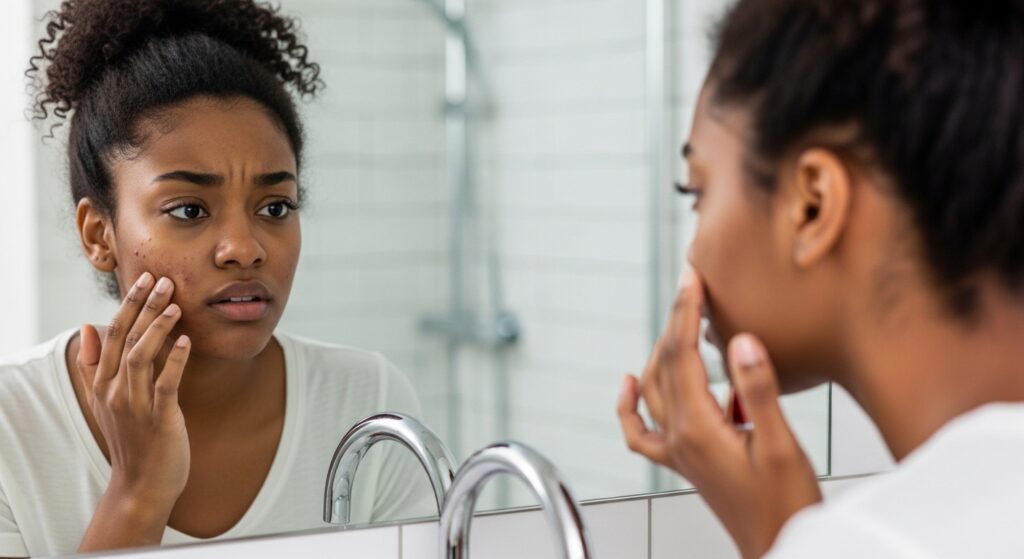
Dermatologist recommended acne treatment for Black skin focuses on clearing breakouts while reducing the risk of persistent dark marks and scarring. Effective care combines proven acne medicines with gentle skincare, appropriate sun protection, and a treatment plan suited to the individual.
We approach acne care with two connected goals: controlling active blemishes and addressing the pigmentation they leave behind. Treating dark spots alone allows new breakouts to create further discoloration. The American Academy of Dermatology recommends addressing both concerns together in darker skin tones.
Understanding Acne and Dark Marks on Black Skin
Acne develops when hair follicles become blocked with excess oil and dead skin cells. Bacteria and inflammation can contribute to swollen pimples, while deeper inflammation may produce painful nodules or cysts. On Black skin, inflamed bumps may appear brown or purple, making redness a less reliable measure of severity.
The flat marks remaining after a breakout are often post-inflammatory hyperpigmentation, rather than permanent scars. Inflammation stimulates additional pigment production, leaving areas darker than the surrounding complexion. Irritating skincare products can also trigger discoloration, which makes treatment tolerability particularly important.
We therefore evaluate treatment by more than how quickly it dries a pimple. A useful plan should reduce new lesions, remain comfortable enough for consistent use, and avoid unnecessary irritation.
Dermatologist Recommended Topical Acne Treatments
Dermatology guidelines support several topical treatments, including retinoids, benzoyl peroxide, azelaic acid, and salicylic acid. Selection depends on the type and severity of acne, previous treatment response, and skin sensitivity.
Topical Retinoids for Blocked Pores and Recurring Breakouts
Adapalene, tretinoin, tazarotene, and trifarotene are topical retinoids used in acne treatment. They help unclog pores and reduce inflammation, making them valuable for blackheads, whiteheads, and recurring blemishes. Dermatologists may prescribe a retinoid alone or combine it with another acne medicine.
Retinoids can cause dryness or irritation, especially during the early stages of treatment. We favour a manageable introduction rather than assuming that frequent application immediately produces better results. Follow the product instructions or prescribed schedule, and discuss persistent discomfort with the prescribing clinician.
Pregnancy or pregnancy planning requires a treatment review, because topical retinoids are generally avoided during pregnancy. A suitable alternative should be selected with a healthcare professional.
Benzoyl Peroxide for Inflamed Pimples
Benzoyl peroxide reduces acne-associated bacteria and is commonly included in treatment for inflammatory breakouts. For darker skin tones, the American Academy of Dermatology suggests starting with a 2.5% product to reduce the likelihood of irritation. Higher concentrations can cause more dryness and flaking.
Benzoyl peroxide does not bleach the skin, although it can bleach towels, pillowcases, and clothing. If a product causes irritation, using it less frequently may help, provided this is consistent with its instructions or the clinician’s advice.
Azelaic Acid for Acne and Uneven Skin Tone
Azelaic acid is an option when acne and post-breakout pigmentation occur together. Acne guidelines include it among supported topical therapies, and dermatologists also recommend it as an ingredient that can help fade dark spots.
We consider its dual purpose useful when building a straightforward routine. However, suitability still depends on the formulation, other treatments being used, and individual tolerance. Adding azelaic acid to an already irritating routine should be discussed with a clinician rather than treated as an automatic next step.
Salicylic Acid for Blackheads and Whiteheads
Salicylic acid helps unclog pores and may be useful for mild acne dominated by blackheads and whiteheads. It is available in different product formats, including cleansers and leave-on treatments.
We recommend choosing products according to their active ingredients and intended use. A routine containing several exfoliating products can become difficult to tolerate, so each addition should have a clear purpose.
Prescription Treatment for Persistent or Severe Acne
When topical care is insufficient, a dermatologist may recommend oral medication or a different combination of treatments. Current guidelines support options including oral antibiotics, hormonal therapies, and isotretinoin for appropriately selected patients.
Oral Antibiotics for Inflammatory Acne
Medicines such as doxycycline may be prescribed for inflammatory acne. Dermatology guidance recommends limiting antibiotic use where possible and combining antibiotics with appropriate topical treatment. Benzoyl peroxide is used alongside topical or oral antibiotics to help reduce antibiotic resistance.
We view antibiotics as part of a planned treatment course, with follow-up to assess improvement and determine the next stage of care.
Hormonal Treatment for Suitable Patients
Spironolactone and certain combined oral contraceptives can be considered for suitable patients with acne influenced by hormonal factors. These treatments require medical assessment because eligibility depends on pregnancy considerations, medical history, other medicines, and individual risk factors.
A dermatologist can help determine whether hormonal treatment fits the overall pattern of breakouts.
Isotretinoin for Severe or Treatment-Resistant Acne
Isotretinoin may be appropriate for severe acne, including deep, painful nodules and cysts, particularly when other treatments have failed. It can provide prolonged clearance, although outcomes vary between individuals.
Treatment requires specialist supervision and safety monitoring. Isotretinoin must not be used during pregnancy, because it can cause serious birth defects. Pregnancy prevention requirements apply to patients who can become pregnant.
A Gentle Skincare Routine to Support Acne Treatment
We favour a routine that is practical enough to maintain. The NHS advises gentle cleansing twice daily, removing makeup at the end of the day, and selecting non-comedogenic products. Scrubbing and squeezing spots can worsen irritation or cause scars.
Daily Routine Essentials
- Gentle cleansing: Wash without abrasive scrubs or vigorous rubbing.
- Prescribed treatment: Follow the agreed application schedule.
- Moisturising: Use a suitable moisturiser to support treatment tolerance.
- Sun protection: Choose sunscreen that is comfortable to wear consistently.
Dermatologists commonly include moisturiser and sun protection within acne care, particularly when treatment causes dryness or increases sun sensitivity.
Sun Protection for Post-Acne Hyperpigmentation
For dark marks, the American Academy of Dermatology recommends a tinted sunscreen containing iron oxides, alongside broad-spectrum protection and SPF 30 or higher. Iron oxides help protect against visible light, which can contribute to pigmentation.
We prioritise a formula that blends with the complexion and suits acne-prone skin. Dark marks often fade gradually: relatively superficial discoloration may take six to twelve months after its cause is controlled, while deeper pigmentation can take longer.
When to Seek a Dermatologist Experienced in Black Skin
Professional assessment is particularly useful when breakouts are deep, painful, causing scars, affecting emotional wellbeing, or failing to improve with self-care.
We also recommend specialist advice before considering chemical peels, microdermabrasion, or laser treatment. These procedures can cause unwanted dark or light patches in darker skin when poorly selected or performed. Ask about the clinician’s experience treating comparable skin tones.
Questions to Discuss at an Acne Consultation
- Which treatment best matches the type of acne present?
- How should treatment be adjusted if irritation develops?
- How will active acne and dark marks be addressed together?
- When should progress be reviewed?
- What maintenance plan will follow improvement?
These questions help turn a collection of products into a clear, reviewable treatment plan.
FAQs about Acne Treatment for Black Skin Cost and Options
1. How much does acne treatment for Black skin cost?
The cost of acne treatment for Black skin varies depending on acne severity, treatment type, location, and whether prescription medication or professional procedures are required. Over-the-counter products are generally less expensive than dermatologist-led treatments.
2. What are the best acne treatment options for Black skin?
Common options include salicylic acid, benzoyl peroxide, topical retinoids, azelaic acid, and prescription treatments. A dermatologist can recommend an approach based on skin type and acne severity.
3. Is acne treatment different for Black skin?
Treatment requires particular attention to irritation and post-inflammatory hyperpigmentation (PIH). Darker skin tones may develop persistent dark marks after acne, so controlling inflammation while minimizing irritation is important.
4. Is azelaic acid suitable for Black skin?
Azelaic acid is commonly used to treat acne and can also help improve the appearance of post-acne hyperpigmentation. The appropriate strength and routine depend on individual skin needs.
5. Can acne scars and dark spots be treated?
Yes. Depending on the concern, options may include topical treatments, chemical peels, microneedling, and certain laser procedures. Professional assessment is especially important because some procedures carry a higher risk of pigment changes in darker skin tones.
6. When should we see a dermatologist?
We recommend professional evaluation when acne is severe, painful, persistent, causing scars, or leaving significant dark marks. Early treatment can help reduce the risk of long-term scarring and discoloration.
7. How do we choose an affordable acne treatment?
We can begin with a gentle cleanser, non-comedogenic moisturizer, sunscreen, and an appropriate acne active. If results remain limited, a dermatologist can help determine whether prescription treatment offers better value and effectiveness.
Conclusion
The most useful dermatologist recommended acne treatment for Black skin combines evidence-based medication with a routine the skin can tolerate. We prioritise individual assessment, consistent treatment, and clear follow-up rather than choosing products solely by strength or price.
By discussing breakouts, pigmentation, sensitivity, and treatment goals together, we can make better-informed decisions about care and establish a practical route towards clearer skin.