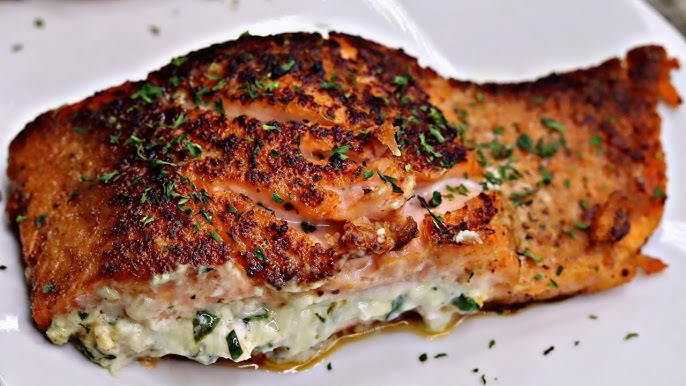
Stuffed Salmon Recipe: Stuffed salmon isn’t just another seafood dish—it’s the kind of meal that turns a simple dinner into an elegant experience. It strikes the perfect balance between comfort food and fine dining, offering layers of rich flavor packed into every bite. The flaky, buttery salmon on the outside combined with a savory, creamy filling inside creates a mouthwatering contrast that satisfies both the eye and the palate.
What makes stuffed salmon so special is its versatility. Whether you prefer spinach and cream cheese, crab and herbs, or a medley of sun-dried tomatoes and feta, there’s a version for every taste. The dish also allows you to get creative with spices and stuffing, making it as simple or luxurious as you like.
This gourmet dish doesn’t need to be reserved for five-star restaurants. With a little care and some good-quality ingredients, you can recreate it in your home kitchen and impress anyone—yourself included!
Perfect Occasions for Serving Stuffed Salmon
Stuffed salmon is one of those recipes that works beautifully across different occasions. Hosting a dinner party? It’s a guaranteed crowd-pleaser. Planning a romantic dinner at home? It feels intimate and special. Need a hearty but healthy weeknight meal? You can prepare it in under an hour and still feel good about what you’re eating.
Holidays like Christmas, Easter, or Valentine’s Day are especially great opportunities to serve this dish. It adds an elegant touch to your menu and pairs well with festive sides like roasted vegetables, wild rice, or garlic mashed potatoes. It also reheats well, so if you’re lucky enough to have leftovers, you’ve got a delicious lunch for the next day.
Ingredients You’ll Need
Fresh Salmon Selection Tips
Start with the star of the show—salmon. You want fresh, boneless salmon fillets with the skin on for the best results. The skin helps hold everything together while cooking, especially when you’re stuffing it. Look for fillets that are bright pink, smell fresh (not fishy), and have a firm texture.
If you’re buying from a fishmonger or seafood counter, ask for center-cut fillets of even thickness. This makes it easier to stuff and ensures it cooks evenly. Wild-caught salmon like Sockeye or King salmon offers better flavor, but farm-raised works fine too.
For individual servings, go for fillets around 6-8 ounces each. If you’re feeding a crowd, a whole side of salmon can be stuffed and baked family-style.
Ingredients for the Filling
The filling is where the magic happens. One of the most popular and decadent fillings includes:
- 1 cup cooked spinach (squeezed dry)
- 4 oz cream cheese (softened)
- 1/4 cup grated Parmesan
- 1/4 cup breadcrumbs or panko
- 2 cloves garlic (minced)
- 1 tbsp lemon zest
- Salt and pepper to taste
Optional additions for extra flavor:
- Chopped sun-dried tomatoes
- Fresh herbs like dill, parsley, or chives
- Crab meat or shrimp for a seafood twist
The cream cheese helps bind everything together and adds richness. You can also substitute goat cheese or ricotta if you want a different flavor profile.
Seasonings and Garnishes
Don’t forget the outer layer. While the stuffing adds deep flavor, the salmon itself also needs seasoning:
- Olive oil
- Paprika
- Garlic powder
- Lemon juice
- Fresh dill or parsley for garnish
Season both the inside and outside of the fillets for balanced flavor. A final squeeze of lemon juice before serving adds brightness and cuts through the richness of the stuffing.
Step-by-Step Instructions
Step 1: Preparing the Salmon Fillets
Start by rinsing the salmon fillets under cold water and patting them dry with paper towels. Place them skin-side down on a cutting board. Using a sharp knife, make a horizontal slit along the side of each fillet—creating a pocket for the stuffing. Be careful not to slice all the way through.
Once the pockets are ready, lightly brush the fillets with olive oil. Sprinkle them with salt, pepper, garlic powder, and paprika. This ensures the fish is flavorful all around and develops a beautiful crust when cooked.
If you’re cooking a whole side of salmon instead of individual fillets, cut slits in the top and stuff each one generously. Alternatively, you can butterfly the entire piece and stuff the center.
Step 2: Making the Stuffing
Now comes the fun part. In a medium mixing bowl, combine the spinach, softened cream cheese, Parmesan, breadcrumbs, garlic, and lemon zest. Stir until everything is well mixed. You want a smooth, slightly thick mixture that holds its shape when spooned.
Taste the filling and adjust seasoning with salt and pepper. This is crucial because it’s harder to fix the flavor once it’s inside the salmon. If you’re adding seafood or herbs, fold them in gently at this stage.
The mixture should be moist but not watery. If it’s too loose, add a bit more breadcrumbs. If it’s too stiff, a tablespoon of olive oil or a splash of cream can help loosen it.
Step 3: Stuffing the Salmon Properly
Now that your filling is ready and your salmon fillets are prepped, it’s time to assemble. Use a spoon or your hands to gently stuff each fillet’s pocket with a generous amount of the filling. Be careful not to overfill—it should be snug but not spilling out. If the salmon fillet resists closing, you can secure it with toothpicks to keep everything neatly tucked inside.
For whole salmon fillets or larger cuts, spread the stuffing evenly across one half, then fold the other half over like a sandwich. Some people even roll the fillet with stuffing inside to create a spiral effect when sliced—perfect for presentation.
If you’re feeling extra fancy, top the fillets with a small amount of stuffing as well. This gives the dish a rustic look and adds more flavor to the top layer.
Once stuffed, place the salmon in a greased baking dish or a parchment-lined baking tray. Leave a little space between fillets if you’re making multiple servings.
Step 4: Baking or Pan-Searing the Salmon
There are two popular methods to cook stuffed salmon—baking and pan-searing. Both have their pros, and the choice depends on your preference and available time.
Baking Method
Preheat your oven to 375°F (190°C). Cover the baking dish with foil and bake for 15 minutes. Remove the foil and bake for another 10-15 minutes or until the salmon is opaque and flakes easily with a fork. The stuffing should be hot and slightly golden on top. Internal temperature should reach 145°F (63°C) in the thickest part of the fish.
Pan-Searing Method
If you prefer a crispier outside, try pan-searing. Heat olive oil in a large skillet over medium-high heat. Sear the stuffed fillets skin-side down for 3-4 minutes, then flip and sear the top for another 2 minutes. Transfer to a preheated oven at 350°F (175°C) and finish cooking for 8-10 minutes.
Either way, the key is not to overcook the fish. Dry salmon can ruin all your efforts, so watch it closely near the end of cooking time.
Step 5: Finishing Touches and Plating
Once your salmon is perfectly cooked, remove it from the oven and let it rest for a couple of minutes. This allows the juices to redistribute, keeping your fish moist and flavorful.
Before serving, drizzle a bit of fresh lemon juice over the fillets and garnish with chopped parsley or dill. If you’re entertaining guests, consider plating with elegance. A bed of wild rice, sautéed asparagus, or lemon-herb couscous makes the dish look and taste amazing.
For extra flair, you can spoon a light lemon-butter sauce or a creamy dill sauce over the salmon. These sauces elevate the flavor and make the dish feel restaurant-worthy.
Tips for the Best Stuffed Salmon
Avoiding Common Mistakes
Stuffed salmon isn’t difficult, but there are some pitfalls to avoid:
- Overcooking: This is the number one mistake. Always use a food thermometer if you’re unsure.
- Too much stuffing: It might be tempting, but overstuffing can lead to messy results and uneven cooking.
- Not drying the spinach: If using frozen spinach, make sure to squeeze out all the water. Excess moisture will make the filling runny.
- Skipping the seasoning: Don’t rely solely on the filling. Salmon itself needs proper seasoning for a balanced taste.
Use parchment paper or foil to line your baking sheet—this helps prevent sticking and makes cleanup a breeze.
Make-Ahead and Storage Advice
Want to save time? You can prepare stuffed salmon in advance and keep it refrigerated until ready to bake. Just cover it tightly and store for up to 24 hours. When ready, bake directly from the fridge—just add an extra 5 minutes to the cook time.
Leftovers? No problem. Stuffed salmon stores well in the fridge for up to 3 days. Reheat gently in the oven at 300°F (150°C) or microwave at 50% power to avoid drying it out.
You can also freeze stuffed salmon, either before or after baking. Wrap each portion tightly in plastic wrap and then foil. Freeze for up to 2 months. Thaw overnight in the fridge before baking or reheating.
Nutritional Benefits of Stuffed Salmon
Health Benefits of Salmon
Salmon isn’t just delicious—it’s one of the healthiest proteins you can add to your diet. It’s a rich source of omega-3 fatty acids, particularly EPA and DHA, which are crucial for heart health. These healthy fats help reduce inflammation, lower blood pressure, and even improve brain function. If you’re trying to eat cleaner, stuffed salmon is a powerhouse that keeps things flavorful without compromising your health goals.
In addition to omega-3s, salmon is packed with high-quality protein, vitamin B12, potassium, and selenium. It’s also one of the few natural food sources of vitamin D, which supports bone health and immune function. Whether you’re an athlete, a busy parent, or someone just trying to eat better, salmon is a smart addition to your weekly meals.
When you stuff the salmon with spinach, herbs, and a bit of cheese, you’re adding even more nutrition. Spinach brings in iron, calcium, and vitamin K. Herbs like parsley and dill offer antioxidants and digestive benefits. Even cream cheese and Parmesan, in moderation, provide calcium and flavor without overwhelming the calorie count.
Nutritious Value of the Stuffing Ingredients
Let’s break down what’s inside that creamy, savory stuffing:
- Spinach: Loaded with vitamins A, C, and K, as well as iron and magnesium. It’s low in calories but big on nutrients.
- Cream Cheese: While rich, a small amount adds creaminess and satisfaction. Opt for reduced-fat or Neufchâtel cheese for a lighter version.
- Parmesan: Aged cheeses like Parmesan are strong in flavor, so you only need a little. They’re also good sources of protein and calcium.
- Breadcrumbs: Add structure without adding too many calories. For a gluten-free version, use almond flour or gluten-free breadcrumbs.
- Garlic and Lemon Zest: These not only enhance flavor but bring in antibacterial properties and vitamin C.
Together, these ingredients create a balanced dish rich in healthy fats, protein, fiber, and essential vitamins. You’re not just eating something that tastes amazing—you’re nourishing your body with every bite.
FAQs about Stuffed Salmon Recipe
Can I use frozen salmon for this recipe?
Yes, absolutely! Just make sure to thaw it completely and pat it dry before cooking. Excess water can mess with the stuffing and cooking time.
What are the best stuffing alternatives?
You can use crab meat, shrimp, sun-dried tomatoes, feta cheese, artichoke hearts, or even sautéed mushrooms. Feel free to get creative!
How long should I cook stuffed salmon?
Bake at 375°F (190°C) for 20-25 minutes, depending on the thickness of your fillets. Use a thermometer to check for an internal temperature of 145°F (63°C).
Can I grill stuffed salmon?
Yes, but it’s trickier. Use a grill-safe pan and cook over indirect heat to avoid burning. Cover with foil to retain moisture and prevent the stuffing from falling out.
What wine pairs best with this dish?
Try a crisp white wine like Chardonnay, Pinot Grigio, or Sauvignon Blanc. If you’re using a richer filling, a lightly oaked Chardonnay works beautifully.
Conclusion
Stuffed salmon is more than just a recipe—it’s an experience. It’s the kind of dish that makes any meal feel like a celebration. With its rich flavor, creamy filling, and elegant presentation, it easily becomes the centerpiece of your dining table. Whether you’re cooking for your family, friends, or yourself, it never fails to impress.
The beauty of this dish lies in its adaptability. Want to go gourmet? Add lobster or crab to your stuffing. Prefer to keep it simple and healthy? Stick with spinach, herbs, and light cheese. You can even make it spicy with a pinch of chili flakes or Cajun seasoning. The possibilities are endless, and the results are always delicious.
Best of all, this dish is easier to make than it looks. With just a few ingredients and a simple step-by-step approach, anyone can whip up restaurant-quality stuffed salmon in their home kitchen. So go ahead—grab those fillets, prep that stuffing, and bring some gourmet vibes to your dinner table tonight.