Spring Roll Peanut Sauce Recipe: Spring roll peanut sauce is a rich, creamy, savory, slightly sweet, and mildly tangy dipping sauce that turns fresh spring rolls into a complete, restaurant-quality dish. When prepared correctly, this sauce delivers the perfect balance of nutty peanut flavor, soy sauce depth, citrus brightness, garlic aroma, and gentle heat. It is smooth enough for dipping, flavorful enough to coat every bite, and versatile enough to serve with fresh rolls, crispy rolls, grilled chicken, noodles, vegetables, rice bowls, and lettuce wraps.
This spring roll peanut sauce recipe is designed to be simple, reliable, and deeply flavorful. We use everyday ingredients, mix them in the right order, adjust the texture carefully, and finish with toppings that make the sauce look and taste professional.
Ingredients You’ll Need for Spring Roll Peanut Sauce
To make a smooth and flavorful peanut sauce for spring rolls, we need the right balance of creamy, salty, sweet, acidic, spicy, and aromatic ingredients.
Main Ingredients
- ½ cup creamy peanut butter
- 2 tablespoons soy sauce
- 1 tablespoon hoisin sauce
- 1 tablespoon fresh lime juice
- 1 tablespoon rice vinegar
- 1 tablespoon honey or brown sugar
- 1 teaspoon sesame oil
- 1 small garlic clove, finely grated
- 1 teaspoon fresh ginger, grated
- 2 to 4 tablespoons warm water
- 1 teaspoon chili garlic sauce or sriracha
- ½ teaspoon fish sauce optional, for extra savory depth
Optional Garnishes
- Crushed roasted peanuts
- Toasted sesame seeds
- Chopped fresh cilantro
- Thinly sliced red chili
- A drizzle of sesame oil
- A squeeze of fresh lime juice
Best Peanut Butter for Spring Roll Peanut Sauce
The best peanut butter for this sauce is creamy, smooth peanut butter. It blends easily and creates a silky dipping texture. Natural peanut butter can also work, but it may separate more quickly because the oil rises to the top. If using natural peanut butter, we should stir it very well before measuring.
For a sweeter, more familiar sauce, regular store-bought creamy peanut butter works beautifully. For a more earthy and less sweet flavor, natural unsweetened peanut butter is a strong option. Crunchy peanut butter may be used, but it creates a thicker, textured sauce rather than a smooth dipping sauce.
Step-by-Step Guide to Making Spring Roll Peanut Sauce
Step 1: Add Peanut Butter to a Mixing Bowl
We begin by adding ½ cup creamy peanut butter to a medium mixing bowl. Peanut butter is the base of the sauce, so it controls the richness, thickness, and nutty flavor. A medium bowl gives us enough room to whisk without spilling.
If the peanut butter is very thick, we can warm it slightly for a few seconds to make it easier to mix. The goal is not to melt it completely, but to soften it enough so the other ingredients blend smoothly.
Step 2: Add Soy Sauce and Hoisin Sauce
Next, we add 2 tablespoons soy sauce and 1 tablespoon hoisin sauce. Soy sauce gives the peanut sauce its salty, savory foundation, while hoisin sauce adds sweetness, depth, and a slightly glossy texture.
This combination creates the classic flavor associated with many Asian-style dipping sauces. The soy sauce sharpens the peanut butter, and the hoisin sauce rounds it out with a mild sweetness that works perfectly with fresh spring rolls.
Step 3: Add Lime Juice and Rice Vinegar
Now we add 1 tablespoon fresh lime juice and 1 tablespoon rice vinegar. These acidic ingredients brighten the sauce and prevent it from tasting heavy. Peanut butter is naturally rich, so the sauce needs acidity to stay balanced.
Fresh lime juice gives the sauce a clean citrus taste, while rice vinegar adds a gentle tang. Together, they make the sauce more refreshing, especially when served with fresh vegetables, shrimp, chicken, tofu, herbs, and rice paper rolls.
Step 4: Add Honey or Brown Sugar
We stir in 1 tablespoon honey or brown sugar. This adds sweetness and balances the salty soy sauce and tangy lime juice. Honey creates a smoother sauce with a light floral sweetness, while brown sugar gives a deeper, caramel-like flavor.
The sweetness should not overpower the peanut flavor. It should simply soften the sharp edges and make the sauce taste complete.
Step 5: Add Garlic, Ginger, and Sesame Oil
Next, we add 1 finely grated garlic clove, 1 teaspoon grated fresh ginger, and 1 teaspoon sesame oil.
Garlic gives the peanut sauce a bold, savory aroma. Ginger adds warmth and freshness. Sesame oil brings a toasted, nutty fragrance that makes the sauce taste richer and more polished. These ingredients are powerful, so a small amount is enough.
For the smoothest texture, garlic and ginger should be finely grated rather than chopped. This helps them blend into the sauce instead of creating strong pieces in every bite.
Step 6: Add Chili Sauce for Mild Heat
We add 1 teaspoon chili garlic sauce or sriracha. This gives the sauce a gentle heat without making it too spicy. The spice should lift the flavor, not dominate it.
For a mild sauce, we can use only ½ teaspoon. For a spicy peanut sauce, we can add 2 teaspoons or more. Chili garlic sauce works especially well because it adds both heat and garlic flavor. Sriracha gives a smoother, slightly sweeter heat.
Step 7: Whisk Until Thick and Combined
At this stage, the sauce may look thick, grainy, or slightly separated. That is normal. We whisk firmly until the ingredients begin to come together.
The mixture will first become dense and paste-like. As the soy sauce, vinegar, lime juice, and sweetener combine with the peanut butter, the sauce will slowly turn smooth. We should scrape the sides of the bowl to make sure no peanut butter remains unmixed.
Step 8: Add Warm Water Gradually
Now we add warm water, one tablespoon at a time, whisking after each addition. This is the most important step for getting the perfect dipping texture.
Warm water loosens the peanut butter and turns the sauce from a thick paste into a creamy dip. We should not add all the water at once because the sauce can become too thin quickly. Usually, 2 to 4 tablespoons are enough.
For dipping spring rolls, the sauce should be thick but pourable. It should cling to the roll without feeling heavy or sticky.
Step 9: Taste and Adjust the Flavor
After mixing, we taste the sauce and adjust it carefully.
If the sauce tastes too thick, we add a little more warm water. If it tastes too salty, we add more lime juice or honey. If it tastes too sweet, we add more soy sauce or vinegar. If it needs more brightness, we add a squeeze of lime. If it needs more depth, we add a small amount of fish sauce or hoisin sauce.
A great spring roll peanut sauce should taste creamy, savory, lightly sweet, tangy, aromatic, and balanced.
How to Serve Peanut Sauce with Spring Rolls
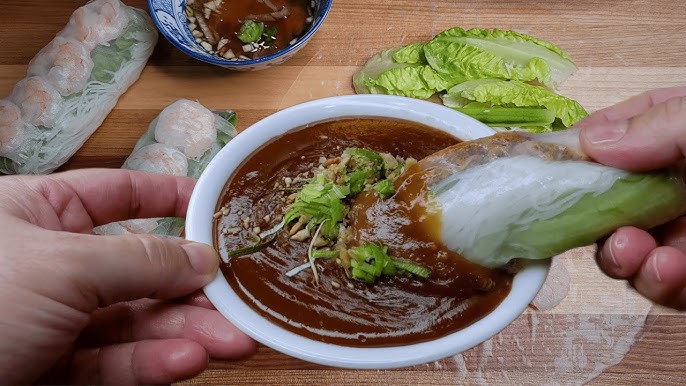
Spring roll peanut sauce is best served in a small dipping bowl beside freshly made rolls. We can garnish it with crushed peanuts, sesame seeds, chopped cilantro, or sliced chili for a restaurant-style finish.
It pairs beautifully with fresh spring rolls filled with:
- Shrimp
- Chicken
- Tofu
- Rice noodles
- Carrots
- Cucumber
- Lettuce
- Mint
- Cilantro
- Basil
- Avocado
- Bean sprouts
The creamy sauce contrasts perfectly with the crisp vegetables and soft rice paper wrapper. Every dip adds richness, saltiness, sweetness, and freshness.
How to Make the Sauce Thicker or Thinner
For a thicker peanut sauce, we use less water or add an extra spoonful of peanut butter. This version is best for spreading inside wraps, serving over noodles, or using as a dressing for grain bowls.
For a thinner peanut sauce, we add more warm water, one teaspoon at a time. A thinner sauce works well as a drizzle for salads, noodle bowls, grilled meats, or roasted vegetables.
The sauce thickens as it sits, especially when refrigerated. Before serving leftovers, we can stir in a little warm water to bring back the creamy texture.
How to Store Spring Roll Peanut Sauce
We can store leftover peanut sauce in an airtight container in the refrigerator for up to 5 days. Before storing, the sauce should be fully cooled if any warm water was used.
When ready to serve again, we stir the sauce well. If it has become too thick, we add a small splash of warm water and whisk until smooth. The flavor often becomes deeper after a few hours because the garlic, ginger, soy sauce, and sesame oil continue to blend.
Freezing is not recommended because peanut sauce can separate after thawing and lose its smooth consistency.
Common Mistakes to Avoid
One common mistake is adding too much water at once. This can make the sauce thin and weak. We should always add water gradually.
Another mistake is skipping the acid. Without lime juice or vinegar, the sauce can taste heavy and flat. The acidity is what keeps the peanut flavor fresh and balanced.
Using too much sesame oil can also overpower the sauce. Sesame oil has a strong flavor, so one teaspoon is enough for most recipes.
Finally, the sauce should always be tasted before serving. Peanut butter, soy sauce, hoisin sauce, and chili sauce can vary by brand, so small adjustments make a big difference.
Best Ways to Use Spring Roll Peanut Sauce
Although this sauce is perfect for spring rolls, it can be used in many other meals. We can drizzle it over cold noodle salads, grilled chicken skewers, roasted sweet potatoes, rice bowls, steamed vegetables, lettuce wraps, and tofu bowls.
It also works as a quick salad dressing when thinned with extra lime juice and water. For a richer noodle sauce, we can toss it with warm noodles and add vegetables, chopped peanuts, and fresh herbs.
This makes the recipe useful beyond one dish. A good peanut sauce can become a weekly kitchen staple because it adds instant flavor to simple ingredients.
Spring Roll Peanut Sauce Recipe Card
Ingredients
- ½ cup creamy peanut butter
- 2 tablespoons soy sauce
- 1 tablespoon hoisin sauce
- 1 tablespoon lime juice
- 1 tablespoon rice vinegar
- 1 tablespoon honey or brown sugar
- 1 teaspoon sesame oil
- 1 garlic clove, finely grated
- 1 teaspoon grated ginger
- 1 teaspoon chili garlic sauce or sriracha
- 2 to 4 tablespoons warm water
- Crushed peanuts, for garnish
Instructions
- Add peanut butter to a medium mixing bowl.
- Stir in soy sauce, hoisin sauce, lime juice, rice vinegar, and honey.
- Add garlic, ginger, sesame oil, and chili sauce.
- Whisk until the mixture becomes thick and combined.
- Add warm water, one tablespoon at a time, until smooth and creamy.
- Taste and adjust with more lime juice, soy sauce, honey, or chili sauce.
- Garnish with crushed peanuts and serve with fresh spring rolls.
FAQs about Spring Roll Peanut Sauce Recipe
1. What is spring roll peanut sauce made of?
Spring roll peanut sauce is usually made with peanut butter, soy sauce, garlic, lime juice, honey or sugar, sesame oil, and water. Some versions also include chili sauce, ginger, or rice vinegar for extra flavor.
2. Can we make peanut sauce without peanut butter?
Yes, we can make it without peanut butter by using ground peanuts or peanut powder. Blend the peanuts with soy sauce, lime juice, garlic, and a little warm water until smooth.
3. How do we make peanut sauce thinner?
To thin peanut sauce, we simply add warm water, one tablespoon at a time, while stirring. Warm water helps the peanut butter mix smoothly without becoming lumpy.
4. How long does spring roll peanut sauce last?
Peanut sauce can last for about 5 to 7 days in the refrigerator when stored in an airtight container. Before using it again, stir well and add a little water if it becomes too thick.
5. Is peanut sauce spicy?
Peanut sauce is not always spicy. We can keep it mild or add chili garlic sauce, sriracha, or crushed red pepper if we want a spicy version.
Final Thoughts
A well-made spring roll peanut sauce should be creamy, balanced, and full of flavor. With peanut butter as the rich base, soy sauce for savory depth, lime juice for brightness, hoisin for sweetness, garlic and ginger for aroma, and warm water for the perfect texture, we create a dipping sauce that tastes fresh, smooth, and satisfying.
This recipe is simple enough for everyday cooking but flavorful enough for entertaining. Whether served with fresh vegetable spring rolls, shrimp rolls, tofu rolls, chicken wraps, noodles, or rice bowls, this peanut sauce adds a delicious finishing touch to every bite.