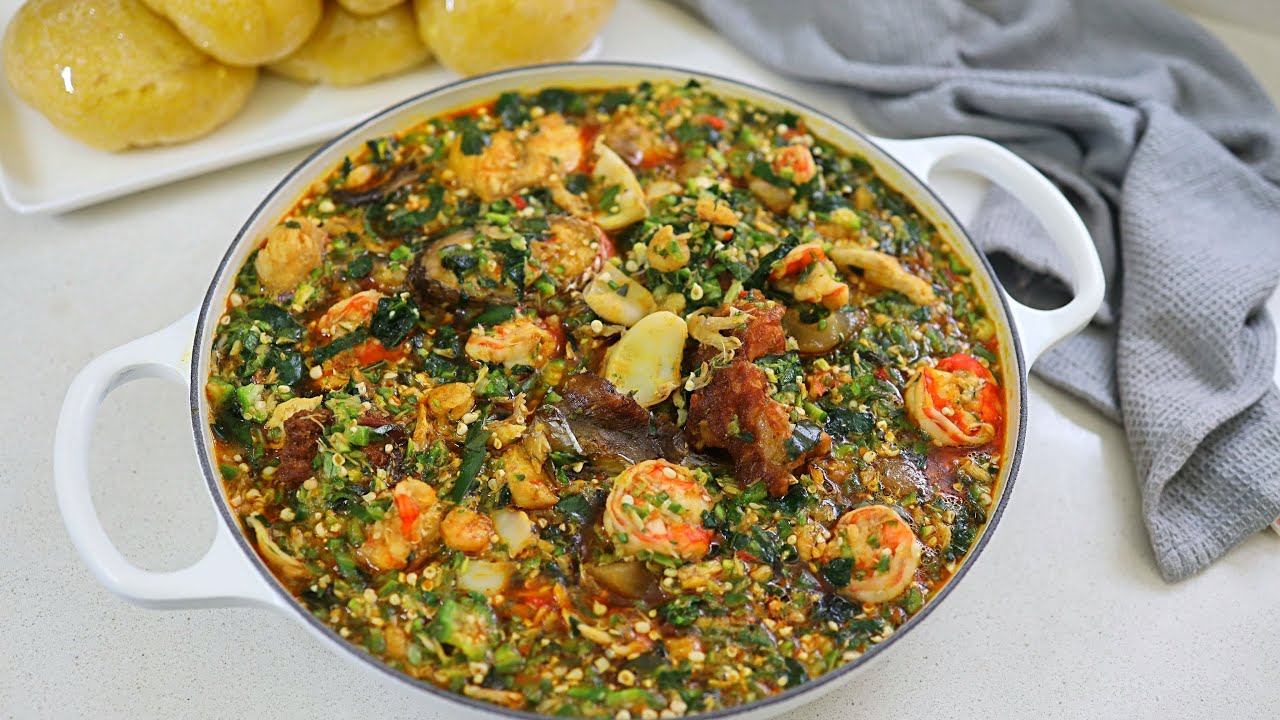
Okra Soup is one of the most popular and satisfying soups in Nigerian cuisine. Known for its naturally thick and slightly slippery texture, rich flavour, and versatility, this traditional dish can be prepared with different combinations of meat, fish, seafood, vegetables, and spices.
A well-prepared Nigerian Okra Soup recipe combines freshly chopped or grated okra with a flavourful meat stock, palm oil, assorted proteins, traditional seasonings, and leafy vegetables. The result is a colourful, hearty soup that pairs beautifully with eba, pounded yam, fufu, semolina, amala, wheat meal, and other Nigerian swallows.
In this recipe, we prepare Okra Soup using simple ingredients and practical cooking techniques that help preserve the fresh taste, attractive colour, and signature consistency of the okra.
What Is Okra Soup?
Okra Soup is a traditional African soup made primarily from okra, a green vegetable known for releasing a natural mucilage when cut and cooked. This gives the soup its characteristic thick and stretchy consistency.
In Nigeria, Okra Soup is prepared in several ways depending on personal preference, family tradition, and regional cooking styles. Some versions contain only meat and fish, while others include prawns, periwinkles, stockfish, crayfish, and leafy vegetables.
We can also control how thick or light the soup becomes by adjusting the quantity of okra and stock used during cooking.
One of the biggest advantages of Okra Soup is its flexibility. We can prepare an elaborate pot using several proteins or make a simple version with only fish, meat, or seafood.
Ingredients for Nigerian Okra Soup
Before cooking, we recommend preparing and measuring all the ingredients. This makes the cooking process easier and helps us avoid overcooking the okra.
Main Ingredients
For a delicious pot of Okra Soup, we can use:
- 500g fresh okra
- 500g assorted meat such as beef, goat meat, tripe, or cow skin
- 1 medium smoked or dried fish
- Stockfish, as desired
- ½ cup palm oil
- 2 tablespoons ground crayfish
- 1–2 fresh peppers or ground pepper, according to taste
- 1 medium onion
- 2 seasoning cubes
- Salt, to taste
- 1–2 cups meat stock
- Fresh leafy vegetables such as ugu, spinach, or another preferred green
- Prawns or shrimp, optional
- Periwinkles, optional
We can adjust these quantities depending on the number of people we intend to serve.
How to Prepare Okra for Okra Soup
Properly preparing the okra is one of the most important parts of the recipe.
First, we wash the fresh okra thoroughly under clean running water and allow it to drain. We then remove the tips and stalk ends.
The okra can be finely chopped, grated, blended briefly, or processed in a food processor.
For a soup with plenty of draw, we recommend cutting or grating the okra very finely. If we prefer visible pieces of okra with a slightly lighter consistency, we can chop it into small pieces instead.
We should avoid blending the okra with too much water because this can make controlling the final texture of the soup more difficult.
How to Prepare the Meat and Fish
Before assembling the soup, we need a rich, flavourful stock.
We place the cleaned assorted meat in a pot and season it with chopped onion, seasoning cubes, and a little salt. Tougher meats such as tripe or cow skin should be cooked first because they generally require more time to soften.
We add enough water to cook the meat without unnecessarily diluting the stock.
If using stockfish, we wash it carefully and add it according to how long it needs to become tender.
Once the meat is nearly cooked, we can add properly cleaned smoked or dried fish. We handle the fish carefully so that it does not completely break apart during cooking.
The liquid remaining after cooking the proteins becomes the flavourful base for our homemade Okra Soup.
How to Cook Okra Soup Step by Step
Once the ingredients have been prepared, we can begin cooking the soup.
Step 1: Prepare the Soup Base
We place the cooked meat, stockfish, and meat stock over medium heat.
Next, we add the palm oil, ground crayfish, pepper, and additional seasoning where necessary.
We allow the mixture to simmer briefly so that the ingredients combine and the stock develops a deeper flavour.
If we are using prawns, shrimp, or periwinkles, we can add them at this stage depending on how much cooking time they require.
Step 2: Add the Chopped Okra
We add the prepared okra gradually to the pot while stirring.
Once the okra enters the hot stock, it begins releasing the natural substance responsible for its characteristic texture.
We stir gently and consistently to distribute it throughout the soup.
One important principle when cooking Okra Soup is to avoid cooking the okra for too long. Extended cooking can reduce its fresh colour, flavour, and desirable texture.
Step 3: Adjust the Consistency
If the soup appears too thick, we add a small quantity of warm stock or water.
We should add liquid gradually because too much can make the soup unnecessarily watery.
If the soup is thinner than desired, we can add additional finely chopped or grated okra and allow it to cook briefly.
The ideal consistency depends on preference. Some people enjoy thick, highly viscous Okra Soup, while others prefer a lighter soup containing clearly visible pieces of okra.
Step 4: Add the Vegetables
We add the washed and sliced leafy vegetables near the end of cooking.
Ugu is a popular choice for Nigerian Okra Soup, but spinach or other suitable leafy greens can also be used.
We stir the vegetables into the soup and cook briefly.
Adding them toward the end helps preserve their colour and prevents them from becoming excessively soft.
Step 5: Taste and Finish
Finally, we taste the soup and adjust the salt, pepper, crayfish, or seasoning where necessary.
We allow everything to simmer briefly before removing the pot from the heat.
Our Okra Soup should now be aromatic, colourful, flavourful, and ready to serve.
How to Make Okra Soup Draw More
Many people want their Okra Soup to have a strong, stretchy consistency.
Fresh okra generally produces the best results. Finely chopping or grating it increases the amount of surface area exposed during cooking, helping the okra release more of its natural mucilage.
We should also avoid adding excessive liquid.
Another important factor is cooking time. We only need enough heat to cook the okra properly and combine it with the other ingredients. Excessive cooking may weaken the desired texture.
For an especially thick consistency, we can finely grate a portion of the okra while chopping the remaining portion. This gives us both strong draw and visible pieces of fresh okra.
Best Meat and Fish for Okra Soup
One reason this recipe is so versatile is that several proteins work beautifully.
We can prepare Okra Soup with:
- Beef
- Goat meat
- Cow skin
- Tripe
- Stockfish
- Smoked fish
- Fresh fish
- Prawns
- Shrimp
- Periwinkles
Combining meat, fish, and seafood creates a particularly rich pot of soup.
However, we do not have to use every protein available. Even a simple Okra Soup made with one or two good-quality proteins can be extremely satisfying when properly seasoned.
How to Make Okra Soup Without Meat
Okra Soup can also be prepared without meat.
We can replace meat with fresh fish, smoked fish, prawns, shrimp, mushrooms, or another preferred ingredient.
For a seafood-focused version, we prepare the stock using fish and seasonings before introducing the okra. Because many seafood ingredients cook quickly, they should not remain in the pot for unnecessarily long periods.
A meat-free Okra Soup can still have a rich flavour when we use good-quality crayfish, pepper, palm oil, vegetables, and properly seasoned stock.
Common Mistakes to Avoid When Making Okra Soup
Even though Okra Soup is relatively easy to prepare, a few cooking mistakes can affect the final result.
Using Too Much Water
Too much water can dilute both the flavour and consistency of the soup. We therefore add liquid gradually.
Overcooking the Okra
Okra does not require prolonged cooking. Excessive heat can affect its colour, texture, and freshness.
Using Weak Stock
Because the okra itself has a mild taste, a properly seasoned stock is essential. Cooking the meat and fish correctly before adding the okra provides a stronger flavour foundation.
Adding Vegetables Too Early
Leafy vegetables can become dull and overly soft when cooked for too long. We add them close to the end of the cooking process.
Adding Too Much Seasoning at Once
The meat stock, smoked fish, crayfish, and seasoning cubes may already contribute significant flavour. We taste the soup before adding extra salt or seasoning.
What to Eat With Okra Soup
Nigerian Okra Soup is commonly served with swallow foods.
Some excellent options include:
- Eba
- Pounded yam
- Fufu
- Amala
- Semolina
- Wheat meal
- Oat swallow
- Plantain-based swallow
The thick texture of the soup makes it particularly suitable for eating with swallow.
We can also enjoy Okra Soup on its own or pair it with another preferred side depending on our dietary needs.
How to Store Leftover Okra Soup
If we have leftover soup, we first allow it to cool before transferring it into a clean, airtight food container.
We can keep it refrigerated for short-term storage and reheat only the quantity required for serving.
For longer storage, freezing is usually more practical.
When reheating Okra Soup, we use gentle heat and avoid repeatedly boiling the entire batch. Excessive reheating can gradually change the texture of both the okra and vegetables.
If the soup becomes too thick after refrigeration, a small amount of water or stock can be added while reheating.
Tips for Making the Best Nigerian Okra Soup
A few simple techniques can significantly improve the final dish.
We recommend using fresh, tender okra, preparing a well-seasoned meat stock, and allowing the flavours from crayfish, fish, meat, palm oil, and pepper to complement one another.
We should also keep the cooking time relatively short after adding the okra.
For extra texture, we can combine finely grated okra with chopped okra. For a richer soup, we can include assorted meat, smoked fish, stockfish, prawns, and periwinkles.
Most importantly, we taste the soup as we cook rather than relying entirely on fixed seasoning measurements.
Why This Okra Soup Recipe Works
This recipe allows the natural character of fresh okra to remain at the centre of the dish while combining it with the deep flavours commonly associated with traditional Nigerian soups.
Preparing the proteins first creates a robust stock. Adding crayfish and palm oil gives the soup additional richness, while pepper contributes warmth and depth.
Introducing the okra later prevents unnecessary overcooking, and finishing with fresh vegetables adds colour and freshness.
The method is also flexible enough to accommodate different combinations of meat, fish, seafood, and vegetables.
Serving Nigerian Okra Soup
For the best experience, we serve Okra Soup warm with freshly prepared swallow.
A generous portion of soup containing meat, fish, vegetables, and okra can be placed alongside eba, pounded yam, fufu, amala, or semolina.
When serving guests or family members, we can distribute the assorted proteins evenly so that each portion contains a satisfying combination of soup and protein.
FAQs about Okra Soup Recipe
1. What is Okra Soup?
Okra Soup is a popular African soup made with fresh okra, meat or fish, palm oil, seasonings, and other ingredients. It is known for its naturally thick and slightly slimy texture.
2. What ingredients are needed for Okra Soup?
Common ingredients include fresh okra, palm oil, assorted meat, fish, stockfish, crayfish, pepper, onions, seasoning cubes, and salt. Leafy vegetables may also be added.
3. How do we make Okra Soup less slimy?
We can reduce the sliminess by cutting the okra into larger pieces and cooking it for a little longer. However, the characteristic draw of okra is an important part of traditional Okra Soup.
4. How long does Okra Soup take to cook?
Once the meat is prepared, Okra Soup usually takes about 20–30 minutes to complete, depending on the ingredients used.
5. Can we cook Okra Soup without palm oil?
Yes. Okra Soup can be prepared without palm oil for a lighter version, although palm oil provides the traditional colour and flavour.
6. What can we eat with Okra Soup?
Okra Soup pairs perfectly with eba, pounded yam, fufu, semolina, amala, or wheat swallow.
7. Can we use frozen okra?
Yes. Frozen okra works well when fresh okra is unavailable. It can usually be added directly to the soup without thawing.
8. How do we store leftover Okra Soup?
We can refrigerate leftover Okra Soup in an airtight container for a few days or freeze it for longer storage.
9. Is Okra Soup healthy?
Yes. Okra provides fibre, vitamins, minerals, and antioxidants. The overall nutritional value depends on the meat, fish, oil, and other ingredients used.
Conclusion
A delicious Okra Soup recipe does not require complicated techniques. The key is to start with fresh okra, prepare a flavourful stock, use quality proteins and seasonings, and avoid overcooking the soup.
By combining fresh okra, assorted meat, fish, crayfish, palm oil, pepper, seasonings, and leafy vegetables, we can prepare a rich Nigerian Okra Soup with an appealing texture and deeply satisfying flavour.
Whether we prefer it thick and highly viscous or slightly lighter with visible pieces of okra, the recipe can easily be adjusted to suit our taste. Served with eba, pounded yam, fufu, semolina, amala, or another favourite swallow, homemade Okra Soup remains a comforting and versatile Nigerian meal suitable for everyday dining and special family occasions.