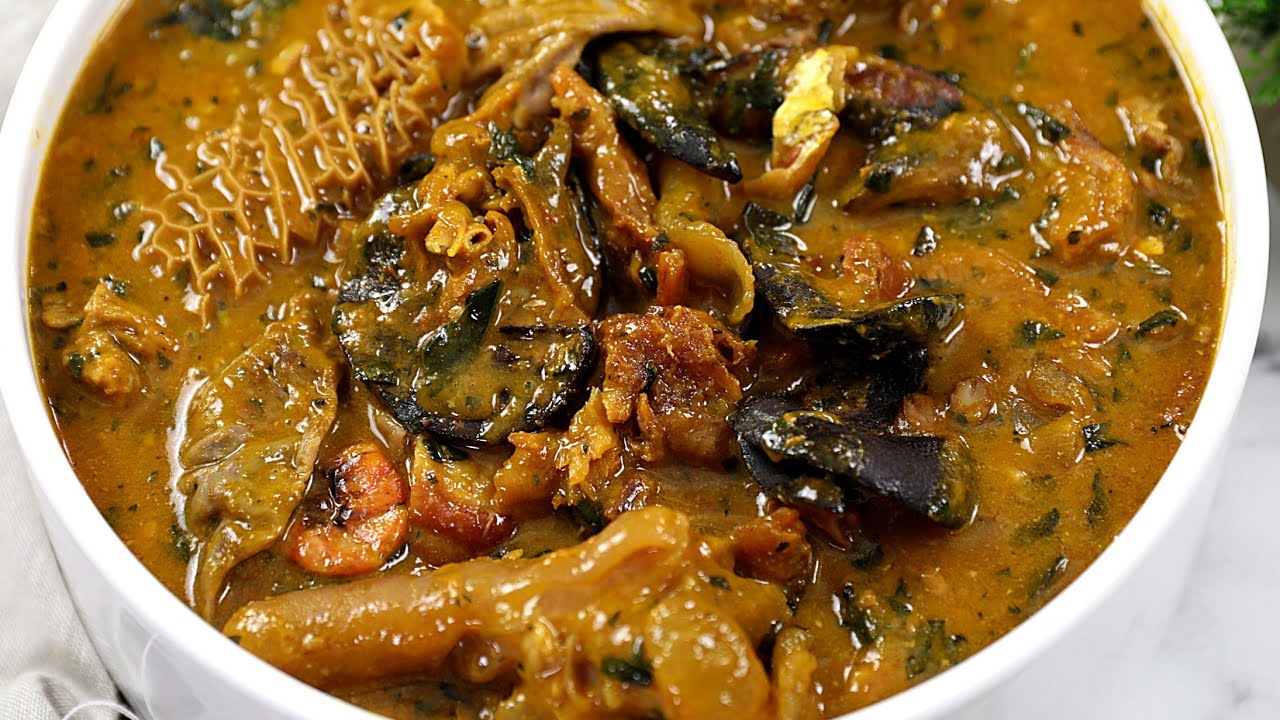
Ogbono soup is one of Nigeria’s most loved traditional soups, known for its rich flavour, smooth texture, and distinctive draw. Made primarily from ground ogbono seeds, also known as African bush mango seeds, this hearty soup is commonly enjoyed with eba, pounded yam, fufu, semovita, amala, or other Nigerian swallows.
With the right ingredients and cooking technique, we can prepare a delicious pot of Nigerian Ogbono Soup that combines assorted meats, fish, vegetables, palm oil, and traditional seasonings. The beauty of this recipe is its flexibility. We can prepare it with beef, goat meat, tripe, stockfish, smoked fish, or a combination of several proteins.
In this detailed Ogbono Soup recipe, we explain the ingredients, cooking method, useful preparation tips, serving suggestions, and common mistakes to avoid when making this classic Nigerian dish.
What Is Ogbono Soup?
Ogbono Soup is a traditional Nigerian soup prepared with ground dried ogbono seeds. These seeds naturally thicken the soup and create the characteristic slippery or “drawing” consistency for which Ogbono Soup is famous.
The flavour of ogbono itself is mild and slightly earthy, allowing ingredients such as meat stock, crayfish, palm oil, seasoning, peppers, fish, and vegetables to build the overall taste.
Ogbono Soup is prepared in different ways across Nigeria. Some households prefer a simple version containing meat and fish, while others enrich the soup with vegetables such as ugu, bitterleaf, spinach, or okra.
Regardless of the variation we choose, the goal is usually the same: a thick, flavourful soup with a satisfying draw and a well-balanced combination of proteins and seasonings.
Ingredients for Ogbono Soup
Before cooking, we should prepare all our ingredients so that they can be added at the appropriate stages.
For a flavourful pot of Ogbono Soup, we can use:
- 1 cup ground ogbono seeds
- ½ to ¾ cup palm oil
- 500–700g beef, goat meat, or assorted meat
- 1 medium stockfish
- 1 medium smoked or dried fish
- 2–3 tablespoons ground crayfish
- 2–3 seasoning cubes
- Fresh pepper or ground dry pepper to taste
- Salt to taste
- 1 medium onion
- 2–3 cups meat stock
- Ugu, spinach, or bitterleaf, optional
- Ponmo, optional
- Water as required
The quantities can be increased or reduced depending on the number of people we intend to serve and our preferred soup consistency.
How to Prepare the Ingredients
Good preparation makes the cooking process easier and also improves the final flavour of the soup.
We begin by washing our beef, goat meat, tripe, ponmo, or other assorted meats thoroughly. We then place the meat in a pot and season it with onions, seasoning cubes, and a moderate amount of salt.
Stockfish should be properly soaked and washed to remove dirt and soften it before cooking. Smoked or dried fish should also be cleaned carefully, with the bones removed where necessary.
If we are using vegetables, we should wash them thoroughly and slice them before starting the soup.
The ogbono seeds should be finely ground. Finely ground ogbono dissolves more easily into the palm oil and helps us achieve the smooth, stretchy texture associated with properly prepared Ogbono Soup.
How to Make Ogbono Soup Step by Step
1. Cook the Meat and Stockfish
We place the cleaned meat in a cooking pot and add chopped onions, seasoning cubes, salt, and a small amount of water.
We allow the meat to cook gradually so that it releases its natural flavour into the stock.
If we are using tougher ingredients such as stockfish, tripe, or cow skin, we can begin cooking them earlier or add them according to the amount of time they require to soften.
The resulting stock forms an important part of the soup, so we should avoid using excessive water during this stage.
2. Prepare the Ogbono Mixture
Once the meat is almost tender, we can prepare our ground ogbono.
We place the palm oil in a clean bowl or pot and add the ground ogbono. We mix thoroughly until the powder combines with the oil and forms a smooth paste.
The palm oil helps prevent the ground ogbono from forming unwanted lumps when it enters the soup.
We do not need to fry the ogbono aggressively. Excessive frying or prolonged exposure to very high heat can affect its ability to produce the characteristic draw.
3. Add the Ogbono to the Stock
We bring the meat stock to a gentle boil before introducing the ogbono mixture.
We can add the mixture gradually while stirring continuously. As it heats, the ogbono begins to dissolve, thicken the stock, and develop its familiar stretchy consistency.
If the soup becomes too thick, we add a small quantity of warm water or additional stock.
We should avoid adding too much water at once because Ogbono Soup is easier to thin than it is to thicken after cooking.
4. Add Crayfish, Pepper and Other Proteins
Once the ogbono has blended properly with the stock, we add ground crayfish, pepper, smoked fish, dried fish, ponmo, and other preferred ingredients.
The crayfish contributes a deep seafood flavour that complements the richness of the palm oil and meat stock.
We stir gently and allow everything to simmer together so that the flavours can combine.
At this stage, we can taste the soup before adding additional salt or seasoning. The meat stock, fish, crayfish, and seasoning cubes may already contain enough saltiness.
5. Add the Vegetables
Vegetables are optional when preparing traditional Ogbono Soup, but they can introduce freshness, colour, texture, and additional nutrients.
Popular choices include:
- Ugu leaves
- Spinach
- Bitterleaf
We add our chosen vegetables towards the end of cooking.
Vegetables generally do not require prolonged cooking. A few minutes are usually enough for the leaves to soften while retaining their colour and texture.
After adding the vegetables, we stir gently and allow the soup to simmer briefly before removing it from the heat.
How to Make Ogbono Soup Draw Properly
The characteristic draw is one of the most important qualities of good Ogbono Soup.
To achieve it, we should use fresh, properly dried ogbono seeds. Old or poorly stored seeds may produce weaker results.
We should also avoid excessively frying the ground ogbono. Mixing it with palm oil before introducing it into warm stock is usually sufficient.
Another important factor is the amount of liquid used. Excessive water can make the soup watery and reduce the noticeable thickness and stretch.
We should therefore introduce water gradually until we achieve our preferred consistency.
Best Meat and Fish for Ogbono Soup
One of the advantages of this soup is that we can customise the proteins according to availability and preference.
Beef provides a familiar meaty flavour and works exceptionally well for everyday cooking.
Goat meat adds a deeper, distinctive taste that complements the richness of ogbono.
Assorted meat can include tripe, cow skin, beef, intestines, or other preferred cuts.
For seafood flavours, we can use stockfish, smoked fish, dried fish, or crayfish.
Combining two or more proteins usually produces a richer soup because each ingredient contributes a different layer of flavour to the cooking liquid.
Ogbono Soup With Okra
Ogbono and okra can also be combined to create an exceptionally thick and stretchy soup.
To prepare Ogbono Soup with okra, we follow the regular cooking method and add finely chopped or grated okra towards the later stage of cooking.
Because both ingredients have natural thickening properties, we may need slightly more stock or water.
The combination works especially well for anyone who enjoys soups with a pronounced draw.
Ogbono Soup With Ugu or Bitterleaf
Adding vegetables changes both the flavour and appearance of Ogbono Soup.
Ugu leaves provide a mild vegetable flavour and vibrant green colour, making them one of the most popular additions.
Bitterleaf creates a slightly bitter contrast to the richness of the soup. Before using bitterleaf, we should wash it properly to reduce excessive bitterness while retaining its distinctive taste.
Spinach can also be used when traditional Nigerian vegetables are unavailable.
Common Mistakes to Avoid When Cooking Ogbono Soup
Even though Ogbono Soup is relatively straightforward to prepare, certain mistakes can affect its texture and taste.
Using Too Much Water
Adding excessive water can leave the soup thin and reduce the desired draw. We should begin with meat stock and introduce additional water gradually.
Using Too Much Palm Oil
Palm oil provides colour and flavour, but excessive oil can overpower the ogbono and leave a heavy layer of oil on the surface.
Overcooking the Ogbono
Prolonged cooking at very high temperatures may affect the soup’s texture. Once the ingredients have combined and the soup is properly cooked, we do not need to continue boiling it unnecessarily.
Adding Too Much Seasoning
Ogbono Soup contains several naturally flavourful ingredients, including meat stock, crayfish, smoked fish, and stockfish. We should therefore taste the soup before adding extra seasoning cubes or salt.
Using Poor-Quality Ogbono
Fresh ogbono is essential for good flavour and texture. When purchasing the seeds, we should select clean, properly dried ogbono without an unpleasant or rancid smell.
What to Eat With Ogbono Soup
Ogbono Soup is traditionally served with Nigerian swallow foods.
Some of the best combinations include:
- Pounded yam
- Eba
- Fufu
- Semovita
- Amala
- Wheat swallow
- Oat swallow
We can take a small portion of the swallow, shape it with our fingers, dip it into the Ogbono Soup, and enjoy it with meat, fish, or other ingredients.
Pounded yam is particularly popular because its smooth texture works beautifully with the thick, stretchy consistency of the soup.
How to Store Leftover Ogbono Soup
If we prepare more soup than we can consume immediately, proper storage helps preserve its flavour and quality.
We should first allow the soup to cool before transferring it into a clean, airtight food container.
For short-term storage, we can refrigerate it. For longer storage, freezing is generally more practical.
Dividing the soup into smaller portions before freezing makes reheating easier because we only need to defrost the quantity we intend to eat.
When reheating, we warm the soup thoroughly over medium heat and stir occasionally. If it becomes excessively thick, we can add a small quantity of water or stock.
How to Improve the Flavour of Nigerian Ogbono Soup
A truly delicious Ogbono Soup depends heavily on the quality of its stock.
Instead of relying mainly on seasoning cubes, we can build flavour naturally by cooking our meat with onions and allowing stockfish, smoked fish, and crayfish to contribute to the broth.
The combination of well-seasoned meat stock, quality palm oil, fresh ogbono, crayfish, pepper, and smoked fish creates a more balanced and traditional taste.
We should also allow each ingredient enough time to release its flavour without overcooking the entire soup.
Why This Ogbono Soup Recipe Works
This method keeps the preparation straightforward while preserving the most important characteristics of authentic Nigerian Ogbono Soup.
By first preparing a flavourful meat stock, mixing the ground ogbono with palm oil, controlling the amount of water, and adding delicate ingredients towards the end, we can achieve a soup that is rich, smooth, well-seasoned, and beautifully stretchy.
It can also be adapted easily. We can use a simple combination of beef and smoked fish for an everyday meal or prepare a more elaborate version with assorted meat, stockfish, ponmo, crayfish, and vegetables for special occasions.
FAQs about Ogbono Soup Recipe
What is Ogbono Soup?
Ogbono Soup is a popular Nigerian soup made from ground ogbono seeds, also known as African mango seeds. The seeds give the soup its characteristic thick, smooth, and slightly stretchy texture.
What ingredients are needed for Ogbono Soup?
Common ingredients include ground ogbono, palm oil, assorted meat, stockfish, dried fish, crayfish, pepper, seasoning, vegetables, and meat stock. Ingredients can be adjusted according to preference.
How do we make Ogbono Soup?
We begin by cooking the meat until tender and preparing a flavorful stock. We then combine the ground ogbono with palm oil, add it to the stock, and cook gently. Fish, crayfish, seasonings, and vegetables are added before allowing the soup to simmer.
Why is my Ogbono Soup not drawing?
Ogbono may lose some of its characteristic draw if it is overcooked or if the seeds are old or poorly processed. Using fresh, properly ground ogbono usually provides the best texture.
What vegetables can we use in Ogbono Soup?
Popular choices include ugu (fluted pumpkin leaves), spinach, bitter leaf, and uziza leaves. Ogbono Soup can also be prepared without vegetables.
What can we eat with Ogbono Soup?
Ogbono Soup pairs perfectly with Nigerian swallows such as pounded yam, eba, fufu, semovita, wheat, or amala.
How long does Ogbono Soup take to cook?
Preparation time depends largely on the meat used, but once the stock is ready, the soup itself generally cooks relatively quickly.
Can we prepare Ogbono Soup without meat?
Yes. We can prepare a meat-free version using mushrooms, vegetables, or other preferred alternatives while maintaining the soup’s rich flavour and signature texture.
Conclusion
A good Ogbono Soup recipe does not require complicated techniques. The most important elements are fresh ground ogbono, flavourful meat stock, quality palm oil, well-prepared proteins, crayfish, pepper, and balanced seasoning.
By carefully controlling the liquid and avoiding excessive cooking, we can produce the thick, smooth, and satisfying draw that makes Nigerian Ogbono Soup distinctive.
Whether we serve it with pounded yam, eba, fufu, semovita, or amala, Ogbono Soup remains a comforting Nigerian meal that can be customised with different meats, fish, and vegetables while retaining its unmistakable traditional character.