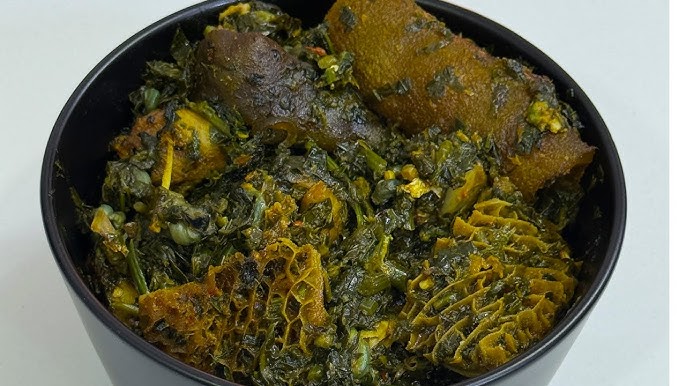
Edikang Ikong soup is one of Nigeria’s most celebrated vegetable soups, known for its rich combination of leafy vegetables, assorted meats, seafood, palm oil, and traditional seasonings. Originally associated with the Efik and Ibibio people of Cross River and Akwa Ibom States, this deeply satisfying soup has become popular across Nigeria and beyond.
When we prepare an authentic Edikang Ikong soup recipe, the goal is to achieve a thick, colourful vegetable soup in which the greens remain vibrant while the meat, stockfish, dried fish, crayfish, and palm oil create a savoury base. Unlike soups that depend heavily on thickeners, Edikang Ikong gets its characteristic body primarily from the generous quantity of vegetables used.
Whether we serve it with pounded yam, eba, fufu, semovita, wheat, or another Nigerian swallow, Edikang Ikong makes a filling meal suitable for family lunches, dinners, celebrations, and special occasions.
What Is Edikang Ikong Soup?
Edikang Ikong is a traditional Nigerian vegetable soup prepared primarily with waterleaf and ugu, also known as fluted pumpkin leaves. These vegetables contribute different textures to the soup.
Waterleaf is naturally soft and contains considerable moisture, while ugu is firmer and gives the finished soup its distinctive leafy texture. When combined correctly, they create a vegetable-rich soup that is neither excessively watery nor dry.
Traditional variations can include beef, goat meat, cow skin, stockfish, dried fish, periwinkles, crayfish, and other proteins. Recipes naturally differ between households, so the exact combination of meat and seafood can be adjusted according to availability and preference.
Ingredients for Edikang Ikong Soup
Before cooking, we prepare and clean every ingredient properly. The quantity below can be adjusted depending on the number of people we intend to serve.
Main Ingredients
- 4 cups chopped waterleaf
- 5 cups chopped ugu (fluted pumpkin leaves)
- 500 g beef or goat meat
- 200 g cow skin (ponmo), optional
- Stockfish, cleaned and softened
- Dried fish, cleaned and deboned
- 1–2 cups palm oil
- ½–1 cup ground crayfish
- Fresh or dried pepper, to taste
- Periwinkles, optional
- 1–2 onions
- Seasoning cubes or powder, to taste
- Salt, to taste
- A small quantity of water or meat stock, where necessary
The vegetables should make up a substantial portion of the soup. Edikang Ikong should be rich in vegetables, rather than containing only a few leaves floating in a large amount of liquid.
How to Prepare the Ingredients
Proper preparation improves both the flavour and texture of the finished soup.
Prepare the Waterleaf
We remove damaged leaves and tough portions before washing the waterleaf thoroughly with clean water. Because leafy vegetables can contain sand or soil, washing them several times may be necessary.
After washing, we drain the waterleaf thoroughly and chop it into manageable pieces.
Removing excess water is particularly important because waterleaf naturally releases moisture during cooking.
Prepare the Ugu Leaves
We pick the ugu leaves, wash them thoroughly, drain them, and slice them.
The leaves should not be chopped excessively fine. Slightly larger slices provide the attractive leafy appearance normally associated with Edikang Ikong soup.
Clean the Meat and Seafood
We rinse the meat thoroughly and clean the stockfish, dried fish, ponmo, and periwinkles where applicable.
Stockfish may require soaking or pre-cooking until it becomes tender. Dried fish should be carefully cleaned so that unwanted bones, dirt, or sand do not enter the soup.
Having all the ingredients prepared before cooking makes the process much easier.
How to Cook Edikang Ikong Soup Step by Step
Once the ingredients are ready, we can begin preparing the soup.
Step 1: Cook the Meat
We place the beef, goat meat, or preferred meat in a clean pot.
We add chopped onions, seasoning, and a moderate amount of salt. Only a small quantity of water is needed initially because the meat will release some liquid as it cooks.
We cover the pot and cook until the meat begins to soften.
Tougher meats may require additional cooking time, so we ensure they are nearly tender before adding ingredients that require less cooking.
Step 2: Add the Stockfish and Ponmo
Next, we add the cleaned stockfish and ponmo.
We continue cooking until the meat and stockfish are tender.
There should be some concentrated stock remaining in the pot, but the soup should not contain excessive liquid. Controlling the amount of stock at this stage helps prevent watery Edikang Ikong.
Step 3: Add Palm Oil
We pour the palm oil into the meat mixture and stir.
Palm oil gives Edikang Ikong its rich colour and characteristic flavour. The exact amount can be adjusted depending on how rich we want the soup to be, but enough should be used to coat the ingredients and vegetables properly.
We allow the mixture to simmer briefly.
Step 4: Add Crayfish and Pepper
We add the ground crayfish and pepper.
Crayfish contributes an important savoury seafood flavour and complements the meat, stockfish, and vegetables.
At this stage, we taste the stock and adjust the seasoning carefully. We avoid adding too much salt because dried fish, stockfish, seasoning cubes, and other ingredients may already contribute saltiness.
Step 5: Add Dried Fish and Periwinkles
We gently add the cleaned dried fish and periwinkles, if using them.
Dried fish is delicate once softened, so we stir carefully to prevent it from breaking into very small pieces.
We allow the mixture to simmer briefly so the flavours combine.
Step 6: Add the Waterleaf
Now we add the chopped waterleaf.
The volume may initially appear large, but the leaves quickly reduce as they cook.
We stir everything together and allow the waterleaf to release some of its natural moisture. This is one reason we do not need to add large amounts of water while preparing Edikang Ikong.
We cook until the waterleaf softens and blends with the meat and seafood mixture.
Step 7: Add the Ugu
Finally, we add the sliced ugu leaves.
We mix them thoroughly into the soup, making sure the vegetables are evenly distributed.
Ugu does not require prolonged cooking. We therefore cook the soup for only a short period after adding it.
Once the ugu has softened slightly but still retains its colour and texture, we taste the soup again and adjust the salt or seasoning if necessary.
Our Edikang Ikong soup is ready to serve.
How to Make Edikang Ikong Soup Thick and Rich
One of the most desirable qualities of authentic Edikang Ikong is its thick, vegetable-packed consistency.
The easiest way to achieve this is by controlling liquid from the beginning.
We should avoid adding unnecessary water while cooking the meat. Instead, we use a concentrated meat stock and allow the waterleaf to provide additional moisture.
We also use plenty of vegetables.
If the soup contains too much liquid before we add the vegetables, it may remain watery even after cooking.
A generous combination of waterleaf and ugu produces the rich consistency associated with a properly prepared pot of Edikang Ikong.
Best Meat and Seafood for Edikang Ikong Soup
One advantage of this recipe is the flexibility it gives us when choosing proteins.
We can prepare Edikang Ikong with:
- Beef
- Goat meat
- Cow skin (ponmo)
- Stockfish
- Dried fish
- Periwinkles
- Assorted meat
Using several proteins creates a more complex flavour, but we do not need to use every option.
For a simpler version, beef, stockfish, dried fish, and crayfish can provide plenty of flavour.
For a more elaborate Nigerian Edikang Ikong soup, assorted meats and seafood can be combined.
Waterleaf and Ugu Ratio for Edikang Ikong Soup
Getting the vegetable balance right can significantly improve the finished soup.
We generally use a generous quantity of both vegetables, with ugu slightly dominating the mixture when we want a firmer, greener texture.
Waterleaf softens considerably and releases moisture during cooking, while ugu provides structure.
For example, approximately 4 cups of chopped waterleaf and 5 cups of sliced ugu can provide a useful starting ratio.
The quantity does not need to be mathematically exact. What matters most is maintaining enough ugu to prevent the finished soup from becoming overly soft or watery.
Can We Make Edikang Ikong Without Waterleaf?
Traditional Edikang Ikong relies heavily on waterleaf and ugu, so using both produces the most recognizable result.
However, people living outside Nigeria may not always have access to fresh waterleaf.
In such cases, some cooks use locally available leafy vegetables with similar characteristics. The flavour and texture may differ from the traditional version, but substitutions can make the recipe more accessible.
Whenever authentic ingredients are available, fresh waterleaf and fluted pumpkin leaves remain the preferred combination.
Common Mistakes to Avoid When Cooking Edikang Ikong
Even though the cooking process is straightforward, a few mistakes can significantly affect the final result.
Adding Too Much Water
This is one of the most common problems.
Waterleaf releases liquid naturally, so we should not begin with a large quantity of stock. Edikang Ikong should be rich and concentrated rather than resembling a thin vegetable broth.
Overcooking the Ugu
Once the ugu is added, prolonged cooking is unnecessary.
Overcooking can reduce the fresh texture and vibrant appearance of the leaves. We add the ugu near the end and cook it briefly.
Using Too Few Vegetables
The vegetables are central to this dish.
A small quantity of vegetables combined with excessive meat stock will not produce the characteristic consistency of authentic Edikang Ikong.
Adding Too Much Salt
Stockfish, dried fish, crayfish, meat seasoning, and other ingredients already contribute flavour.
We therefore taste before adding extra salt.
Failing to Drain the Vegetables
After washing the waterleaf and ugu, we allow them to drain properly. This helps us maintain better control over the amount of liquid entering the pot.
What to Eat With Edikang Ikong Soup
Edikang Ikong pairs beautifully with several Nigerian staple foods.
Popular Swallow Options
We can serve the soup with:
- Pounded yam
- Eba
- Fufu
- Semovita
- Wheat swallow
- Oat swallow
- Garri-based swallow
Pounded yam and Edikang Ikong soup are particularly popular because the smooth texture of the yam complements the rich vegetables, meat, seafood, and palm oil.
The soup should be served warm, with enough meat and vegetables included in each portion.
How to Store Leftover Edikang Ikong Soup
If we have leftovers, we allow the soup to cool before transferring it into a clean, airtight food container.
We then refrigerate it promptly.
For longer storage, Edikang Ikong can be divided into smaller portions and frozen. Portioning is useful because we can reheat only what we intend to eat instead of repeatedly warming the entire batch.
When reheating, we use moderate heat and warm the soup until it is thoroughly heated. We avoid unnecessarily prolonged cooking, as repeated overheating can soften the vegetables further.
Tips for the Best Authentic Edikang Ikong Soup
A few practical techniques can make a noticeable difference when preparing this classic Nigerian dish.
We should use fresh vegetables whenever possible, clean our seafood carefully, and cook tougher meats until tender before introducing the vegetables.
We also keep the meat stock concentrated rather than watery.
Ground crayfish should be used generously enough to contribute flavour without overpowering the freshness of the vegetables.
Most importantly, we add ugu near the end of cooking. This preserves more of its texture and gives the finished soup its distinctive vegetable-rich appearance.
For an especially rich version, we can combine beef or goat meat with stockfish, dried fish, ponmo, crayfish, and periwinkles.
Why This Edikang Ikong Soup Recipe Works
This method allows each ingredient to perform a specific role.
The seasoned meat creates the savoury foundation. Stockfish, dried fish, and crayfish deepen the flavour. Palm oil provides richness and colour. Waterleaf contributes moisture and softness, while ugu gives the soup its recognizable leafy texture.
By adding the ingredients in stages, we ensure the meat becomes tender without overcooking the vegetables.
Controlling the amount of liquid also allows us to create a thick Edikang Ikong soup without flour, starch, or other artificial thickeners.
The result is a rich Nigerian vegetable soup packed with layers of meat, seafood, vegetables, and traditional flavour.
Serving Edikang Ikong for Family Meals and Special Occasions
Edikang Ikong is suitable for both everyday meals and large gatherings.
When cooking for several people, we can increase the quantities while maintaining the same basic method. The key is to ensure there are enough vegetables relative to the amount of meat stock.
For celebrations, we may use a wider selection of assorted meats and seafood to create a more luxurious pot.
For regular family meals, we can keep the ingredients simpler without losing the fundamental character of the dish.
Either way, serving the soup hot with freshly prepared swallow creates a hearty Nigerian meal.
FAQs about Edikang Ikong Soup Recipe
What is Edikang Ikong Soup?
Edikang Ikong Soup is a traditional Nigerian vegetable soup associated with the Efik and Ibibio people of southern Nigeria. It is typically prepared with waterleaf, ugu (fluted pumpkin leaves), assorted meats, seafood, palm oil, and seasonings.
What vegetables are used in Edikang Ikong Soup?
The two main vegetables are waterleaf and ugu leaves. Waterleaf provides moisture and softness, while ugu gives the soup its rich green colour and distinctive vegetable flavour.
Can I make Edikang Ikong Soup without waterleaf?
Yes. If waterleaf is unavailable, spinach can be used as a substitute, although the flavour and texture may differ slightly from the traditional recipe.
What meat can I use for Edikang Ikong Soup?
We can prepare the soup with beef, goat meat, cow skin (ponmo), tripe, or assorted meat. Smoked fish, stockfish, and dried fish can also add deeper flavour.
How long does Edikang Ikong Soup take to cook?
Cooking time usually depends on the meat used. Once the meat is tender, the vegetables require only a short cooking period to preserve their colour, texture, and nutrients.
What can I eat with Edikang Ikong Soup?
Edikang Ikong pairs well with pounded yam, eba, fufu, semovita, wheat meal, or rice.
How should Edikang Ikong Soup be stored?
Allow the soup to cool before placing it in an airtight container. It can be refrigerated for a few days or frozen for longer storage.
Is Edikang Ikong Soup spicy?
It can be mild or spicy depending on the amount of fresh pepper added during preparation.
Conclusion
A well-prepared Edikang Ikong soup recipe combines fresh waterleaf, ugu, palm oil, crayfish, meat, stockfish, dried fish, and carefully balanced seasonings to create one of Nigeria’s most distinctive vegetable soups.
For the best results, we keep the stock concentrated, use vegetables generously, allow the waterleaf to soften before adding the ugu, and avoid overcooking the final pot.
Whether we pair it with pounded yam, eba, fufu, semovita, or wheat, authentic Edikang Ikong delivers a satisfying combination of leafy vegetables, rich palm oil, savoury meat, and seafood flavours. With properly prepared ingredients and careful control of cooking time, we can consistently produce a thick, colourful, flavourful pot of traditional Nigerian Edikang Ikong soup.