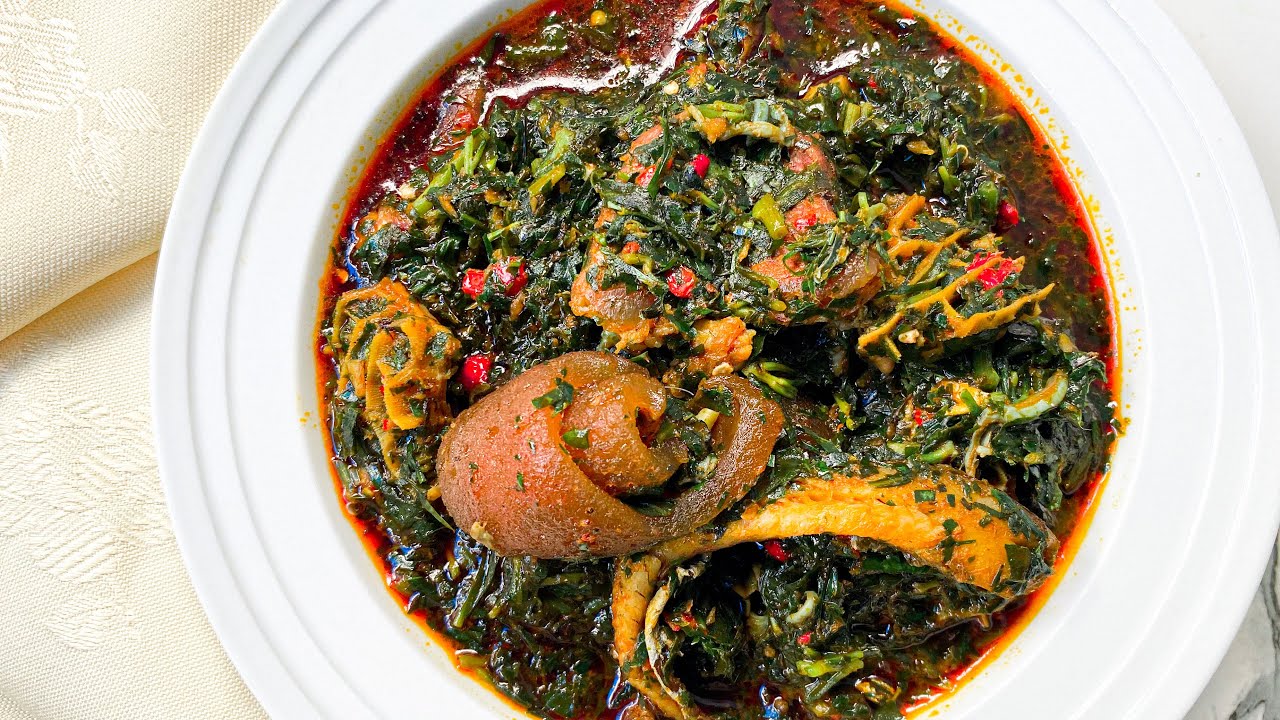
A rich, flavorful bowl of Afang soup is one of the most satisfying dishes in Nigerian cuisine. Popular among the Efik and Ibibio people of southern Nigeria, particularly in Cross River and Akwa Ibom States, this traditional soup combines finely sliced waterleaf and Afang leaves with palm oil, assorted meats, seafood, and carefully selected seasonings.
When we prepare an authentic Afang soup recipe, we aim for a thick, vegetable-rich soup with deep savory flavors. The Afang leaves provide their distinctive earthy taste and slightly chewy texture, while waterleaf contributes moisture and softness. Combined with meat stock, palm oil, crayfish, stockfish, and other traditional ingredients, the result is a hearty soup that pairs beautifully with several Nigerian swallows.
This recipe explains how we can make Nigerian Afang soup from scratch while maintaining the traditional flavor, texture, and appearance that make the dish special.
What Is Afang Soup?
Afang soup is a traditional Nigerian vegetable soup prepared primarily with Afang leaves, also known as Okazi leaves, and waterleaf. Afang leaves come from the climbing plant Gnetum africanum and are commonly used in several West and Central African dishes.
The leaves have a firm texture, so they are usually sliced very thinly or ground before cooking. In contrast, waterleaf is soft and releases moisture during cooking. Combining the two vegetables gives the soup its characteristic balance of thickness and tenderness.
Afang soup is traditionally enriched with ingredients such as palm oil, crayfish, stockfish, dried fish, periwinkle, beef, cow skin, tripe, and seasoning.
While families may prepare the soup differently, the foundation remains largely the same: plenty of vegetables, rich meat or seafood stock, palm oil, and Afang leaves.
Ingredients for Afang Soup
Before we begin cooking, we should prepare and clean all our ingredients properly. Having everything ready makes the cooking process easier and helps us control the final texture of the soup.
Main Ingredients We Need
- 4 cups sliced waterleaf
- 2 cups finely sliced or ground Afang leaves
- 500–700g beef or assorted meat
- 1 cup cooked stockfish
- 1 medium dried fish
- 1–2 cups periwinkle, optional
- 1 cup palm oil
- 3–4 tablespoons ground crayfish
- 2–3 seasoning cubes
- Fresh pepper or ground pepper, according to taste
- Salt, according to taste
- 1–2 cups meat stock
- Cow skin (ponmo/kpomo), optional
- Tripe (shaki), optional
The quantities can be adjusted depending on how many people we intend to serve. When cooking Afang soup for a larger family or gathering, we can increase the ingredients while maintaining a good balance between the waterleaf and Afang leaves.
How to Prepare Afang Leaves
Properly preparing the Afang leaves is essential because they are naturally tougher than many vegetables used in Nigerian soups.
If we purchase whole Afang leaves, we should wash them carefully to remove dirt before slicing them extremely thinly. Traditionally, the leaves may be pounded after slicing to make them softer.
We can also blend or grind the leaves briefly. However, we should avoid adding too much water while blending because excessive water can affect the consistency of the soup.
Pre-sliced Afang leaves are available in many Nigerian markets. Dried or packaged versions may also be available outside Nigeria.
When using dried Afang leaves, we can rinse or soak them briefly according to their texture before adding them to the soup.
How to Prepare Waterleaf for Afang Soup
Waterleaf provides moisture and helps balance the tougher texture of Afang leaves.
We should wash the waterleaf thoroughly because soil can easily remain between the leaves and stems. Washing it several times in clean water helps remove sand and dirt.
After washing, we drain the water completely before slicing the vegetable.
It is especially important not to leave excessive washing water in the vegetables. Waterleaf naturally releases liquid during cooking, so additional water may make the soup thinner than desired.
How to Cook Afang Soup Step by Step
Making authentic Afang soup becomes straightforward once the ingredients have been prepared.
Step 1: Cook the Meat
We begin by placing our beef and other tougher assorted meats in a cooking pot.
We season them with:
- Salt
- Seasoning cubes
- Pepper
- A small amount of water
We cover the pot and allow the meat to cook until it becomes tender.
If we are using tougher ingredients such as cow skin, tripe, or stockfish, we may need to cook them longer. Stockfish should also be properly soaked, cleaned, and softened before being added.
We should avoid using excessive water because the stock becomes an important flavor base for the soup.
Step 2: Add the Fish and Seafood
Once the meat is almost tender, we add the cleaned stockfish and dried fish if they have not already been cooked with the meat.
We allow everything to simmer so the flavors from the fish combine with the meat stock.
If we are using periwinkle, we should clean it thoroughly before adding it.
Periwinkle gives Afang soup an additional seafood flavor and is particularly popular in traditional preparations.
Step 3: Add Palm Oil
Next, we pour the palm oil into the pot.
Palm oil gives Afang soup its rich color and distinctive traditional taste. The quantity should be sufficient to coat the vegetables without overwhelming the dish.
We allow the palm oil to combine with the stock for a few minutes.
Step 4: Add Crayfish and Pepper
We add our ground crayfish and pepper.
Crayfish is one of the ingredients that gives Nigerian Afang soup its characteristic depth of flavor. Depending on our preference, we can increase the amount slightly for a stronger seafood taste.
We stir everything thoroughly and allow the mixture to simmer briefly.
At this stage, we should taste the stock and adjust the seasoning if necessary.
Step 5: Add the Waterleaf
We now add the sliced waterleaf.
The vegetable will initially look like a large quantity, but it quickly reduces as it cooks.
After adding it, we stir and cover the pot briefly.
Waterleaf releases natural moisture, which helps create the liquid needed to cook the Afang leaves. For this reason, we should avoid immediately adding extra water.
We allow the waterleaf to cook for approximately 3–5 minutes.
Step 6: Add the Afang Leaves
Finally, we add our finely sliced or ground Afang leaves.
We stir thoroughly so the Afang leaves combine evenly with the waterleaf, meat, seafood, palm oil, and seasonings.
The soup should now appear thick and packed with vegetables.
We allow it to simmer for another 3–5 minutes, depending on the texture we prefer.
We should avoid cooking the vegetables unnecessarily for a long period. Shorter cooking helps retain their texture and vibrant appearance.
Once everything is properly combined and seasoned, our Afang soup is ready to serve.
How to Make Afang Soup Thick and Rich
One of the defining characteristics of a good Afang soup recipe is its thick consistency.
We can achieve this by controlling the amount of liquid added during cooking.
Because waterleaf releases moisture naturally, we may not need much additional water once the vegetables are introduced.
Using sufficient Afang leaves also helps create the thick vegetable texture associated with the soup.
If the soup becomes too watery, we can allow it to simmer uncovered briefly before adding the Afang leaves. However, we should avoid excessive boiling after adding the vegetables.
Another important factor is maintaining the correct ratio between waterleaf and Afang leaves. Waterleaf should provide moisture, but Afang leaves should remain clearly visible throughout the finished soup.
Best Meat for Afang Soup
Afang soup can be prepared with several types of meat depending on our preference.
We can use:
- Beef
- Goat meat
- Cow skin
- Tripe
- Cow foot
- Assorted meat
Beef is an excellent choice for a simple homemade version because it cooks relatively easily and provides flavorful stock.
For a more elaborate traditional version, combining several meats creates additional textures and flavors.
Whatever meat we choose, it should be properly cooked until tender before the vegetables are added.
Seafood We Can Add to Afang Soup
Seafood plays an important role in many traditional Afang soup recipes.
Popular choices include stockfish, dried fish, crayfish, and periwinkle.
Stockfish contributes an intense savory flavor, while dried fish adds smokiness. Ground crayfish seasons the entire soup, and periwinkle provides an additional seafood texture.
We do not necessarily need every seafood ingredient to make delicious Afang soup. However, using a combination of meat and seafood produces a more complex traditional flavor.
What to Eat With Afang Soup
Afang soup is usually served with swallow, making it a filling lunch or dinner.
Some excellent options include:
- Pounded yam
- Eba
- Fufu
- Semo
- Wheat meal
- Amala
- Garri
- Plantain fufu
Pounded yam and Afang soup are particularly popular because the smooth texture of the pounded yam complements the rich vegetable soup.
We can also enjoy Afang soup according to our personal dietary preferences.
Tips for Making the Best Nigerian Afang Soup
Several small details can significantly improve the final dish.
Use Fresh Vegetables Whenever Possible
Fresh waterleaf provides the best moisture and texture. Freshly prepared Afang leaves also produce excellent results.
Do Not Add Too Much Water
Afang soup should not resemble a watery vegetable soup. We should rely mainly on meat stock and the moisture released from the waterleaf.
Cook Tough Meat First
Assorted meats, stockfish, and cow skin may require additional cooking time. They should become tender before we add the vegetables.
Grind Afang Leaves Properly
Finely sliced or ground Afang leaves are easier to eat and distribute more evenly throughout the soup.
Season Gradually
Stockfish, dried fish, crayfish, and seasoning cubes all contribute saltiness and flavor. We should taste the soup before adding extra salt.
Avoid Overcooking the Vegetables
Once the Afang leaves are added, the soup usually needs only a few more minutes of cooking.
Common Afang Soup Mistakes to Avoid
A simple mistake can change the consistency or flavor of the finished soup.
One common problem is adding too much water. Since waterleaf releases liquid during cooking, excessive stock can leave us with a thin soup.
Another mistake is using Afang leaves that are sliced too coarsely. Because the leaves are naturally tough, they should be finely cut or ground.
We should also avoid adding all the ingredients simultaneously. Tough meats need sufficient cooking time, whereas the vegetables should be added toward the end.
Finally, we should avoid overpowering the soup with seasoning cubes. Traditional ingredients such as crayfish, stockfish, dried fish, meat stock, and palm oil already provide significant flavor.
How to Store Leftover Afang Soup
If we have leftover Afang soup, we should allow it to cool before transferring it into a clean airtight container.
We can keep it refrigerated for short-term use and reheat only the portion we intend to eat.
For longer storage, Afang soup can be frozen in suitable freezer containers. Dividing the soup into individual portions before freezing makes reheating more convenient.
When reheating, we should warm the soup thoroughly without repeatedly boiling it for extended periods.
Why This Traditional Afang Soup Recipe Works
The success of this recipe comes from building flavor gradually.
We first create a rich stock using meat, stockfish, dried fish, and seasonings. Palm oil and crayfish then deepen the flavor before the vegetables are introduced.
Waterleaf supplies natural moisture while Afang leaves create the characteristic body and texture of the soup.
By adding the vegetables toward the end and cooking them briefly, we maintain the hearty vegetable consistency that distinguishes authentic Nigerian Afang soup.
FAQs about Afang Soup Recipe
1. What is Afang Soup?
Afang Soup is a traditional Nigerian soup popular among the Efik and Ibibio people. It is prepared with Afang leaves, waterleaf, palm oil, meat, seafood, and seasonings.
2. What are the main ingredients in Afang Soup?
The essential ingredients include Afang leaves (okazi), waterleaf, palm oil, assorted meat, stockfish, dried fish, crayfish, pepper, onions, and seasoning.
3. Can I use dried Afang leaves?
Yes. Dried Afang leaves work well, especially when fresh leaves are unavailable. Soak or rinse them appropriately before cooking to soften them.
4. What can I substitute for waterleaf?
If waterleaf is unavailable, spinach can be used as an alternative. However, authentic waterleaf provides the traditional texture and flavour.
5. How do I make Afang Soup less bitter?
Wash the Afang leaves properly and avoid adding too much. Combining them with enough waterleaf, palm oil, crayfish, and stock helps balance the flavour.
6. What meat is best for Afang Soup?
We can use beef, goat meat, cow skin, tripe, or assorted meat. Stockfish and dried fish also add depth to the soup.
7. How long does Afang Soup take to cook?
Depending on the meat used, Afang Soup generally takes about 45–90 minutes to prepare.
8. What can I eat with Afang Soup?
Afang Soup pairs perfectly with eba, fufu, pounded yam, semovita, wheat swallow, or other Nigerian swallows.
9. Can Afang Soup be refrigerated?
Yes. Store it in an airtight container in the refrigerator and reheat thoroughly before serving.
10. Is Afang Soup healthy?
Yes. Afang Soup contains leafy vegetables, protein, healthy fats, and essential nutrients, although portion sizes and ingredients influence its overall nutritional value.
Conclusion
Afang soup proves that a few carefully balanced traditional ingredients can create an exceptionally satisfying meal. When we combine fresh waterleaf, finely prepared Afang leaves, assorted meat, seafood, crayfish, palm oil, and flavorful stock, we achieve the rich taste and thick consistency expected from this celebrated Nigerian dish.
Whether we serve our Afang soup with pounded yam, eba, fufu, semovita, or another favorite swallow, it makes a hearty meal suitable for family lunches, dinners, celebrations, and special occasions.
For the best result, we should focus on fresh ingredients, properly cooked meat, finely prepared Afang leaves, minimal added water, and careful seasoning. With these steps, we can prepare a delicious Afang soup recipe that delivers the authentic flavor, aroma, and satisfying texture associated with one of Nigeria’s most loved traditional soups.