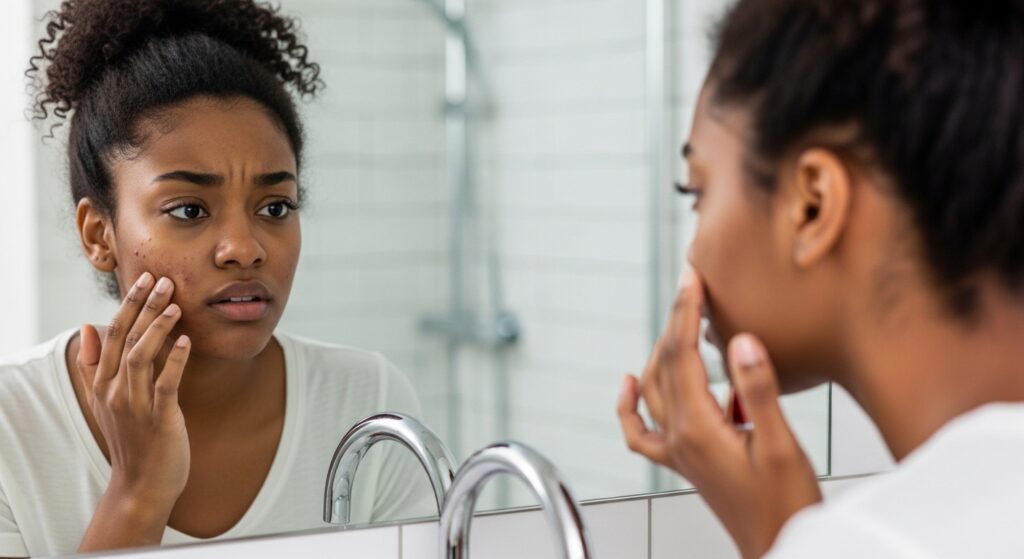
Choosing the right acne treatment for sensitive skin requires a careful balance between clearing breakouts and protecting the skin barrier. Sensitive skin may react quickly to strong acne ingredients, excessive exfoliation, fragrances, harsh cleansers, or overly complicated skincare routines. Instead of using the strongest product available, we recommend focusing on treatments that address clogged pores, inflammation, excess oil, and acne-causing bacteria without causing unnecessary dryness, burning, redness, or peeling.
A well-designed acne routine should be effective, gentle, consistent, and appropriate for the type of acne present. Understanding the ingredients, product formulations, frequency of application, and individual skin response can help us choose treatments that improve acne while keeping sensitive skin comfortable and healthy.
Understand Your Sensitive Skin Before Choosing Acne Treatment
Before selecting an acne product, we first need to understand how the skin normally reacts. Sensitive skin is not the same for everyone. Some people experience persistent redness, while others develop itching, stinging, dryness, or irritation after using certain skincare products.
Acne can also appear in different forms, including blackheads, whiteheads, small inflammatory pimples, pustules, nodules, and cysts. The most appropriate treatment often depends on the severity and type of acne.
For sensitive skin, aggressive treatment can sometimes create additional problems. Excessive dryness and irritation may weaken the skin barrier, making the skin feel tighter and more reactive. This is why introducing acne treatments gradually is often more comfortable than starting several powerful products at the same time.
What to Look for in Acne Treatment for Sensitive Skin
When choosing products, we should focus on formulations that provide acne-fighting benefits without unnecessary irritants.
Important features may include:
- Non-comedogenic formulas designed not to clog pores
- Fragrance-free products when fragrance tends to trigger irritation
- Gentle cleansers without aggressive scrubbing particles
- Lightweight moisturizers that support the skin barrier
- Acne ingredients available in lower concentrations
- Simple formulations with fewer unnecessary additives
- Products suitable for sensitive or reactive skin
A product labelled for sensitive skin is not automatically suitable for everyone. Patch testing and gradual introduction remain important because individual reactions can vary considerably.
Choose Gentle Acne-Fighting Ingredients
Several proven acne ingredients are available, but sensitive skin often benefits from careful product selection and slower introduction.
Salicylic Acid
Salicylic acid is a beta-hydroxy acid commonly used for clogged pores, blackheads, and mild acne. Because it can penetrate oil within the pores, it helps remove dead skin cells and reduce congestion.
People with sensitive skin may prefer a lower-strength formulation or a product designed for occasional rather than aggressive daily exfoliation. Using salicylic acid too frequently can sometimes cause dryness or irritation.
Benzoyl Peroxide
Benzoyl peroxide helps reduce acne-causing bacteria and inflammatory breakouts. It is available in several concentrations, and stronger formulas are not necessarily better for sensitive skin.
Lower-strength benzoyl peroxide can sometimes provide acne benefits with less irritation. Starting gradually and applying moisturizer can help reduce dryness.
Azelaic Acid
Azelaic acid can be a useful option for people dealing with acne, inflammation, uneven skin tone, or post-acne marks. It helps reduce clogged pores and inflammation and may be better tolerated than some stronger exfoliating products.
Sensitive skin can still react to azelaic acid, particularly during the first few applications, so gradual use remains important.
Topical Retinoids
Retinoids such as adapalene help prevent clogged pores and support normal skin-cell turnover. They are widely used for comedonal and inflammatory acne.
However, retinoids may initially cause dryness, peeling, or irritation. People with sensitive skin should be particularly cautious about combining retinoids with multiple exfoliating ingredients without professional guidance.
Start With a Simple Sensitive-Skin Acne Routine
A complicated skincare routine is rarely necessary when beginning acne treatment. Sensitive skin often responds better when we introduce treatments individually and observe how the skin reacts.
Basic Morning Routine
A simple morning routine may include:
- Gentle cleanser
- Appropriate acne treatment if recommended for daytime use
- Non-comedogenic moisturizer
- Broad-spectrum sunscreen
Basic Evening Routine
An evening routine may include:
- Gentle cleanser
- Acne treatment
- Barrier-supporting moisturizer
Keeping the routine simple makes it easier to identify whether a particular product is helping or irritating the skin.
Do Not Introduce Too Many Active Ingredients at Once
One of the most common skincare mistakes is combining several strong products immediately because each product is marketed for acne.
Using salicylic acid, benzoyl peroxide, retinoids, exfoliating toners, scrubs, and strong masks simultaneously may overwhelm sensitive skin.
Instead, we should introduce one active product at a time. This approach allows us to monitor redness, dryness, itching, burning, or peeling and determine whether the treatment is tolerable.
Increasing treatment intensity gradually is usually more sustainable than repeatedly stopping treatment because of severe irritation.
Protect the Skin Barrier While Treating Acne
Healthy skin requires a functional protective barrier. Acne treatment does not mean the skin should constantly feel dry, tight, or uncomfortable.
A suitable moisturizer can be particularly important when using acne treatments.
Look for ingredients commonly used to support hydration and the skin barrier, such as:
- Ceramides
- Glycerin
- Hyaluronic acid
- Squalane
- Panthenol
- Niacinamide, when well tolerated
Moisturizers labelled non-comedogenic may be preferable for acne-prone skin.
People sometimes avoid moisturizer because they believe it causes acne. However, excessively dry skin can become uncomfortable and make acne treatments difficult to tolerate. Choosing an appropriate lightweight moisturizer can help maintain hydration without creating a heavy or greasy feeling.
Avoid Harsh Scrubs and Excessive Exfoliation
Physical scrubs with rough particles may temporarily make the skin feel smoother, but aggressive scrubbing can irritate sensitive acne-prone skin.
Frequent exfoliation can also worsen redness and compromise the skin barrier.
When treating acne, more exfoliation does not automatically produce faster results. Acne develops below and within the pores, so repeatedly scrubbing the surface cannot simply remove it.
A gentle, consistent routine is usually preferable to abrasive cleansing.
Choose a Gentle Cleanser for Acne-Prone Sensitive Skin
Cleansing should remove excess oil, sunscreen, makeup, and environmental debris without leaving the skin feeling painfully tight.
A cleanser suitable for sensitive acne-prone skin should ideally clean effectively without excessive fragrance or harsh exfoliating particles.
Washing the face repeatedly throughout the day is generally unnecessary and may increase irritation. For many people, cleansing morning and evening is sufficient, with adjustments based on activity levels and professional recommendations.
Hot water should also be avoided if it increases redness or discomfort. Lukewarm water is generally gentler.
Use Sunscreen During Acne Treatment
Daily sunscreen is particularly important when using ingredients that can make the skin more sensitive to sunlight or when trying to prevent post-acne marks from becoming more noticeable.
Choose a broad-spectrum sunscreen that works comfortably with acne-prone skin. Lightweight, non-comedogenic formulations may be easier to use consistently.
If one sunscreen causes stinging or breakouts, another formulation may be more appropriate. Sensitive skin often requires experimentation with texture and ingredients before finding a comfortable option.
Patch Test New Acne Products
Patch testing can help identify potential irritation before applying a new product to the entire face.
We can apply a small amount of the product to a limited area according to product directions and observe how the skin responds.
Minor temporary sensations may occur with certain active ingredients, but significant burning, swelling, blistering, or persistent irritation should not be ignored.
Products causing severe reactions should be discontinued, and professional medical advice may be appropriate.
Consider the Severity of Your Acne
Not every type of acne should be managed exclusively with over-the-counter skincare.
Mild blackheads and occasional pimples may respond to topical products, while persistent inflammatory acne, nodules, cysts, or acne that causes scarring may require medical evaluation.
A dermatologist can assess the acne pattern and recommend treatment based on severity, skin type, existing medications, pregnancy considerations, allergies, and previous treatment responses.
How to Choose Between Salicylic Acid, Benzoyl Peroxide and Retinoids
Different ingredients address acne in different ways.
Salicylic acid may be particularly useful when clogged pores and blackheads are the main concern.
Benzoyl peroxide is commonly used for inflammatory acne because of its antibacterial properties.
Topical retinoids help prevent clogged pores and can be valuable for both comedonal and inflammatory acne.
Some treatment plans combine these ingredients, but sensitive skin may require adjusted frequency, concentration, or application methods.
Rather than selecting several active ingredients independently, people with persistent acne may benefit from professional guidance to develop a structured treatment plan.
Give Acne Treatment Enough Time to Work
Acne treatments rarely produce dramatic improvement after only a few applications. Skin turnover and acne formation take time, and treatment benefits often develop gradually.
Frequently changing products can make it difficult to determine what is actually working.
Consistency is important, but so is tolerance. If a product causes significant irritation, continuing simply because acne treatments supposedly need time may not be appropriate.
We should aim for a routine that can be used consistently without causing substantial discomfort.
Watch for Signs That Your Acne Treatment Is Too Strong
Sensitive skin may provide clear warning signs when a treatment routine becomes too aggressive.
Possible signs include:
- Persistent burning
- Severe dryness
- Cracking or flaking
- Increased redness
- Swelling
- Intense itching
- Painful sensitivity when applying ordinary moisturizer
- Worsening irritation around the eyes, mouth, or nose
Mild dryness can occur with some acne treatments, particularly during the adjustment period, but severe or persistent reactions deserve attention.
Reducing frequency, simplifying the routine, or seeking professional advice may be necessary.
Be Careful With Natural and DIY Acne Remedies
Products described as natural are not automatically gentle or suitable for sensitive skin.
Undiluted essential oils, lemon juice, baking soda, toothpaste, alcohol-based mixtures, and abrasive homemade scrubs may cause irritation or damage the skin barrier.
Acne treatment should focus on ingredients with established dermatological use rather than harsh DIY solutions that may worsen inflammation.
Choose Products Based on Your Skin, Not Trends
Skincare trends change quickly. A product that works well for someone on social media may not be appropriate for sensitive skin.
Individual differences in oil production, skin barrier function, acne severity, allergies, environment, medications, hormones, and existing skincare routines can dramatically affect treatment results.
Instead of copying an entire viral routine, we should evaluate each product according to its ingredients, purpose, strength, and suitability for sensitive skin.
When to See a Dermatologist for Sensitive-Skin Acne
Professional evaluation may be appropriate when acne:
- Becomes painful or severe
- Produces deep cysts or nodules
- Causes permanent or developing scars
- Continues despite consistent over-the-counter treatment
- Suddenly becomes significantly worse
- Causes substantial emotional distress
- Occurs alongside other concerning symptoms
- Produces persistent discoloration or inflammation
A dermatologist may recommend prescription topical treatments, oral medications, hormonal treatments where appropriate, or other evidence-based approaches.
Medical supervision can be especially valuable for sensitive skin because treatment can be adjusted according to both acne severity and tolerance.
How to Build a Long-Term Acne Routine for Sensitive Skin
The most effective skincare routine is one that can be followed consistently.
We should prioritize:
- A gentle cleanser
- One appropriate acne treatment introduced gradually
- A non-comedogenic moisturizer
- Daily broad-spectrum sunscreen
- Minimal unnecessary exfoliation
- Careful observation of irritation
- Professional treatment when acne is moderate, severe, persistent, or scarring
Once the skin tolerates the basic routine, additional products can be considered when they serve a specific purpose.
There is rarely a need to introduce several new treatments at the same time.
Common Mistakes to Avoid When Treating Sensitive Acne-Prone Skin
Even effective acne ingredients can become problematic when used incorrectly.
We should avoid:
- Washing the face excessively
- Picking or squeezing pimples
- Using rough facial scrubs
- Applying too many active ingredients together
- Skipping moisturizer because the skin is oily
- Changing treatments every few days
- Using highly fragranced products on reactive skin
- Applying stronger concentrations simply for faster results
- Ignoring persistent burning or swelling
- Using prescription treatments without following medical guidance
Avoiding these mistakes can make acne treatment more comfortable and improve consistency.
Choosing the Best Acne Treatment for Sensitive Skin
The best acne treatment for sensitive skin is not necessarily the strongest formula. It is the treatment that targets the type of acne present while remaining tolerable enough for consistent use.
For mild acne, a carefully selected ingredient such as salicylic acid, benzoyl peroxide, azelaic acid, or a topical retinoid may form part of an effective routine. However, concentration, frequency, formulation, and combination with other products all influence how well sensitive skin tolerates treatment.
Supporting the skin with gentle cleansing, adequate moisturization, sun protection, and minimal unnecessary exfoliation is equally important.
FAQs about How to Choose Acne Treatment for Sensitive Skin
1. How do I choose acne treatment for sensitive skin?
Choose gentle, non-comedogenic products designed for sensitive or acne-prone skin. Introduce active ingredients gradually and avoid using several strong treatments at once.
2. Which acne ingredients are suitable for sensitive skin?
Common options include salicylic acid, azelaic acid, and low-strength benzoyl peroxide. Retinoids may also help, but sensitive skin may require slower introduction and professional guidance.
3. How can I tell if an acne product is irritating my skin?
Signs may include persistent burning, redness, itching, peeling, swelling, or excessive dryness. Stop using products that cause severe or worsening reactions and seek professional advice when necessary.
4. Should sensitive skin use benzoyl peroxide?
Yes, but lower concentrations may be easier to tolerate. Starting slowly and using a gentle moisturizer can help reduce dryness and irritation.
5. Is salicylic acid good for sensitive, acne-prone skin?
It can help unclog pores and reduce breakouts, but sensitive skin may benefit from lower-strength formulas or less frequent application.
6. What skincare products should I avoid?
Avoid harsh scrubs, excessive exfoliation, strongly fragranced products, and combining too many powerful active ingredients. These may weaken the skin barrier and increase irritation.
7. Should I moisturize acne-prone sensitive skin?
Yes. A lightweight, fragrance-free, non-comedogenic moisturizer can support the skin barrier without unnecessarily clogging pores.
8. When should I see a dermatologist?
Consider professional care if acne is severe, painful, persistent, causing scars, or does not improve with appropriate over-the-counter treatment. A dermatologist can recommend treatment based on your acne type and skin sensitivity.
Conclusion
Learning how to choose acne treatment for sensitive skin means focusing on effectiveness without sacrificing skin comfort. We should select gentle, non-comedogenic products, introduce active ingredients gradually, protect the skin barrier, use sunscreen, and avoid aggressive scrubbing or complicated routines.
Sensitive skin does not prevent effective acne treatment, but it often requires a more measured approach. By choosing evidence-based acne ingredients, monitoring irritation, maintaining a simple skincare routine, and seeking professional dermatological care when acne is persistent, painful, severe, or scarring, we can work toward clearer skin while minimizing unnecessary sensitivity and inflammation.