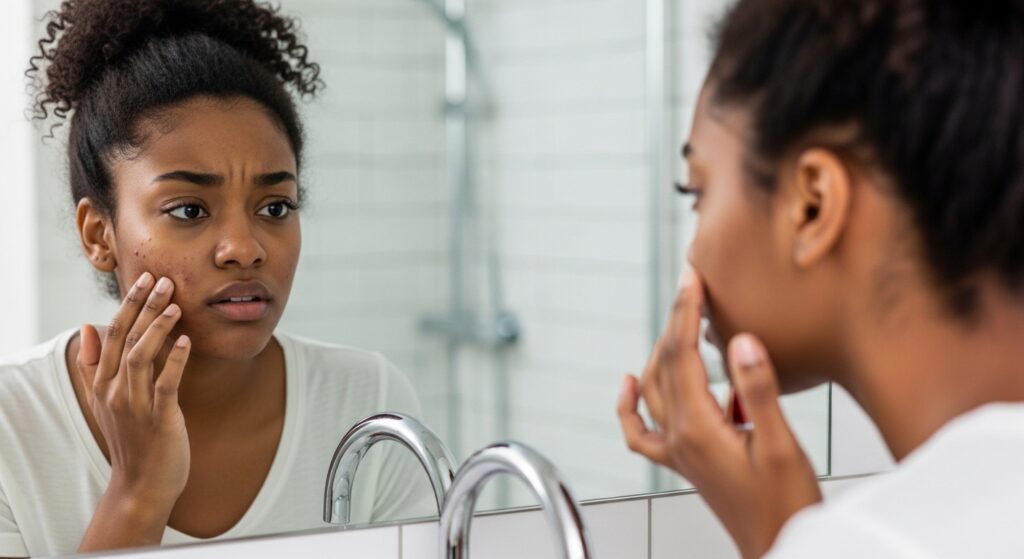
Dermatologist recommended acne treatment for dry skin combines effective acne medication with gentle cleansing, regular moisturising, and sun protection. Clearing breakouts should not require living with persistent burning, tightness, or peeling. We recommend choosing a treatment plan that addresses acne while keeping the skin comfortable enough for consistent use.
Dry skin does not rule out acne. Blackheads, whiteheads, and inflamed pimples can occur alongside roughness and flaking. The right approach depends on the type of breakouts, their severity, and how well the skin tolerates treatment. Dermatologists use these factors to select medication and adjust its application rather than prescribing the same routine for everyone.
Start With an Accurate Assessment of Dry, Acne-Prone Skin
Before choosing an acne product, we recommend considering whether dryness existed before treatment or developed after introducing new skincare. This distinction helps identify products that may be contributing to discomfort.
A consultation is particularly helpful when bumps appear alongside persistent itching, widespread redness, or a rash around the mouth. Conditions such as perioral dermatitis and folliculitis can resemble acne but require different treatment. Adding stronger acne products without confirming the diagnosis may delay appropriate care.
Details to Discuss With a Dermatologist
Prepare a clear picture of your current routine and symptoms:
- Breakout type: Blackheads, whiteheads, inflamed pimples, or deep painful lumps.
- Dryness pattern: Occasional tightness, persistent flaking, or soreness.
- Current products: Cleansers, moisturisers, exfoliants, and acne medications.
- Previous treatment: What helped, what caused irritation, and how long each product was used.
- Health considerations: Existing skin conditions, other medication, pregnancy, or plans to become pregnant.
These details make it easier to develop a practical routine and avoid repeating treatments that were difficult to tolerate.
Dermatologist Recommended Acne Treatment Options for Dry Skin
Dermatology guidelines support several topical treatments, including retinoids, benzoyl peroxide, and azelaic acid. Dry skin influences how these treatments are introduced, but it does not automatically exclude them. We favour a measured approach that considers both acne control and tolerability.
Topical Retinoids for Clogged Pores
Topical retinoids, such as adapalene and tretinoin, help clear clogged pores and treat blackheads, whiteheads, and some pimples. They may also form part of a maintenance plan after breakouts improve.
However, dryness and irritation can make regular use difficult. A dermatologist may recommend applying less medication, using it less frequently, or applying moisturiser first. We recommend discussing these adjustments with the prescriber rather than abandoning an otherwise useful treatment after early discomfort.
A retinoid routine should be straightforward. Follow the prescribed application instructions and avoid adding several exfoliating products while assessing tolerance.
Benzoyl Peroxide for Inflamed Breakouts
Benzoyl peroxide reduces acne-causing bacteria and is often included in treatment for inflamed pimples. Dermatologists may combine it with another medication to address different contributors to acne.
For dry skin, the introduction schedule matters. NICE recommends starting potentially irritating treatments, including benzoyl peroxide and retinoids, with alternate-day or short-contact application, then progressing as tolerated. The appropriate schedule should follow the product instructions and professional guidance.
We recommend checking how the skin responds before adding further active ingredients. Persistent discomfort is a reason to review the plan rather than increase application.
Azelaic Acid for Acne and Post-Breakout Marks
Azelaic acid is another guideline-supported option. It can help unclog pores, reduce acne-related inflammation, and improve dark marks remaining after breakouts heal.
We recommend discussing it when acne and uneven skin tone are both concerns. Its suitability depends on the individual treatment plan; no active ingredient should be assumed to suit every person with dry skin.
Salicylic Acid as a Carefully Selected Option
Salicylic acid is supported in acne guidelines as an option for unclogging pores. However, a dry-skin routine does not need an exfoliating cleanser, an acid toner, and a separate exfoliating serum all at once.
We recommend asking whether salicylic acid adds a useful benefit to the existing plan before introducing it. A simpler routine makes it easier to identify which product helps and which causes discomfort.
Moisturising During Acne Treatment
Moisturiser is an essential consideration for dry, acne-prone skin. Common acne medications can cause dryness, and an appropriate moisturiser can help the skin tolerate treatment. The American Academy of Dermatology recommends looking for products labelled oil-free, non-comedogenic, or “won’t clog pores.”
We recommend choosing a product that feels comfortable during everyday use. A moisturiser that repeatedly stings or leaves the skin feeling uncomfortable deserves reassessment.
What to Look for in an Acne-Friendly Moisturiser
Useful selection criteria include:
- Non-comedogenic labelling: A practical starting point when choosing products for acne-prone skin.
- Fragrance-free formulation: Particularly helpful when dryness accompanies sensitivity.
- Adequate moisturising comfort: The product should relieve tightness without making the routine unpleasant.
- Simple application: A product that fits easily into morning and evening care supports consistency.
Fragrance-free products are generally preferable for sensitive skin because added fragrance can trigger irritation or allergic reactions. We recommend prioritising comfort and tolerability over elaborate ingredient lists.
A Simple Skincare Routine for Dry Skin With Acne
We recommend organising skincare around a few clear tasks: cleanse gently, use the selected treatment, moisturise, and protect against sun exposure. A consistent routine is easier to assess than one that changes every few days.
Morning Routine
- Cleanse gently: Use a non-abrasive cleanser and your fingertips.
- Apply morning medication if prescribed: Follow the specific treatment instructions.
- Moisturise: Use an acne-friendly product that relieves dryness.
- Apply sunscreen: Choose broad-spectrum SPF 30 or higher, with water resistance when outdoors.
Evening Routine
- Remove makeup and cleanse gently.
- Apply the evening treatment as directed.
- Use moisturiser according to the treatment plan.
Dermatologists recommend gentle cleansing, avoiding abrasive scrubbing, and choosing non-comedogenic sunscreen. We also recommend avoiding unnecessary astringents and harsh exfoliants, which can worsen dryness and irritation.
Mistakes That Make Dry-Skin Acne Treatment Harder
A routine can contain effective ingredients and still be difficult to tolerate. We recommend reviewing application habits before assuming a medication has failed.
Habits to Avoid
- Scrubbing breakouts: Friction can irritate already uncomfortable skin.
- Switching treatments frequently: Repeated changes make progress harder to assess.
- Picking or squeezing pimples: This increases the risk of scars and dark marks.
- Using drying toners unnecessarily: Astringent products can add discomfort.
- Skipping moisturiser: Dryness may become harder to manage during treatment.
Dermatology guidance emphasises gentle skincare and giving treatment time to work. We recommend making deliberate changes, ideally with professional guidance, rather than reacting to every new spot with another product.
When Prescription Treatment May Be Necessary
Persistent, widespread, or severe acne may require more than an over-the-counter routine. Dermatologists can consider oral antibiotics, hormonal treatment, or isotretinoin, depending on severity and individual suitability.
Antibiotics should be used within a structured treatment plan, with efforts to limit treatment duration and reduce antibiotic resistance. Hormonal options may suit selected patients, while isotretinoin is recommended for severe acne or acne that has failed standard treatment.
We recommend seeking assessment promptly when breakouts are painful, leave scars, or significantly affect confidence. Existing dryness should be discussed during prescribing so supportive skincare can be planned from the outset.
How Long Does Acne Treatment Take to Work?
Acne treatment requires consistency. We recommend evaluating progress across several weeks rather than expecting an immediate change after a few applications.
NICE advises that noticeable benefits may take six to eight weeks and recommends reviewing first-line treatment after 12 weeks. Review provides an opportunity to assess improvement, side effects, and whether the treatment should continue or change.
Track both breakouts and comfort. Fewer pimples alongside persistent soreness still warrants a discussion about treatment tolerability.
Choosing a Sustainable Treatment Plan
The most useful dermatologist recommended acne treatment for dry skin is a plan that matches the breakouts and remains manageable in daily life. We recommend prioritising a suitable medication, an effective moisturiser, gentle cleansing, and reliable sun protection.
Product quantity does not determine treatment quality. A clear routine with appropriate follow-up provides a better basis for assessing progress than repeatedly adding new steps.
FAQs about Dermatologist-Recommended Acne Treatment for Dry Skin
1. What acne treatment do dermatologists recommend for dry skin?
Dermatologists may recommend gentle acne treatments such as low-strength salicylic acid, benzoyl peroxide, azelaic acid, or topical retinoids. The appropriate option depends on the type and severity of acne and how sensitive or dry the skin is.
2. Can dry skin still develop acne?
Yes. Dry skin can still experience acne when pores become clogged with dead skin cells, oil, bacteria, or other debris. Using overly harsh skincare products may also irritate the skin barrier and worsen breakouts.
3. Is salicylic acid suitable for dry, acne-prone skin?
Salicylic acid can help unclog pores, but it may increase dryness. People with dry acne-prone skin may benefit from lower concentrations or less frequent application, depending on professional advice.
4. Can I use a moisturizer while treating acne?
Yes. A non-comedogenic moisturizer can help maintain the skin barrier and reduce dryness caused by certain acne treatments. Look for hydrating ingredients such as ceramides, glycerin, and hyaluronic acid.
5. Is benzoyl peroxide safe for dry skin?
Benzoyl peroxide can be effective against inflammatory acne, but it may cause dryness, peeling, or irritation. Dermatologists may recommend a lower concentration or reduced application frequency when dryness is a concern.
6. Should I use retinoids if I have dry skin?
Retinoids can help treat acne but commonly cause irritation when treatment begins. A dermatologist can recommend an appropriate strength and application schedule.
7. When should I see a dermatologist?
Consider professional evaluation if acne is persistent, painful, causing scars, or not improving with over-the-counter treatment. A dermatologist can develop a treatment plan that addresses acne while protecting dry, sensitive skin.
Conclusion
We recommend treating dry-skin acne with evidence-based medication and consistent moisturising support. Retinoids, benzoyl peroxide, and azelaic acid may all have a role, but selection and application should reflect individual needs. Gentle skincare, gradual introduction where appropriate, and timely dermatology review help build a routine that supports clearer, more comfortable skin.