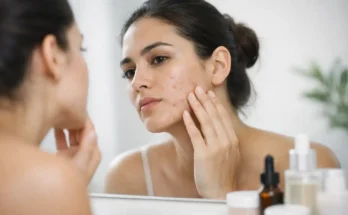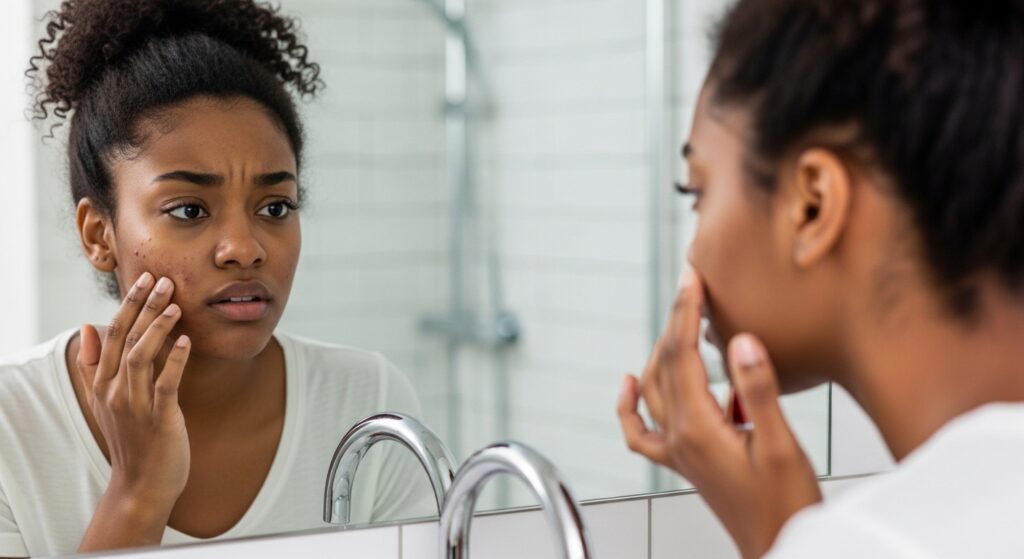
Acne treatment for dry skin requires a balance between controlling breakouts and maintaining comfortable, hydrated skin. Products that reduce pimples can also cause tightness, flaking, or irritation, making it harder to follow a treatment plan consistently.
We recommend choosing treatment according to acne severity, skin tolerance, and total cost. An affordable routine should include effective acne medication alongside gentle cleansing, moisturising, and sun protection. Buying more products does not necessarily improve results; a carefully selected routine can be easier to maintain and less expensive.
Choosing Acne Treatment for Dry, Acne-Prone Skin
Dry skin can develop blackheads, whiteheads, and inflamed pimples. Having dry skin does not exclude acne, and excessive washing will not solve the problem.
Before choosing a product, we recommend assessing whether dryness existed before treatment or appeared after introducing an acne medication. This distinction matters because treatment-related irritation may require changes to application frequency or formulation.
A moisturiser labelled non-comedogenic, meaning formulated to avoid clogging pores, can help manage dryness during acne treatment. The American Academy of Dermatology specifically recommends moisturising when acne medicines leave skin dry or irritated. aad.org
Factors to Consider Before Buying Treatment
We suggest reviewing the following:
- Type of breakouts: Blackheads and whiteheads may require a different approach from deep, painful spots.
- Current irritation: Burning, cracking, and persistent peeling should influence product selection.
- Previous treatments: Record which ingredients helped and which caused problems.
- Medical circumstances: Pregnancy, other medicines, and existing skin conditions affect suitability.
- Ongoing affordability: Include replacement products and follow-up appointments in the budget.
Acne Treatment Options for Dry Skin
Several established treatments can help, but dry skin may need a gradual introduction and adjustments guided by a pharmacist or dermatologist.
Azelaic Acid
Azelaic acid is an option when benzoyl peroxide or topical retinoids cause troublesome irritation. However, it can still produce stinging, redness, or dryness, so it should not be assumed to suit everyone automatically.
We recommend comparing the prescribed strength, formulation, and application instructions rather than choosing solely by brand name. A cosmetic product containing azelaic acid is not necessarily equivalent to a prescription preparation. The NHS identifies azelaic acid as an alternative when other topical acne treatments are particularly irritating. Treatment
Topical Retinoids
Topical retinoids, including adapalene and tretinoin, help treat clogged pores and prevent new blemishes. They can be useful for acne-prone skin, although dryness and irritation may limit tolerance.
We recommend following the product instructions and discussing a slower introduction with a healthcare professional. Applying moisturiser can also improve comfort. Availability varies: some adapalene products are sold without prescription in certain countries, while other retinoids require a prescription. aad.org
Benzoyl Peroxide
Benzoyl peroxide reduces acne-causing bacteria and can help with inflamed pimples. Its main drawback for dry skin is the possibility of additional dryness, peeling, or burning.
We recommend asking about an appropriate strength and formulation rather than assuming the strongest product will work best. For irritating treatments such as benzoyl peroxide and retinoids, NICE advises considering an initial alternate-day or short-contact approach, progressing as tolerated. The exact approach should follow professional advice and the product’s directions. Guidance
Prescription Treatment for More Severe Acne
Persistent inflammatory acne may require prescription combinations or oral treatment. Options can include antibiotics, hormonal medicines for suitable patients, or isotretinoin for severe disease.
Treatment selection depends on medical history and the pattern of acne. Antibiotics should form part of a clinician-directed plan; current dermatology guidance recommends combining systemic antibiotics with benzoyl peroxide and other topical therapies. We recommend discussing how to manage dryness alongside any prescribed combination. aad.org
Isotretinoin
Isotretinoin is a specialist treatment for severe acne. It is not a routine first choice for occasional breakouts, and existing dry skin requires particular attention because the medicine commonly causes further dryness.
Its total cost may include consultations, medication, monitoring, and supportive skincare. Isotretinoin must not be used during pregnancy, and patients who could become pregnant need to follow the applicable pregnancy-prevention requirements. nhs.uk
How Much Does Acne Treatment for Dry Skin Cost?
There is no single reliable price for acne treatment for dry skin. Costs depend on the country, clinic, pharmacy, medication strength, brand, and whether treatment is covered by insurance or a public healthcare service.
Without a specific location and current provider quotes, fixed figures could misrepresent what treatment actually costs. We recommend requesting an itemised estimate and comparing the full course of care, rather than only the first purchase.
Main Expenses to Include in Your Budget
| Expense | What to check |
|---|---|
| Initial consultation | Whether assessment and a written treatment plan are included |
| Acne medication | Strength, quantity, expected duration, and generic alternatives |
| Supportive skincare | Cleanser, moisturiser, and sunscreen replacement costs |
| Follow-up appointments | Number of visits likely to be needed |
| Monitoring | Whether the prescribed medicine requires tests |
| Optional procedures | Whether they are necessary for active acne or intended for scarring |
A tube with a higher purchase price may last longer than a cheaper, smaller product. Equally, a low-cost product becomes poor value if irritation prevents consistent use. Comparing quantity, suitability, and replacement frequency gives a clearer picture of affordability.
How to Reduce Acne Treatment Costs
We recommend putting the budget into a manageable treatment plan before purchasing additional serums, masks, or exfoliants. Ask a pharmacist or prescriber whether a lower-cost equivalent is appropriate, especially when a branded prescription is expensive.
Practical Ways to Keep Treatment Affordable
- Ask about generic medicines: Confirm that the strength and formulation are suitable.
- Keep the routine focused: Buy products with a clear purpose.
- Check insurance benefits: Verify consultation, prescription, and monitoring coverage.
- Request transparent pricing: Ask about follow-up charges before starting.
- Avoid premature switching: Allow the agreed treatment period unless side effects require review.
- Separate acne from scar treatment: Request distinct estimates for each concern.
We also recommend avoiding prepaid procedure packages until there is a clear explanation of their role. Procedures marketed for smoother skin may address pigmentation or scars rather than the underlying active acne.
A Simple Skincare Routine During Acne Treatment
Supportive skincare helps make treatment more tolerable. It should complement the prescribed medication without adding unnecessary irritation.
Morning Routine
We recommend a gentle cleanser, a suitable moisturiser, and broad-spectrum sunscreen with SPF 30 or higher. Use any morning acne medication according to its instructions.
Choose products that feel comfortable and do not leave the skin persistently tight or stinging. Scrubs and harsh cleansing tools can add irritation, particularly when the skin is already dry.
Evening Routine
Remove makeup and sunscreen gently, then follow the agreed treatment and moisturising schedule. Introduce additional products cautiously so that any irritation is easier to identify.
During isotretinoin treatment, skincare often needs further simplification. The American Academy of Dermatology advises avoiding potentially irritating ingredients, including benzoyl peroxide and sulfur, unless the treating clinician directs otherwise. aad.org
When to Review Your Acne Treatment
We recommend arranging a review when treatment causes persistent burning, significant peeling, or discomfort that interferes with regular use. The solution may involve adjusting the formulation, frequency, or medication.
Seek professional assessment for deep, painful acne, emerging scars, or continuing deterioration. These concerns deserve timely attention rather than repeated trials of cosmetic products. The American Academy of Dermatology recommends dermatologist care for deep painful pimples and acne that leaves scars.
FAQs about Acne Treatment for Dry Skin Cost and Options
1. How much does acne treatment for dry skin cost?
The cost of acne treatment for dry skin varies depending on acne severity, treatment type, location, and whether prescription medication or professional procedures are required. Over-the-counter products are generally less expensive than dermatologist-led treatment.
2. What are the best acne treatment options for dry skin?
Common options may include gentle topical treatments, prescription medications, non-comedogenic moisturizers, and professional dermatology procedures. Treatment should control acne without excessively drying or irritating the skin.
3. Can salicylic acid be used on dry, acne-prone skin?
Yes, but it may cause additional dryness or irritation. People with dry skin may benefit from using lower-strength salicylic acid less frequently and pairing it with a suitable moisturizer.
4. Is benzoyl peroxide suitable for dry skin?
Benzoyl peroxide can help treat inflammatory acne, but it may cause dryness. A dermatologist may recommend a lower concentration or reduced application frequency to improve tolerance.
5. Are prescription acne treatments more expensive?
They can be. Costs may include dermatology consultations, prescription medications, follow-up appointments, and laboratory monitoring for certain treatments.
6. Should moisturizer be included in acne treatment?
Yes. A non-comedogenic, fragrance-free moisturizer can support the skin barrier and reduce dryness associated with some acne treatments.
7. When should we consult a dermatologist?
We recommend professional evaluation when acne is persistent, painful, causing scars, or worsening despite appropriate over-the-counter care. A dermatologist can recommend treatment based on both acne severity and skin type.
Conclusion
The best acne treatment for dry skin is a plan that addresses breakouts while remaining tolerable and financially sustainable. We recommend comparing suitable medicines, supporting the skin with gentle care, and budgeting for the complete treatment course.
A focused routine, clear pricing, and appropriate follow-up can help reduce wasted spending while giving treatment a fair opportunity to work.