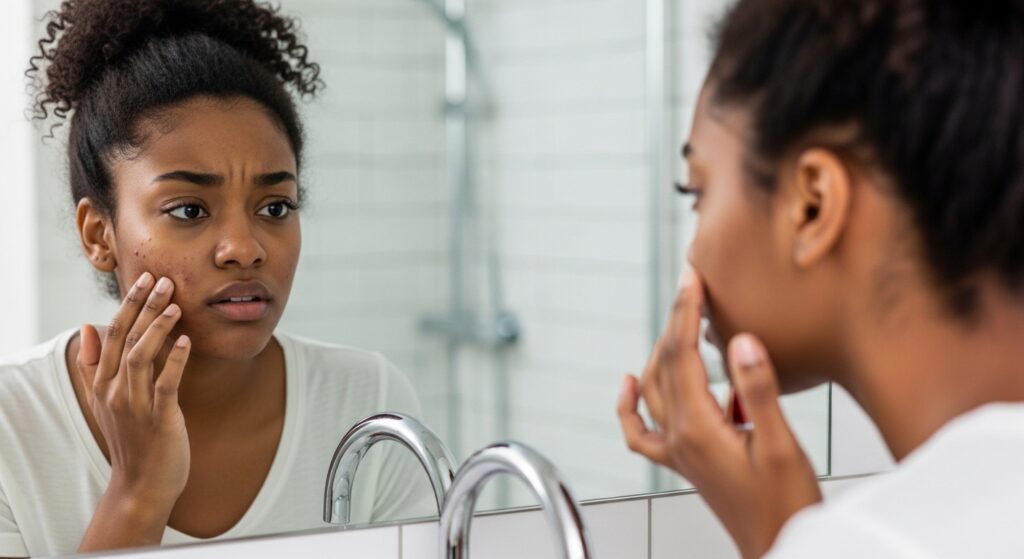
The best acne treatment for dry skin combines effective breakout control with a routine that preserves moisture. Treating pimples should not leave the face persistently tight, flaky, or uncomfortable. When dryness makes an acne product difficult to tolerate, adjusting the formula or application schedule can help maintain consistent treatment.
We recommend choosing treatment according to the type and severity of acne, existing irritation, and individual skin tolerance. Gentle cleansing, regular moisturising, and carefully introduced acne medication form the foundation of a practical routine. Moisturiser is particularly useful because several effective acne treatments can cause dryness. aad.org
Choosing Acne Treatment for Dry, Acne-Prone Skin
Dry skin can still develop blackheads, whiteheads, and inflamed pimples. A dry surface does not mean the pores cannot become blocked. The challenge is selecting treatment that addresses those breakouts while remaining comfortable enough to use regularly.
We begin by distinguishing naturally dry skin from dryness that appears after introducing an acne product. If peeling started after increasing treatment frequency or adding several active ingredients, the routine may need simplifying. Persistent burning, cracking, or an itchy rash deserves assessment rather than another exfoliating product.
What to Consider Before Selecting a Treatment
Before purchasing an acne treatment, we recommend reviewing:
- Breakout type: Blackheads and whiteheads may require a different approach from deep, painful lesions.
- Existing irritation: Stinging, redness, and peeling affect how treatment should be introduced.
- Current products: Several medicated cleansers, serums, and spot treatments can duplicate ingredients.
- Previous reactions: A product that repeatedly causes irritation may need replacing.
- Pregnancy or pregnancy planning: Some acne medications are unsuitable.
- Scarring: Deep acne or developing scars warrants professional treatment.
The aim is a manageable routine with a clear purpose for each product.
Effective Acne Treatment Ingredients for Dry Skin
Several ingredients can treat acne, but none is universally the best choice for every person with dry skin. We consider the medication, its formulation, and how frequently it is applied.
Azelaic Acid for Acne and Post-Breakout Marks
Azelaic acid helps treat clogged pores and inflammation and can also improve dark marks left after acne. This makes it an option to discuss when both active breakouts and uneven pigmentation are concerns. aad.org
However, azelaic acid can still sting or irritate some skin. We recommend following the product instructions and assessing tolerance before adding another active ingredient. A formula described as suitable for sensitive skin does not guarantee that every individual will tolerate it.
Topical Retinoids for Blackheads and Whiteheads
Topical retinoids, including adapalene, help clear blocked pores and are established acne treatments. They can be useful when blackheads, whiteheads, and recurring pimples are prominent. Dryness and irritation can make the early treatment period challenging.
We recommend a gradual introduction when appropriate. NICE advises starting irritating topical treatments, including retinoids, with alternate-day or short-contact application, then progressing if tolerated. Follow the medication instructions and professional advice when choosing the schedule. NICE
Applying more medication than directed does not provide a dependable shortcut to clearer skin. Consistent, tolerable use is the more practical goal.
Benzoyl Peroxide for Inflamed Pimples
Benzoyl peroxide reduces acne-causing bacteria and can help treat inflammatory breakouts. However, it may also cause dryness, peeling, or irritation. We recommend selecting an appropriate strength and formulation with a pharmacist or clinician when the skin is already dry. aad.org
Check whether another product in the routine already contains benzoyl peroxide. A medicated cleanser and a leave-on treatment may unintentionally duplicate exposure. The product can also bleach fabrics, so application requires care around towels and clothing.
Salicylic Acid for Blocked Pores
Salicylic acid helps unclog pores and is an acne treatment option recognised in dermatology guidance. It may suit some people with blackheads and whiteheads, but dry skin requires attention to tolerance. aad.org
We recommend avoiding the assumption that more exfoliation produces better results. If a salicylic acid product causes persistent tightness or peeling, reassess its frequency and the other active ingredients being used.
Choosing a Moisturiser for Acne-Prone Dry Skin
A moisturiser supports comfort and makes a drying treatment easier to continue. We recommend choosing a product labelled non-comedogenic, meaning it is formulated to be less likely to block pores. This label is useful, although individual reactions remain possible. bad.org.uk
Texture matters too. A light lotion may feel insufficient on very dry cheeks, while a richer cream may be more comfortable. Assess how the product performs throughout the day rather than choosing only by its packaging or marketing claims.
Features to Look for in a Moisturiser
Useful features include:
- Fragrance-free formulation, particularly when fragrance has previously caused irritation.
- Hydrating ingredients, such as glycerin or hyaluronic acid.
- Barrier-supporting ingredients, such as ceramides.
- A comfortable texture that relieves tightness without feeling unpleasant.
- Non-comedogenic labelling for acne-prone skin.
We favour a moisturiser that fits consistently into the routine. An expensive product is unnecessary if a simpler, affordable formula provides adequate comfort.
A Practical Skincare Routine for Dry Skin With Acne
A straightforward routine makes it easier to identify what helps and what causes irritation. We recommend establishing comfortable cleansing and moisturising habits before introducing multiple treatment products.
Morning Routine for Dry, Acne-Prone Skin
- Cleanse gently: Use a mild cleanser and lukewarm water. Avoid scrubbing with brushes or rough cloths.
- Apply prescribed morning treatment: Follow the directions if medication is scheduled for morning use.
- Moisturise: Apply enough to relieve dryness without repeatedly rubbing the skin.
- Use sunscreen: Choose a comfortable, broad-spectrum sunscreen with SPF 30 or higher.
A sunscreen that feels pleasant is easier to use regularly. If one formula stings, consider a different formulation rather than abandoning sun protection.
Evening Routine for Acne Treatment and Moisture Support
- Remove makeup and sunscreen gently: Avoid repeated washing or aggressive rubbing.
- Cleanse with a mild product: Pat the skin dry.
- Apply acne medication as directed: Follow instructions on amount, frequency, and application area.
- Moisturise: The order may depend on the medication and tolerance; a dermatologist may recommend moisturiser before a retinoid.
We recommend introducing one new product at a time. This provides a clearer picture of whether a reaction comes from the treatment, cleanser, or moisturiser.
Common Mistakes That Increase Dryness
An acne routine can become unnecessarily complicated when each new breakout prompts another purchase. Repeated changes also make it harder to evaluate whether treatment is working.
Habits to Reconsider During Treatment
- Using several exfoliating products together: Acids, scrubs, and medicated cleansers may produce cumulative irritation.
- Skipping moisturiser: Dryness can make effective treatment harder to tolerate.
- Applying excess medication: Use the amount specified in the directions.
- Picking or squeezing lesions: This can contribute to scarring and persistent marks.
- Continuing through severe irritation: Painful cracking or a worsening rash needs reassessment.
- Changing treatment too quickly: Acne medication usually requires sustained use to evaluate its benefit.
We also recommend keeping track of treatment frequency. A brief note or occasional photograph can help identify progress without relying on day-to-day impressions.
When Dry Skin Acne Needs a Dermatologist
Professional assessment is useful when breakouts are painful, persistent, or leaving scars. It is also appropriate when dryness prevents regular use of treatment.
A dermatologist can confirm the diagnosis and select medication according to acne severity and personal circumstances. Options may include prescription topical combinations, oral antibiotics, hormonal treatment for suitable patients, or isotretinoin for severe acne. These treatments have different precautions and monitoring requirements. aad.org
Pregnancy and Acne Treatment Selection
If pregnant or planning pregnancy, we recommend reviewing acne products with a clinician before use. Topical retinoids should be avoided during pregnancy, and isotretinoin must not be used. Azelaic acid may be an option, but treatment selection should still be discussed with the relevant clinician. aad.org
How Long Does Acne Treatment Take to Work?
Visible improvement is gradual. Some treatments may begin showing benefits after six to eight weeks, while a fuller assessment often requires approximately 12 weeks. The timeline depends on the treatment and severity of acne. nice.org.uk
We assess both breakout control and comfort. Fewer new lesions are encouraging, but persistent irritation may mean the application schedule or medication needs adjusting. Severe worsening should be reviewed promptly rather than waiting for the planned assessment.
FAQs about Best Acne Treatment for Dry Skin
1. What is the best acne treatment for dry skin?
The best acne treatment for dry skin usually combines a gentle acne-fighting ingredient with products that protect the skin barrier. Options may include salicylic acid, azelaic acid, or topical retinoids, depending on acne severity and skin sensitivity.
2. Can dry skin still develop acne?
Yes. Dry skin can develop acne when dead skin cells, oil, and debris clog pores. Some harsh skincare products can also cause irritation and worsen breakouts.
3. Is salicylic acid suitable for dry, acne-prone skin?
Salicylic acid can help unclog pores, but it may increase dryness. We recommend starting with a lower-strength product and using it less frequently if the skin becomes irritated.
4. Should we moisturize acne-prone dry skin?
Yes. A non-comedogenic moisturizer can support the skin barrier and reduce dryness without unnecessarily clogging pores. Ingredients such as ceramides, glycerin, and hyaluronic acid may be helpful.
5. What ingredients should dry, acne-prone skin avoid?
We recommend limiting harsh scrubs, strongly fragranced products, excessive exfoliation, and frequent use of drying cleansers, particularly when they cause irritation.
6. How often should acne treatments be applied?
Frequency depends on the treatment. Starting gradually can help dry skin adjust and reduce redness, peeling, and irritation.
7. When should we see a dermatologist?
Consider professional care when acne is painful, cystic, persistent, causing scars, or not improving with appropriate over-the-counter treatment. A dermatologist can recommend a treatment plan suited to both acne and dry skin.
Conclusion
The best acne treatment for dry skin is an effective option that can be used consistently without persistent irritation. We recommend combining gentle skincare with appropriately selected medication, introducing treatments gradually, and seeking professional advice for painful, scarring, or treatment-resistant acne.
A focused routine can address breakouts while keeping dryness manageable. The strongest product is not automatically the most suitable; the right treatment matches the acne, the skin’s tolerance, and the individual’s circumstances.