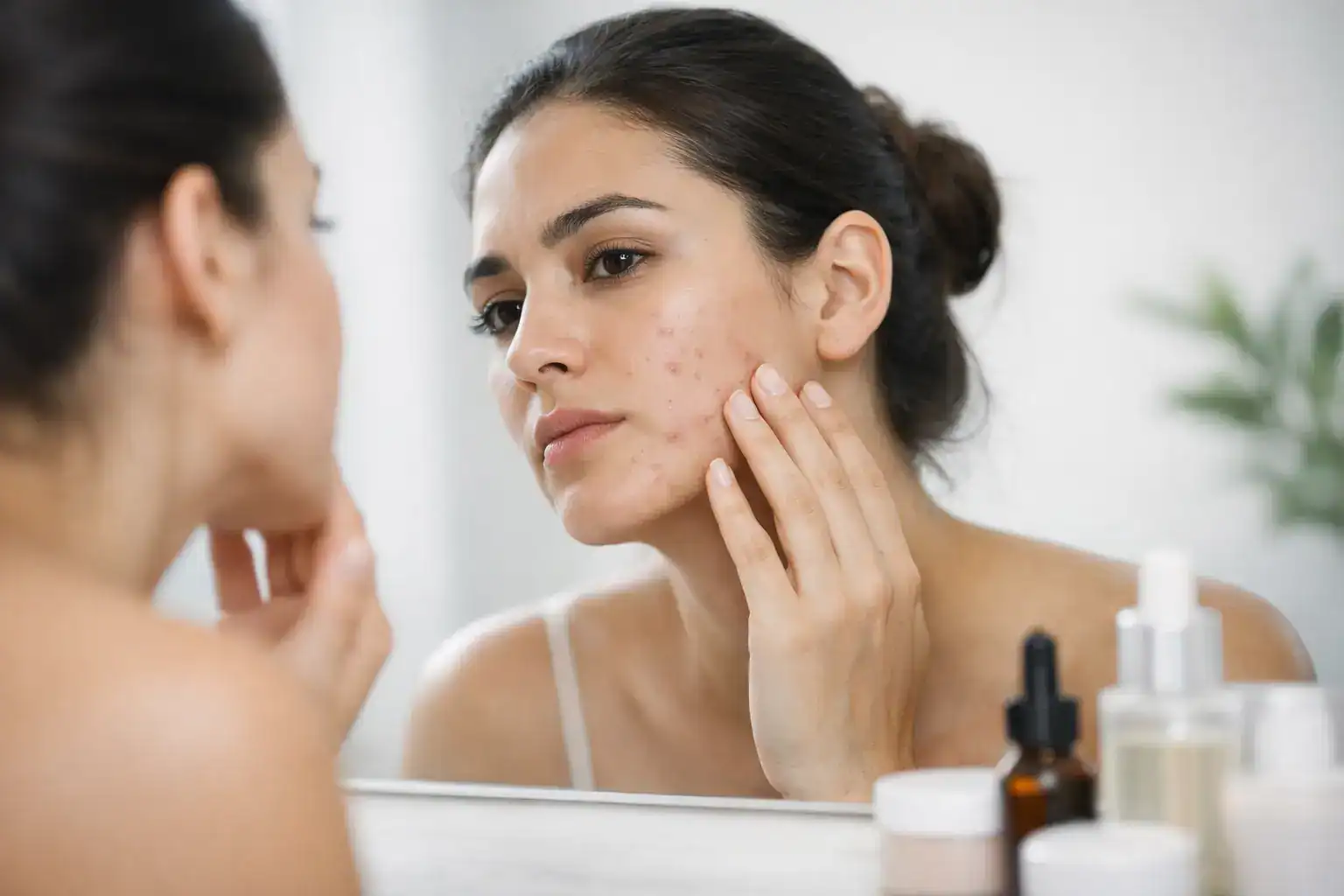
Finding the best acne scar laser treatment starts with understanding that acne scars are not all the same. Some scars create deep, narrow pits, while others produce broad depressions, uneven texture, redness, or discoloration. Because these scars respond differently to treatment, we focus on matching the laser technology to the scar type, skin tone, scar depth, and desired recovery time rather than relying on a single treatment for everyone.
Laser resurfacing can improve acne scars by creating controlled zones of injury within the skin. During healing, the skin produces new collagen and elastin, helping improve texture and make depressed scars less noticeable. Dermatologists may also use lasers to reshape the tissue surrounding individual scars.
For many patients with atrophic acne scars, fractional CO2 laser resurfacing is among the most established options. However, Er lasers, non-ablative fractional lasers, vascular lasers, and combination treatments may be more appropriate depending on the individual.
What Is the Best Laser Treatment for Acne Scars?
The fractional CO2 laser is commonly considered one of the strongest laser resurfacing options for moderate to severe atrophic acne scars, including rolling and boxcar scars.
Instead of removing the entire surface of the skin, fractional technology creates microscopic treatment columns while leaving surrounding areas intact. These controlled injuries stimulate collagen remodeling as the skin repairs itself.
Recent comparative evidence has found a favorable clinical-response signal for fractional CO2 laser when compared with erbium-based fractional lasers, although CO2 treatment can also produce greater discomfort and longer recovery.
We therefore do not define the “best” treatment by intensity alone. The most suitable laser is one that provides meaningful scar improvement while remaining appropriate for the patient’s:
- Acne scar type
- Skin tone
- Pigmentation tendency
- Scar severity
- Tolerance for downtime
- Previous treatments
- Active acne status
- Expected results
- Budget and treatment schedule
A personalized approach is particularly important because many people have several different types of acne scars at the same time.
Fractional CO2 Laser for Acne Scars
Fractional CO2 laser treatment uses a carbon dioxide laser to deliver controlled thermal energy into the skin. This initiates a wound-healing response and stimulates collagen remodeling.
It is particularly useful when improving uneven skin texture and depressed acne scars is the main goal.
A systematic review of fractional CO2 laser treatment reported meaningful improvement among many patients studied, although outcomes varied depending on scar severity, laser settings, treatment protocols, and individual characteristics. Temporary redness, swelling, and post-inflammatory hyperpigmentation were among reported adverse effects.
Benefits of Fractional CO2 Laser Treatment
When properly selected and performed by an experienced medical professional, fractional CO2 resurfacing may help:
- Reduce the depth of atrophic acne scars
- Smooth irregular skin texture
- Stimulate new collagen formation
- Blend scar edges with surrounding skin
- Improve the appearance of some boxcar and rolling scars
- Produce progressive improvement as collagen remodels after treatment
However, deeper scars may require additional procedures rather than laser treatment alone.
CO2 Laser vs Er Laser for Acne Scars
Two important ablative resurfacing technologies used for acne scarring are the fractional CO2 laser and fractional Er laser.
Both remove microscopic areas of damaged tissue and stimulate skin remodeling, but they interact with tissue differently.
Fractional CO2 Laser
CO2 lasers generally create a stronger thermal effect in treated tissue. This can provide substantial collagen remodeling, making the treatment useful for more noticeable textural acne scars.
The trade-off may include more:
- Redness
- Swelling
- Procedural discomfort
- Recovery requirements
- Pigmentation concerns in susceptible patients
Fractional Er Laser
The Er laser is strongly absorbed by water and can provide precise resurfacing with comparatively limited surrounding thermal injury.
It may therefore be considered when a clinician wants ablative resurfacing while balancing recovery and thermal exposure.
A meta-analysis comparing fractional CO2 and Er treatments found differences in effectiveness, pain and recovery-related outcomes, illustrating why the choice should be individualized instead of assuming one laser is universally superior.
Non-Ablative Fractional Laser for Acne Scars
Patients who cannot accommodate significant downtime may be considered for a non-ablative fractional laser.
Unlike ablative lasers, these devices heat controlled areas beneath the skin while largely preserving the outer surface. Collagen remodeling occurs gradually, which can improve mild to moderate textural irregularities.
The principal advantage is usually a more manageable recovery period. The trade-off is that patients commonly need a series of treatments rather than expecting substantial correction from one session. The American Academy of Dermatology notes that multiple sessions are often required with non-ablative lasers.
For patients comparing CO2 laser vs non-ablative laser for acne scars, we generally consider the balance between intensity and recovery:
Fractional CO2: stronger resurfacing with greater downtime.
Non-ablative fractional laser: gentler treatment with less downtime but often more sessions.
Neither choice is automatically better for every patient.
Best Laser Treatment for Rolling Acne Scars
Rolling acne scars create broad, wave-like depressions that may occur when fibrous bands tether the skin to deeper tissue.
Laser resurfacing can improve surface irregularity and stimulate collagen, but significant tethering may limit what laser treatment alone can accomplish.
This is why some patients receive subcision before or alongside laser resurfacing. Subcision releases fibrous attachments underneath the scar, while laser treatment addresses surface texture and promotes collagen remodeling.
Combination treatment can therefore be more appropriate than repeatedly increasing laser intensity.
Best Laser Treatment for Boxcar Acne Scars
Boxcar scars are round or oval depressions with relatively defined edges. Their depth can range from shallow to deep.
Shallow and moderately deep boxcar scars may respond well to fractional ablative resurfacing, including CO2 or Er treatment.
Deeper boxcar scars may require additional techniques such as:
- Punch excision
- Punch elevation
- Subcision
- Fillers
- Microneedling
- Radiofrequency microneedling
Laser resurfacing may then be used to improve the remaining texture and blend treated scars into surrounding skin.
The American Academy of Dermatology notes that acne-scar treatment often combines procedures because different scars require different approaches.
Best Treatment for Ice Pick Acne Scars
Ice pick scars are narrow but deep depressions extending into the skin. Their depth makes them particularly difficult to correct through surface resurfacing alone.
For these scars, laser therapy is frequently more effective as one component of a broader treatment strategy.
Depending on the scar, a dermatologist may consider methods such as:
- TCA CROSS
- Punch excision
- Punch techniques
- Fractional laser resurfacing
- Combination treatment
A systematic review of fractional laser treatment noted that combining laser therapy with surgical techniques can improve outcomes for deeper scar types.
This illustrates an important principle: increasing laser intensity is not always the answer. Correcting the structural cause of the scar may need to come first.
Best Acne Scar Laser Treatment for Dark Skin
Laser treatment for acne scars requires additional planning in people with darker skin tones because inflammation from treatment can trigger post-inflammatory hyperpigmentation (PIH).
PIH can produce brown, grey, or darker patches after the skin becomes inflamed or injured. Research indicates that it is particularly relevant in darker skin phototypes.
This does not mean people with darker skin cannot have laser treatment. It means that laser selection, energy settings, treatment density, preparation and aftercare become especially important.
Clinical literature discussing fractional CO2 treatment in skin of color emphasizes careful parameters, including lower energy or treatment density where appropriate and repeated conservative sessions rather than excessively aggressive resurfacing.
For darker skin, we therefore prioritize an experienced dermatologist who routinely treats Fitzpatrick skin types IV–VI and understands how to minimize unwanted pigmentary changes.
Can Laser Treatment Remove Acne Scars Completely?
Laser resurfacing should generally be viewed as an acne scar improvement treatment, not a guaranteed method of completely erasing every scar.
Scar remodeling occurs gradually. Results depend on factors such as scar depth, scar type, collagen response, treatment intensity, number of sessions and whether combination procedures are required.
The American Academy of Dermatology explains that acne scars can be made less noticeable, but treatment must be tailored to the type of scars present.
For patients with mixed scars, the greatest improvement may come from combining treatments instead of expecting a single laser to solve every concern.
How Many Laser Sessions Are Needed for Acne Scars?
There is no universal number of sessions.
Some aggressive ablative procedures may deliver noticeable improvement after fewer sessions, while non-ablative fractional lasers usually require multiple treatments.
The number of treatments can depend on:
- Scar severity
- Scar type
- Laser technology
- Treatment intensity
- Skin tone
- Healing response
- Previous procedures
- Desired degree of improvement
Sessions are generally spaced sufficiently apart to allow inflammation to settle and the skin to undergo remodeling.
Collagen production also continues after the visible surface has healed, meaning the final result should not always be judged immediately after treatment.
What to Expect After Acne Scar Laser Treatment
Recovery depends substantially on whether treatment is ablative or non-ablative and how aggressively the laser is used.
Following stronger fractional ablative procedures, patients may experience:
- Redness
- Swelling
- Warmth
- Tenderness
- Dryness
- Peeling or crusting
- Temporary darkening or pigment changes
The skin requires careful protection while healing.
Aftercare prescribed by the treating clinician may include gentle cleansing, moisturizing or healing products, and rigorous sun protection.
The AAD emphasizes that following dermatologist-provided aftercare is important for achieving good results and reducing complications.
Who Is a Good Candidate for Acne Scar Laser Treatment?
Laser resurfacing may be considered when acne scars remain after breakouts have been brought under reasonable control.
Before recommending treatment, we would expect a comprehensive consultation to evaluate:
- Scar morphology
- Current acne activity
- History of hyperpigmentation
- Tendency to develop keloids
- Skin phototype
- Current skincare products
- Prescription medications
- Previous procedures
- History of cold sores
- Recent sun exposure
- Expectations regarding improvement and downtime
Active acne may need to be addressed before scar-focused procedures because continuing breakouts can produce new scars. The AAD notes that acne-scar treatment plans commonly begin by controlling active acne.
When Laser Treatment Should Be Combined With Other Acne Scar Procedures
One of the most important developments in acne scar treatment is recognition that multimodal treatment can be more appropriate than relying exclusively on laser resurfacing.
A patient could have rolling scars, ice pick scars and boxcar scars on the same cheek. One technology may not address all three effectively.
Depending on the scar pattern, a treatment strategy may incorporate:
- Subcision for tethered rolling scars
- TCA CROSS for narrow ice pick scars
- Punch techniques for selected deep scars
- Dermal fillers for volume loss
- Microneedling for collagen stimulation
- Radiofrequency microneedling for remodeling
- Fractional CO2 laser for textural resurfacing
- Er laser for controlled ablative resurfacing
- Non-ablative fractional lasers when lower downtime is preferred
The AAD similarly notes that dermatologists often combine acne-scar treatments to obtain better results.
How to Choose the Best Acne Scar Laser Treatment
Before choosing a laser clinic or treatment plan, we recommend focusing on the quality of the medical assessment rather than simply selecting the strongest machine available.
Important Questions to Consider Before Treatment
A comprehensive consultation should address:
- What type of acne scars are present?
- Are the scars shallow, moderate or deep?
- Is active acne still developing?
- Does the patient have a history of post-inflammatory hyperpigmentation?
- Which laser is appropriate for the patient’s skin tone?
- What level of downtime is expected?
- How many treatment sessions may be needed?
- Would subcision, TCA CROSS, filler or another procedure improve the result?
- What complications are possible?
- What skincare is required before and after treatment?
This approach gives patients a far more useful treatment plan than simply asking whether CO2 laser is “the best.”
Risks and Side Effects of Acne Scar Laser Treatment
Laser resurfacing is a medical procedure and can cause side effects.
Depending on the laser, skin type and treatment settings, potential complications include:
- Persistent redness
- Swelling
- Temporary discomfort
- Post-inflammatory hyperpigmentation
- Hypopigmentation
- Infection
- Acne-like eruptions
- Prolonged healing
- Scarring in uncommon cases
- Reactivation of cold sores in susceptible patients
Pigmentation deserves particular attention in darker skin. Research on skin of color shows that laser-associated inflammation can contribute to PIH, reinforcing the importance of conservative settings and careful patient selection.
How to Get Better Results From Acne Scar Laser Treatment
Successful laser resurfacing starts before the laser is activated.
We recommend following the dermatologist’s instructions carefully and avoiding aggressive self-treatment before or after a procedure.
Sun exposure is particularly important. The AAD advises patients to avoid tanning and significant sun exposure before scar laser treatment because treating tanned or sunburned skin can increase complications.
Long-term results also depend on preventing additional acne scars. Maintaining appropriate acne treatment after resurfacing can therefore be just as important as the laser procedure itself.
Choosing the Right Dermatologist for Acne Scar Laser Treatment
Technology matters, but the person operating it matters just as much.
Different laser platforms can be adjusted across multiple energy levels, densities and treatment depths. An experienced dermatologist evaluates these settings according to the patient’s scar pattern and skin characteristics.
This is particularly important for patients with:
- Darker skin tones
- Deep acne scars
- Previous pigmentation problems
- A history of poor wound healing
- Multiple scar types
- Previous unsuccessful laser treatments
A proper acne-scar assessment should examine the skin in detail rather than simply recommending the same laser package to every patient.
FAQs about Best Acne Scar Laser Treatment
What is the best laser treatment for acne scars?
The best acne scar laser treatment depends on the scar type, skin tone, and severity. Fractional CO₂ lasers are commonly used for deeper atrophic scars, while erbium and non-ablative fractional lasers may be suitable for milder scars with less downtime.
Does laser treatment permanently remove acne scars?
Laser treatment can significantly improve the appearance of acne scars, but complete removal is not always possible. Results vary depending on scar depth, skin response, and the number of sessions completed.
How many laser sessions are needed for acne scars?
Some people notice improvement after one treatment, while others may require three or more sessions. A dermatologist can recommend an appropriate treatment schedule after examining the scars.
Is CO₂ laser good for acne scars?
Fractional CO₂ laser treatment can be effective for boxcar, rolling, and certain deeper acne scars because it stimulates collagen remodeling. However, it may involve more downtime than gentler laser options.
Is laser treatment suitable for dark skin?
Laser treatment can be performed on darker skin tones, but careful laser selection and settings are important because of the risk of post-inflammatory hyperpigmentation. Treatment should be performed by an experienced dermatologist or qualified medical professional.
How long does acne scar laser treatment take to heal?
Recovery varies by laser type. Non-ablative treatments may cause redness for a few days, while ablative lasers can require a longer healing period.
Which acne scars respond best to laser treatment?
Laser therapy is often most helpful for atrophic scars, including rolling and boxcar scars. Ice-pick scars may require additional treatments such as TCA CROSS or other dermatologic procedures.
Conclusion
Er laser treatment may provide an alternative ablative approach, while non-ablative fractional lasers can be useful when reduced downtime is a priority. Patients with darker skin require particularly careful treatment planning because of the increased importance of preventing unwanted pigmentation.
Most importantly, ice pick, rolling and boxcar scars should not automatically receive identical treatment. Deep or tethered scars may respond better when procedures such as subcision, TCA CROSS, fillers, punch techniques or microneedling are combined with laser resurfacing.
When we approach acne scarring according to scar type, scar depth, skin tone and individual healing characteristics, laser treatment becomes more targeted, safer and more capable of producing meaningful improvements in skin texture.