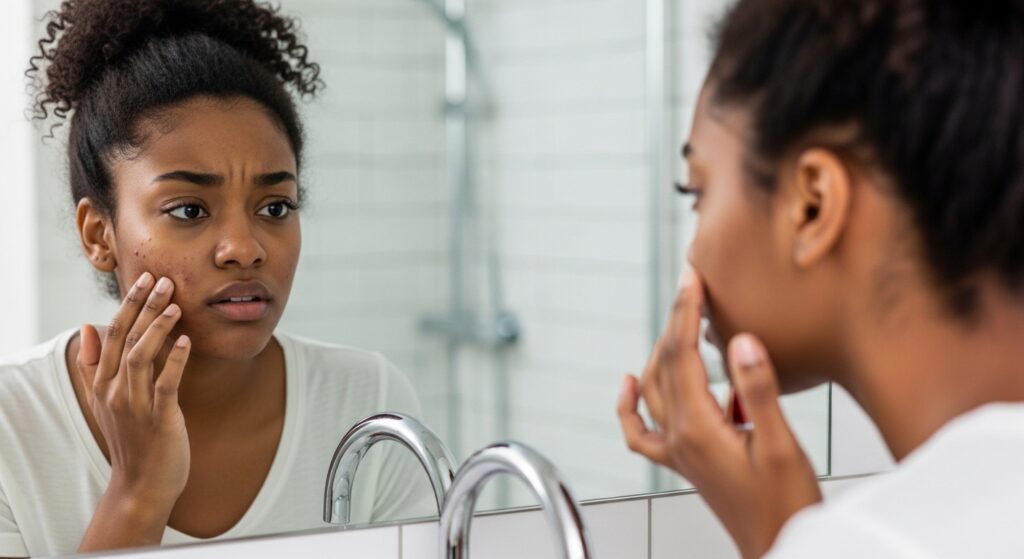
Finding an effective acne treatment for sensitive skin can be challenging because many traditional acne products contain powerful active ingredients that may cause dryness, redness, burning, or irritation. Sensitive skin requires a careful balance: we want to control breakouts, clogged pores, inflammation, and excess oil without weakening the skin barrier.
A dermatologist recommended acne treatment for sensitive skin typically focuses on gentle cleansing, carefully selected acne-fighting ingredients, adequate hydration, sun protection, and gradual introduction of active treatments. Rather than using several aggressive products at once, we generally achieve better tolerance by building a simple routine and adjusting it according to the type and severity of acne.
What Makes Sensitive Acne-Prone Skin Different?
Sensitive skin may react more easily to skincare products, environmental conditions, fragrances, harsh cleansers, or strong concentrations of active ingredients. When acne is also present, treatment becomes more complicated because many ingredients used to unclog pores and reduce breakouts can temporarily cause dryness or irritation.
Signs that acne-prone skin may also be sensitive include persistent redness, burning, stinging, tightness, excessive dryness, flaking, or irritation after using skincare products.
We should also remember that not every reaction means a person simply has sensitive skin. Conditions such as rosacea, eczema, contact dermatitis, folliculitis, and perioral dermatitis can sometimes resemble acne or occur alongside it. Persistent or unusual symptoms should therefore be assessed by a dermatologist.
Dermatologist Recommended Ingredients for Sensitive Acne-Prone Skin
The best acne ingredient depends on the type of acne, its severity, previous treatments, and how well the skin tolerates active products.
1. Benzoyl Peroxide
Benzoyl peroxide is commonly used for inflammatory acne, including red pimples and pustules. It helps reduce acne-causing bacteria and can be particularly useful when inflammatory breakouts are a major concern.
For sensitive skin, lower-strength formulations or short-contact use may be easier to tolerate. We should avoid assuming that a stronger concentration automatically provides better results. Excessive use may increase dryness, peeling, and irritation.
2. Salicylic Acid
Salicylic acid is a beta-hydroxy acid commonly found in acne cleansers and leave-on treatments. It helps exfoliate inside pores, making it useful for blackheads, whiteheads, clogged pores, and mild acne.
Sensitive skin may benefit from starting with a lower concentration or using salicylic acid less frequently. Combining it immediately with several other exfoliating products can increase the risk of irritation.
3. Adapalene and Other Topical Retinoids
Topical retinoids are widely used in acne management because they help prevent clogged pores and treat comedonal acne. Adapalene is one commonly used topical retinoid.
Retinoids can initially cause dryness, peeling, or irritation, especially on sensitive skin. We can often improve tolerance by introducing them gradually and using a gentle moisturizer. Prescription retinoids should be used according to a dermatologist’s instructions.
People who are pregnant, trying to become pregnant, or breastfeeding should discuss acne medications with a qualified healthcare professional before using them.
4. Azelaic Acid
Azelaic acid can be particularly useful when acne occurs alongside redness or post-acne discoloration. It helps address clogged pores and inflammation while also supporting a more even-looking complexion.
Although azelaic acid is often considered a relatively gentle option, sensitive skin can still experience temporary tingling, dryness, or irritation. Gradual introduction remains important.
How to Build a Sensitive-Skin Acne Routine
An effective routine does not need to contain numerous products. For sensitive acne-prone skin, we generally prioritize a small number of carefully selected products.
A practical routine may include:
- Gentle cleanser: Choose a mild cleanser that removes excess oil, sunscreen, and impurities without leaving the skin excessively tight or dry.
- Targeted acne treatment: Select an appropriate ingredient such as benzoyl peroxide, salicylic acid, azelaic acid, or a dermatologist-recommended retinoid based on the acne type.
- Non-comedogenic moisturizer: Moisturizing can help support the skin barrier and improve tolerance to acne treatments.
- Broad-spectrum sunscreen: Daily sun protection is particularly important when using acne treatments that may leave the skin more vulnerable to irritation or when post-acne marks are present.
- Gradual introduction: Introduce active products slowly rather than starting several treatments simultaneously.
This streamlined approach also makes it easier to determine which product is helping and which product may be causing irritation.
Morning Acne Routine for Sensitive Skin
A morning routine should protect the skin while keeping unnecessary irritation to a minimum.
We can begin with a gentle cleanser, followed by an acne treatment if one has been recommended for morning use. A lightweight, fragrance-free moisturizer can then help maintain hydration.
The final step should generally be a broad-spectrum sunscreen with SPF 30 or higher. Sun protection is especially valuable for people dealing with post-acne marks because ultraviolet exposure can make discoloration more noticeable.
When skin feels unusually irritated, simplifying the routine and focusing on gentle cleansing, moisturizing, and sun protection may be appropriate while seeking professional advice if symptoms persist.
Nighttime Acne Treatment for Sensitive Skin
Evening is often when targeted acne treatments such as topical retinoids are incorporated.
After cleansing gently, we should allow the skin to dry before applying the recommended treatment as directed. Applying more medication than recommended does not necessarily clear acne faster and can significantly increase irritation.
A non-comedogenic moisturizer can help manage dryness associated with acne medications. Some people with sensitive skin may tolerate certain treatments better when moisturizer is incorporated before or after the active ingredient, depending on professional guidance and the product being used.
How to Reduce Irritation While Treating Acne
Treating acne aggressively can sometimes damage the skin barrier and make the overall routine harder to tolerate. When we are managing sensitive skin, consistency is usually more practical than repeatedly switching between harsh products.
Several strategies can help reduce unnecessary irritation:
- Avoid introducing multiple powerful active ingredients simultaneously.
- Use lukewarm rather than very hot water when cleansing.
- Avoid aggressive facial scrubs and excessive exfoliation.
- Choose fragrance-free, non-comedogenic skincare products when appropriate.
- Moisturize consistently.
- Follow product instructions carefully.
- Avoid picking, squeezing, or scratching acne lesions.
- Stop using products that cause significant swelling, blistering, severe burning, or other concerning reactions and seek medical advice when necessary.
A slight adjustment period can occur with some acne treatments, but severe or persistent irritation should not simply be ignored.
Ingredients and Products to Use Carefully on Sensitive Skin
Sensitive skin does not necessarily require avoiding every powerful skincare ingredient. Instead, we should pay attention to concentration, frequency, formulation, and the number of active products being combined.
Strong exfoliating acids, abrasive scrubs, heavily fragranced products, alcohol-heavy formulations, and multiple active treatments used together may increase irritation for some people.
Over-cleansing can also become a problem. Acne is not caused by dirty skin, and repeatedly washing or scrubbing the face can worsen dryness and inflammation.
Dermatologist Treatment for Moderate or Severe Acne
Over-the-counter skincare may be enough for mild acne, but persistent, painful, widespread, or scarring acne often requires professional treatment.
A dermatologist can determine the type of acne and develop an individualized plan. Depending on the patient’s circumstances, treatment may include prescription topical retinoids, antimicrobial treatments, oral antibiotics, hormonal therapies, or isotretinoin.
These treatments are not appropriate for everyone and may require specific precautions, monitoring, or pregnancy-prevention measures. Professional assessment becomes particularly important when acne is causing scars, painful nodules, significant discoloration, or substantial emotional distress.
How Long Does Acne Treatment Take to Work?
Acne treatment is rarely an overnight process. Some treatments require several weeks of consistent use before meaningful improvement becomes noticeable.
Frequently changing products because results are not immediate can make sensitive skin more irritated and make it difficult to determine whether a treatment is actually effective.
We should evaluate progress based on factors such as fewer new breakouts, reduced inflammation, fewer clogged pores, improved tolerance, and gradual healing of existing lesions.
If acne continues to worsen despite consistent treatment, professional evaluation can help identify whether the diagnosis or treatment strategy needs to change.
Choosing the Best Dermatologist Recommended Acne Treatment for Sensitive Skin
There is no single acne treatment that works equally well for every sensitive skin type. The most suitable approach depends on whether the acne consists mainly of blackheads, whiteheads, inflammatory pimples, pustules, cysts, nodules, or a combination of lesions.
Skin history also matters. Someone with eczema-prone skin may require a different approach from someone whose main concern is oily but easily irritated skin.
Before choosing a treatment, we should consider acne severity, skin sensitivity, existing skincare products, medications, pregnancy status, allergies, and previous reactions to acne treatments.
When Should We See a Dermatologist for Sensitive-Skin Acne?
Professional care becomes increasingly important when acne is painful, persistent, widespread, leaving scars, causing significant dark marks, or failing to improve with appropriate over-the-counter treatment.
A dermatologist should also assess skin that develops unusual rashes, intense burning, persistent redness, swelling, or severe irritation. What appears to be acne may sometimes be another skin condition requiring a different treatment approach.
Early professional treatment can be particularly valuable when deep cysts or nodules are developing because these forms of acne carry a greater risk of permanent scarring.
Supporting the Skin Barrier During Acne Treatment
Healthy-looking skin depends on more than eliminating individual pimples. Maintaining the skin barrier is particularly important for sensitive skin.
We can support the barrier by avoiding unnecessary exfoliation, using a suitable moisturizer, cleansing gently, and protecting the skin from excessive sun exposure.
Moisturizers containing ingredients such as ceramides, glycerin, or hyaluronic acid may help maintain hydration. However, individual tolerance varies, so products should still be selected according to personal skin needs.
When the barrier is better supported, acne treatments may become easier to tolerate, helping us maintain the consistency necessary for long-term acne management.
FAQs about Dermatologist Recommended Acne Treatment for Sensitive Skin
1. What is the best dermatologist recommended acne treatment for sensitive skin?
The best treatment depends on the type and severity of acne and how reactive the skin is. Dermatologists may recommend gentle topical treatments containing azelaic acid, low-strength salicylic acid, or carefully introduced retinoids alongside a non-comedogenic skincare routine.
2. Can sensitive skin use acne treatments safely?
Yes. People with sensitive skin can use acne treatments, but products should generally be introduced gradually. A dermatologist can help select appropriate ingredients and concentrations to reduce the risk of redness, dryness, burning, and irritation.
3. Is salicylic acid suitable for sensitive, acne-prone skin?
Salicylic acid can help unclog pores and reduce breakouts, but sensitive skin may tolerate lower concentrations or less frequent application better. Overuse may cause dryness or irritation.
4. Is benzoyl peroxide recommended for sensitive skin?
Benzoyl peroxide is commonly used for acne, but it can be irritating. Dermatologists may recommend a lower concentration, limited frequency, or short-contact application, depending on individual skin tolerance.
5. What skincare routine is suitable for sensitive acne-prone skin?
A simple routine may include a gentle cleanser, dermatologist-recommended acne treatment, fragrance-free moisturizer, and broad-spectrum sunscreen. Avoiding excessive exfoliation and harsh scrubs can also help protect the skin barrier.
6. How long does dermatologist acne treatment take to work?
Improvement often requires several weeks, and some treatments may take a few months to produce their full effect. Consistent use according to professional guidance is important.
7. When should we see a dermatologist for sensitive skin acne?
We should consider professional care when acne is persistent, painful, scarring, worsening, or difficult to treat without causing significant skin irritation.
Conclusion
We should prioritize a gentle cleanser, targeted acne treatment, non-comedogenic moisturizer, daily sunscreen, and gradual introduction of active ingredients. Instead of overwhelming sensitive skin with numerous treatments, a carefully structured routine gives us a better opportunity to control acne while minimizing irritation.
For persistent, severe, painful, or scarring acne, consulting a board-certified dermatologist or appropriately qualified medical professional provides access to an accurate diagnosis and a personalized treatment plan. With the right balance of effective acne treatment and skin-barrier support, sensitive acne-prone skin can be managed without relying on an unnecessarily harsh skincare routine.