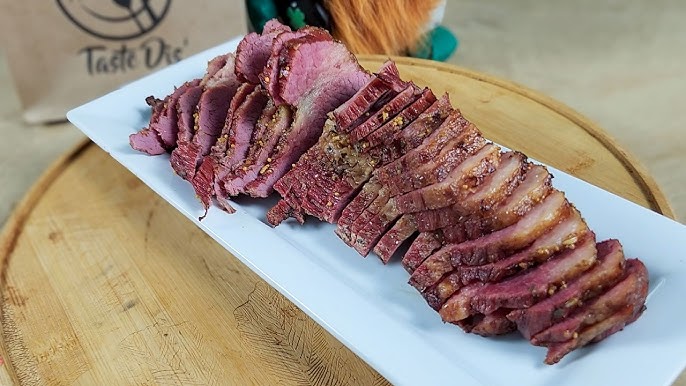
A perfectly smoked Traeger beef brisket recipe gives us everything we want from true barbecue: deep smoky flavor, tender slices, a juicy interior, and that signature bark that makes brisket one of the most respected cuts in outdoor cooking. With the right seasoning, steady temperature control, and enough patience, we can turn a tough cut of beef into a rich, flavorful centerpiece worthy of any cookout, family gathering, holiday table, or weekend feast.
This step-by-step guide walks us through the complete process of making beef brisket on a Traeger grill, from trimming and seasoning to smoking, wrapping, resting, slicing, and serving. The goal is simple: a brisket with a bold crust, moist texture, balanced smoke, and clean slices that hold together without becoming dry or chewy.
Ingredients You’ll Need for Traeger Beef Brisket
To make a flavorful and tender smoked brisket, we need simple ingredients that allow the beef and smoke to stand out.
Main Ingredient
- 1 whole packer beef brisket, about 10 to 14 pounds
- Yellow mustard or olive oil, used as a binder
- Apple cider vinegar, beef broth, or water for spritzing
Brisket Rub Ingredients
- 3 tablespoons kosher salt
- 3 tablespoons coarse black pepper
- 2 tablespoons smoked paprika
- 1 tablespoon garlic powder
- 1 tablespoon onion powder
- 1 tablespoon brown sugar
- 1 teaspoon chili powder
- 1 teaspoon cayenne pepper, optional for heat
For Wrapping
- Butcher paper or heavy-duty aluminum foil
- Beef tallow, optional for extra moisture and richness
Recommended Wood Pellets
For the best Traeger brisket flavor, we can use oak, hickory, mesquite, pecan, or a competition blend. Oak is a classic choice because it gives brisket a balanced smoke flavor without overpowering the beef. Hickory adds a stronger barbecue taste, while pecan gives a slightly sweeter smoke profile.
Best Cut of Beef for Traeger Brisket
For the best result, we use a whole packer brisket. This includes both the flat and the point. The flat is leaner and slices beautifully, while the point contains more marbling and becomes extremely juicy when cooked low and slow.
A good brisket should have visible marbling throughout the meat, a flexible feel when lifted, and a thick flat that is not too thin at the edges. A brisket between 10 and 14 pounds is ideal for most home Traeger grills because it gives us enough meat for proper smoking while still fitting comfortably on the grill grate.
How to Trim Beef Brisket Before Smoking
Trimming is one of the most important steps in this Traeger beef brisket recipe. A properly trimmed brisket cooks more evenly, develops better bark, and slices more cleanly.
We start by placing the brisket on a large cutting board with the fat side facing up. Using a sharp boning knife, we remove any hard chunks of fat that will not render during cooking. These thick, waxy fat deposits can block seasoning and prevent smoke from reaching the meat.
Next, we trim the fat cap down to about ¼ inch thick. This gives the brisket enough fat to protect the meat during the long smoke while still allowing seasoning and smoke to penetrate. If the fat cap is too thick, the rub may not attach well, and the finished bark can become soft.
We also square off thin edges because they can dry out before the thicker parts finish cooking. A clean, even shape helps the brisket cook consistently from end to end.
How to Season Traeger Beef Brisket
After trimming, we lightly coat the brisket with yellow mustard or olive oil. This acts as a binder and helps the rub stick to the surface. The mustard flavor will not dominate the finished brisket; it simply creates a tacky layer for seasoning.
In a bowl, we combine kosher salt, coarse black pepper, smoked paprika, garlic powder, onion powder, brown sugar, chili powder, and cayenne pepper. Then we apply the rub generously over every side of the brisket, including the edges.
The seasoning should fully cover the meat, but we do not need to press it aggressively. A light press helps it stick. Once seasoned, we let the brisket rest at room temperature for about 30 to 45 minutes while the Traeger preheats. For deeper flavor, we can season the brisket the night before and refrigerate it uncovered or loosely covered.
Traeger Temperature for Beef Brisket
The best temperature for smoking brisket on a Traeger is 225°F. This low-and-slow temperature allows the connective tissue to break down slowly while the smoke builds flavor and bark.
For a slightly faster cook, we can use 250°F, especially after the brisket has absorbed several hours of smoke. However, for beginners, 225°F offers more control and gives the brisket plenty of time to become tender.
Step-by-Step Guide to Make Traeger Beef Brisket
Step 1: Preheat the Traeger Grill
We set the Traeger to 225°F and allow it to preheat with the lid closed for about 15 minutes. If the Traeger has a Super Smoke setting, we use it during the first few hours to build a stronger smoke profile.
A clean grill grate and a full pellet hopper are important because brisket requires a long cook. We make sure there are enough pellets to maintain consistent heat throughout the smoking process.
Step 2: Place the Brisket on the Traeger
We place the brisket directly on the grill grates with the fat side down if the heat source is coming from below. This helps protect the meat from direct heat and reduces the chance of the bottom drying out.
The thicker point should face the hotter side of the grill if the Traeger has uneven heat zones. We insert a meat probe into the thickest part of the flat, making sure it is not sitting in fat.
Step 3: Smoke the Brisket Low and Slow
We smoke the brisket at 225°F until the internal temperature reaches around 160°F to 170°F. This stage usually takes 6 to 8 hours, depending on the size and thickness of the brisket.
During this time, the brisket will develop a dark, flavorful bark. We avoid opening the lid too often because temperature swings can slow the cook. After the first 3 hours, we can spritz the brisket every 45 to 60 minutes with apple cider vinegar, beef broth, or water to help keep the surface moist.
Step 4: Manage the Brisket Stall
At around 150°F to 170°F, the brisket may enter the stall. This means the internal temperature stops rising for a while as moisture evaporates from the surface. This is normal and part of the smoking process.
We do not rush this stage too early. The stall is also when the bark becomes more developed. Once the bark is dark, firm, and set, we move to wrapping.
Step 5: Wrap the Brisket
When the brisket reaches about 165°F and has a rich bark, we wrap it tightly in butcher paper or foil. Butcher paper allows the brisket to breathe slightly, helping preserve bark texture. Foil traps more moisture and can make the brisket cook faster, but it may soften the bark.
For extra richness, we can spread a small amount of beef tallow on the butcher paper before wrapping. Then we return the wrapped brisket to the Traeger with the seam side down.
Step 6: Continue Cooking Until Tender
After wrapping, we continue cooking at 225°F to 250°F until the brisket reaches an internal temperature of about 200°F to 205°F. More importantly, we check for tenderness.
The brisket is done when a probe slides into the flat with little resistance, similar to softened butter. Temperature is a guide, but tenderness is the real test. Some briskets are ready at 200°F, while others need a little more time.
Step 7: Rest the Brisket Properly
Resting is essential for juicy smoked brisket. Once the brisket is tender, we remove it from the Traeger and keep it wrapped. We let it rest for at least 1 hour, but 2 to 3 hours is even better.
We can place the wrapped brisket in a dry cooler or warm oven set to a low temperature. Resting allows the juices to redistribute throughout the meat, making each slice more tender and flavorful.
Step 8: Slice the Brisket Against the Grain
After resting, we unwrap the brisket and place it on a cutting board. We separate the flat from the point if needed because the grain runs in different directions.
We slice the flat against the grain into pencil-thick slices. The slices should bend without falling apart. The point can be sliced thicker, chopped, or cubed for burnt ends.
How Long to Smoke Beef Brisket on a Traeger
A whole packer brisket usually takes 12 to 18 hours on a Traeger, depending on size, thickness, grill temperature, weather, and how long the stall lasts.
As a general rule, we estimate about 1 to 1½ hours per pound at 225°F. However, brisket should never be cooked by time alone. We use internal temperature and tenderness as the main guide.
Tips for the Best Traeger Beef Brisket
For the best Traeger smoked brisket, we choose a brisket with good marbling, trim it evenly, season it generously, and keep the temperature steady. We avoid wrapping too early because the bark needs time to develop. We also avoid slicing immediately after cooking because the juices need time to settle.
A reliable meat thermometer is important for accuracy. Brisket can look done on the outside long before it becomes tender inside. The probe test helps us avoid undercooked or tough brisket.
What to Serve with Traeger Beef Brisket
Smoked beef brisket pairs well with classic barbecue sides. We can serve it with coleslaw, baked beans, mac and cheese, cornbread, potato salad, grilled vegetables, pickles, onions, or barbecue sauce.
For a complete meal, we can serve sliced brisket on a platter with warm sides. For sandwiches, we use soft buns, pickles, onions, and a light layer of barbecue sauce.
How to Store Leftover Brisket
Leftover brisket should be cooled and stored in an airtight container in the refrigerator for up to 4 days. For longer storage, we wrap it tightly and freeze it for up to 3 months.
To reheat brisket, we add a splash of beef broth, wrap it in foil, and warm it gently in the oven at 250°F until heated through. This helps prevent the meat from drying out.
Common Mistakes to Avoid When Smoking Brisket
One common mistake is cooking brisket too hot too early. High heat can dry out the flat before the connective tissue breaks down. Another mistake is under-seasoning. Brisket is a large cut of beef, so it needs enough rub to create flavor in every bite.
We also avoid slicing with the grain because it makes the meat feel chewy. Cutting against the grain shortens the muscle fibers and gives us tender slices.
Traeger Beef Brisket Recipe Card
Ingredients
- 1 whole packer beef brisket, 10 to 14 pounds
- 2 to 3 tablespoons yellow mustard or olive oil
- 3 tablespoons kosher salt
- 3 tablespoons coarse black pepper
- 2 tablespoons smoked paprika
- 1 tablespoon garlic powder
- 1 tablespoon onion powder
- 1 tablespoon brown sugar
- 1 teaspoon chili powder
- 1 teaspoon cayenne pepper, optional
- Apple cider vinegar or beef broth, for spritzing
- Beef tallow, optional
- Oak, hickory, pecan, or mesquite pellets
Instructions
- Trim the brisket, leaving about ¼ inch of fat on the fat cap.
- Coat the brisket with mustard or olive oil.
- Combine all rub ingredients and season the brisket generously.
- Preheat the Traeger to 225°F.
- Place brisket on the grill, fat side down.
- Smoke until internal temperature reaches 160°F to 170°F.
- Spritz every 45 to 60 minutes after the first 3 hours.
- Wrap brisket tightly in butcher paper or foil.
- Continue cooking until internal temperature reaches 200°F to 205°F and probe-tender.
- Rest wrapped brisket for at least 1 hour.
- Slice against the grain and serve warm.
FAQs about Traeger Beef Brisket Recipe
1. How long does it take to cook beef brisket on a Traeger?
Cooking beef brisket on a Traeger usually takes 8 to 12 hours, depending on the size of the brisket, cooking temperature, and thickness of the meat. Low and slow smoking gives the best tenderness and flavor.
2. What temperature should we smoke brisket on a Traeger?
We should smoke brisket at 225°F for the best results. This temperature allows the meat to cook slowly, absorb smoky flavor, and become tender without drying out.
3. Should we wrap brisket while smoking?
Yes, wrapping the brisket in butcher paper or foil after it reaches about 160°F to 170°F internal temperature helps keep it moist and speeds up the cooking process.
4. What internal temperature should brisket reach?
Brisket is usually done when it reaches an internal temperature of about 200°F to 205°F. At this point, the meat should feel tender when pierced with a probe.
5. How long should brisket rest after smoking?
We should let the brisket rest for at least 1 hour before slicing. Resting allows the juices to redistribute, making the brisket more flavorful, moist, and tender.
Final Thoughts
A well-made Traeger beef brisket recipe is built on simple ingredients, steady heat, clean smoke, and patience. When we trim the brisket properly, season it generously, smoke it low and slow, wrap it at the right time, and rest it before slicing, we get a brisket that is tender, juicy, smoky, and full of bold barbecue flavor.
This method gives us a reliable way to prepare smoked beef brisket on a Traeger grill, whether we are cooking for a backyard barbecue, family dinner, holiday meal, or special weekend gathering. With the right process, every slice comes out rich, flavorful, and satisfying.