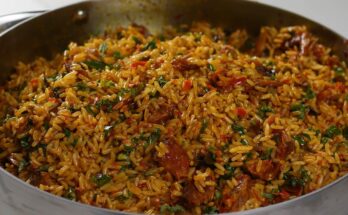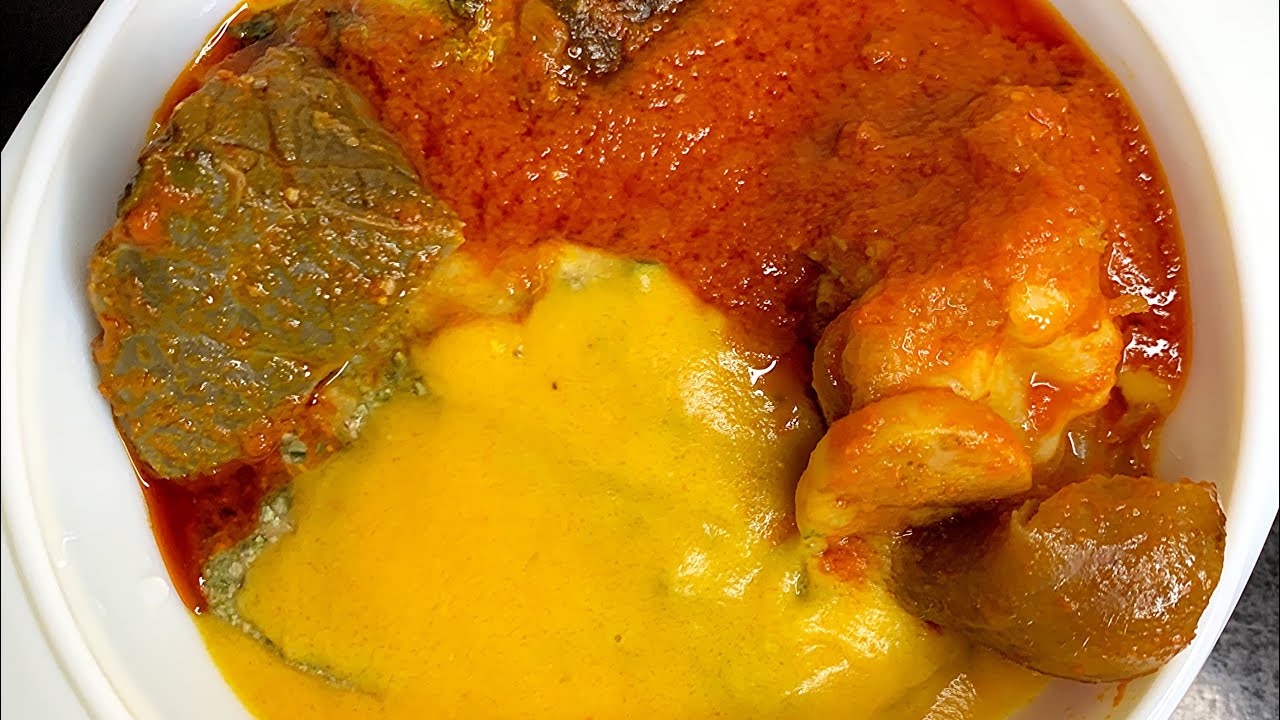
Tuwo Shinkafa is a traditional Nigerian rice dish known for its soft, smooth, and slightly sticky texture. It is especially popular in Northern Nigeria, where we commonly serve it with rich soups such as Miyan Kuka, Miyan Taushe, Miyan Karkashi, vegetable soup, okra soup, and groundnut soup.
Unlike ordinary boiled rice, Tuwo Shinkafa is cooked until the grains become extremely soft and can be mashed into a smooth, mouldable consistency. When prepared correctly, the finished dish should be soft enough to scoop easily while remaining firm enough to hold its shape when served.
In this Tuwo Shinkafa recipe, we explain the ingredients, preparation method, cooking tips, serving suggestions, storage methods, and common mistakes to avoid when making this classic Nigerian meal at home.
What Is Tuwo Shinkafa?
Tuwo Shinkafa is a Nigerian rice swallow traditionally prepared by cooking soft rice with water until the grains break down and form a thick paste. The Hausa word “shinkafa” means rice, while “tuwo” refers to a thick food that can be moulded and eaten with soup.
We typically serve Tuwo Shinkafa in rounded portions alongside soup. Instead of eating it with a spoon like conventional rice dishes, small portions can be taken and dipped into the accompanying soup.
The simplicity of the ingredients makes this dish easy to prepare, but achieving the correct texture requires proper cooking. The rice must receive enough water and cooking time to soften completely.
Best Rice for Making Tuwo Shinkafa
The type of rice we choose can significantly affect the final texture.
Traditionally, we prepare Tuwo Shinkafa using short-grain rice, local Nigerian rice, or another soft and starchy rice variety. Rice containing sufficient starch becomes sticky when cooked and is therefore easier to mash.
Long-grain rice can sometimes be used, but it may not provide the same naturally sticky texture. If using it, we may need additional cooking time and water.
For the best Tuwo Shinkafa, we choose rice that:
- Becomes soft easily when cooked
- Contains enough starch
- Can absorb plenty of water
- Breaks down without remaining grainy
- Produces a smooth and sticky consistency
Tuwo Shinkafa Ingredients
One advantage of this traditional recipe is that we need very few ingredients.
Main Ingredients
- 2 cups short-grain or soft rice
- 4–5 cups water
- Extra hot water if required during cooking
The exact amount of water can vary depending on the rice variety. Some types of rice absorb considerably more water than others.
We generally do not need oil, seasoning cubes, salt, or spices because Tuwo Shinkafa is intended to have a mild taste that complements flavourful Nigerian soups.
How to Prepare Rice for Tuwo Shinkafa
Before cooking, we sort through the rice and remove stones, husks, or other unwanted particles, particularly when using local rice.
We then rinse the rice thoroughly with clean water. Washing it about two or three times is generally sufficient.
Although excessive washing can remove some surface starch, we still need to clean the rice properly before cooking.
Once washed, we drain the rice and prepare it immediately.
How to Make Tuwo Shinkafa Step by Step
Tuwo Shinkafa is a soft Nigerian rice swallow commonly enjoyed with soups such as Miyan Kuka, Miyan Taushe, Egusi Soup, and other rich Northern Nigerian soups. It is traditionally prepared with soft rice that becomes smooth and mouldable after cooking.
Ingredients Needed
- 2 cups Tuwo rice or short-grain rice
- 5–6 cups water
- Extra hot water if needed
How to Make Tuwo Shinkafa Step by Step
Step 1: Wash the Rice
Rinse the rice thoroughly with clean water to remove dirt and excess starch. Drain and place it in a deep cooking pot.
Step 2: Cook Until Very Soft
Add enough water to completely cover the rice. Cook over medium heat until the rice becomes very soft and mushy. Add a little more hot water if the rice dries out before becoming soft.
Step 3: Mash the Rice
Reduce the heat. Using a wooden spoon or sturdy spatula, begin mashing and stirring the cooked rice firmly against the sides of the pot.
Step 4: Mix Until Smooth
Continue stirring and folding the rice until it forms a smooth, thick, stretchy consistency with very few visible rice grains.
Step 5: Steam the Tuwo
Add a small amount of hot water, cover the pot and allow it to steam on low heat for about 3–5 minutes. Stir again until completely smooth.
Step 6: Shape and Serve
Scoop the Tuwo Shinkafa into serving portions and shape into smooth balls.
Serve your freshly prepared Tuwo Shinkafa warm with Miyan Kuka, Miyan Taushe, vegetable soup, Egusi Soup, or your preferred Nigerian soup.
How to Know When Tuwo Shinkafa Is Ready
Properly prepared Tuwo Shinkafa should be noticeably different from ordinary cooked rice.
The final result should be:
- Soft
- Smooth
- Sticky
- Easy to mould
- Free from hard rice grains
- Firm enough to hold its shape
- Easy to scoop and swallow
If individual rice grains remain clearly visible and firm, we should cook the mixture longer before serving.
How to Make Tuwo Shinkafa Smooth
A smooth texture is one of the most important characteristics of good Tuwo Shinkafa.
First, we must avoid allowing the cooking water to disappear too early. Rice that becomes dry before softening properly will be difficult to mash.
Second, we cook the rice over moderate heat. Extremely high heat may cause the bottom to burn while the upper portion remains insufficiently cooked.
Third, we turn and mash the rice thoroughly. Even perfectly soft rice will remain grainy if we do not mash it properly.
A strong wooden spoon makes this process considerably easier.
Best Soups to Eat With Tuwo Shinkafa
Tuwo Shinkafa has a mild flavour, which makes it suitable for pairing with several rich Nigerian soups.
Miyan Kuka
Miyan Kuka is one of the most traditional soups served with Tuwo Shinkafa. It is made with powdered baobab leaves and can contain meat, fish, spices, and other ingredients.
Miyan Taushe
Another excellent pairing is Miyan Taushe, a rich Northern Nigerian soup commonly prepared with pumpkin and other flavourful ingredients.
Groundnut Soup
The creamy, nutty flavour of groundnut soup works particularly well with the mild taste of Tuwo Shinkafa.
Okra Soup
The naturally thick texture of okra soup makes it another excellent accompaniment.
Vegetable Soup
A rich vegetable soup containing leafy greens, meat, fish, or assorted proteins can also be served with Tuwo Shinkafa.
Other suitable options include Egusi soup, Miyan Karkashi, spinach soup, and selected Nigerian stew-based soups.
Common Mistakes to Avoid When Making Tuwo Shinkafa
Although the recipe is simple, several mistakes can affect the finished dish.
Using Too Little Water
Tuwo Shinkafa needs enough moisture for the rice to become extremely soft. When the rice dries too early, it may remain grainy.
Using the Wrong Rice
Some long-grain varieties remain separate even after extended cooking. A soft, starchy rice variety generally produces better results.
Cooking Over Excessively High Heat
High heat can cause the bottom of the rice to burn before the grains have softened properly.
Not Turning the Rice Enough
Turning is essential for creating the characteristic smooth texture. We should mash the softened grains thoroughly.
Adding Too Much Water at Once
While additional water may be necessary, adding excessive amounts can make the Tuwo Shinkafa watery. We add extra hot water gradually.
How to Fix Tuwo Shinkafa That Is Too Hard
If the Tuwo Shinkafa becomes too hard, we do not need to discard it.
We make a small opening in the centre, add a little hot water, cover the pot, and allow it to steam over low heat.
After several minutes, we turn the mixture again.
We can repeat this process cautiously until it reaches the desired softness.
How to Fix Watery Tuwo Shinkafa
When too much water has been added, we keep the pot over low heat and continue stirring.
Leaving the pot partially uncovered can help excess moisture evaporate.
We should avoid increasing the heat excessively because the bottom may burn.
As moisture evaporates and the starch thickens, the mixture should gradually become firmer.
How to Serve Tuwo Shinkafa
We normally serve Tuwo Shinkafa immediately after cooking while it is still warm.
For an attractive presentation, we can wet a small bowl with clean water, place some Tuwo Shinkafa inside, gently press it into shape, and turn it onto a plate.
The soup can be served beside the Tuwo Shinkafa or in a separate bowl.
For a complete traditional meal, we may accompany it with soup containing:
- Beef
- Goat meat
- Chicken
- Cow skin
- Dried fish
- Smoked fish
- Fresh fish
The protein choice can be adjusted according to preference.
How to Store Leftover Tuwo Shinkafa
If we have leftovers, we allow the Tuwo Shinkafa to cool before transferring it to a clean airtight container.
We then refrigerate it promptly.
Cold Tuwo Shinkafa naturally becomes firmer because the starch sets as it cools. When reheating, we can add a small amount of water and gently steam it until warm and soft again.
For the best texture and flavour, freshly prepared Tuwo Shinkafa is generally preferable.
Tips for Making Perfect Tuwo Shinkafa
A few practical techniques can make preparation much easier.
- Choose soft, starchy rice whenever possible.
- Use a heavy-bottomed pot to reduce the chance of burning.
- Keep additional hot water nearby while cooking.
- Allow the rice to become extremely soft before turning.
- Mash thoroughly to remove noticeable grains.
- Add additional water gradually rather than all at once.
- Keep the heat low while turning and steaming.
- Serve the finished Tuwo Shinkafa while warm.
Tuwo Shinkafa Recipe Variations
Traditional Tuwo Shinkafa is prepared primarily from rice and water, but preparation methods may vary between households.
Some cooks blend or partially grind the rice before cooking to create a smoother texture more quickly. Others cook whole rice until extremely soft before mashing it manually.
Rice flour can also be used to prepare a similar rice swallow. However, the traditional whole-rice method gives Tuwo Shinkafa its familiar homemade character.
Regardless of the method, the goal remains the same: a soft, smooth, cohesive rice swallow that pairs perfectly with soup.
Why Tuwo Shinkafa Works Well With Nigerian Soups
Tuwo Shinkafa has a subtle rice flavour rather than an overpowering taste. This allows strongly seasoned soups to remain the centre of the meal.
Rich soups containing peppers, vegetables, meats, fish, spices, groundnuts, melon seeds, or traditional Northern Nigerian ingredients complement it particularly well.
Its soft texture also absorbs soup beautifully, making every portion flavourful.
FAQs about Tuwo Shinkafa Recipe
What is Tuwo Shinkafa?
Tuwo Shinkafa is a traditional Nigerian swallow made from soft-cooked rice that is mashed or stirred until smooth and stretchy. It is especially popular in Northern Nigeria.
What type of rice is best for Tuwo Shinkafa?
We recommend using short-grain or soft rice because it becomes sticky and easy to mash after cooking. Tuwo rice sold specifically for this purpose is also ideal.
What ingredients are needed to make Tuwo Shinkafa?
The basic ingredients are simple:
- Rice
- Water
No oil or seasoning is usually required.
How do we make Tuwo Shinkafa smooth?
We cook the rice with enough water until it becomes extremely soft. We then mash and stir it continuously until it develops a smooth, thick, and stretchy texture.
What soup goes well with Tuwo Shinkafa?
Tuwo Shinkafa can be served with several Nigerian soups, including Miyan Kuka, Miyan Taushe, Miyan Gyada, vegetable soup, okra soup, and other rich meat or vegetable soups.
Can we make Tuwo Shinkafa with regular rice?
Yes. Regular rice can be used, although soft or short-grain rice usually gives a better texture.
How do we know when Tuwo Shinkafa is ready?
It is ready when the rice has completely softened and formed a smooth, firm dough-like consistency without noticeable grains.
Can Tuwo Shinkafa be reheated?
Yes. We can reheat it by steaming or warming it with a small amount of water until soft.
Is Tuwo Shinkafa eaten alone?
It is traditionally served with soup or stew, often accompanied by meat, fish, or vegetables.
Conclusion
This Tuwo Shinkafa recipe shows that we can prepare one of Northern Nigeria’s most popular traditional foods with only rice, water, and the correct cooking technique.
For the best result, we use soft, starchy rice, cook it with sufficient water until extremely tender, and then mash and turn it until smooth. Proper steaming and consistent turning help us achieve the soft, stretchy, and mouldable consistency associated with authentic Tuwo Shinkafa.
Once prepared, we can serve it with Miyan Kuka, Miyan Taushe, groundnut soup, okra soup, vegetable soup, Egusi soup, or another rich Nigerian soup. Whether served as a family meal or alongside a traditional Northern Nigerian soup, freshly prepared Tuwo Shinkafa remains a simple, satisfying, and versatile Nigerian staple.