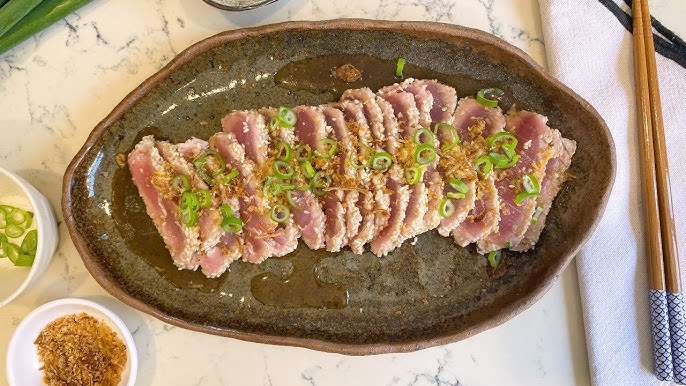
A well-prepared Tuna Tataki Recipe delivers everything we want in a refined seafood dish: a lightly seared crust, a cool and tender center, bright citrus flavor, savory umami depth, and a clean restaurant-style finish. Tuna tataki is known for its beautiful contrast between the smoky outer layer and the delicate rare interior. With the right tuna, a balanced marinade, and a quick searing technique, we can create a dish that looks elegant, tastes fresh, and works beautifully as an appetizer, light lunch, dinner starter, or impressive party plate.
This step-by-step Tuna Tataki Recipe focuses on simple ingredients, proper preparation, and precise cooking time. Since tuna tataki depends heavily on freshness and technique, every stage matters. We begin with high-quality tuna, season it properly, sear it quickly, chill it for clean slicing, and serve it with a bold dipping sauce that enhances the natural flavor of the fish without overpowering it.
Ingredients You’ll Need for Tuna Tataki
To make a flavorful and authentic-style Tuna Tataki Recipe, we use fresh tuna, a simple seasoning blend, and a bright sauce made with soy sauce, citrus, ginger, garlic, and sesame.
For the Tuna
- 450g fresh sushi-grade tuna loin or tuna steak
- 1 tablespoon sesame oil
- 1 tablespoon neutral oil, such as vegetable oil or canola oil
- 1 teaspoon sea salt
- ½ teaspoon freshly ground black pepper
- 1 tablespoon white sesame seeds
- 1 tablespoon black sesame seeds
- 1 teaspoon finely grated fresh ginger
- 1 small garlic clove, finely grated
- 1 tablespoon finely chopped spring onions
For the Tataki Sauce
- 3 tablespoons soy sauce
- 2 tablespoons fresh lime juice or lemon juice
- 1 tablespoon rice vinegar
- 1 teaspoon sesame oil
- 1 teaspoon honey or brown sugar
- 1 teaspoon grated ginger
- 1 small garlic clove, minced
- ½ teaspoon chili flakes, optional
- 1 tablespoon finely sliced spring onions
For Serving
- Thinly sliced cucumber
- Shredded daikon or white radish
- Avocado slices
- Fresh coriander or microgreens
- Extra sesame seeds
- Lime wedges
- Pickled ginger, optional
Best Tuna to Use for Tuna Tataki
For the best Tuna Tataki Recipe, we should use sushi-grade tuna or very fresh tuna from a trusted fish supplier. The most common choices are yellowfin tuna, ahi tuna, or bluefin tuna. Yellowfin tuna is widely available, firm, mildly sweet, and excellent for searing. Ahi tuna is also a popular option because it has a clean flavor and holds its shape well during cooking.
The tuna should have a deep red or bright ruby color, a fresh ocean smell, and a firm texture. It should not smell overly fishy, feel slimy, or appear dull. Since the center of tuna tataki remains rare, quality is extremely important. We should keep the tuna chilled until cooking and prepare it on a clean cutting board with a sharp knife.
How to Prepare Tuna for Tataki
Before searing, we pat the tuna completely dry with paper towels. This step is important because moisture prevents the tuna from searing properly. A dry surface helps create a quick golden crust while keeping the middle cool and tender.
After drying the tuna, we season it with sea salt, black pepper, grated ginger, and a light coating of sesame oil. We then press a mixture of white and black sesame seeds onto the surface. The sesame seeds add a nutty flavor and a beautiful speckled crust. They also help give the tuna a more polished restaurant-style appearance.
For best results, the tuna should be shaped like a thick rectangular loin or steak. A thicker piece gives us better control because the outside can sear quickly while the inside remains rare. If the tuna is too thin, it may cook through too fast.
Step-by-Step Guide to Make Tuna Tataki
Step 1: Make the Tataki Sauce
In a small bowl, combine soy sauce, fresh lime juice, rice vinegar, sesame oil, honey, grated ginger, minced garlic, and chili flakes. Stir until the honey dissolves fully into the sauce. Add sliced spring onions and set the sauce aside.
The sauce should taste savory, slightly tangy, lightly sweet, and aromatic. Lime or lemon juice gives freshness, soy sauce adds saltiness, sesame oil adds richness, and ginger brings warmth. This sauce can be made ahead and refrigerated for a deeper flavor.
Step 2: Season the Tuna
Place the tuna on a clean plate. Pat it dry on all sides. Rub it lightly with sesame oil, then season evenly with sea salt, black pepper, ginger, and garlic. Sprinkle the sesame seeds over the tuna and press them gently so they stick to the surface.
We should avoid over-seasoning because tuna has a delicate natural flavor. The goal is to enhance the fish, not cover it. A light but even coating gives the best result.
Step 3: Heat the Pan Properly
Place a heavy skillet, cast-iron pan, or non-stick frying pan over high heat. Add neutral oil and allow it to become hot. The pan must be very hot before the tuna touches it. A hot pan creates a fast sear, which is the key to a perfect Tuna Tataki Recipe.
If the heat is too low, the tuna will cook slowly and lose the rare center. If the pan is properly heated, the outside forms a crust almost immediately.
Step 4: Sear the Tuna Quickly
Place the tuna in the hot pan and sear each side for about 20 to 30 seconds. Turn the tuna carefully with tongs and sear all sides, including the edges. The outside should look lightly browned while the center stays red or pink.
This is the most important step in the recipe. Tuna tataki should not be cooked like a regular tuna steak. It only needs a quick sear. The goal is a smoky crust with a raw or rare center.
Step 5: Chill the Seared Tuna
After searing, transfer the tuna immediately to a plate. For cleaner slices, place it in the refrigerator for about 10 to 15 minutes. Chilling firms up the tuna slightly and makes slicing easier.
Some cooks place the tuna briefly in an ice bath after searing, but refrigeration works well for home preparation. The tuna should be cool enough to slice neatly but not frozen or hard.
Step 6: Slice the Tuna Tataki
Using a very sharp knife, slice the tuna against the grain into thin pieces. Each slice should be about ½ cm thick. Wipe the knife between cuts if needed to keep the slices neat and clean.
Arrange the tuna slices slightly overlapping on a serving plate. This presentation makes the dish look elegant and helps the sauce coat each piece evenly.
Step 7: Add Sauce and Garnish
Spoon the prepared tataki sauce lightly over the sliced tuna or serve it on the side as a dipping sauce. Garnish with spring onions, extra sesame seeds, microgreens, coriander, lime wedges, or thin cucumber slices.
For a fuller plate, serve the tuna tataki with avocado, shredded daikon, pickled ginger, or a small salad. The fresh garnishes balance the richness of the tuna and add texture to every bite.
Tips for the Best Tuna Tataki Recipe
To achieve the best result, we should always begin with cold, fresh tuna. The colder the tuna is before searing, the easier it is to keep the center rare. We should also avoid overcrowding the pan. If the tuna pieces are too close together, the pan temperature drops and the fish may steam instead of sear.
A sharp knife is also essential. Tuna tataki is known for clean, smooth slices, so a dull knife can tear the fish and ruin the presentation. We should cut gently in one smooth motion instead of pressing down too hard.
The sauce should be balanced. If it tastes too salty, we can add a little more citrus juice or honey. If it tastes too sharp, we can add a few drops of sesame oil. If we want a stronger Japanese-inspired flavor, we can add a small amount of ponzu, mirin, or wasabi.
What to Serve with Tuna Tataki
This Tuna Tataki Recipe pairs well with light and fresh side dishes. Steamed jasmine rice, sushi rice, cucumber salad, seaweed salad, edamame, miso soup, and avocado salad are excellent choices. For a low-carb option, we can serve tuna tataki over shredded cabbage, lettuce, cucumber ribbons, or radish.
It also works well as part of a seafood platter. We can serve it alongside grilled prawns, salmon sashimi, crispy wontons, or vegetable tempura. For a more filling meal, place the sliced tuna over rice and add avocado, cucumber, carrots, sesame seeds, and extra sauce to create a tuna tataki rice bowl.
How to Store Tuna Tataki
Tuna tataki is best served fresh, shortly after it is prepared. However, leftovers can be stored in an airtight container in the refrigerator for up to 24 hours. Since the center remains rare, it should not be kept for too long.
We should not reheat tuna tataki because reheating will cook the rare center and change the texture. If serving leftovers, enjoy them cold with fresh sauce, salad, or rice.
Common Mistakes to Avoid
The most common mistake is overcooking the tuna. Tuna tataki should be seared quickly, not cooked all the way through. Another mistake is using tuna that is not fresh enough. Since the center remains rare, the tuna must be suitable for raw or lightly seared preparation.
Another issue is slicing the tuna too thick or using a dull knife. Thin, clean slices give the best texture and appearance. We should also avoid adding too much sauce before serving because it can overpower the delicate flavor of the fish. A light drizzle or side dipping sauce is usually best.
FAQs about Tuna Tataki Recipe
1. What is Tuna Tataki?
Tuna Tataki is a Japanese-style dish made by quickly searing the outside of fresh tuna while keeping the inside rare. It is usually sliced thinly and served with a flavorful dipping sauce, sesame seeds, herbs, or citrus-based dressing.
2. What type of tuna is best for Tuna Tataki?
The best tuna for Tuna Tataki is sushi-grade tuna, such as ahi tuna or yellowfin tuna. Since the center remains rare, we should always use fresh, high-quality tuna from a trusted source.
3. How long should tuna be seared for Tataki?
Tuna should be seared for about 30 to 60 seconds per side over high heat. The goal is to create a lightly browned crust while keeping the inside pink and tender.
4. Can Tuna Tataki be made ahead of time?
Yes, Tuna Tataki can be prepared slightly ahead, but it is best served fresh. After searing, we can chill it briefly, slice it, and serve it with sauce. Avoid storing it for too long because fresh tuna tastes best when eaten soon after preparation.
5. What can we serve with Tuna Tataki?
Tuna Tataki pairs well with soy sauce, ponzu sauce, wasabi, pickled ginger, cucumber salad, steamed rice, or mixed greens. It can be served as an appetizer, light lunch, or elegant dinner starter.
Final Thoughts
This Tuna Tataki Recipe is a simple yet elegant dish that brings together fresh tuna, quick searing, sesame flavor, citrus brightness, and a savory dipping sauce. With quality tuna, a hot pan, and careful slicing, we can create a restaurant-style seafood dish at home with very little cooking time.
The beauty of tuna tataki is in its balance. The outside is smoky and lightly crisp, while the inside stays tender, cool, and rich. The sauce adds brightness and depth, while the garnishes complete the dish with freshness and texture. Whether served as an appetizer, a light meal, or part of a special dinner, tuna tataki remains one of the most impressive and satisfying ways to enjoy fresh tuna.