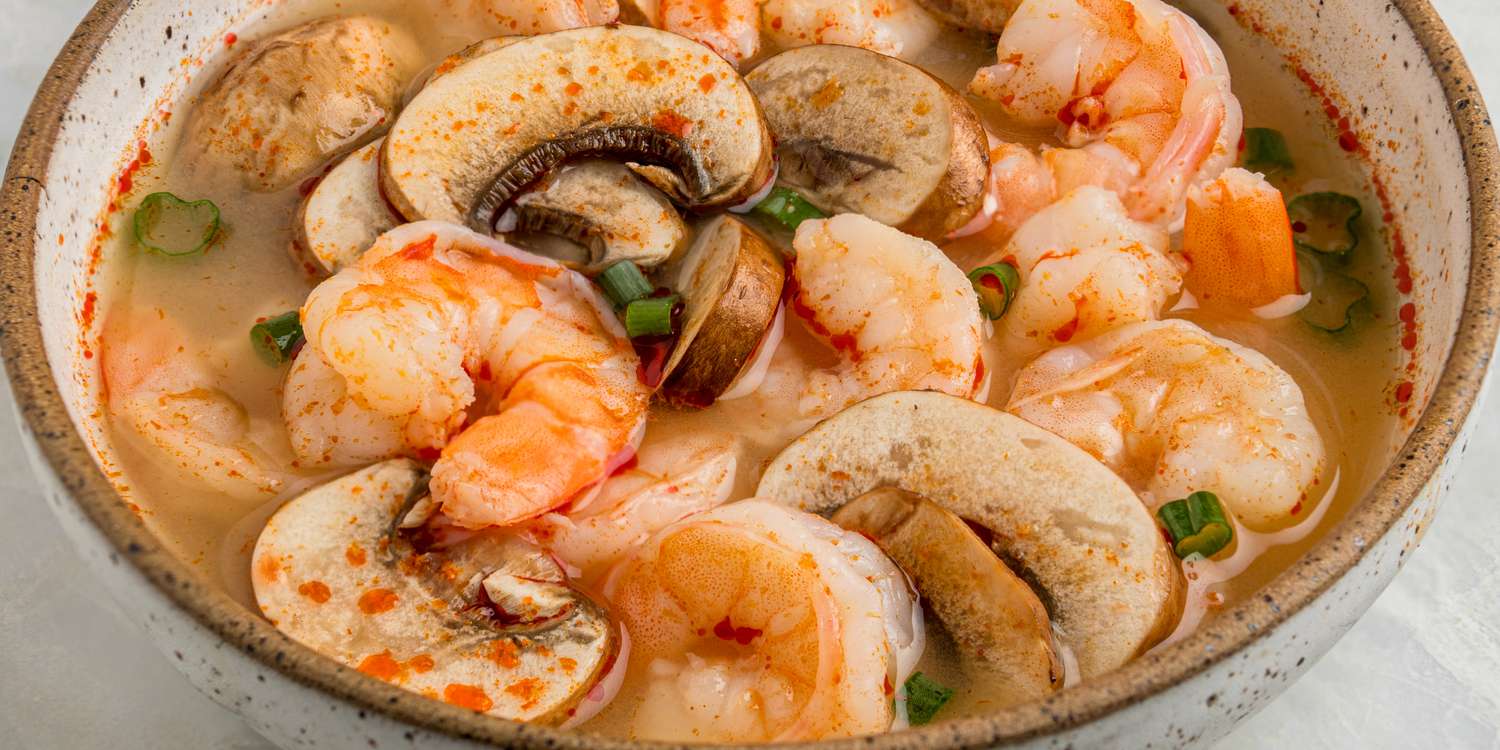
Thai Tom Yum Soup Recipe: Thai Tom Yum Soup is one of the most famous Thai dishes in the world, loved for its bold balance of spicy, sour, savory, and aromatic flavors. This classic soup is light yet deeply flavorful, combining fresh herbs, seafood or chicken, mushrooms, lime juice, chilies, and fragrant spices into one warming bowl. Every spoonful delivers the signature taste of Thai cooking: bright, fresh, bold, and perfectly balanced.
Tom Yum is not just another soup. It is a powerful combination of lemongrass, kaffir lime leaves, galangal, fish sauce, Thai chilies, and lime juice, creating a broth that feels refreshing and comforting at the same time. Whether served as a starter, a light meal, or a main dish with steamed jasmine rice, this soup brings authentic Thai restaurant flavor straight into the home kitchen.
This Thai Tom Yum Soup recipe gives us a practical and detailed step-by-step method for preparing a rich, aromatic soup with fresh ingredients and a clean, vibrant finish. We can make it with shrimp for the classic Tom Yum Goong, chicken for Tom Yum Gai, or mushrooms and vegetables for a lighter version.
Ingredients You’ll Need for Thai Tom Yum Soup
To prepare a flavorful and authentic Thai Tom Yum Soup, we need fresh aromatics, a good broth base, protein, seasoning, and finishing ingredients. The quality of the ingredients plays a major role in the final taste of the soup.
Main Ingredients
- 4 cups chicken stock or seafood stock
- 300g fresh shrimp, peeled and deveined, or sliced chicken breast
- 1 cup mushrooms, sliced
- 2 stalks lemongrass, cut into pieces and lightly crushed
- 4 kaffir lime leaves, torn gently
- 4 slices galangal
- 2–4 Thai bird’s eye chilies, crushed
- 2 tablespoons fish sauce
- 1 tablespoon Thai chili paste, optional for deeper flavor
- 2 tablespoons fresh lime juice
- 1 teaspoon sugar, optional
- 1 medium tomato, cut into wedges
- 1 small onion, sliced
- Fresh cilantro, chopped for garnish
- Spring onions, chopped for garnish
Optional Ingredients
- Evaporated milk or coconut milk for a creamier Tom Yum
- Extra mushrooms such as oyster mushrooms or straw mushrooms
- Squid, fish, or mixed seafood
- Tofu for a vegetarian-style variation
- Vegetable stock instead of chicken or seafood stock
- Extra chili oil for a stronger spicy finish
Best Ingredients for Authentic Thai Tom Yum Flavor
The heart of authentic Thai Tom Yum Soup is the aromatic base. Lemongrass gives the broth a citrus-like fragrance, galangal adds sharp earthiness, and kaffir lime leaves bring a distinct fresh aroma. These ingredients should be gently crushed, sliced, or torn before cooking so their oils release into the broth.
Fresh lime juice should be added near the end, not boiled for too long, because boiling can reduce its bright flavor. Fish sauce gives the soup its salty umami depth, while Thai chilies create the heat that makes Tom Yum exciting. Mushrooms add body and absorb the spicy-sour broth beautifully.
For a classic seafood version, fresh shrimp is one of the best choices. Shrimp cooks quickly, adds natural sweetness, and pairs perfectly with the sharp soup base. For a richer version, Thai chili paste can be added to give the broth a deeper red color and fuller flavor.
Step-by-Step Guide to Making Thai Tom Yum Soup
Step 1: Prepare the Aromatic Ingredients
We begin by preparing the ingredients that build the flavor foundation of the soup. Cut the lemongrass into short pieces and lightly crush them using the back of a knife. This helps release the essential oils into the broth. Tear the kaffir lime leaves gently to open their fragrance. Slice the galangal thinly so it infuses quickly.
Crush the Thai chilies depending on the desired spice level. For mild soup, use one or two chilies. For a strong, spicy Thai-style broth, use three to four chilies or more. Slice the mushrooms, cut the tomato into wedges, and prepare the onion.
Step 2: Heat the Broth
Pour the chicken stock or seafood stock into a medium pot and bring it to a gentle boil over medium heat. A good stock creates a flavorful base and prevents the soup from tasting flat. Seafood stock works especially well with shrimp, while chicken stock gives a rounded savory flavor.
Once the broth begins to boil, reduce the heat slightly so it simmers steadily. Tom Yum should not be aggressively boiled throughout the whole process. A controlled simmer allows the herbs and spices to release flavor without making the broth harsh.
Step 3: Add Lemongrass, Galangal, and Kaffir Lime Leaves
Add the crushed lemongrass, sliced galangal, and torn kaffir lime leaves into the simmering broth. Let them cook for about 5 to 7 minutes. During this time, the broth will become fragrant and deeply aromatic.
This step is important because these ingredients give Thai Tom Yum Soup its unmistakable flavor. They are not usually eaten directly, but they are essential for infusing the soup. Their aroma should be fresh, citrusy, and slightly spicy.
Step 4: Add Onion, Tomato, and Mushrooms
Next, add the sliced onion, tomato wedges, and mushrooms. Let them cook for about 3 to 5 minutes until the mushrooms soften slightly and the tomato begins to release its flavor into the broth.
The tomato adds gentle sweetness and a light tangy note, while the mushrooms give the soup a satisfying texture. Onion helps round out the sharpness of the broth and adds natural sweetness.
Step 5: Add Thai Chili Paste for Extra Depth
For a richer and more colorful soup, stir in Thai chili paste. This ingredient adds a deeper, slightly smoky flavor and gives the broth a beautiful red-orange tone. It also adds mild sweetness and richness, especially useful when making a restaurant-style version of Tom Yum.
This step is optional, but it is highly recommended for a more layered flavor. For a clear broth version, the chili paste can be skipped.
Step 6: Add the Shrimp or Chicken
Add the shrimp to the simmering soup and cook for about 2 to 3 minutes, or until the shrimp turns pink and firm. Shrimp cooks very quickly, so it should not be overcooked. Overcooked shrimp can become rubbery and lose its natural sweetness.
If using chicken, add thinly sliced chicken pieces and simmer until fully cooked. Chicken usually takes longer than shrimp, about 5 to 7 minutes, depending on the thickness of the slices.
Step 7: Season with Fish Sauce and Sugar
Add fish sauce to the soup and stir gently. Fish sauce is a key seasoning in Thai cooking, giving the soup its salty and savory depth. Add a small amount of sugar if needed to balance the sourness and spice.
The flavor should not taste sweet. The sugar simply softens the sharp edges and helps create balance. At this stage, taste the broth and adjust carefully. The soup should be savory, spicy, and aromatic before the lime juice is added.
Step 8: Turn Off the Heat and Add Lime Juice
Turn off the heat before adding fresh lime juice. This helps preserve the bright, fresh citrus flavor. Stir the lime juice into the soup and taste again. The final flavor should be bold and balanced, with a clear sour note, gentle saltiness, strong aroma, and pleasant heat.
If the soup tastes too salty, add a little more stock. If it needs more brightness, add extra lime juice. If it needs more depth, add a small amount of fish sauce. If it needs more heat, add crushed chilies.
Step 9: Garnish and Serve Hot
Ladle the Thai Tom Yum Soup into serving bowls and garnish with fresh cilantro and spring onions. Serve immediately while hot. This soup is best enjoyed fresh, when the herbs are fragrant and the lime flavor is lively.
Tom Yum can be served on its own or with steamed jasmine rice. The rice absorbs the spicy-sour broth beautifully and makes the meal more filling.
How to Make Creamy Thai Tom Yum Soup
For a creamy version, add a small amount of evaporated milk or coconut milk near the end of cooking. This creates a smoother, richer soup while keeping the spicy and sour character. Creamy Tom Yum is popular because it gives the broth more body and a slightly luxurious texture.
To make creamy Tom Yum, follow the same steps above, then stir in ¼ to ½ cup of evaporated milk or coconut milk before adding the lime juice. Do not boil heavily after adding milk, as this can affect the texture. Finish with lime juice, fresh herbs, and extra chili oil if desired.
Tips for the Best Thai Tom Yum Soup
Use fresh lime juice instead of bottled lime juice for the best flavor. Bottled juice can taste dull and may not give the soup the bright finish it needs. Use fresh lemongrass, galangal, and kaffir lime leaves whenever possible. Dried versions can work in emergencies, but fresh herbs give the strongest aroma.
Do not overcook the shrimp. Add it near the end and remove the soup from heat as soon as the shrimp is cooked. Taste and adjust the soup before serving because Tom Yum depends on balance. The best version should be spicy, sour, salty, and aromatic without one flavor overpowering the others.
For a stronger broth, let the aromatics simmer longer before adding the protein. For a lighter soup, keep the broth clear and skip the chili paste or milk.
Common Mistakes to Avoid When Making Tom Yum Soup
One common mistake is adding lime juice too early. Lime juice should be added after turning off the heat so it stays fresh and sharp. Another mistake is using too much fish sauce at once. It is better to add gradually and taste as we go.
Overboiling the herbs can also make the broth taste too strong or bitter. The aromatics should be simmered gently. Another mistake is overcooking seafood, especially shrimp. Since shrimp cooks quickly, it should be added only when the broth is already flavorful.
Using weak stock can also make the soup taste plain. A good stock supports the aromatics and gives the soup a satisfying base.
Thai Tom Yum Soup Variations
Tom Yum Goong
This is the classic shrimp version. It is bold, aromatic, and naturally sweet from the shrimp. It is one of the most popular versions of Tom Yum.
Tom Yum Gai
This version uses chicken instead of shrimp. It is hearty, comforting, and easy to prepare with simple ingredients.
Tom Yum Talay
This seafood version includes shrimp, squid, fish, mussels, or mixed seafood. It is rich, flavorful, and perfect for seafood lovers.
Vegetarian Tom Yum Soup
This version uses vegetable stock, tofu, mushrooms, tomatoes, and fresh herbs. Soy sauce can be used instead of fish sauce for a vegetarian-friendly option.
What to Serve with Thai Tom Yum Soup
Thai Tom Yum Soup pairs beautifully with steamed jasmine rice, fried rice, Thai basil chicken, spring rolls, grilled seafood, or stir-fried vegetables. For a lighter meal, it can be served alone as a refreshing soup. For a fuller dinner, serve it with rice and another Thai main dish.
The soup also works well as an appetizer before noodles, curry, or stir-fried dishes. Its bright and spicy flavor awakens the appetite and adds freshness to the meal.
How to Store and Reheat Tom Yum Soup
Tom Yum Soup is best eaten fresh, but leftovers can be stored in an airtight container in the refrigerator for up to 2 days. If possible, store the broth separately from shrimp or seafood to prevent overcooking when reheating.
To reheat, warm gently over medium heat until hot. Avoid boiling aggressively, especially if the soup contains shrimp or milk. Add a little fresh lime juice after reheating to bring back the bright flavor.
Freezing is possible for the broth, but seafood and fresh herbs may lose texture after thawing. For best results, freeze only the seasoned broth and add fresh shrimp, mushrooms, and lime juice when serving.
FAQs about Thai Tom Yum Soup Recipe
1. What is Thai Tom Yum Soup?
Thai Tom Yum Soup is a popular Thai hot and sour soup made with aromatic herbs, spices, and protein such as shrimp, chicken, or tofu. It is known for its bold flavor, combining spicy, sour, salty, and slightly sweet tastes.
2. What ingredients are used in Tom Yum Soup?
Common ingredients include lemongrass, kaffir lime leaves, galangal, chili, lime juice, fish sauce, mushrooms, tomatoes, and shrimp or chicken. These ingredients give the soup its fresh and fragrant Thai flavor.
3. Can I make Tom Yum Soup without shrimp?
Yes, you can make Tom Yum Soup without shrimp. Chicken, tofu, fish, or mixed vegetables can be used instead. For a vegetarian version, replace fish sauce with soy sauce and use vegetable broth.
4. Is Tom Yum Soup spicy?
Traditional Tom Yum Soup is usually spicy, but the spice level can be adjusted. You can reduce the number of chilies for a milder taste or add more chili paste for extra heat.
5. What is the difference between clear Tom Yum and creamy Tom Yum?
Clear Tom Yum has a light broth with a sharp, sour, and spicy flavor. Creamy Tom Yum includes evaporated milk or coconut milk, giving it a richer texture and slightly smoother taste.
Final Thoughts
This Thai Tom Yum Soup recipe gives us a flavorful, aromatic, and satisfying dish that captures the essence of Thai cooking. With fresh lemongrass, galangal, kaffir lime leaves, chilies, mushrooms, lime juice, and shrimp or chicken, we can create a soup that is bold, refreshing, and deeply comforting.
The secret to perfect Tom Yum is balance. The broth should be spicy but not harsh, sour but not overpowering, salty but not heavy, and fragrant without tasting bitter. Once the ingredients are prepared and the cooking steps are followed carefully, this soup becomes simple to make and impressive to serve.
Whether prepared as Tom Yum Goong, Tom Yum Gai, creamy Tom Yum, seafood Tom Yum, or vegetarian Tom Yum, this recipe delivers a beautiful bowl of Thai flavor with every serving.