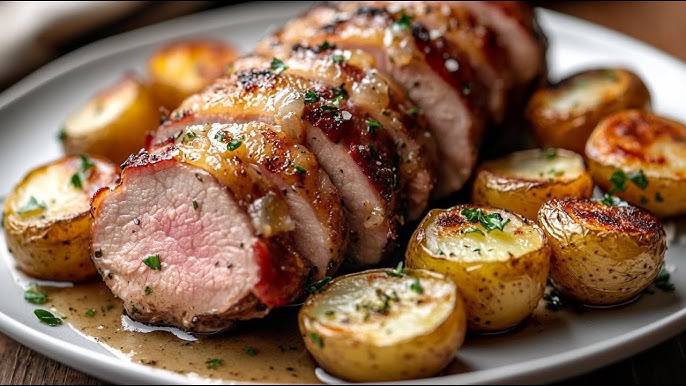
Pork Tenderloin Roast Recipe: A perfectly cooked pork tenderloin roast should be juicy, flavorful, tender, and beautifully browned on the outside. This recipe gives us a reliable way to prepare pork tenderloin with a savory herb-garlic seasoning, a golden roasted finish, and a moist center that slices beautifully for dinner, meal prep, family gatherings, or special occasions.
Pork tenderloin is one of the most tender cuts of pork, but because it is lean, it must be handled carefully. The secret is to season it generously, sear it for color, roast it at the right temperature, and allow it to rest before slicing. With the right method, we can turn a simple pork tenderloin into a delicious main dish that tastes elegant without being complicated.
Ingredients You’ll Need
To make this pork tenderloin roast recipe, we need simple ingredients that build rich flavor without overpowering the natural tenderness of the meat.
Main Ingredients
- 2 pork tenderloins, about 1 to 1½ pounds each
- 2 tablespoons olive oil
- 1 tablespoon Dijon mustard
- 1 tablespoon fresh lemon juice
- 4 garlic cloves, minced
- 1 teaspoon salt, or to taste
- 1 teaspoon black pepper
- 1 teaspoon smoked paprika
- 1 teaspoon dried thyme
- 1 teaspoon dried rosemary
- ½ teaspoon onion powder
- ½ teaspoon garlic powder
- ½ teaspoon dried parsley
- 1 tablespoon honey or brown sugar, optional for light sweetness
- 2 tablespoons butter, optional for finishing
Optional Roasting Additions
- 1 large onion, sliced
- 2 carrots, chopped
- 2 potatoes, cubed
- Fresh rosemary sprigs
- Fresh thyme sprigs
- ½ cup chicken broth or vegetable broth
These optional ingredients help create a flavorful base in the roasting pan. The vegetables absorb the pork juices and seasoning, making them an excellent side dish.
Kitchen Tools Needed
For this recipe, we need a few basic kitchen tools:
- Sharp knife
- Cutting board
- Small mixing bowl
- Large oven-safe skillet or roasting pan
- Tongs
- Meat thermometer
- Aluminum foil
- Serving platter
A meat thermometer is especially important because pork tenderloin can dry out quickly when overcooked. Checking the internal temperature helps us achieve a juicy, safe, and tender result.
Choosing the Best Pork Tenderloin
For the best roasted pork tenderloin, we should choose tenderloins that are firm, pinkish-red, and evenly shaped. A good pork tenderloin should not have a sour smell or excessive liquid in the package. The meat should look fresh and smooth, with only a small amount of visible fat.
Pork tenderloin is different from pork loin. Pork tenderloin is long, narrow, and very tender, while pork loin is larger and thicker. This recipe is designed specifically for pork tenderloin, so the cooking time is shorter than a pork loin roast.
How to Prepare Pork Tenderloin Before Roasting
Before seasoning, we need to prepare the meat properly. Place the pork tenderloins on a clean cutting board and pat them dry with paper towels. Drying the surface helps the seasoning stick better and allows the meat to brown properly during searing.
Next, remove the silver skin, which is the thin, tough membrane found on part of the tenderloin. Slide a sharp knife under the silver skin, angle the blade slightly upward, and carefully trim it away. Removing this membrane improves the texture and makes the finished pork more tender.
After trimming, check the tenderloins for uneven thin ends. If one end is much thinner, tuck it under slightly before tying or roasting. This helps the pork cook more evenly.
Step-by-Step Guide to Make Pork Tenderloin Roast
Step 1: Make the Garlic Herb Marinade
In a small bowl, combine olive oil, Dijon mustard, lemon juice, minced garlic, salt, black pepper, smoked paprika, dried thyme, dried rosemary, onion powder, garlic powder, parsley, and honey if using. Mix everything together until it forms a thick, aromatic paste.
This seasoning blend gives the pork a balanced flavor. The Dijon mustard adds sharpness, the garlic brings depth, the herbs add fragrance, and the smoked paprika gives color and mild smokiness.
Step 2: Season the Pork Tenderloin
Rub the seasoning mixture all over the pork tenderloins. Make sure every side is coated evenly. Press the seasoning into the meat so it sticks well.
For deeper flavor, allow the pork to marinate for at least 30 minutes at room temperature before cooking. For an even stronger taste, cover and refrigerate it for 2 to 8 hours. When ready to cook, let the pork sit at room temperature for about 20 to 30 minutes before roasting. This helps the meat cook more evenly.
Step 3: Preheat the Oven
Preheat the oven to 400°F. This temperature is ideal because it allows the pork to roast quickly while staying juicy inside. A hotter oven also helps develop a beautiful outer crust after searing.
While the oven heats, prepare the roasting pan or skillet. If using vegetables, spread sliced onions, carrots, and potatoes in the pan. Drizzle them lightly with olive oil and season with salt, pepper, and herbs.
Step 4: Sear the Pork for a Golden Crust
Place a large oven-safe skillet over medium-high heat. Add a little olive oil and allow it to heat until shimmering. Carefully place the seasoned pork tenderloins in the skillet.
Sear each side for about 2 to 3 minutes, turning with tongs until the surface is golden brown. This step locks in flavor and gives the pork a rich roasted appearance.
Avoid moving the meat too much while searing. Let each side develop color before turning. A good sear creates a flavorful crust that makes the finished roast more delicious.
Step 5: Roast the Pork Tenderloin
After searing, transfer the skillet directly to the preheated oven. If using a separate roasting pan, place the seared pork on top of the vegetables and pour a little broth into the bottom of the pan.
Roast the pork tenderloin for 15 to 22 minutes, depending on thickness. The most accurate way to know when it is done is by checking the internal temperature. Insert a meat thermometer into the thickest part of the tenderloin. The pork is ready when it reaches 145°F.
At this temperature, the pork will be juicy, slightly blush in the center, and safe to eat. Overcooking beyond this point can make the tenderloin dry.
Step 6: Rest the Pork Before Slicing
Remove the pork from the oven and transfer it to a cutting board. Loosely cover it with aluminum foil and let it rest for 8 to 10 minutes.
Resting is very important because it allows the juices to settle back into the meat. If we slice the pork immediately, the juices will run out and the meat may become dry. After resting, the pork will be easier to slice and more tender to eat.
Step 7: Slice and Serve
Using a sharp knife, slice the pork tenderloin into medallions about ½ inch thick. Arrange the slices on a serving platter and spoon any pan juices over the top.
For extra richness, melt 2 tablespoons of butter into the warm pan juices and drizzle it over the pork before serving. This gives the roast a glossy finish and a delicious savory flavor.
Best Side Dishes for Pork Tenderloin Roast
This pork tenderloin roast recipe pairs beautifully with many side dishes. For a classic dinner, serve it with roasted potatoes, mashed potatoes, steamed green beans, glazed carrots, or buttered rice.
For a lighter plate, pair it with garden salad, roasted asparagus, sautéed spinach, cabbage slaw, or grilled vegetables. The pork also works well with sweet sides such as apple sauce, honey-roasted carrots, cranberry sauce, or sweet potato mash.
A well-balanced plate can include sliced pork tenderloin, roasted vegetables, and a simple sauce made from the pan drippings.
How to Make a Simple Pan Sauce
After removing the pork from the skillet, place the skillet over medium heat. Add ½ cup chicken broth and scrape the browned bits from the bottom of the pan. Let it simmer for a few minutes until slightly reduced.
Add 1 tablespoon Dijon mustard, 1 teaspoon honey, and 1 tablespoon butter. Stir until smooth. Taste and adjust with salt and pepper. This quick pan sauce adds moisture and flavor to the sliced pork.
For a creamier sauce, add a small splash of heavy cream and simmer gently until thickened.
Tips for the Best Pork Tenderloin Roast
For the best result, always pat the pork dry before seasoning. Moisture on the surface can prevent browning.
Do not skip the searing step. Searing gives the pork a deeper flavor and better texture.
Use a meat thermometer instead of guessing. Pork tenderloin is lean, so even a few extra minutes can affect the texture.
Let the meat rest before slicing. This keeps the pork juicy.
Slice against the grain for the most tender bite. Thin, even slices make the roast look elegant and easy to serve.
How Long to Cook Pork Tenderloin Roast
At 400°F, pork tenderloin usually takes about 15 to 22 minutes after searing. The exact time depends on the size and thickness of the tenderloin.
A smaller tenderloin may finish in 15 minutes, while a thicker one may need closer to 22 minutes. The best guide is the internal temperature, not only the clock.
The pork should reach 145°F in the thickest part, then rest for several minutes before slicing.
How to Store Leftover Pork Tenderloin
Store leftover pork tenderloin in an airtight container in the refrigerator for up to 3 to 4 days. Let the meat cool before storing, but do not leave it at room temperature for too long.
For longer storage, slice the pork and place it in freezer-safe bags or containers. Freeze for up to 2 to 3 months. Thaw in the refrigerator overnight before reheating.
How to Reheat Pork Tenderloin Without Drying It Out
To reheat pork tenderloin, place slices in a covered skillet with a splash of broth or water. Warm over low heat until heated through. This method helps keep the meat moist.
We can also reheat it in the oven at 300°F. Place the pork in a baking dish, add a little broth, cover with foil, and heat gently.
Avoid overheating in the microwave, because pork tenderloin can become tough if heated too quickly.
What to Do with Leftover Pork Tenderloin
Leftover pork tenderloin is very useful for quick meals. Slice it thin and use it in sandwiches, wraps, rice bowls, pasta dishes, salads, tacos, fried rice, or breakfast hash.
It can also be chopped and added to soups, casseroles, or stir-fries. Because the pork is already cooked and seasoned, it adds fast flavor to simple meals.
Common Mistakes to Avoid
One common mistake is confusing pork tenderloin with pork loin. Pork loin needs a longer cooking time, while pork tenderloin cooks quickly.
Another mistake is overcooking the meat. Pork tenderloin is lean, so it should not be roasted until dry and pale all the way through.
Skipping the resting time can also reduce juiciness. Resting helps the pork stay tender after slicing.
Using too little seasoning can make the roast taste plain. Pork tenderloin has a mild flavor, so it benefits from bold herbs, garlic, mustard, and spices.
Pork Tenderloin Roast Serving Idea
For a complete meal, serve the sliced pork tenderloin with garlic mashed potatoes, roasted carrots, and a spoonful of Dijon pan sauce. Garnish with fresh parsley or rosemary for a beautiful presentation.
This dish is suitable for Sunday dinner, holiday meals, family gatherings, or simple weeknight cooking. It feels special but remains easy enough for regular home cooking.
FAQs about Pork Tenderloin Roast Recipe
1. How long should we roast pork tenderloin?
We should roast pork tenderloin for about 20 to 25 minutes in a preheated oven at 400°F / 200°C, depending on the thickness of the meat. The best way to know it is ready is to use a meat thermometer. Pork tenderloin should reach an internal temperature of 145°F / 63°C, then rest before slicing.
2. Should pork tenderloin be covered while roasting?
We do not need to cover pork tenderloin for the entire roasting time. Roasting it uncovered helps create a flavorful outer crust. However, if the outside is browning too quickly, we can loosely cover it with foil during the final minutes.
3. How do we keep pork tenderloin juicy?
To keep pork tenderloin juicy, we should avoid overcooking it. Seasoning or marinating the meat before roasting also helps add flavor and moisture. After cooking, we should let it rest for 5 to 10 minutes so the juices settle before slicing.
4. What seasoning works best for pork tenderloin roast?
Pork tenderloin pairs well with garlic, rosemary, thyme, paprika, black pepper, salt, olive oil, mustard, honey, and lemon juice. A simple garlic-herb seasoning gives the roast a rich, savory flavor without overpowering the natural taste of the pork.
5. What can we serve with pork tenderloin roast?
We can serve pork tenderloin roast with mashed potatoes, roasted vegetables, rice, salad, gravy, green beans, or dinner rolls. For a balanced meal, pairing it with vegetables and a light sauce makes the dish more complete and satisfying.
Final Thoughts
This pork tenderloin roast recipe gives us a tender, juicy, and flavorful main dish with simple ingredients and reliable steps. By trimming the meat properly, seasoning it well, searing it for color, roasting it to the correct temperature, and resting it before slicing, we create pork tenderloin that is moist, elegant, and full of savory flavor.
With its golden crust, herb-garlic aroma, and tender slices, this roast is a dependable recipe for both everyday meals and special occasions.