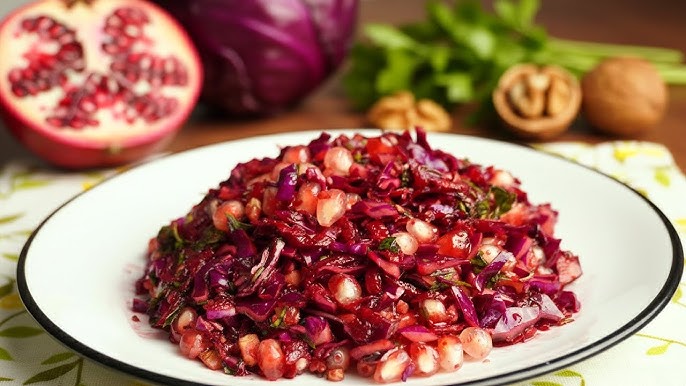
A pomegranate salad recipe is one of the most refreshing, colorful, and elegant dishes we can prepare when we want something healthy, bright, and full of flavor. With juicy pomegranate seeds, crisp greens, creamy cheese, crunchy nuts, and a balanced homemade dressing, this salad delivers the perfect mix of sweet, tangy, fresh, and savory in every bite.
This recipe is ideal for family meals, festive dinners, holiday tables, lunch bowls, and healthy side dishes. It looks beautiful on the table, tastes fresh, and gives us a satisfying combination of textures without requiring complicated cooking. The deep red color of the pomegranate makes the salad visually appealing, while the ingredients create a clean and balanced flavor that works with grilled chicken, roasted turkey, fish, rice dishes, pasta, or even as a light main meal.
Ingredients You’ll Need
To make a delicious pomegranate salad, we need fresh ingredients that bring color, crunch, creaminess, and natural sweetness.
For the Salad
- 4 cups mixed salad greens such as romaine, arugula, baby spinach, lettuce, or spring mix
- 1 cup fresh pomegranate seeds
- 1 medium cucumber, sliced or diced
- 1 small red onion, thinly sliced
- 1 ripe avocado, sliced or cubed
- ½ cup crumbled feta cheese or goat cheese
- ½ cup walnuts, pecans, or almonds
- ½ cup cherry tomatoes, halved
- 1 small apple or pear, thinly sliced
- 2 tablespoons fresh parsley or mint, chopped
- Salt and black pepper to taste
For the Homemade Dressing
- 3 tablespoons extra virgin olive oil
- 1 tablespoon fresh lemon juice
- 1 tablespoon balsamic vinegar or apple cider vinegar
- 1 teaspoon honey or maple syrup
- 1 teaspoon Dijon mustard
- 1 small garlic clove, finely minced
- Salt and black pepper to taste
Choosing the Best Pomegranate for Salad
For the best pomegranate salad recipe, we should use ripe, juicy pomegranates with deep red seeds. A good pomegranate usually feels heavy for its size because it contains plenty of juice. The skin should be firm, smooth, and slightly angular rather than perfectly round. Avoid fruits with soft spots, cracks, or dull skin.
Fresh pomegranate seeds give the salad a bright burst of sweetness and a pleasant juicy crunch. We can use store-bought pomegranate arils for convenience, but fresh seeds usually have a stronger flavor and better texture. If we are preparing the salad for a special meal, fresh pomegranate gives a more vibrant result.
How to Remove Pomegranate Seeds Easily
To remove pomegranate seeds without making a mess, we first cut off the top crown of the pomegranate. Then we gently score the skin from top to bottom along the natural ridges. After that, we pull the fruit apart into sections. We can loosen the seeds by gently bending each section over a bowl.
Another easy method is to place the pomegranate sections in a bowl of water and separate the seeds with our fingers. The seeds sink while the white membrane floats. Once the seeds are separated, we remove the floating membrane, drain the seeds, and pat them dry before adding them to the salad.
Step-by-Step Guide to Make Pomegranate Salad
Step 1: Prepare the Salad Greens
We begin by washing the salad greens thoroughly under cold water. After washing, we dry them well using a salad spinner or clean kitchen towel. Dry greens are important because wet leaves can make the dressing watery and prevent it from coating the salad properly.
Once the greens are dry, we place them in a large salad bowl. Mixed greens provide a fresh base, while spinach gives softness, romaine gives crunch, and arugula adds a slightly peppery taste.
Step 2: Prepare the Fresh Vegetables
Next, we slice the cucumber, halve the cherry tomatoes, and thinly slice the red onion. The cucumber adds freshness and crunch, while the tomatoes bring juiciness and mild sweetness. Red onion adds a sharp flavor that balances the sweetness of the pomegranate.
For a softer onion flavor, we can soak the sliced red onion in cold water for 5 to 10 minutes, then drain it before adding it to the salad. This keeps the onion crisp but reduces its strong bite.
Step 3: Add Fruits for Sweetness and Texture
We add pomegranate seeds to the greens, followed by thin slices of apple or pear. Apple gives a crisp, sweet bite, while pear creates a softer and more delicate flavor. Both work beautifully with pomegranate.
To keep apple or pear slices from browning, we can lightly toss them with a little lemon juice before adding them to the salad. This helps preserve their fresh color and taste.
Step 4: Add Creamy Ingredients
We then add sliced avocado and crumbled feta cheese or goat cheese. Avocado makes the salad rich and creamy, while feta cheese gives a salty, tangy flavor that balances the sweetness of the fruit.
Goat cheese is another excellent option because it has a smooth texture and slightly earthy flavor. For a dairy-free version, we can leave out the cheese or replace it with a plant-based alternative.
Step 5: Add Crunchy Nuts
Toasted walnuts, pecans, or almonds give the salad a crunchy texture and a warm nutty flavor. Toasting the nuts before adding them makes a big difference. We can toast them in a dry pan over medium heat for 2 to 4 minutes, stirring often until fragrant.
After toasting, we allow the nuts to cool before adding them to the salad. Warm nuts can soften the greens, so they should be added only when cooled.
Step 6: Make the Homemade Dressing
In a small bowl or jar, we combine olive oil, lemon juice, balsamic vinegar, honey, Dijon mustard, minced garlic, salt, and black pepper. We whisk everything together until smooth and slightly thickened.
The dressing should taste balanced: lightly sweet, slightly tangy, and savory. If we want it sweeter, we add a little more honey. If we want it sharper, we add more lemon juice or vinegar.
Step 7: Toss the Salad Gently
We pour a small amount of dressing over the salad and toss gently using salad tongs. It is better to start with less dressing and add more as needed. Overdressing can make the salad soggy and heavy.
We should toss carefully so the avocado, cheese, and fruit do not break apart. The goal is to coat the ingredients lightly while keeping the salad fresh and beautiful.
Step 8: Garnish and Serve Fresh
Finally, we sprinkle extra pomegranate seeds, chopped parsley or mint, and a few more nuts on top. This gives the salad a finished look and adds more color and freshness.
The salad is best served immediately after dressing. This keeps the greens crisp, the nuts crunchy, and the pomegranate seeds juicy.
Best Dressing for Pomegranate Salad
The best dressing for pomegranate salad is one that supports the fresh ingredients without overpowering them. A lemon balsamic dressing works well because it has brightness from the lemon, depth from the balsamic vinegar, and smoothness from the olive oil.
Honey or maple syrup helps bring out the natural sweetness of the pomegranate. Dijon mustard helps the dressing blend properly and adds a gentle sharpness. Garlic adds flavor, while salt and black pepper complete the taste.
For a lighter dressing, we can use only olive oil, lemon juice, honey, salt, and pepper. For a richer flavor, we can add a little orange juice or pomegranate juice.
Pomegranate Salad Variations
This pomegranate salad recipe is easy to adjust depending on what we have available.
For a protein-rich salad, we can add grilled chicken, turkey, salmon, shrimp, chickpeas, or boiled eggs. These additions turn the salad into a complete meal.
For a more festive version, we can add roasted sweet potatoes, quinoa, couscous, or wild rice. These ingredients make the salad more filling and suitable for dinner.
For a sweeter version, we can add dried cranberries, orange slices, or grapes. For a more savory version, we can add roasted beets, olives, or grilled vegetables.
What to Serve with Pomegranate Salad
Pomegranate salad pairs well with many dishes. It works beautifully with roasted chicken, grilled fish, lamb, turkey, steak, pasta, rice, and vegetable dishes. It is also a great side dish for holiday meals because it adds freshness and color to the table.
For a light lunch, we can serve it with toasted bread, pita, wraps, or a bowl of soup. For dinner, it can be served beside roasted potatoes, grilled meat, or baked vegetables.
Tips for the Best Pomegranate Salad
For the best result, we should always dry the greens properly before mixing. Wet greens make the salad watery and reduce the flavor of the dressing.
We should add avocado and dressing just before serving to keep the salad fresh. If we are preparing the salad ahead of time, we can wash and chop the ingredients, store them separately, and combine everything when ready to serve.
To keep the nuts crunchy, we should store them separately and add them at the end. Cheese should also be added close to serving time so it does not become too soft.
How to Store Pomegranate Salad
Pomegranate salad is best eaten fresh, but we can store leftovers in an airtight container in the refrigerator for up to 24 hours. However, once the salad has been dressed, the greens may soften over time.
For meal prep, we should store the dressing separately from the salad ingredients. The pomegranate seeds, chopped vegetables, greens, nuts, and cheese can be stored in separate containers. When ready to eat, we simply combine everything and toss with dressing.
Healthy Benefits of Pomegranate Salad
This salad is packed with fresh greens, fruits, healthy fats, and fiber-rich ingredients. Pomegranate seeds provide natural sweetness and are known for their bright color and refreshing taste. Greens add vitamins and freshness, while nuts offer healthy fats and crunch.
Avocado adds creaminess and makes the salad more satisfying. Olive oil provides a smooth base for the dressing, while lemon juice adds freshness without heaviness. This makes the salad a smart choice for anyone who wants a colorful, nutrient-rich dish.
FAQs about Pomegranate Salad Recipe
1. What ingredients go well in a pomegranate salad?
Pomegranate salad pairs beautifully with fresh greens, cucumber, red onion, feta cheese, walnuts, avocado, and citrus fruits. The sweet-tart flavor of pomegranate seeds balances well with creamy, crunchy, and savory ingredients, making the salad refreshing and flavorful.
2. Can we make pomegranate salad ahead of time?
Yes, we can prepare most of the ingredients ahead of time. However, it is best to add the dressing, pomegranate seeds, and delicate toppings shortly before serving. This keeps the salad fresh, crisp, and visually appealing.
3. What dressing is best for pomegranate salad?
A light dressing works best. We can use lemon vinaigrette, balsamic vinaigrette, or a simple mix of olive oil, lemon juice, honey, salt, and black pepper. These dressings enhance the natural sweetness of the pomegranate without overpowering it.
4. Is pomegranate salad healthy?
Yes, pomegranate salad is a healthy option. Pomegranate seeds contain antioxidants, fiber, and vitamins, while fresh vegetables and greens add nutrients and freshness. To keep it lighter, we can use a moderate amount of cheese, nuts, and dressing.
5. How do we store leftover pomegranate salad?
Leftover pomegranate salad should be stored in an airtight container in the refrigerator. It is best eaten within 24 hours, especially if it has already been mixed with dressing. For better freshness, store the dressing separately.
Final Thoughts
A well-made pomegranate salad recipe is fresh, elegant, and full of flavor. With crisp greens, juicy pomegranate seeds, creamy avocado, tangy cheese, crunchy nuts, and a bright homemade dressing, we create a salad that is simple enough for everyday meals and beautiful enough for special occasions.
This recipe gives us the perfect balance of sweetness, freshness, crunch, and creaminess. It is easy to prepare, easy to customize, and always impressive on the table. Whether we serve it as a side dish or a light main meal, this pomegranate salad brings color, taste, and freshness to every plate.