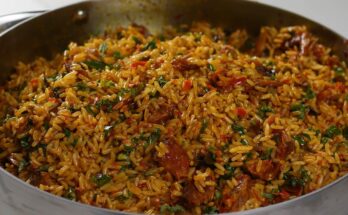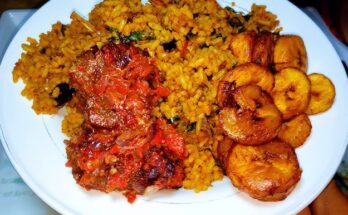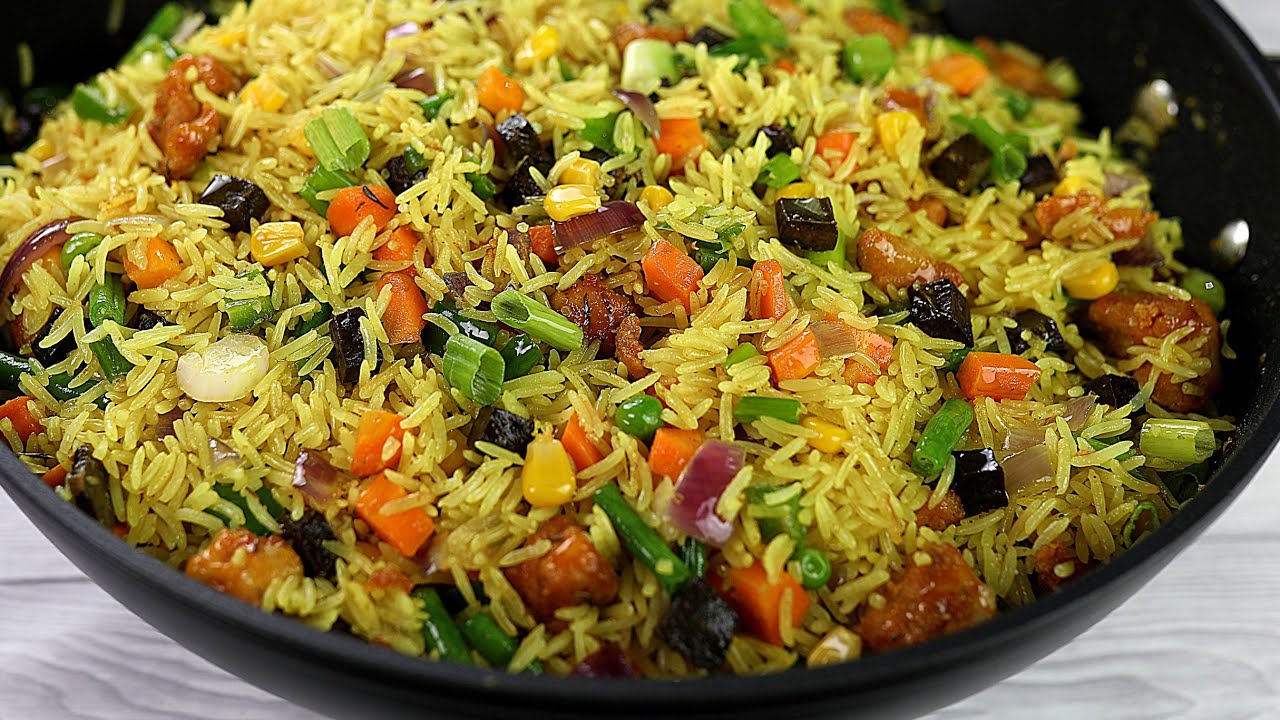
Nigerian fried rice is one of the most colourful, flavourful, and popular rice dishes served across Nigeria. Known for its vibrant vegetables, savoury seasoning, aromatic spices, and rich taste, this dish is a favourite at weddings, birthday parties, family gatherings, festive celebrations, and everyday meals.
Unlike some versions of fried rice that depend heavily on soy sauce, the Nigerian fried rice recipe gets most of its flavour from seasoned stock, curry powder, vegetables, aromatics, and carefully selected proteins. When prepared properly, every grain of rice remains separate while absorbing the delicious flavours of the stock and spices.
In this guide, we show how to make authentic Nigerian fried rice at home with simple ingredients and straightforward cooking techniques.
What Is Nigerian Fried Rice?
Nigerian fried rice is a seasoned rice dish made by combining partially cooked rice with mixed vegetables, spices, stock, and optional proteins such as chicken liver, prawns, shrimp, beef, or chicken.
The characteristic appearance comes from ingredients such as green peas, carrots, sweet corn, green beans, spring onions, bell peppers, and curry powder.
One of the biggest differences between Nigerian fried rice and many Asian-style fried rice recipes is the flavour base. Instead of relying primarily on soy sauce, we use rich chicken or beef stock, curry powder, thyme, onions, seasoning, and vegetables to create its distinctive Nigerian taste.
Ingredients for Nigerian Fried Rice
Before cooking, we recommend preparing and measuring all the ingredients. Fried rice cooks relatively quickly once the vegetables begin frying, so having everything ready makes the process easier.
Main Ingredients We Need
- 3 cups long-grain parboiled rice
- 4 cups chicken or beef stock, as needed
- 1 cup diced carrots
- 1 cup green peas
- 1 cup sweet corn
- 1 cup chopped green beans
- 1 medium green bell pepper, diced
- 1 medium red bell pepper, diced
- ½ cup chopped spring onions
- 1 medium onion, chopped
- ½ cup cooked chicken liver, diced
- 3 tablespoons vegetable oil
- 1 tablespoon butter, optional
- 1–2 teaspoons curry powder
- ½ teaspoon dried thyme
- ½ teaspoon white or black pepper
- 1 teaspoon garlic, minced
- 1 teaspoon ginger, minced
- Seasoning cubes or powder to taste
- Salt to taste
The chicken liver is traditional in many Nigerian fried rice recipes, but we can leave it out or replace it with shrimp, prawns, diced chicken, beef, or another preferred protein.
How to Prepare Nigerian Fried Rice
The secret to great fried rice begins before the actual frying. We want the rice to be properly cooked without becoming soft or sticky.
Step 1: Wash and Prepare the Rice
We rinse the rice thoroughly under clean water to remove excess surface starch.
Next, we place the rice in a pot and add enough seasoned chicken or beef stock to cook it until it is almost tender.
The rice should not become overly soft because it will continue cooking during the frying process.
Once the rice is cooked to a firm texture, we drain any excess liquid and spread it on a tray or wide plate.
Allowing the rice to cool slightly helps the grains remain separate.
Step 2: Prepare the Vegetables
While the rice is cooling, we prepare our vegetables.
We dice the carrots, bell peppers, green beans, onions, and spring onions into relatively small pieces. Keeping the vegetables similar in size allows them to cook evenly.
If using frozen peas or sweet corn, we can allow them to thaw before cooking.
The vegetables should remain slightly crisp after frying. Overcooking them can reduce both their colour and texture.
Step 3: Prepare the Chicken Liver or Protein
If we are using chicken liver, we first boil it with a little seasoning, onion, and salt until properly cooked.
After cooking, we allow it to cool and cut it into small cubes.
We can then lightly fry the liver in a small amount of oil for additional flavour.
For shrimp or prawns, we season them lightly and fry briefly until cooked before removing them from the pan.
Step 4: Fry the Vegetables
We place a large frying pan, wok, or wide pot over medium-high heat.
Add the vegetable oil and optional butter.
Once heated, we add the chopped onions and fry briefly until aromatic. Next, we add the garlic and ginger.
We then add the carrots and green beans because they generally require slightly more cooking time.
After about one or two minutes, we add the peas, sweet corn, bell peppers, and cooked liver.
We season the mixture with curry powder, thyme, pepper, seasoning powder, and a small amount of salt.
The vegetables should be stir-fried quickly rather than slowly cooked.
Step 5: Add the Rice
For the best texture, we recommend frying the rice in batches rather than overcrowding the pan.
Add a portion of cooked rice to the vegetables and stir gently until the rice is evenly combined with the seasoning and vegetable mixture.
Continue frying for a few minutes while stirring occasionally.
Add the spring onions toward the end so they retain their freshness and colour.
Repeat the process until all the rice has been fried.
Taste and adjust the seasoning if necessary.
Our Nigerian fried rice should now have a beautiful golden-green appearance, colourful vegetables, separate grains, and a rich savoury aroma.
How to Make Nigerian Fried Rice Taste Better
Excellent fried rice depends on more than simply combining rice and vegetables. A few cooking techniques can significantly improve the final result.
Use Flavourful Stock
Cooking the rice in well-seasoned chicken or beef stock gives it significantly more flavour than using plain water.
Homemade stock works particularly well because we can control the seasoning and richness.
Do Not Overcook the Rice
Overcooked rice is one of the most common reasons fried rice becomes mushy.
We should cook our rice until it is firm but nearly done. It will finish cooking during the frying stage.
Avoid Too Much Liquid
The vegetables can naturally release moisture while cooking. Adding excessive stock or water while frying can make the rice soggy.
For properly separated fried rice, we keep additional liquid to a minimum.
Fry in Small Batches
When we place too much rice in a small pan, the ingredients tend to steam rather than fry.
Working in batches gives the rice better contact with the hot pan and creates a more desirable fried texture.
Keep the Vegetables Colourful
Vegetables are an important part of Nigerian fried rice.
We fry them only until slightly tender so they maintain their colour, freshness, and gentle crunch.
Best Rice for Nigerian Fried Rice
Long-grain parboiled rice is one of the best options for Nigerian fried rice because the grains are relatively firm and less likely to become sticky.
We can also use basmati rice, although the cooking time and amount of liquid may need to be adjusted.
Regardless of the variety, the important point is to avoid overly soft rice.
Rice that remains firm enough to withstand further frying usually produces the best result.
Nigerian Fried Rice with Chicken
One of the most popular ways to serve this dish is with fried or grilled chicken.
We can season chicken with ingredients such as:
- Onion
- Garlic
- Ginger
- Curry powder
- Thyme
- Paprika
- Pepper
- Seasoning powder
- Salt
The chicken can then be boiled briefly before frying, roasting, air-frying, or grilling.
The stock produced from cooking the chicken can also be used to prepare the rice, creating an even richer flavour.
Nigerian Fried Rice with Shrimp
Shrimp adds another layer of flavour and works particularly well for special occasions.
We lightly season cleaned shrimp with salt, pepper, garlic, and a little seasoning powder.
The shrimp should be fried quickly and removed from the pan before cooking the vegetables. We return it toward the end of the cooking process.
This prevents the shrimp from becoming tough or overcooked.
Vegetable Nigerian Fried Rice
We can also make delicious Nigerian fried rice without meat.
For a vegetable version, we increase ingredients such as carrots, peas, sweet corn, green beans, bell peppers, mushrooms, and spring onions.
Vegetable stock can replace chicken or beef stock.
The same cooking method applies, making this an easy option for anyone who prefers a meat-free meal.
Common Nigerian Fried Rice Mistakes to Avoid
Several small mistakes can affect the texture and taste of fried rice.
Overcooking the Rice
Soft rice can become mushy when stir-fried. We therefore stop the initial cooking process while the grains are still firm.
Using Too Much Curry Powder
Curry powder contributes colour and flavour, but too much can overwhelm the dish.
We use enough to season the rice without allowing it to dominate every other ingredient.
Overcooking the Vegetables
Cooking vegetables for too long makes them soft and dull.
Quick stir-frying helps maintain their freshness.
Overcrowding the Frying Pan
Trying to fry an entire pot of rice in a small pan can cause steaming.
We achieve better results by working in manageable batches.
Adding Too Much Salt
Stock and seasoning cubes may already contain salt, so we recommend tasting the food before adding additional salt.
What to Serve with Nigerian Fried Rice
Nigerian fried rice can be served as a complete meal, but it is especially delicious alongside popular Nigerian proteins and side dishes.
Popular Fried Rice Side Dishes
We can serve it with:
- Fried chicken
- Grilled chicken
- Turkey
- Beef
- Goat meat
- Fried fish
- Grilled fish
- Shrimp or prawns
- Coleslaw
- Fried plantain
- Moi Moi
- Fresh vegetable salad
For Nigerian parties, fried rice is frequently served alongside Nigerian jollof rice, chicken, moi moi, salad, and fried plantain.
How to Store Leftover Nigerian Fried Rice
If we have leftover fried rice, proper storage is important.
We should cool leftovers promptly and place them in an airtight container in the refrigerator rather than leaving cooked rice at room temperature for extended periods.
When reheating, the rice should be heated thoroughly until steaming hot throughout.
We can reheat it in a frying pan with a small amount of oil or use another suitable reheating method.
For the best quality and food safety, leftovers should be handled carefully and consumed within an appropriate refrigerated storage period.
How to Keep Nigerian Fried Rice from Becoming Soggy
The easiest way to avoid soggy fried rice is to control both the rice texture and the amount of moisture used during cooking.
We should begin with firm rice, drain excess liquid, and allow the rice to cool before frying.
We should also avoid adding unnecessary water once frying begins.
Using a sufficiently hot pan and frying in batches further prevents the rice from steaming.
The result should be light, fluffy fried rice with clearly separated grains.
Tips for Perfect Nigerian Fried Rice Every Time
A few final techniques can help us consistently achieve excellent results.
Important Cooking Tips
- Use long-grain rice that remains firm after cooking.
- Cook the rice with flavourful stock rather than plain water when possible.
- Prepare all vegetables before starting the frying process.
- Keep the frying pan hot enough to stir-fry rather than steam the ingredients.
- Add harder vegetables before softer vegetables.
- Avoid excessive curry powder.
- Fry the rice in manageable batches.
- Add spring onions near the end for freshness.
- Taste before adding additional salt.
- Serve the fried rice while warm for the best texture and flavour.
Why This Nigerian Fried Rice Recipe Works
This method gives us a balanced combination of fluffy rice, savoury stock, crisp vegetables, aromatic spices, and optional protein.
Cooking the rice separately helps us control its texture, while quickly frying the vegetables prevents them from becoming overly soft.
The use of chicken stock, curry powder, thyme, ginger, garlic, pepper, and fresh vegetables creates the familiar flavour associated with traditional Nigerian fried rice.
Most importantly, the recipe is flexible.
We can prepare it with chicken liver for a classic taste, add shrimp for a seafood version, increase the vegetables for a meat-free meal, or serve it with chicken and plantain for a complete Nigerian meal.
FAQs about Nigerian Fried Rice Recipe
1. What is Nigerian fried rice?
Nigerian fried rice is a colourful rice dish prepared with vegetables, seasonings, stock, and often proteins such as chicken, beef, liver, or shrimp. It is popular at parties, weddings, and family gatherings.
2. What type of rice is best for Nigerian fried rice?
Long-grain parboiled rice is commonly preferred because it remains firm and separates easily after cooking.
3. What vegetables are used in Nigerian fried rice?
Common vegetables include carrots, green peas, sweet corn, green beans, bell peppers, and spring onions.
4. How do we prevent Nigerian fried rice from becoming soggy?
We should avoid overcooking the rice and adding too much liquid. The rice should be cooked until firm before being fried with the vegetables and seasonings.
5. Can we make Nigerian fried rice without liver?
Yes. Liver is optional. We can replace it with chicken, shrimp, beef, sausage, or prepare the dish without meat.
6. What gives Nigerian fried rice its distinctive colour?
Its attractive colour usually comes from curry powder, vegetables, and seasonings rather than soy sauce.
7. Can Nigerian fried rice be made vegetarian?
Yes. We can use vegetable stock instead of meat stock and add more vegetables or plant-based protein.
8. What can we serve with Nigerian fried rice?
It pairs well with fried chicken, grilled chicken, turkey, beef, plantain, coleslaw, or salad.
9. How should leftover fried rice be stored?
Place leftovers in an airtight container and refrigerate promptly. Reheat thoroughly before serving.
Conclusion
By cooking the rice until just firm, using well-seasoned stock, frying the vegetables quickly, controlling moisture, and preparing the rice in batches, we can achieve restaurant-quality fried rice without complicated techniques.
Whether we are preparing food for a family lunch, dinner, celebration, or Nigerian party, this recipe provides a reliable way to make authentic Nigerian fried rice that is colourful, satisfying, and full of flavour.
Serve it with fried chicken, grilled meat, fish, plantain, moi moi, or salad, and we have a complete Nigerian meal that works equally well for everyday dining and special occasions.