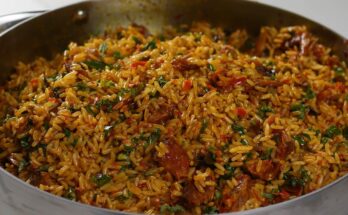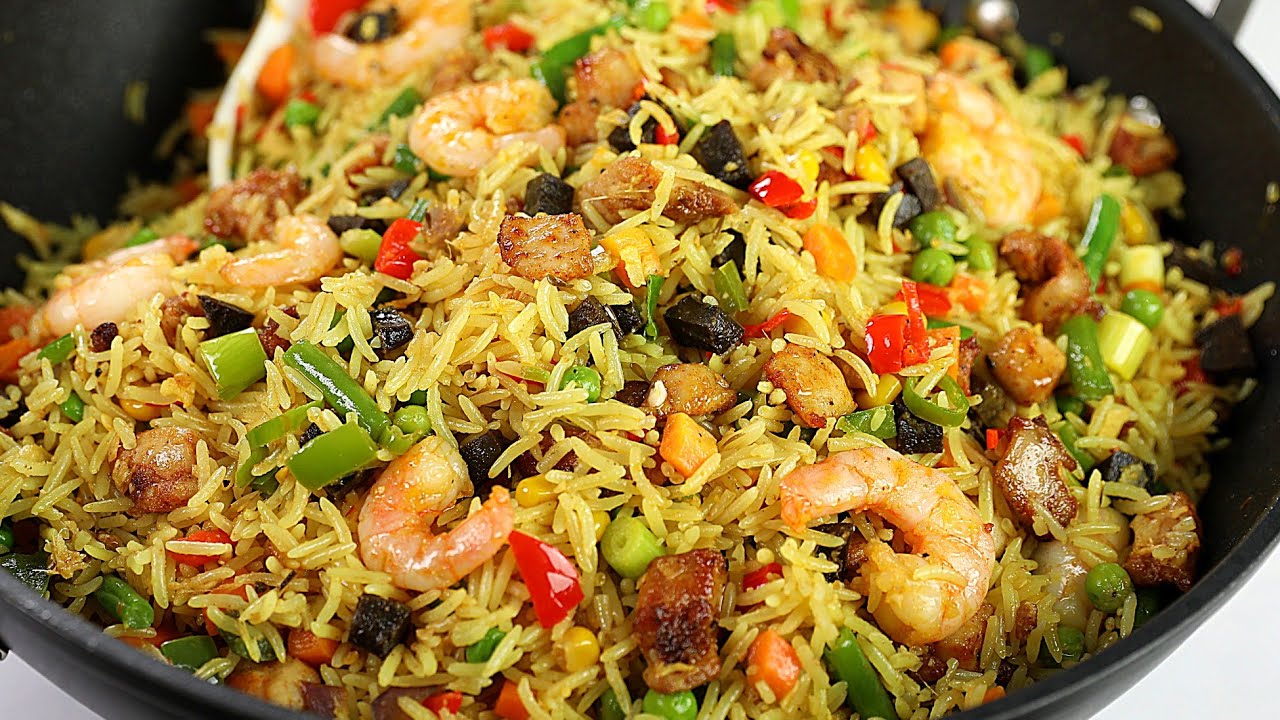
Nigerian Coconut Rice is a rich, aromatic rice dish prepared with coconut milk, peppers, tomatoes, spices, vegetables, and perfectly cooked rice. It combines the natural sweetness and creamy flavor of coconut with the bold, savory taste that makes Nigerian rice dishes so satisfying.
When we prepare coconut rice correctly, every grain absorbs the seasoned coconut broth while remaining tender and separate. The result is a colorful, fragrant meal that works beautifully for family lunches, Sunday dinners, celebrations, parties, and special occasions.
This Nigerian Coconut Rice recipe provides a practical method for achieving deep coconut flavor without making the rice overly soft, oily, or heavy.
What Is Nigerian Coconut Rice?
Nigerian Coconut Rice is a seasoned rice dish in which rice is cooked primarily with coconut milk or coconut extract alongside peppers, tomatoes, onions, stock, spices, and other flavorful ingredients.
Unlike ordinary white rice, the cooking liquid itself is heavily seasoned. As the rice cooks, it absorbs the coconut milk and stock, giving each grain a rich taste.
Different Nigerian households prepare coconut rice differently. Some recipes use a tomato and pepper base, while others keep the rice lighter in color so that the coconut flavor remains dominant. We can also include vegetables, chicken, shrimp, smoked fish, liver, or other proteins depending on the desired result.
Ingredients for Nigerian Coconut Rice
Before cooking, we recommend measuring and preparing all the ingredients. This makes the cooking process easier and prevents the rice from overcooking while other ingredients are being prepared.
Main Ingredients
- 3 cups long-grain parboiled rice
- 2 cups coconut milk
- 1½ to 2 cups chicken or meat stock
- 2 medium red bell peppers
- 2 medium tomatoes
- 1 to 2 Scotch bonnet peppers
- 1 large onion
- 2 tablespoons tomato paste
- 3 tablespoons vegetable oil
- 1 teaspoon curry powder
- 1 teaspoon dried thyme
- 1 teaspoon garlic powder or fresh minced garlic
- 1 teaspoon ginger
- 2 seasoning cubes
- 1 bay leaf
- Salt to taste
Optional Ingredients for Extra Flavor
We can make the dish even more colorful and satisfying by adding:
- Diced carrots
- Green peas
- Sweet corn
- Chopped spring onions
- Green bell pepper
- Red bell pepper
- Cooked chicken
- Grilled chicken
- Shrimp
- Fried liver
- Smoked fish
These additions are optional because the coconut rice remains delicious when prepared with only the basic ingredients.
Choosing the Best Rice for Coconut Rice
The type of rice we use affects the final texture significantly.
Long-grain parboiled rice is one of the best choices for Nigerian coconut rice because it holds its shape well during cooking and is less likely to become mushy.
We should rinse the rice thoroughly until the water becomes considerably clearer. Washing removes excess surface starch, helping the cooked grains remain separate.
If necessary, we can parboil the rice briefly before adding it to the coconut sauce. However, when using good-quality parboiled rice, rinsing thoroughly may be sufficient.
How to Make Nigerian Coconut Rice
The key to excellent coconut rice is building a flavorful sauce before adding the rice. We should avoid simply pouring coconut milk over plain rice because the seasoning needs enough time to develop.
Step 1: Prepare the Pepper Mixture
We blend the red bell peppers, tomatoes, Scotch bonnet pepper, and part of the onion until smooth.
We do not need excessive water during blending. Too much liquid can dilute the sauce and make controlling the rice texture more difficult.
The amount of Scotch bonnet pepper can be adjusted depending on how spicy we want the coconut rice.
Step 2: Wash the Rice
We place the rice in a bowl and rinse it several times with clean water.
After washing, we drain the rice thoroughly and set it aside.
This simple step is important because excess starch can cause the rice grains to stick together during cooking.
Step 3: Fry the Onions and Tomato Paste
We heat the vegetable oil in a large pot over medium heat.
Next, we add the remaining chopped onion and sauté it until fragrant and slightly translucent.
We add the tomato paste and fry for approximately two to three minutes.
Frying the tomato paste reduces its raw acidic taste and creates a deeper flavor.
Step 4: Cook the Pepper Sauce
We pour the blended pepper mixture into the pot and stir well.
We allow the sauce to cook until it reduces and the raw tomato taste disappears.
At this stage, we add:
- Curry powder
- Thyme
- Garlic
- Ginger
- Seasoning cubes
- Bay leaf
- Salt
We stir everything thoroughly so the seasonings are evenly distributed.
Step 5: Add the Coconut Milk and Stock
We pour the coconut milk into the cooked pepper sauce, followed by the chicken or meat stock.
We stir the mixture and allow it to come to a gentle boil.
Before adding the rice, we taste the liquid.
The broth should taste slightly stronger than we want the finished rice because the rice will absorb and soften the intensity of the seasoning during cooking.
We can adjust the salt, seasoning, pepper, or coconut milk at this stage.
Step 6: Add the Rice
We add the washed and drained rice to the coconut broth and stir gently.
The liquid should be enough to cook the rice without completely flooding the pot. If necessary, we can add a little extra stock or water.
Once the mixture begins to boil, we reduce the heat.
We cover the pot tightly with a lid. For better steam retention, we can place foil or baking paper underneath the lid.
The trapped steam allows the rice to cook gently without requiring excessive liquid.
Step 7: Cook Until Tender
We allow the coconut rice to cook over low to medium-low heat until most of the liquid has been absorbed.
Instead of stirring continuously, we check the rice occasionally.
Frequent stirring can break the grains and create a sticky texture.
If the rice is still firm after the liquid has almost disappeared, we can add a small amount of hot water or stock, cover the pot again, and continue steaming.
Step 8: Add the Vegetables
When the rice is almost completely cooked, we add our preferred vegetables.
Carrots, peas, sweet corn, bell peppers, and spring onions are excellent options.
We gently fold them into the rice, cover the pot, and allow everything to steam for several minutes.
Adding vegetables near the end helps maintain their color and prevents them from becoming excessively soft.
How to Make Coconut Rice Taste Better
A delicious Nigerian coconut rice recipe depends on balancing coconut flavor with savory seasoning.
Use Good-Quality Coconut Milk
Coconut milk is the foundation of this dish. We should use rich coconut milk rather than an overly diluted product.
Fresh homemade coconut milk can provide an especially natural coconut aroma, but good-quality canned coconut milk also works well.
Use Flavorful Stock
Instead of relying entirely on water, we can use chicken, turkey, or beef stock.
A properly seasoned stock adds depth and prevents the coconut rice from tasting flat.
Do Not Overuse Tomato
Tomatoes provide color and acidity, but too much tomato can overpower the coconut.
For a true coconut-forward flavor, we keep the tomato mixture balanced and allow the coconut milk to remain noticeable.
Cook on Low Heat
Once the rice enters the pot, lower heat is preferable.
High heat may cause the bottom of the rice to burn before the upper grains have finished cooking.
Steam and gentle heat produce better results.
How to Use Fresh Coconut for Coconut Rice
Fresh coconut can be used instead of packaged coconut milk.
We begin by breaking a mature coconut and removing the white flesh from the shell. We cut the coconut flesh into smaller pieces and blend it with warm water.
Next, we pour the blended mixture through a fine sieve or clean cheesecloth and squeeze thoroughly.
The extracted white liquid becomes our fresh coconut milk.
For a stronger flavor, we should avoid adding too much water while extracting the milk.
Nigerian Coconut Rice With Chicken
Chicken is one of the best proteins to serve with coconut rice.
We can season chicken with onions, garlic, ginger, curry, thyme, seasoning, pepper, and salt before cooking or grilling it.
The resulting chicken stock can then be used in the coconut rice.
This method creates additional flavor because the rice absorbs both coconut milk and seasoned chicken stock.
Grilled or fried chicken can be placed beside the finished rice or chopped and folded into it.
Nigerian Coconut Rice With Shrimp
Shrimp provides another excellent variation.
We season cleaned shrimp lightly with salt, pepper, garlic, and seasoning before sautéing it briefly.
Because shrimp cooks quickly, we should avoid adding it at the beginning of the cooking process.
Instead, we can fold the cooked shrimp into the coconut rice shortly before serving.
The combination of seafood and coconut produces a particularly rich and aromatic dish.
Common Coconut Rice Mistakes to Avoid
Even a straightforward recipe can go wrong when the liquid and heat are not properly controlled.
Adding Too Much Liquid
Excess coconut milk, stock, or water can make the rice soggy.
It is better to begin with a controlled amount of liquid and add a small quantity later if necessary.
Using Too Much Heat
Cooking rice aggressively over high heat increases the risk of burning.
Once the coconut broth begins boiling, we reduce the heat and allow steam to finish most of the cooking.
Over-Stirring the Rice
Stirring repeatedly can break the grains and produce a mushy consistency.
We stir gently only when necessary.
Under-Seasoning the Sauce
Rice absorbs seasoning as it cooks.
For this reason, the coconut broth should already have a rich, balanced flavor before the rice is added.
Overcooking the Vegetables
Vegetables should retain some texture and color.
We therefore add them toward the end rather than allowing them to cook with the rice from the beginning.
What to Serve With Nigerian Coconut Rice
Nigerian Coconut Rice can be enjoyed on its own, but several side dishes can turn it into a more complete meal.
We can serve it with:
- Fried chicken
- Grilled chicken
- Peppered chicken
- Fried turkey
- Grilled fish
- Fried fish
- Shrimp
- Beef
- Goat meat
- Plantain
- Coleslaw
- Fresh vegetable salad
- Moi Moi
- Steamed vegetables
Fried ripe plantain is particularly popular because its sweetness complements the creamy coconut flavor of the rice.
How to Keep Coconut Rice From Becoming Soggy
The correct ratio of rice to cooking liquid is essential.
We should remember that coconut milk, pepper puree, tomato liquid, and stock all contribute moisture. We therefore need to consider the total amount of liquid rather than measuring only the water or stock.
We also avoid adding large amounts of additional liquid once cooking begins.
If the rice is almost cooked but still slightly firm, adding a few tablespoons of hot water and allowing it to steam is usually better than pouring in another cup of liquid.
How to Store Leftover Coconut Rice
We should allow leftover rice to cool before transferring it into an airtight food container.
Refrigerated coconut rice is best consumed within a few days when properly stored.
For longer storage, we can portion it into freezer-safe containers and freeze it.
When reheating, we sprinkle a small amount of water over the rice and heat it thoroughly. The added moisture creates steam and helps restore a softer texture.
We should avoid repeatedly reheating the same batch.
Easy Nigerian Coconut Rice Variations
One advantage of coconut rice is its flexibility.
Vegetable Coconut Rice
We can increase the quantity of carrots, peas, sweet corn, green beans, and bell peppers for a colorful vegetable-focused version.
Chicken Coconut Rice
We add cooked or grilled chicken and prepare the rice with chicken stock.
Seafood Coconut Rice
Shrimp, prawns, or properly prepared fish can complement the tropical coconut flavor.
Spicy Coconut Rice
For those who enjoy considerable heat, we can increase the Scotch bonnet pepper while keeping the other flavors balanced.
Simple Coconut Rice
For a lighter version, we can reduce the tomato and pepper mixture and cook the rice mainly with coconut milk, stock, onions, spices, and vegetables.
Tips for Perfect Nigerian Coconut Rice Every Time
For consistently flavorful results, we should focus on a few important details:
- Wash the rice thoroughly to remove excess starch.
- Use rich coconut milk for a stronger coconut taste.
- Season the cooking broth properly before adding the rice.
- Control the amount of liquid to prevent soggy rice.
- Cook over gentle heat after the rice begins simmering.
- Keep the pot tightly covered so steam does most of the cooking.
- Avoid excessive stirring to keep the grains intact.
- Add vegetables toward the end for better color and texture.
- Use stock instead of plain water whenever possible.
- Taste and adjust seasoning before the rice absorbs the broth.
Why This Nigerian Coconut Rice Recipe Works
This method develops flavor in stages rather than adding every ingredient at once.
We first cook the onion, tomato paste, and pepper mixture to remove raw flavors. We then introduce spices, coconut milk, and stock to create a seasoned cooking broth before adding the rice.
As the rice gently steams, it absorbs the coconut-infused liquid without becoming unnecessarily wet.
Finishing with vegetables or cooked protein adds freshness, texture, and color while preserving the unmistakable flavor of Nigerian coconut rice.
FAQs about Nigerian Coconut Rice Recipe
1. What is Nigerian coconut rice?
Nigerian coconut rice is a flavourful rice dish cooked with coconut milk, seasonings, vegetables, and sometimes proteins such as chicken, shrimp, or fish. It has a rich, slightly sweet coconut flavour balanced with savoury spices.
2. What type of rice is best for Nigerian coconut rice?
We recommend long-grain parboiled rice because it remains firm and separate during cooking. Basmati rice can also be used for a lighter texture and pleasant aroma.
3. Can we use canned coconut milk?
Yes. Canned coconut milk works perfectly and saves preparation time. Freshly extracted coconut milk can also be used for a more traditional and naturally rich coconut flavour.
4. How do we prevent coconut rice from becoming soggy?
Use the correct amount of liquid and avoid excessive stirring. We should also cook the rice over low to medium heat once most of the liquid has been absorbed.
5. Can Nigerian coconut rice be prepared without meat?
Absolutely. We can make vegetarian coconut rice using coconut milk, vegetables, peppers, onions, and vegetable stock without adding meat or seafood.
6. What vegetables can we add to coconut rice?
Popular options include carrots, green peas, sweet peppers, green beans, and spring onions. They add colour, flavour, and texture to the dish.
7. What can we serve with Nigerian coconut rice?
Coconut rice pairs well with fried chicken, grilled fish, beef, shrimp, plantain, coleslaw, or salad.
8. How should leftover coconut rice be stored?
Allow it to cool, transfer it into an airtight container, and refrigerate promptly. Reheat thoroughly before serving.
Conclusion
A well-prepared Nigerian Coconut Rice recipe should deliver tender, flavorful rice with a noticeable coconut aroma, balanced spices, and just enough pepper to complement the natural sweetness of the coconut milk.
By preparing a rich pepper base, using quality coconut milk, seasoning the broth properly, controlling the cooking liquid, and allowing the rice to steam gently, we can achieve consistently delicious results.
Whether we serve it with fried chicken, grilled fish, shrimp, plantain, Moi Moi, or fresh salad, Nigerian Coconut Rice remains a satisfying dish suitable for both everyday meals and special occasions. Its rich coconut flavor, colorful appearance, and versatility make it a worthy addition to any collection of authentic Nigerian recipes.