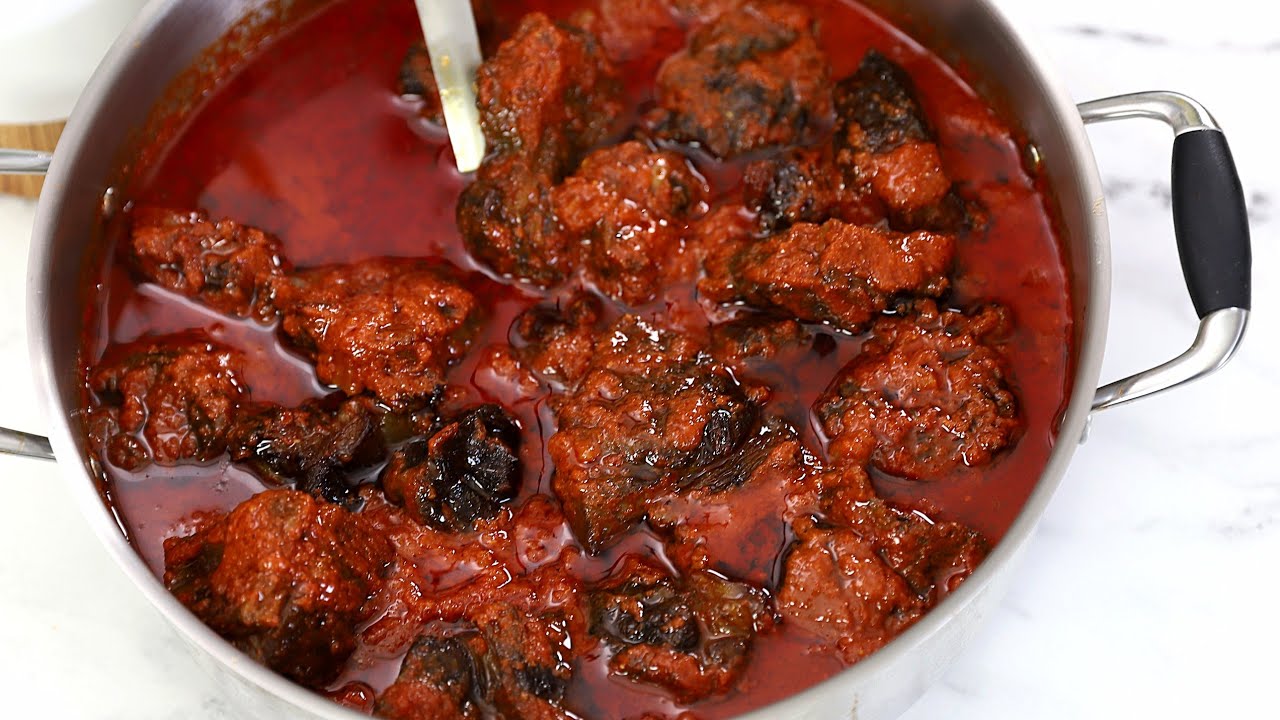
Nigerian Beef Stew is a rich, deeply flavoured tomato and pepper stew prepared with tender beef, fresh peppers, tomatoes, onions, aromatic seasonings and cooking oil. It is one of the most versatile dishes in Nigerian cuisine, commonly served with white rice, jollof rice, boiled yam, fried plantain, spaghetti, beans and other traditional meals.
What makes an authentic Nigerian beef stew special is the balance of flavours. We combine the natural sweetness of red bell peppers and tomatoes with the heat of fresh chilli peppers, the savoury richness of beef stock and carefully selected seasonings. We then cook the pepper mixture thoroughly until it develops a concentrated taste and beautiful red colour.
When prepared correctly, the result is a thick, aromatic Nigerian tomato stew with tender pieces of beef and enough flavour to transform even the simplest side dish into a satisfying meal.
What Is Nigerian Beef Stew?
Nigerian beef stew is a pepper and tomato-based stew cooked with seasoned beef. Unlike lighter tomato sauces, Nigerian stew is usually cooked for longer so that excess moisture evaporates and the ingredients develop a deeper, richer flavour.
The traditional preparation involves boiling seasoned beef until tender, blending tomatoes with peppers and onions, frying or simmering the blended mixture in oil and then adding the cooked beef and stock.
We aim for a consistency that is neither watery nor excessively oily. The finished stew should coat the beef beautifully while remaining saucy enough to serve generously over rice, yam or pasta.
Ingredients for Nigerian Beef Stew
Before we begin cooking, we prepare all the ingredients so the process remains simple and organised.
Main Ingredients
- 1 kg beef, cut into medium-sized pieces
- 5 large red bell peppers
- 5 medium fresh tomatoes
- 2 medium onions
- 2–4 Scotch bonnet peppers, depending on preferred heat
- 3 tablespoons tomato paste
- 1–1½ cups vegetable oil
- 1–2 cups beef stock
- 2 teaspoons curry powder
- 1 teaspoon dried thyme
- 2–3 seasoning cubes
- 1 teaspoon ground black or white pepper
- Salt to taste
- 1 teaspoon garlic powder or 2 fresh garlic cloves, optional
- 1 teaspoon ginger, optional
- 1–2 bay leaves, optional
The amount of Scotch bonnet pepper can be adjusted according to preference. Nigerian stew should have some heat, but the chilli should complement rather than overpower the other ingredients.
Best Beef to Use for Nigerian Beef Stew
We recommend using stewing beef with a moderate amount of fat and connective tissue. Such cuts become tender during cooking and contribute additional flavour to the stock.
Boneless beef is convenient, but bone-in pieces can create an especially flavourful broth. A combination of both can also work well.
We cut the meat into relatively even pieces so that it cooks at approximately the same rate. Extremely large pieces take longer to soften, while very small pieces can become dry.
How to Prepare the Pepper and Tomato Blend
The pepper mixture forms the foundation of our Nigerian beef stew recipe, so we give this stage proper attention.
We wash the red bell peppers, tomatoes, Scotch bonnet peppers and one onion. We remove the stalks and seeds where necessary, cut the vegetables into smaller pieces and place them in a blender.
We blend everything until smooth.
If the blender requires additional liquid, we add only a small quantity of water. Using too much water increases the cooking time because the liquid must eventually evaporate before the stew can develop its concentrated flavour.
For an even richer stew, we can briefly roast the tomatoes and peppers before blending. However, this is optional and is not necessary for achieving excellent results.
How to Cook Nigerian Beef Stew Step by Step
Cooking Nigerian beef stew is simple when we prepare the ingredients properly and allow the tomato-pepper mixture to cook until rich and flavorful.
Step 1: Prepare and Season the Beef
Wash the beef and place it in a pot. Season with onion, seasoning cubes, thyme, curry powder, salt, and a little water. Cook until the beef is tender. Reserve the beef stock for the stew.
Step 2: Fry or Grill the Beef
Heat some vegetable oil and lightly fry the cooked beef until browned. Alternatively, we can grill or air-fry it for a lighter option. Set aside.
Step 3: Blend the Pepper Mixture
Blend fresh tomatoes, red bell peppers, Scotch bonnet peppers, and onions until smooth. Pour into a pot and boil for a few minutes to reduce excess water.
Step 4: Fry the Tomato Base
Heat vegetable oil in a large pot and sauté sliced onions until fragrant. Add tomato paste and fry briefly. Pour in the blended pepper mixture and cook over medium heat, stirring occasionally, until the sauce thickens and the oil begins to rise to the surface.
Step 5: Season the Stew
Add thyme, curry powder, seasoning cubes, salt, and reserved beef stock. Stir thoroughly and allow the stew to simmer for about 10 minutes.
Step 6: Add the Beef
Add the fried beef to the stew and mix well. Simmer for another 10–15 minutes so the meat absorbs the rich flavors.
How to Know When Nigerian Stew Is Properly Cooked
One of the most common problems when preparing tomato stew is stopping the cooking process too early.
Properly cooked Nigerian stew should have a deep red or reddish-orange appearance, depending on the peppers and oil used. The raw aroma of fresh tomatoes should disappear completely.
We should also notice that the sauce becomes thicker and more concentrated.
A slight separation of oil around the surface or edges of the stew is another useful indication that the pepper mixture has cooked thoroughly.
However, excessive oil separation is unnecessary. Our objective is a flavourful, well-reduced sauce rather than an overly greasy stew.
Tips for Making the Best Nigerian Beef Stew
Several small techniques can significantly improve the final result.
Use Ripe Red Peppers
Bright red bell peppers contribute colour, mild sweetness and body. We avoid using large quantities of green peppers because they can alter the colour and flavour of traditional Nigerian red stew.
Do Not Add Too Much Water
The vegetables already contain substantial moisture. Adding too much water while blending means we must spend considerably longer reducing the sauce.
Cook the Pepper Mixture Thoroughly
Patience is essential. A properly cooked pepper base gives us the deep flavour associated with authentic Nigerian stew.
Use the Beef Stock
Instead of replacing all the cooking liquid with plain water, we use some of the stock from the seasoned beef. It intensifies the savoury flavour of the stew.
Control the Heat Level
Scotch bonnet pepper provides authentic Nigerian heat, but we adjust the quantity according to preference. The stew does not have to be painfully spicy to taste authentic.
Taste Before Adding Extra Salt
Beef stock and seasoning cubes may already contain significant amounts of salt. We therefore taste before adding additional salt.
How to Make Nigerian Beef Stew Less Acidic
A strongly acidic tomato flavour usually means the tomato mixture requires additional cooking.
Rather than immediately adding sugar, we continue cooking the stew gently until the tomatoes lose their raw sharpness.
Using ripe tomatoes and naturally sweet red bell peppers also helps create a more balanced sauce.
If tomato paste is included, frying it for several minutes before adding the blended peppers can further reduce its raw acidic flavour.
How to Make Nigerian Beef Stew Thicker
If our stew is too watery, we leave the pot partially uncovered and allow it to simmer over medium-low heat.
As the excess liquid evaporates, the stew naturally thickens and its flavour becomes more concentrated.
We avoid adding flour or cornstarch because traditional Nigerian tomato stew generally does not require artificial thickeners.
The tomatoes, peppers and onions provide enough body when properly reduced.
What to Serve With Nigerian Beef Stew
One major advantage of this Nigerian beef stew recipe is its versatility.
We can prepare a generous quantity and serve it with different meals throughout the week.
Popular Nigerian Beef Stew Pairings
Nigerian beef stew tastes especially delicious with:
- White rice and fried plantain
- Boiled white yam
- Fried yam
- Boiled potatoes
- Spaghetti or other pasta
- Beans
- Bread
- Nigerian jollof rice
- Coconut rice
- Fried rice
- Boiled plantain
- Rice and beans
A classic combination is steamed white rice, Nigerian beef stew and fried ripe plantain. The mild flavour of rice balances the spicy tomato sauce, while the sweetness of plantain complements the savoury beef.
Nigerian Beef Stew With White Rice
When serving the stew with white rice, we cook the rice separately until tender and fluffy.
We spoon the beef stew generously over the rice and include one or two pieces of tender beef per serving.
For a more complete Nigerian meal, we can add fried plantain, steamed vegetables, coleslaw or a simple salad.
This combination works particularly well because the plain rice allows the concentrated flavours of the pepper, tomato and seasoned beef to stand out.
Can We Use Canned Tomatoes for Nigerian Beef Stew?
Yes. Fresh tomatoes are widely used, but good-quality canned tomatoes can also produce excellent results.
When using canned tomatoes, we still combine them with fresh red bell peppers, Scotch bonnet peppers and onions for a fuller Nigerian flavour.
Canned tomatoes can sometimes have a stronger acidic taste, so we ensure the sauce cooks long enough for that sharpness to mellow.
Tomato paste remains optional, although a small quantity can improve the depth and colour of the stew.
Can Nigerian Beef Stew Be Made Without Frying the Beef?
Absolutely.
Frying is mainly used to create additional texture and flavour. We can add the boiled beef directly to the cooked tomato stew instead.
For another option, we can lightly brown the cooked beef in a small quantity of oil rather than deep-frying it.
Whichever method we choose, the most important requirement is ensuring that the beef is properly seasoned and tender before the final simmer.
How to Store Nigerian Beef Stew
Nigerian beef stew is particularly suitable for batch cooking because its flavour remains rich after reheating.
After cooking, we allow the stew to cool before transferring it into clean, airtight containers.
We store the portions in the refrigerator if they will be consumed within a few days.
For longer storage, we divide the stew into smaller freezer-safe containers and freeze it. Portioning prevents us from repeatedly thawing and reheating the entire batch.
When reheating, we place the required portion in a saucepan and heat thoroughly over medium-low heat, stirring occasionally.
If the sauce has become extremely thick during storage, we can add a very small amount of water or stock while reheating.
Common Mistakes to Avoid When Making Nigerian Beef Stew
Even a simple stew can lose flavour or texture when certain preparation stages are rushed.
One common mistake is using too much water while blending the peppers. This unnecessarily lengthens the cooking process.
Another is failing to cook the tomato and pepper mixture thoroughly. Undercooked tomatoes can leave the stew tasting raw, sour and watery.
Excessive seasoning can also overpower the natural flavour of the beef and peppers. We season gradually and taste throughout the cooking process.
We also avoid adding large quantities of beef stock at once. It is easier to thin a thick stew than to correct one that has become excessively watery.
Finally, we keep an eye on the heat. Once the sauce has thickened, it can burn easily at the bottom of the pot if left unattended.
How to Get a Rich Red Colour in Nigerian Beef Stew
The colour of Nigerian stew depends largely on the ingredients rather than artificial colouring.
We achieve a beautiful red colour by using ripe red tomatoes, red bell peppers and properly fried tomato paste.
Cooking the pepper mixture long enough also intensifies the colour as water evaporates.
We avoid blending too many onions with the peppers because excessive onion can make the mixture paler.
The final colour can vary naturally depending on the variety and ripeness of the tomatoes and peppers used.
Why This Nigerian Beef Stew Recipe Works
This recipe gives us the essential qualities we expect from a good Nigerian tomato beef stew: tender meat, concentrated pepper flavour, balanced spice and a rich sauce that works with numerous side dishes.
Cooking the beef separately gives us control over its tenderness while producing flavourful stock. Thoroughly reducing the tomato-pepper mixture removes excess moisture and develops a deeper taste. Adding the beef toward the end allows the meat to absorb the sauce without becoming excessively soft.
The result is a dependable stew we can prepare for regular family meals, celebrations or meal prep.
Serving Suggestions for a Complete Nigerian Meal
For a traditional and satisfying presentation, we can serve the stew with long-grain white rice and golden fried plantain.
We can also serve it over boiled yam for breakfast or dinner. With spaghetti, the stew becomes an easy Nigerian-style pasta sauce. When paired with rice and beans, it provides additional richness and protein.
Because the flavour is concentrated, a moderate serving of stew is often enough to transform plain staples into a hearty meal.
FAQs about Nigerian Beef Stew Recipe
What is Nigerian beef stew?
Nigerian beef stew is a rich, spicy tomato-based sauce prepared with beef, tomatoes, red bell peppers, onions, seasoning, and oil. It is commonly served with rice, yam, pasta, bread, or other Nigerian dishes.
What type of beef is best for Nigerian beef stew?
We recommend using tender beef cuts such as chuck, stewing beef, or boneless beef. Beef with a little fat can provide additional flavour and richness.
How do we make Nigerian beef stew thicker?
We can make the stew thicker by allowing the blended tomato and pepper mixture to cook uncovered until excess liquid evaporates. Proper frying also gives the stew its characteristic thick consistency.
How long should Nigerian beef stew cook?
Cooking time depends on the quantity and tenderness of the beef. We should first cook the beef until tender, then allow the tomato mixture to fry and simmer until the flavours combine properly.
Can we make Nigerian beef stew without frying the tomatoes?
Yes, but frying the tomato and pepper base helps reduce acidity and develops the deep, rich flavour traditionally associated with Nigerian stew.
What can we serve with Nigerian beef stew?
Nigerian beef stew pairs perfectly with white rice, jollof rice, boiled yam, fried plantain, spaghetti, potatoes, beans, and bread.
How can we reduce the spiciness?
We can reduce the amount of Scotch bonnet pepper and increase the quantity of tomatoes or red bell peppers.
Can Nigerian beef stew be frozen?
Yes. Once completely cooled, we can store the stew in an airtight freezer-safe container and freeze it for convenient future meals.
Conclusion
A properly prepared Nigerian Beef Stew Recipe delivers everything we want from classic Nigerian comfort food: tender seasoned beef, rich tomatoes, vibrant red peppers, aromatic spices and satisfying heat.
The key is not complicated ingredients but careful cooking. We season the beef well, preserve the flavourful stock, blend ripe tomatoes and peppers, cook the sauce until thoroughly reduced and allow the beef to simmer briefly in the finished stew.
Once mastered, this recipe becomes one of the most useful dishes in our Nigerian cooking collection. We can serve it with rice, yam, plantain, beans, spaghetti, potatoes or bread, making it suitable for everything from a quick family meal to a generous weekend spread.
With its bold colour, deep savoury flavour and incredible versatility, homemade Nigerian beef stew remains a timeless favourite that deserves a permanent place in every Nigerian recipe collection.