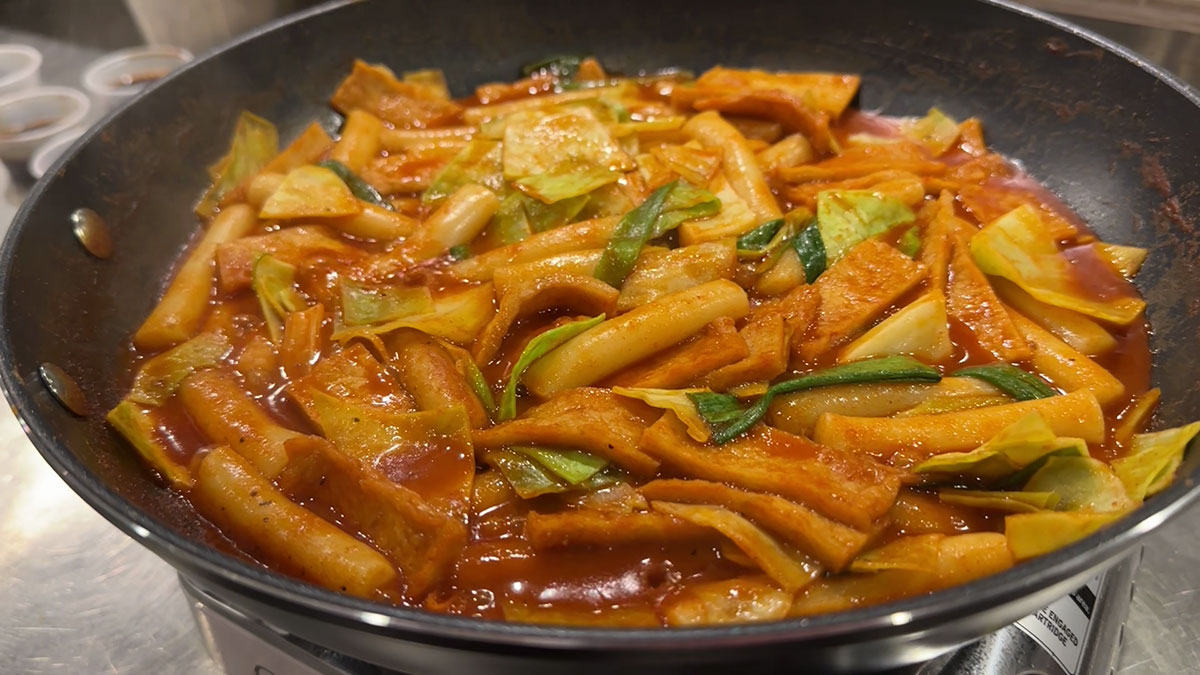
Korean tteokbokki recipe is one of the most loved Korean street food dishes, known for its chewy rice cakes, bold spicy sauce, and deeply satisfying flavor. It is quick to prepare, rich in texture, and perfect for lunch, dinner, or a comforting snack.
In this guide, we make it the proper way, using simple ingredients and a balanced method that creates a glossy, flavorful sauce that coats every piece beautifully.
What Is Korean Tteokbokki?
Tteokbokki is a classic Korean dish made with cylindrical rice cakes simmered in a savory, spicy, and slightly sweet sauce. The sauce is usually built with gochujang, gochugaru, soy sauce, sugar, and stock. The result is a dish that is deeply flavorful, warming, and unforgettable.
Traditionally sold by street vendors across Korea, tteokbokki has become popular worldwide because of its bold taste and satisfying chew. It can be kept simple or upgraded with extras such as fish cakes, boiled eggs, scallions, cabbage, ramen noodles, or melted cheese. The core of the dish, however, remains the same: tender rice cakes cooked until soft and coated in a rich red sauce.
Ingredients You’ll Need
To make an authentic and delicious Korean tteokbokki recipe, we need the following ingredients:
Main Ingredients
- 500g Korean rice cakes for tteokbokki
- 3 to 4 fish cakes, sliced into bite-sized pieces
- 2 boiled eggs, peeled
- 2 cups anchovy stock or water
- 2 scallions, cut into long pieces
- 1 cup cabbage, roughly chopped
For the Tteokbokki Sauce
- 2 tablespoons gochujang
- 1 tablespoon gochugaru
- 1 tablespoon soy sauce
- 1 to 2 tablespoons sugar
- 1 tablespoon corn syrup or honey
- 1 teaspoon minced garlic
Optional Add-Ins
- Ramen noodles
- Mozzarella cheese
- Sesame seeds
- A drizzle of sesame oil
These ingredients create the classic sweet, spicy, savory balance that makes tteokbokki so popular.
Best Rice Cakes for Tteokbokki
The most important ingredient in this dish is the Korean rice cake. For the best texture, we should use garaetteok or packaged tteokbokki rice cakes sold fresh, refrigerated, or frozen. Fresh rice cakes are soft and cook quickly. Frozen rice cakes also work very well, but they should be soaked in warm water first to soften them.
The ideal rice cake should be chewy without becoming hard in the center. If the rice cakes have been stored in the refrigerator for too long, they may become firm. Soaking them for 10 to 20 minutes in warm water helps restore their texture before cooking.
How to Prepare the Ingredients
Before we start cooking, it helps to prepare everything in advance. Slice the fish cakes, chop the cabbage, and cut the scallions into long pieces. If the rice cakes are frozen or stiff, soak them in warm water until they loosen. Peel the boiled eggs and set them aside.
In a small bowl, mix the gochujang, gochugaru, soy sauce, sugar, corn syrup, and minced garlic. Stir until smooth. Preparing the sauce ahead of time helps it blend evenly into the stock once it goes into the pan.
Step-by-Step Guide to Making Korean Tteokbokki
Step 1: Soften the Rice Cakes
If the rice cakes are frozen or refrigerated, place them in a bowl of warm water for about 10 to 20 minutes. This helps them soften and cook more evenly. Drain them once they feel flexible.
Step 2: Heat the Stock
Pour 2 cups of anchovy stock into a wide pan or shallow pot. Anchovy stock gives the dish a more authentic Korean flavor, but water can be used if needed. Bring the liquid to a gentle simmer over medium heat.
Step 3: Add the Sauce
Add the prepared tteokbokki sauce to the simmering stock. Stir well until the sauce dissolves fully and the liquid turns smooth, red, and glossy. Let it simmer for a minute so the flavors begin to combine.
Step 4: Add the Rice Cakes
Place the softened rice cakes into the sauce. Stir gently so they do not stick together. Let them cook for several minutes, stirring occasionally, until they begin to soften further and absorb the sauce.
Step 5: Add Fish Cakes and Vegetables
Once the rice cakes are cooking well, add the fish cakes, cabbage, and part of the scallions. Keep simmering over medium heat. As the sauce reduces, it will thicken and cling to the rice cakes.
Step 6: Add Boiled Eggs
Add the boiled eggs and spoon some sauce over them. This allows the eggs to warm through and absorb some of the flavor while staying tender.
Step 7: Simmer Until Thick and Glossy
Continue cooking for about 8 to 10 minutes, stirring regularly. The sauce should reduce to a rich, thick consistency. The rice cakes should be soft and chewy, not mushy. This is the stage where the dish develops its signature texture.
Step 8: Finish and Serve
Turn off the heat when the sauce has thickened nicely. Add the remaining scallions on top. Garnish with sesame seeds if desired. Serve immediately while hot.
How the Sauce Should Taste
A great Korean tteokbokki sauce should have a strong but balanced flavor. It should be:
- Spicy
- Slightly sweet
- Savory
- Rich and glossy
The gochujang provides depth, the gochugaru adds warmth, the soy sauce gives saltiness, and the sugar rounds out the heat. The result should never taste flat. It should be bold from the first bite and satisfying all the way through.
Tips for the Best Korean Tteokbokki Recipe
Use a Wide Pan
A wide pan helps the rice cakes cook evenly and allows the sauce to reduce properly without overcrowding.
Do Not Overcook
Rice cakes should be soft and chewy, not falling apart. Once they reach the right texture, the dish is ready.
Stir Gently
Frequent gentle stirring prevents sticking and helps the sauce coat everything evenly.
Adjust the Spice Level
For a milder dish, reduce the gochugaru slightly. For extra heat, increase it or add a little more gochujang.
Use Anchovy Stock for Better Flavor
Water works, but anchovy stock gives the dish a more traditional Korean street food taste.
Popular Variations of Tteokbokki
One of the best things about tteokbokki is how versatile it is. Once the base recipe is mastered, it becomes easy to create variations.
Cheese Tteokbokki
Top the hot tteokbokki with mozzarella cheese and let it melt over the surface. The creamy cheese softens the spice and adds richness.
Ramen Tteokbokki
Add instant ramen noodles during the last few minutes of cooking. The noodles absorb the sauce and turn the dish into a fuller meal.
Seafood Tteokbokki
Add shrimp, squid, or mussels for a seafood version with extra flavor and texture.
Rose Tteokbokki
For a creamier modern version, add a splash of cream or milk to create a milder, silky sauce.
Vegetarian Tteokbokki
Leave out the fish cakes and anchovy stock. Use vegetable stock and load the pan with cabbage, mushrooms, onions, and scallions.
What to Serve with Tteokbokki
Although Korean tteokbokki recipe is satisfying on its own, it pairs well with several side dishes. It is often enjoyed with:
- Korean fried dumplings
- Kimchi
- Kimbap
- Boiled eggs
- Tempura vegetables
- Crispy seaweed rolls
These pairings add crunch, freshness, or extra richness and make the meal more complete.
How to Store and Reheat Tteokbokki
If there are leftovers, store them in an airtight container in the refrigerator for up to 2 days. Keep in mind that rice cakes become firmer as they cool. That is normal.
To reheat, place the tteokbokki in a pan with a small splash of water and warm it over low to medium heat. Stir gently until the sauce loosens and the rice cakes soften again. Avoid overheating, as that can make the texture too soft or uneven.
Common Mistakes to Avoid
A few mistakes can affect the final texture and flavor of tteokbokki.
Using Rice Cakes Straight From the Freezer
Frozen rice cakes need soaking first. Otherwise, they may cook unevenly.
Making the Sauce Too Thin
The sauce should reduce enough to coat the rice cakes. If it stays watery, the dish will lack intensity.
Cooking on High Heat Only
Very high heat can reduce the sauce too fast before the rice cakes fully soften. Medium heat works best.
Adding Too Much Liquid
Too much stock dilutes the flavor. Start with the recommended amount and let the sauce thicken naturally.
Why This Korean Tteokbokki Recipe Works
This recipe works because it focuses on the essential elements that make Korean street food tteokbokki memorable: chewy rice cakes, a deep red spicy sauce, balanced seasoning, and the right simmering time. Every step builds flavor and texture without unnecessary complication.
The sauce is strong enough to feel authentic, yet balanced enough to be enjoyable for repeated bites. The rice cakes stay tender and chewy, the fish cakes add savory depth, and the boiled eggs make the dish even more satisfying.
FAQs about Korean Tteokbokki Recipe
1. What is Korean tteokbokki?
Korean tteokbokki is a popular Korean street food made with soft rice cakes cooked in a spicy, sweet, and savory sauce. It is loved for its chewy texture and bold flavor.
2. What ingredients are used in Korean tteokbokki recipe?
A typical recipe includes Korean rice cakes, gochujang (Korean chili paste), gochugaru (Korean chili flakes), soy sauce, sugar, garlic, and water or stock. Some versions also include fish cakes, boiled eggs, or green onions.
3. Is tteokbokki very spicy?
Traditional tteokbokki is usually spicy, but you can easily adjust the heat by using less gochujang and gochugaru. Some recipes are mild and more sweet than hot.
4. Do I need to soak the rice cakes before cooking?
Yes, if the rice cakes are hard or refrigerated, soaking them in warm water for about 10 to 20 minutes helps soften them and improves their texture.
5. Can I make tteokbokki without fish cakes?
Yes, you can make tteokbokki without fish cakes. Many homemade versions use only rice cakes and sauce, while others add vegetables, eggs, or cheese.
6. What does tteokbokki taste like?
It has a chewy, spicy, slightly sweet, and deeply savory taste. The sauce is rich and coats the rice cakes well.
7. Can I store leftover tteokbokki?
Yes, leftovers can be stored in an airtight container in the refrigerator for up to 2 days. Reheat with a small splash of water to loosen the sauce.
Final Thoughts
A well-made Korean tteokbokki recipe is bold, comforting, and full of character. It turns a few simple ingredients into a dish that feels exciting, rich, and deeply satisfying. Whether served as a quick snack, a cozy dinner, or part of a Korean-inspired spread, it remains one of the most rewarding recipes to make at home.
With the right rice cakes, a balanced sauce, and careful simmering, we can create homemade tteokbokki that tastes vibrant, chewy, spicy, and restaurant-worthy. This is the kind of dish that delivers strong flavor, beautiful texture, and real comfort in every bite.