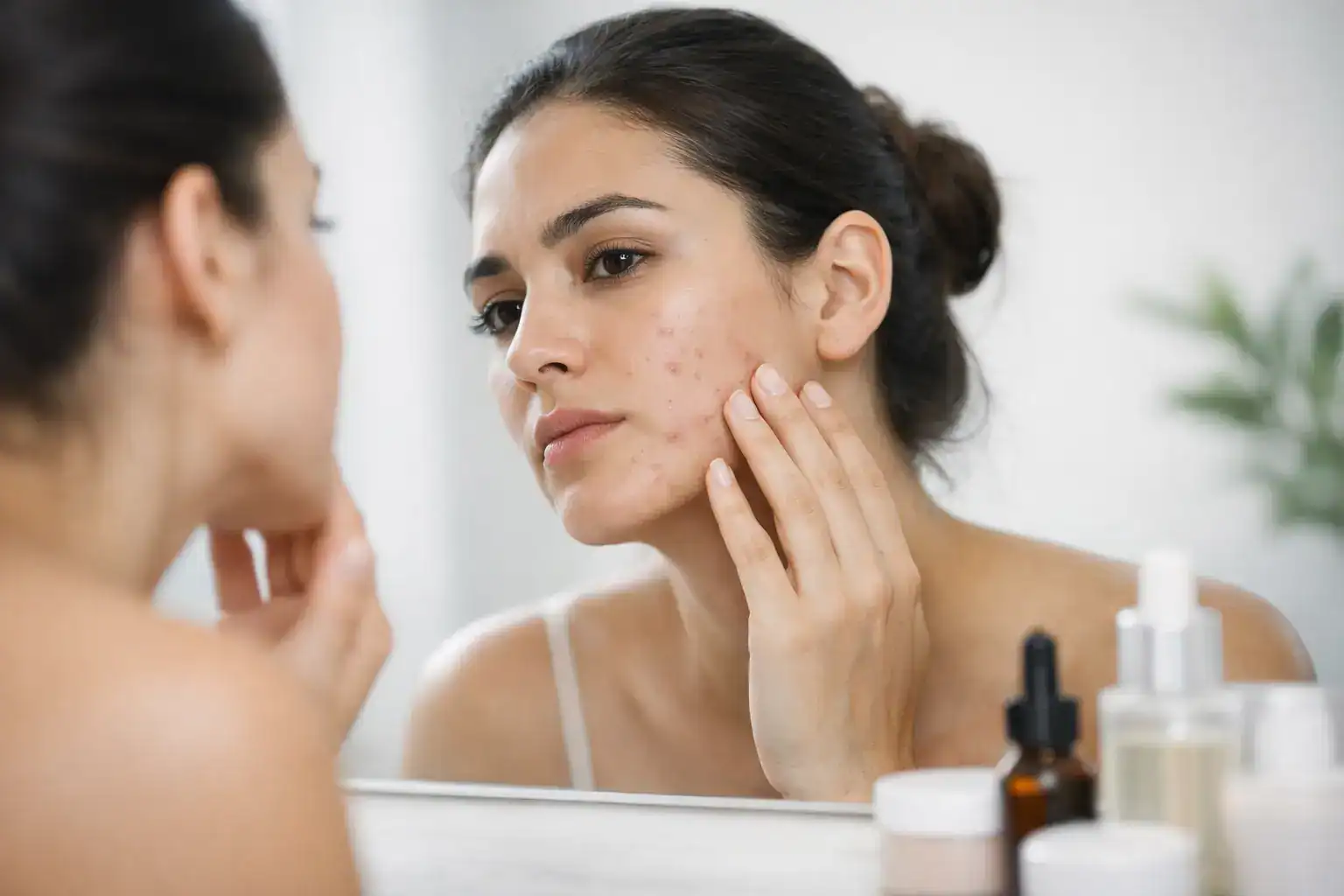
Melasma is a common skin condition that causes dark, uneven patches, particularly on the cheeks, forehead, nose, and upper lip. Although melasma can affect anyone, individuals with sensitive skin often face additional challenges when selecting effective treatments. Many pigmentation products contain powerful ingredients that may trigger redness, dryness, burning, or irritation.
Understanding how to choose melasma treatment for sensitive skin is essential for achieving a more even complexion without compromising skin health. We recommend focusing on gentle ingredients, consistent sun protection, and dermatologist-guided treatments that address pigmentation while preserving the skin’s natural protective barrier.
Understanding Melasma and Sensitive Skin
Melasma develops when melanocytes, the cells responsible for producing skin pigment, generate excess melanin. Sun exposure, hormonal changes, genetic predisposition, and visible light can contribute to its development or worsening.
Sensitive skin, meanwhile, reacts more easily to certain skincare ingredients, environmental conditions, and cosmetic treatments. When melasma and sensitivity occur together, aggressive treatment can worsen inflammation and potentially increase pigmentation.
We emphasize choosing gentle melasma treatments for sensitive skin that gradually improve discoloration while supporting hydration and skin barrier function.
Why Sensitive Skin Requires Special Melasma Treatment
Sensitive skin may experience increased discomfort when exposed to strong exfoliating acids, concentrated retinoids, or harsh skin-lightening products.
Common reactions include redness, itching, dryness, stinging, and peeling. Furthermore, inflammation can trigger post-inflammatory hyperpigmentation, making existing dark patches more noticeable.
For this reason, we recommend selecting treatments based on skin tolerance, pigmentation severity, and professional dermatological assessment rather than relying on product strength alone.
Key Factors to Consider When Choosing Melasma Treatment for Sensitive Skin
Selecting the best melasma treatment for sensitive skin requires careful evaluation of several important factors.
1. Identify Your Skin Type and Sensitivity Level
Before beginning treatment, we recommend determining whether the skin is dry, oily, combination, or highly reactive.
Dry and sensitive skin generally benefits from moisturizing formulations, while oily and sensitive skin may respond better to lightweight, fragrance-free products.
Individuals experiencing frequent irritation, eczema, or rosacea should consult a dermatologist before introducing active pigmentation treatments.
2. Choose Gentle and Effective Ingredients
The effectiveness of melasma treatment depends largely on the active ingredients used.
Some ingredients may improve pigmentation without causing the intense irritation associated with stronger treatments.
We recommend considering:
- Azelaic Acid: Helps reduce abnormal pigmentation and may be suitable for sensitive skin when introduced gradually.
- Niacinamide: Supports skin barrier function and may help reduce uneven skin tone.
- Tranexamic Acid: Topical formulations may help improve melasma, although evidence and product tolerability vary.
- Vitamin C: Provides antioxidant benefits and may help improve discoloration, but certain formulations can irritate sensitive skin.
- Licorice Root Extract: Contains compounds with potential pigment-reducing effects, although clinical evidence is more limited.
- Ceramides: Strengthen the skin’s protective barrier and reduce moisture loss.
We recommend introducing one active ingredient at a time to identify potential irritation before combining multiple products.
3. Prioritize Daily Sun Protection
Sun protection is one of the most important components of melasma treatment for sensitive skin.
Ultraviolet radiation and visible light can stimulate melanin production, making dark patches more persistent.
We recommend using a broad-spectrum sunscreen with SPF 30 or higher, ideally SPF 50+, every morning.
Tinted sunscreens containing iron oxides are particularly beneficial because they help protect against visible light that can worsen melasma.
For sensitive skin, fragrance-free mineral sunscreen formulations containing zinc oxide or titanium dioxide may be more comfortable.
Sunscreen should be reapplied approximately every two hours during outdoor exposure, especially after sweating or swimming.
4. Avoid Harsh Skincare Ingredients
Strong exfoliating products and aggressive skincare routines can disrupt the skin barrier.
We advise avoiding excessive use of high-strength chemical exfoliants, abrasive facial scrubs, fragranced skincare products, and unregulated bleaching creams.
Combining several potent active ingredients without professional guidance may increase inflammation and worsen discoloration.
Instead, we recommend a simple routine that prioritizes hydration, gentle cleansing, and targeted pigmentation treatment.
5. Consider Dermatologist-Recommended Treatments
Professional dermatological guidance is particularly valuable when melasma is persistent or the skin reacts easily to cosmetic products.
A dermatologist can assess pigmentation patterns and recommend appropriate treatment options.
Prescription therapies may include hydroquinone, azelaic acid, retinoids, or combination creams. However, stronger treatments require careful monitoring because irritation may aggravate sensitive skin.
We recommend avoiding unsupervised use of prescription-strength bleaching products, particularly over prolonged periods.
Best Melasma Treatment Options for Sensitive Skin
Different treatment approaches offer varying benefits depending on pigmentation severity and individual skin tolerance.
| Treatment option | Potential benefits | Sensitive skin considerations |
|---|---|---|
| Azelaic acid | Reduces pigmentation and helps improve uneven tone | May cause mild stinging or dryness |
| Niacinamide | Supports barrier repair and improves skin appearance | Usually well tolerated |
| Topical tranexamic acid | May reduce melasma discoloration | Evidence and irritation potential vary |
| Vitamin C | Provides antioxidant support and brightening benefits | Low-pH formulations may sting |
| Hydroquinone | Effective prescription pigmentation treatment | Requires professional supervision |
| Tinted sunscreen | Helps prevent UV- and visible-light-related pigmentation | Choose fragrance-free formulations |
We generally recommend beginning with well-tolerated topical products before considering stronger prescription treatments or procedures.
How to Build a Gentle Skincare Routine for Melasma
A consistent skincare routine can help manage pigmentation while minimizing irritation.
Morning Skincare Routine
We recommend using a gentle cleanser that removes impurities without stripping natural oils.
Next, apply a suitable pigmentation treatment, such as niacinamide or a well-tolerated vitamin C formulation.
Follow with a moisturizer containing barrier-supporting ingredients such as ceramides, glycerin, or hyaluronic acid.
Complete the routine with a broad-spectrum tinted sunscreen containing iron oxides.
Evening Skincare Routine
Begin with a mild cleanser to remove sunscreen, makeup, and environmental impurities.
Apply a dermatologist-recommended pigmentation treatment according to the prescribed frequency.
Finish with a fragrance-free moisturizer to replenish hydration and support overnight barrier recovery.
We recommend gradually introducing active ingredients rather than using several treatments simultaneously.
Professional Melasma Treatments for Sensitive Skin
Some individuals may require professional treatment when topical skincare alone does not provide satisfactory improvement.
Chemical Peels
Superficial chemical peels may help improve certain forms of hyperpigmentation. However, sensitive skin can experience irritation, inflammation, and post-inflammatory hyperpigmentation.
We recommend chemical peels only after professional assessment, especially for darker skin tones.
Laser and Light-Based Treatments
Certain laser and light-based procedures may be considered for resistant melasma.
However, these treatments can sometimes worsen pigmentation or cause rebound discoloration, particularly in individuals with darker or reactive skin.
Therefore, we recommend seeking a dermatologist experienced in treating melasma and sensitive skin before considering these procedures.
Prescription Melasma Treatments
Dermatologists may prescribe hydroquinone-based products or combination creams for more persistent pigmentation.
Although these treatments can be effective, they may cause dryness, irritation, and other adverse effects when used incorrectly.
We recommend following prescribed treatment schedules rather than increasing application frequency to obtain faster results.
Oral tranexamic acid is another specialist-supervised option for selected patients, but it requires evaluation of blood-clotting risks and other contraindications.
Common Mistakes to Avoid When Treating Melasma on Sensitive Skin
Choosing an appropriate treatment is only one part of successful melasma management. Avoiding common skincare mistakes is equally important.
We recommend paying attention to the following:
- Using too many active ingredients: Combining multiple brightening agents may increase irritation.
- Skipping sunscreen: Sun exposure can reverse improvements achieved through pigmentation treatment.
- Expecting immediate results: Melasma often requires several months of consistent management.
- Using harsh exfoliants: Excessive exfoliation may damage the skin barrier and worsen discoloration.
- Ignoring irritation: Persistent redness, burning, or peeling indicates that treatment may need adjustment.
- Stopping maintenance care: Melasma frequently returns when preventive measures are discontinued.
We recommend adopting a sustainable skincare routine rather than relying on aggressive short-term treatments.
How Long Does Melasma Treatment Take to Show Results?
Improvement depends on the depth of pigmentation, treatment approach, skin sensitivity, and consistency of sunscreen use.
Some individuals notice gradual changes within 8 to 12 weeks, while more persistent melasma may require several months of treatment.
Sensitive skin often benefits from slower introduction of active ingredients to reduce the risk of irritation.
We emphasize that melasma is frequently a recurring condition. Long-term sun protection and maintenance skincare are essential for preserving improvements.
How to Know Whether a Melasma Treatment Is Suitable for Your Skin
Before purchasing a treatment, we recommend checking its ingredient list, concentration, formulation, and suitability for reactive skin.
Fragrance-free products with moisturizing ingredients may be preferable, particularly when the skin is prone to dryness or redness.
Patch testing a new cosmetic product on a small area can help identify irritation before broader application, although it cannot guarantee that a product will be tolerated.
If a product causes persistent burning, swelling, or significant redness, discontinue use and seek professional advice.
For individuals who are pregnant, breastfeeding, or planning pregnancy, treatment selection requires additional caution. Retinoids and hydroquinone are generally avoided during pregnancy, and medication choices should be discussed with a qualified clinician.
Why Skin Barrier Health Matters in Melasma Treatment
A healthy skin barrier helps retain moisture and protects against environmental irritants.
When the barrier becomes compromised, the skin may experience excessive dryness, inflammation, and sensitivity.
These reactions can interfere with pigmentation treatments and increase the likelihood of uneven skin tone.
We recommend moisturizers containing ceramides, glycerin, panthenol, and hyaluronic acid to support hydration and skin comfort.
Maintaining barrier health improves the skin’s ability to tolerate appropriate pigmentation treatments over time.
When to Consult a Dermatologist for Melasma
Although mild melasma may respond to gentle topical skincare, professional assessment is recommended when pigmentation persists, spreads, or becomes difficult to manage.
We particularly recommend dermatological consultation when dark patches develop alongside severe irritation, when over-the-counter products repeatedly cause reactions, or when prescription treatments are being considered.
A dermatologist can also confirm whether the discoloration is melasma or another condition requiring a different approach.
This distinction is important because not every dark facial patch is caused by melasma.
FAQs about How to Choose Melasma Treatment for Sensitive Skin
1. What Is the Best Melasma Treatment for Sensitive Skin?
The best melasma treatment for sensitive skin depends on skin type, sensitivity, and pigmentation severity. Dermatologists may recommend gentle ingredients such as azelaic acid, alongside daily sun protection to reduce dark patches without excessive irritation.
2. How Do I Choose a Safe Melasma Treatment for Sensitive Skin?
We recommend choosing dermatologist-approved melasma treatments with gentle formulations. Avoid harsh exfoliants, strong fragrances, and products that cause burning or redness. Always introduce new treatments gradually.
3. Can Sensitive Skin Use Hydroquinone for Melasma?
Yes, hydroquinone may help treat melasma, but it can irritate sensitive skin. We recommend using it only under dermatologist supervision to ensure appropriate strength, duration, and application.
4. What Ingredients Should I Look for in Melasma Treatment?
Effective ingredients may include azelaic acid, niacinamide, and carefully selected topical treatments. We recommend choosing products that support the skin barrier while targeting pigmentation.
5. How Long Does Melasma Treatment Take to Show Results?
Visible improvements typically take 8–12 weeks, although results vary. Consistent treatment, gentle skincare, and daily sunscreen use are essential for managing pigmentation.
6. Is Sunscreen Necessary When Treating Melasma?
Absolutely. We recommend daily broad-spectrum SPF 30 or higher sunscreen. Tinted sunscreens containing iron oxides can provide additional protection against visible light that may worsen melasma.
7. Can Melasma Treatment Make Sensitive Skin Worse?
Yes. Aggressive treatments can trigger irritation and potentially worsen pigmentation. We recommend gentle formulations and professional guidance to minimize unwanted reactions.
8. Should I Consult a Dermatologist Before Starting Treatment?
Yes. A dermatologist can evaluate your skin, confirm the diagnosis, and recommend a personalized melasma treatment plan that balances effectiveness with skin sensitivity.
Conclusion
Understanding how to choose melasma treatment for sensitive skin involves balancing effective pigmentation control with gentle skincare practices.
We recommend prioritizing suitable active ingredients, fragrance-free formulations, consistent use of tinted broad-spectrum sunscreen, and proper skin barrier maintenance.
For stubborn pigmentation, professional dermatological guidance can help identify effective treatment options while minimizing irritation and complications.
With a carefully selected skincare routine, consistent sun protection, and realistic expectations, individuals with sensitive skin can gradually improve the appearance of melasma and maintain a healthier, more even-looking complexion.

