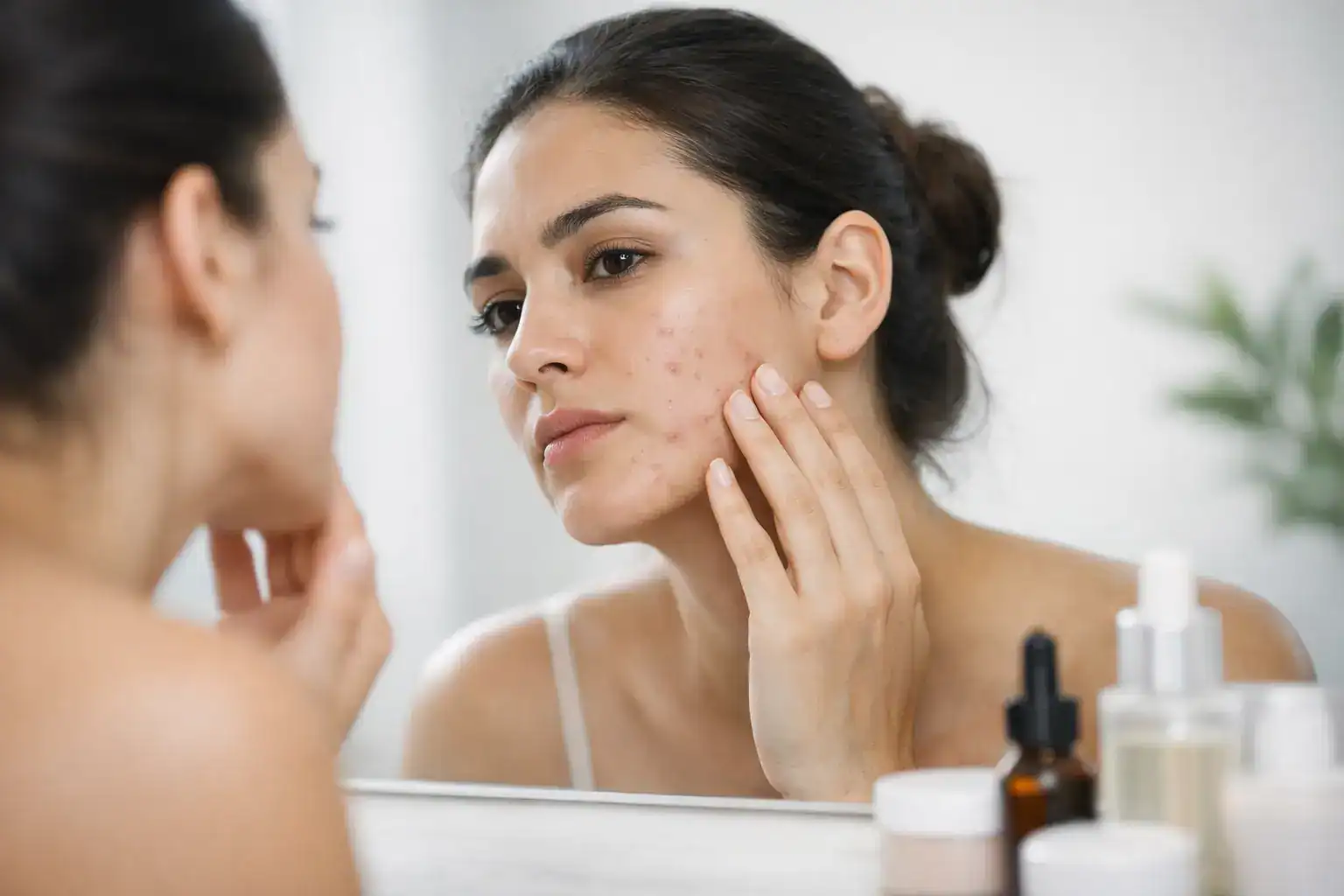
Choosing the right hyperpigmentation treatment starts with identifying the cause of the dark spots, assessing your skin’s sensitivity, and setting realistic goals. A product that suits acne-related marks may not be the best choice for melasma or persistent discoloration. The strongest formula is also not necessarily the most suitable.
We recommend comparing treatments by their suitability for your skin, their potential to cause irritation, and the care they require over time. An effective plan should address existing pigmentation while reducing the triggers that create new marks.
Identify the Cause Before Choosing Hyperpigmentation Treatment
Dark spots can look similar while requiring different approaches. Before buying a brightening serum or booking a procedure, we should establish what caused the discoloration and whether that trigger remains active.
For example, fading acne marks becomes more difficult when breakouts continue to produce new ones. If a skincare product is causing irritation, adding more active ingredients can complicate the problem. Treating the underlying condition and removing avoidable irritation are essential parts of managing pigmentation.
Common Types of Hyperpigmentation to Discuss During Assessment
- Post-inflammatory hyperpigmentation: Dark marks that remain after acne, eczema, an injury, or another inflammatory skin condition.
- Melasma: Patches of pigmentation that require an individual treatment plan based on skin tone, triggers, and the depth of discoloration.
- Persistent or unexplained pigmentation: Discoloration that needs examination before we assume a cosmetic product will resolve it.
Post-inflammatory pigmentation can involve the surface of the skin or deeper layers. This distinction affects treatment selection because surface treatments may have limited benefit for deeper pigment.
Match Hyperpigmentation Treatment to Your Skin’s Tolerance
A treatment must be effective enough to address discoloration and tolerable enough to use consistently. We should therefore consider how the skin responds to current products before introducing another active ingredient.
Dryness, burning, persistent redness, and peeling deserve attention. These reactions are especially relevant when considering retinoids: irritation can trigger additional dark marks in darker skin tones. Starting cautiously and using moisturizer can help reduce this risk. Retinoids should not be used during pregnancy. aad.org
Factors to Review Before Starting Treatment
- Current sensitivity: Does the skin sting after cleansing or react to ordinary skincare?
- Existing conditions: Are acne, eczema, or other inflammatory problems being managed?
- Previous reactions: Which products or procedures have caused discomfort or discoloration?
- Current routine: Are several exfoliating or brightening products already being used?
- Pregnancy: Does the proposed treatment contain ingredients that require avoidance or medical review?
We can make a better decision by bringing a complete product list to a consultation. Include cleansers, serums, moisturizers, prescription creams, and any products bought specifically for dark spots.
Compare Topical Treatments for Dark Spots
Topical treatment is one option to discuss before committing to a procedure. However, we should assess the complete formulation rather than choosing a product solely because its label features a popular ingredient.
Dermatology guidance identifies several ingredients used for pigmentation, including azelaic acid, vitamin C, kojic acid, glycolic acid, and retinoids. Their suitability depends on the diagnosis and the skin’s tolerance.
Questions to Ask About a Brightening Product
Before purchasing, we should ask:
- What type of pigmentation is this product intended to address?
- What are its active ingredients?
- How should it fit into the existing routine?
- What reactions mean we should stop using it?
- When should progress be reviewed?
- Is professional supervision required?
These questions help us move beyond marketing claims. A clear explanation of use, limitations, and follow-up is more useful than a promise of rapid transformation.
When Prescription Hyperpigmentation Treatment May Be Appropriate
For melasma, a dermatologist may prescribe hydroquinone, other topical medications, or a combination cream. Some prescribed combinations include hydroquinone, tretinoin, and a corticosteroid. These treatments require an individual plan and instructions on their use.
We should obtain prescription treatments through a qualified clinician and ask about application, duration, monitoring, and maintenance. A prescription intended for someone else does not establish that the same treatment suits our skin.
Make Sun Protection Part of the Treatment Decision
When comparing hyperpigmentation treatments, we must also consider the sunscreen we can use consistently. Sun protection supports pigmentation management and helps limit further darkening.
For dark spots, dermatologists recommend a broad-spectrum, water-resistant sunscreen with SPF 30 or higher. A tinted formula containing iron oxide also provides protection from visible light, which can contribute to pigmentation.
Choose Sunscreen You Can Wear Consistently
We should compare formulas for comfort, appearance, and compatibility with the rest of the routine. A sunscreen that blends well and feels comfortable is easier to use regularly.
Check the label for broad-spectrum protection and iron oxide rather than assuming every tinted formula offers the same benefits. Reapply sunscreen every two hours while outdoors and after swimming or sweating, and combine it with shade and a wide-brimmed hat.
Evaluate Professional Hyperpigmentation Procedures Carefully
Professional procedures deserve a diagnosis-led discussion. Chemical peels, lasers, and intense pulsed light treatments can help selected cases of superficial post-inflammatory pigmentation, but they can also worsen discoloration by injuring the skin.
We should therefore avoid choosing a procedure simply because it is described as advanced or offers a short appointment time. The relevant question is whether it suits the particular pigmentation and the patient’s skin.
Questions to Ask Before Booking a Procedure
- What diagnosis are we treating?
- Why is this procedure suitable?
- What experience does the clinician have with similar skin tones?
- What improvement is realistic?
- Could the treatment worsen pigmentation?
- What preparation and aftercare are required?
- How will complications be managed?
- Are additional sessions likely?
Ask to see relevant examples, while recognizing that another person’s result cannot guarantee our outcome. A useful consultation should explain the reasoning behind the recommendation and allow time to consider it.
Compare the Full Cost of Hyperpigmentation Treatment
The price of one cream or one appointment rarely explains the complete financial commitment. We should request a written outline of expected expenses before deciding.
Costs to Include in Your Comparison
- Initial consultation and follow-up appointments.
- Prescription or recommended skincare.
- Sunscreen and supporting moisturizers.
- Procedure fees and possible repeat sessions.
- Aftercare products.
- Maintenance treatment, when recommended.
We can then compare options against the same questions: suitability, expected benefit, tolerability, follow-up, and total cost. An affordable plan should remain manageable long enough to assess progress.
Avoid Products With Unclear Ingredients or Extreme Claims
We should be cautious about products promising immediate bleaching, permanent whitening, or dramatic changes without assessment. Check for a complete ingredient list, identifiable manufacturer, and clear directions.
Regulators have found mercury and undeclared hydroquinone in some skin-lightening products. Mercury exposure can cause serious harm, and unsupervised hydroquinone use can cause adverse skin reactions, including persistent discoloration.
Choosing treatment through reputable sources helps us verify what we are applying. Unlabelled mixtures and products with uncertain contents make informed decisions difficult.
Set Realistic Expectations and Review Progress
We should agree on a review point before starting treatment. Ask what early improvement might look like, how progress will be assessed, and what would justify changing the plan.
Treatment should also remain comfortable enough to follow. Retinoids, for example, can cause irritation when introduced too aggressively; dermatology guidance recommends a cautious approach and attention to moisturizing.
Photographs taken in consistent lighting can support a more useful discussion than daily comparisons under different conditions. Record product changes and reactions so that follow-up decisions reflect what actually happened.
FAQs about How to Choose Hyperpigmentation Treatment
1. How do I choose the right hyperpigmentation treatment?
The best hyperpigmentation treatment depends on the cause, severity, skin type, and location of the discoloration. A dermatologist can help determine whether the pigmentation is caused by acne, sun exposure, hormonal changes, or another condition before recommending treatment.
2. Which ingredients are commonly used for hyperpigmentation?
Common ingredients include vitamin C, azelaic acid, retinoids, niacinamide, kojic acid, glycolic acid, and hydroquinone. The most appropriate option depends on your skin’s sensitivity and the type of pigmentation being treated.
3. Should I see a dermatologist for hyperpigmentation?
Yes, especially if pigmentation is persistent, worsening, or difficult to identify. Professional assessment can help prevent irritation and ensure that the treatment matches the underlying cause.
4. Are professional treatments better than skincare products?
Not necessarily. Mild discoloration may improve with topical skincare, while stubborn or deeper pigmentation may benefit from professional treatments such as chemical peels, laser therapy, or microneedling.
5. How important is sunscreen when treating hyperpigmentation?
Daily broad-spectrum sunscreen is essential. UV exposure can darken existing pigmentation and reduce the effectiveness of treatment.
6. How long does hyperpigmentation treatment take?
Results vary depending on the treatment and severity of pigmentation. Some people notice improvement within several weeks, while deeper pigmentation may require several months.
7. Can sensitive skin use hyperpigmentation treatments?
Yes, but gentler ingredients and lower concentrations are usually preferred. Introducing products gradually can help reduce irritation.
8. What should I avoid when choosing a treatment?
Avoid aggressive treatments, unregulated bleaching products, and combining several strong active ingredients without professional guidance, as this may worsen irritation and discoloration.
Conclusion
To choose hyperpigmentation treatment, we should begin with the cause, assess skin tolerance, compare suitable options, and include sun protection from the outset. We should also understand the full cost, expected limitations, and follow-up arrangements.
A clear treatment plan gives every product or procedure a defined purpose. With informed selection and regular review, we can pursue a more even-looking complexion while responding promptly to irritation or disappointing results.