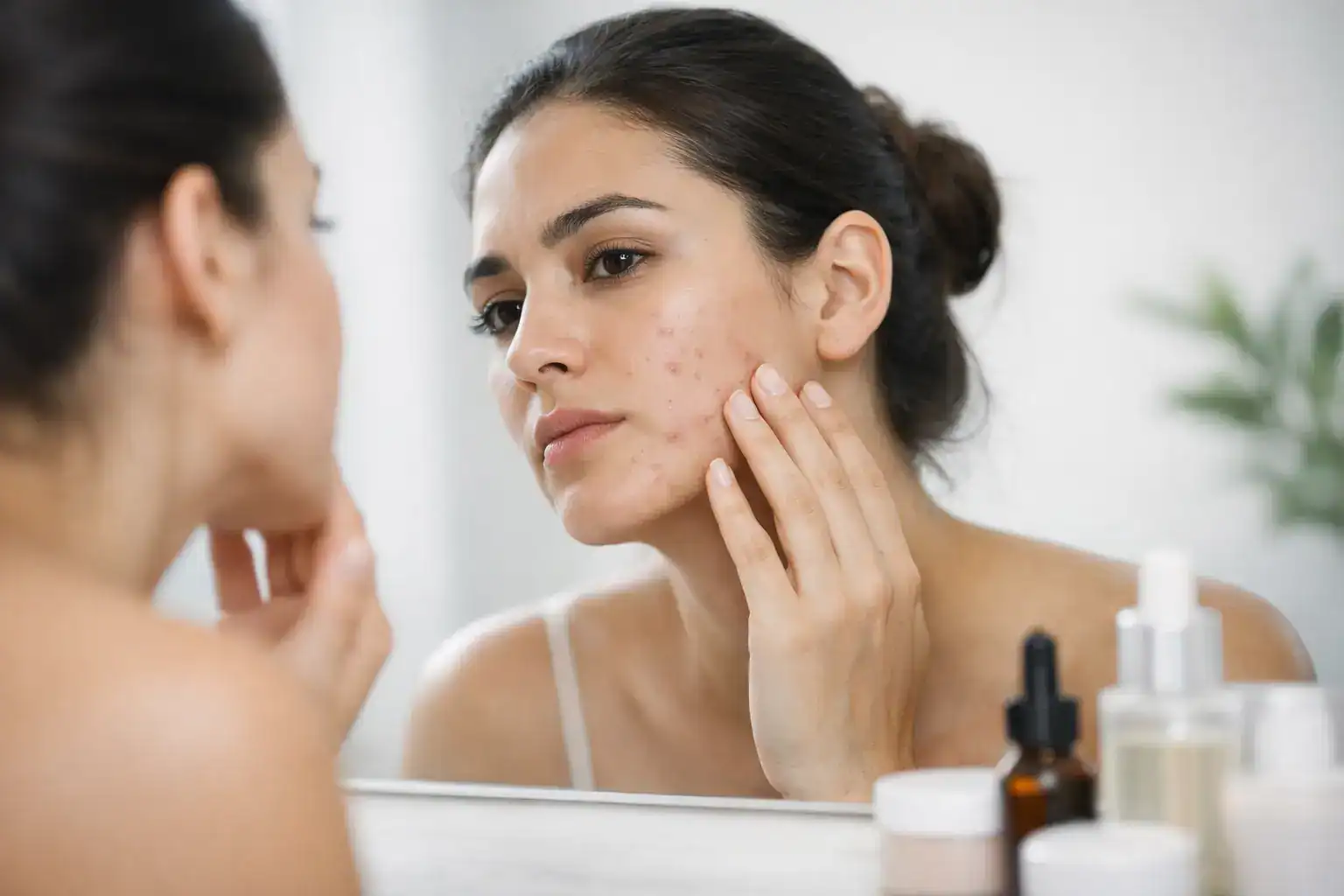
The best dark spot treatment for the face combines daily sun protection, an appropriate pigment-targeting ingredient, and care that prevents further irritation. Acne marks, sunspots, and melasma can look similar, but they do not always respond to the same treatment. Choosing the right approach begins with identifying the type of pigmentation involved.
We recommend a focused routine that supports gradual improvement without overwhelming the skin. Persistent pigmentation may require prescription treatment, while selected dark spots can benefit from professional procedures. The goal is a more even complexion while preserving healthy skin and its natural colour.
Identify the Cause Before Choosing a Facial Dark Spot Treatment
Facial dark spots often develop when the skin produces excess melanin, the pigment responsible for skin colour. Inflammation, sun exposure, and hormonal changes can contribute to different patterns of discoloration.
Common Types of Facial Hyperpigmentation
- Post-inflammatory hyperpigmentation: Flat marks that remain after acne, eczema, irritation, or an injury heals.
- Sunspots: Areas of pigmentation associated with accumulated sun exposure, often appearing on frequently exposed skin.
- Melasma: Irregular brown or grey-brown patches, commonly affecting the cheeks, forehead, and upper lip.
With acne-related pigmentation, we prioritise controlling breakouts alongside fading existing marks. Otherwise, new inflammation can keep producing new spots. The same principle applies when eczema, irritating cosmetics, or hair-removal practices trigger discoloration. Addressing the underlying cause helps prevent repeated pigmentation.
Daily Sunscreen: The Foundation of Dark Spot Treatment
Sunscreen is essential for treating facial hyperpigmentation. Sun exposure can deepen existing pigmentation and undermine progress from creams or prescription treatments. A routine that includes brightening products but inconsistent sun protection is unlikely to deliver its best results.
We recommend choosing a broad-spectrum sunscreen with SPF 30 or higher. For melasma and pigmentation affected by visible light, a tinted sunscreen containing iron oxides can offer additional protection. Reapply approximately every two hours when outdoors and after swimming or sweating, following the product instructions. Shade and a wide-brimmed hat provide further protection. aad.org
Texture also matters when choosing sunscreen. A comfortable product that fits into a daily routine is more practical than one that feels unpleasant and is frequently skipped. We favour consistent use over selecting sunscreen solely because it is marketed as a luxury skincare product.
Effective Ingredients for Dark Spots on the Face
Different ingredients address pigmentation in different ways. The appropriate choice depends on the diagnosis, skin sensitivity, and whether acne or other concerns also need treatment.
Azelaic Acid for Acne-Related Dark Marks
Azelaic acid is a useful option when uneven pigmentation accompanies acne. Clinical evidence supports its role in treating post-inflammatory hyperpigmentation, including in darker skin tones.
We consider it particularly relevant when a treatment plan needs to address both breakouts and the marks they leave behind. However, it can still cause stinging, dryness, or irritation. Product strength and frequency should reflect skin tolerance rather than an assumption that stronger treatment always produces better results.
Retinoids for Uneven Pigmentation and Acne
Retinoids, including prescription tretinoin and some acne treatments, can improve uneven pigmentation and help manage acne. Over-the-counter retinol is also used for mild pigmentation irregularities, although formulations differ considerably.
We recommend introducing retinoids slowly and using moisturiser to reduce dryness. Starting with frequent applications can cause irritation, which may create additional dark marks, particularly in darker skin. Retinoids should be avoided during pregnancy; anyone planning pregnancy should review their routine with a clinician.
Vitamin C and Other Brightening Ingredients
Vitamin C, kojic acid, and niacinamide appear in topical treatments used for hyperpigmentation. They may provide options within a broader treatment plan, but their presence on a label does not guarantee a particular result.
We assess the complete formulation, its tolerability, and the type of pigmentation being treated. A serum that causes persistent inflammation is a poor choice, even when it contains a recognised brightening ingredient. Introducing one product at a time also makes it easier to identify the cause of any reaction.
Hydroquinone for Clinician-Supervised Treatment
Hydroquinone is an established treatment for selected pigmentation concerns, including melasma. A dermatologist may prescribe it alone or as part of a combination treatment.
We recommend using it within a defined treatment plan rather than repeatedly purchasing unverified lightening mixtures. The appropriate duration, application area, and follow-up depend on the diagnosis and response. For melasma, prescription combination creams may contain hydroquinone, tretinoin, and a corticosteroid; these require medical supervision.
How to Choose the Best Dark Spot Treatment for Your Skin
A useful treatment should match both the pigmentation and the condition of the surrounding skin. We recommend considering tolerance, current skincare products, and any ongoing inflammation before adding another active ingredient.
Questions to Guide Treatment Selection
- Did the spots follow acne or irritation? The trigger may need treatment alongside the discoloration.
- Are the patches widespread or symmetrical? Melasma may require a different approach from isolated sunspots.
- Does the skin sting easily? A simpler routine may be preferable before introducing stronger products.
- Are several exfoliants already in use? Adding another active ingredient can make the routine harder to tolerate.
- Has a spot changed noticeably? An uncertain lesion should be examined before cosmetic treatment.
These questions help organise a consultation and reduce unnecessary product purchases. We also recommend bringing a list of existing products so a clinician can identify overlapping ingredients.
A Practical Skincare Routine for Facial Dark Spots
A manageable routine makes consistent treatment easier. We suggest using a small number of compatible products and following the instructions provided for any prescribed medication.
Morning Routine
- Cleanse gently if needed.
- Apply a chosen treatment according to its instructions.
- Use moisturiser appropriate for the skin.
- Finish with broad-spectrum sunscreen.
Evening Routine
- Remove sunscreen and makeup gently.
- Apply the selected treatment as directed.
- Use moisturiser to support comfort and reduce dryness.
We recommend avoiding the temptation to introduce several new treatments simultaneously. Keeping the routine stable makes it easier to evaluate progress and identify products that cause discomfort.
Professional Dark Spot Treatments for Persistent Pigmentation
When topical care provides insufficient improvement, a dermatologist can assess whether a procedure is appropriate. The decision should reflect the diagnosis, pigment depth, skin tone, and potential for treatment-related discoloration.
Chemical Peels and Laser Treatments
Chemical peels, laser treatments, and selected light-based procedures may help some forms of superficial pigmentation. However, procedures can also worsen hyperpigmentation by causing inflammation or injury. They are not interchangeable treatments for every dark mark.
We recommend discussing the expected benefit, recovery period, and risk of darker or lighter patches before proceeding. Professional assessment is particularly important when treating melasma or skin prone to post-inflammatory pigmentation.
For confirmed sunspots, procedures may work faster than creams, but they generally cost more and carry greater potential for side effects. Faster treatment does not eliminate the need for ongoing sun protection.
How Long Does Dark Spot Treatment Take?
Dark spot improvement is gradual, and the timeline varies with the cause and depth of pigmentation. Some marks fade slowly after their trigger stops; others need ongoing treatment.
We recommend assessing changes over time rather than expecting visible improvement after a few applications. Photographs taken in similar lighting can provide a more useful comparison than checking the mirror repeatedly. Naturally fading spots that are only slightly darker than the surrounding skin may take six to twelve months, while deeper pigmentation can last longer.
When a Facial Dark Spot Needs Examination
A new, changing, bleeding, or unusual spot should be assessed before applying a fading treatment. Some lesions that resemble ordinary age spots require a different diagnosis and management.
We recommend professional examination when the identity of a spot is uncertain. Attempting to lighten an undiagnosed lesion can delay appropriate care.
FAQs about Best Dark Spot Treatment for Face
1. What is the best dark spot treatment for the face?
The best dark spot treatment for the face depends on the cause of pigmentation and skin type. Common options include vitamin C, niacinamide, azelaic acid, retinoids, hydroquinone, chemical peels, and professional laser treatments.
2. What causes dark spots on the face?
Dark spots can develop from sun exposure, acne, hormonal changes, inflammation, aging, or certain skin conditions. Post-inflammatory hyperpigmentation is especially common after acne or skin irritation.
3. Can vitamin C remove dark spots?
Vitamin C can help brighten the skin and gradually reduce hyperpigmentation by limiting excess melanin production. Consistent use alongside sunscreen generally provides better results.
4. How long does it take for dark spot treatments to work?
Some people notice improvement within several weeks, while deeper pigmentation may require several months of consistent treatment.
5. Is sunscreen important when treating dark spots?
Yes. Daily broad-spectrum SPF 30 or higher is essential because ultraviolet exposure can darken existing pigmentation and contribute to new spots.
6. Can dark spots disappear completely?
Many dark spots can fade significantly, although results depend on their cause, depth, and duration. Persistent pigmentation may require professional dermatological treatment.
7. When should we see a dermatologist?
We recommend consulting a dermatologist when dark spots are persistent, rapidly changing, unusual in appearance, or do not improve with appropriate skincare. A dermatologist can determine the cause and recommend the safest dark spot treatment for the face.
Conclusion
The best dark spot treatment for the face is a consistent plan built around the correct diagnosis, effective sun protection, and ingredients the skin can tolerate. We prioritise controlling the cause of new marks, introducing treatment carefully, and reviewing persistent pigmentation when necessary. This approach supports gradual improvement while keeping skin health central to every treatment decision.