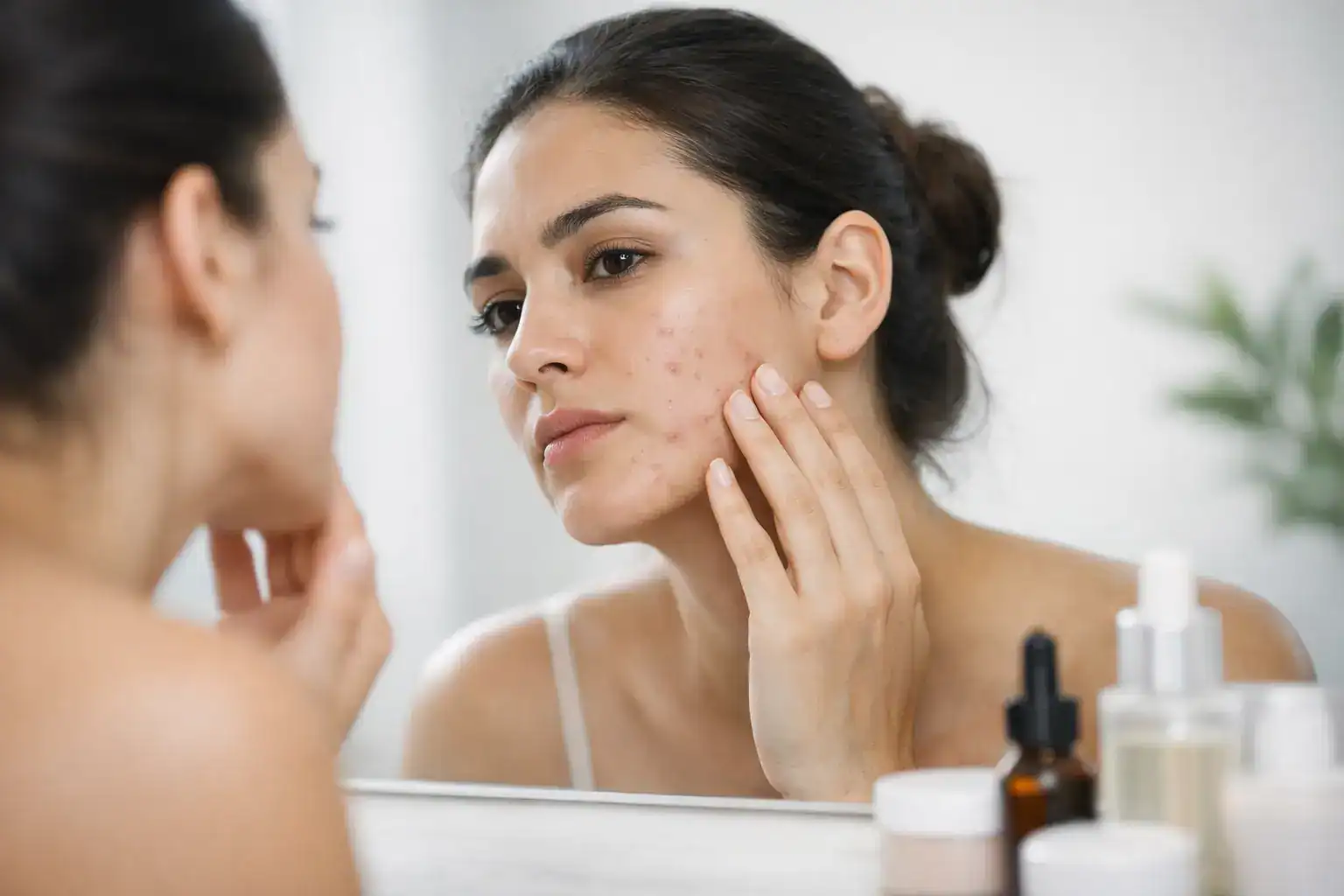
Choosing hyperpigmentation treatment for dark skin starts with understanding the cause of the discoloration and selecting a treatment your skin can tolerate. A product that promises rapid brightening may offer little benefit if it irritates your skin or leaves the underlying problem untreated.
We recommend a measured approach: identify the type of pigmentation, address ongoing inflammation, compare suitable ingredients, and protect your skin consistently. The aim is to reduce unwanted dark marks while preserving your natural complexion.
Identify the Cause of Your Hyperpigmentation
Dark patches can look similar while requiring different treatment plans. Post-inflammatory hyperpigmentation develops after inflammation or injury, including acne, eczema, burns, or irritating skincare. Melasma commonly causes patches on the face and may be influenced by hormonal changes and sunlight.
We recommend seeking a diagnosis when pigmentation is widespread, persistent, or difficult to explain. Treating every dark patch as an acne mark can lead to unnecessary purchases and unsuitable procedures. A dermatologist can assess the pattern, history, and likely depth of the pigment before recommending treatment.
Details to Record Before Choosing Treatment
Prepare the following information for your consultation:
- When the pigmentation appeared: Note whether it followed a breakout, rash, injury, or new product.
- Where it develops: Record whether marks affect individual spots or larger areas.
- What you currently use: Include cleansers, serums, creams, exfoliants, and prescription products.
- Previous reactions: Mention burning, peeling, swelling, or worsening discoloration.
- Your treatment history: Explain what helped, what failed, and how long you used each treatment.
Bringing product labels and clear photographs makes the discussion more useful than relying on memory alone.
Address Active Acne or Irritation First
When new breakouts or recurring irritation continue, fading existing marks is only part of the solution. The trigger can keep producing fresh discoloration.
We recommend choosing a plan that manages the underlying condition alongside the pigmentation. For example, acne treatment may help prevent additional marks, while identifying an irritating cosmetic can stop repeated skin inflammation. Picking or squeezing blemishes also increases the likelihood of lingering dark spots.
Avoid assuming that stronger exfoliation will accelerate improvement. If your routine leaves your skin uncomfortable, discuss that reaction before adding another active ingredient.
Compare Ingredients for Hyperpigmentation Treatment
There is no single ingredient that suits every case of hyperpigmentation in dark skin. The diagnosis, formulation, concentration, and tolerance all influence the choice.
Ingredients Worth Discussing With a Dermatologist
- Azelaic acid: An option used for pigmentation that may also fit some acne treatment plans.
- Retinoids: Treatments such as tretinoin can help with certain pigmentation concerns, but irritation must be managed carefully.
- Hydroquinone: A pigment-reducing medication that requires clear instructions about application, duration, and review.
- Vitamin C: Included in some topical approaches, although results depend on the formulation and the pigmentation being treated.
- Other options: Cysteamine, kojic acid, and niacinamide may be considered in selected routines; they should not be assumed to deliver identical results.
We recommend comparing the purpose of each ingredient rather than collecting several products with similar “brightening” claims. Topical treatments have varying success, and some cases require a clinician-directed combination.
Choose Tolerability Alongside Effectiveness
A promising ingredient is only useful if you can use it consistently. Retinoids, for example, can cause irritation that triggers additional pigmentation in darker skin. Starting slowly and using moisturizer can help reduce this problem, following the instructions appropriate to the product.
We recommend asking how often to apply treatment, which products to avoid combining, and what reaction should prompt you to stop. Persistent burning should not be interpreted as proof that a treatment is working.
Make Sunscreen Part of Your Treatment Decision
Sun protection belongs in the treatment plan from the beginning. Ultraviolet exposure can worsen discoloration, and visible light can contribute to pigmentation concerns in darker skin.
For dark spots, dermatology guidance recommends tinted sunscreen containing iron oxide, alongside broad-spectrum protection, water resistance, and SPF 30 or higher. Iron oxide helps protect against visible light. Reapplication outdoors, shade, and protective clothing support that protection.
Choose a Sunscreen You Can Use Consistently
Consider these practical factors:
- Shade match: A suitable tint makes daily application easier.
- Comfort: Choose a texture you can tolerate throughout the day.
- Clear labeling: Check the SPF, broad-spectrum claim, and ingredient list.
- Affordability: Include replacement sunscreen in your ongoing budget.
We recommend assessing sunscreen as part of the total routine. An expensive treatment plan becomes difficult to maintain if its essential supporting products are unaffordable.
Evaluate Chemical Peels and Laser Treatments Carefully
Professional procedures are sometimes appropriate, but they require careful selection for darker skin. Chemical peels, lasers, and intense pulsed light treatments can aggravate pigmentation when they injure the skin. Procedures for melasma can also worsen the condition or cause post-inflammatory hyperpigmentation.
We recommend consulting a dermatologist experienced in treating your skin tone before purchasing a procedure package. The discussion should explain why the proposed treatment fits your diagnosis and what alternatives are available.
Questions to Ask Before a Procedure
- What type of pigmentation are we treating?
- What experience do you have with skin tones similar to mine?
- Why is this procedure suitable for my case?
- Could it cause darker or lighter patches?
- Would a test area be appropriate?
- What preparation and aftercare are required?
- How will complications be managed?
A useful consultation should provide specific answers and a realistic plan, without pressuring you to commit immediately.
Check Pregnancy and Other Personal Considerations
Treatment selection should account for pregnancy, breastfeeding, current medicines, and previous reactions. A routine borrowed from someone else may be unsuitable for your circumstances.
The American Academy of Dermatology advises avoiding retinoids and hydroquinone during pregnancy. We recommend reviewing your products with a dermatologist or maternity clinician before starting treatment while pregnant. If you are planning pregnancy or breastfeeding, ask for advice suited to that situation as well.
Bring the actual ingredient lists. Marketing terms such as “natural,” “gentle,” or “clean” do not provide enough information for a medication safety review.
Build a Budget You Can Maintain
When comparing hyperpigmentation treatment costs, consider the full course of care. A consultation, prescription, moisturizer, sunscreen, follow-up appointment, and procedure aftercare may all affect the total.
We recommend requesting an itemized plan before committing. Ask which products are essential, which are optional, and whether there are lower-cost alternatives with the same intended role. Avoid buying an entire range merely because every product carries a dark-spot claim.
A manageable routine also makes it easier to identify which treatment helps and which causes problems.
Set Realistic Expectations and Review Progress
Hyperpigmentation usually improves gradually. Some superficial dark marks can take six to twelve months to fade after the trigger is controlled, while deeper discoloration may persist longer. Treatment can help, but complete clearance by a fixed deadline cannot be guaranteed.
Track Progress Without Constantly Changing Products
We recommend taking photographs under similar lighting and reviewing them at agreed intervals. Keep a brief record of product use and reactions. Bring that record to follow-up appointments so adjustments are based on more than day-to-day impressions.
For melasma, ask about maintenance as well as initial improvement. Its management often involves ongoing sun protection and an individualized treatment plan.
FAQs about How to Choose Hyperpigmentation Treatment for Dark Skin
1. What is the best hyperpigmentation treatment for dark skin?
The best hyperpigmentation treatment for dark skin depends on the cause and severity of discoloration. Dermatologists often recommend azelaic acid, niacinamide, retinoids, and vitamin C to help reduce dark spots and improve skin tone.
2. How do I choose the right hyperpigmentation treatment for my skin?
We recommend identifying your skin type, pigmentation concerns, and sensitivity level before selecting a treatment. Consulting a dermatologist can help determine the safest and most effective option.
3. Is hyperpigmentation treatment safe for dark skin?
Yes. Many treatments are safe for darker skin tones when used correctly. However, aggressive chemical peels, unsuitable laser treatments, and irritating products may worsen pigmentation.
4. How long does hyperpigmentation treatment take to work?
Results vary depending on the treatment and pigmentation depth. Many people notice improvements within 8–12 weeks, while deeper discoloration may require several months.
5. Which ingredients should I look for in hyperpigmentation products?
We recommend considering products containing azelaic acid, niacinamide, vitamin C, kojic acid, or retinoids. These ingredients can help reduce excess pigmentation and promote a more even complexion.
6. Can sunscreen prevent hyperpigmentation from getting worse?
Yes. Daily application of broad-spectrum SPF 30 or higher sunscreen helps prevent dark spots from becoming darker. Tinted sunscreens containing iron oxides offer additional protection against visible light.
7. Should I consult a dermatologist before treating hyperpigmentation?
We recommend professional consultation, especially for persistent dark spots, melasma, sensitive skin, or severe pigmentation. A dermatologist can recommend appropriate treatments and reduce the risk of complications.
8. Can hyperpigmentation return after treatment?
Yes. Sun exposure, hormonal changes, acne, and skin irritation can trigger recurring pigmentation. Maintaining a gentle skincare routine and consistent sun protection helps reduce recurrence.
Conclusion
To choose hyperpigmentation treatment for dark skin, prioritize an accurate diagnosis, suitable ingredients, tolerability, and consistent sun protection. We recommend a clear, affordable plan with defined instructions and follow-up. Effective care should help reduce discoloration while keeping your skin comfortable and your natural complexion intact.