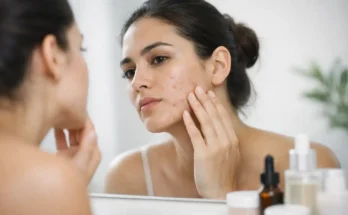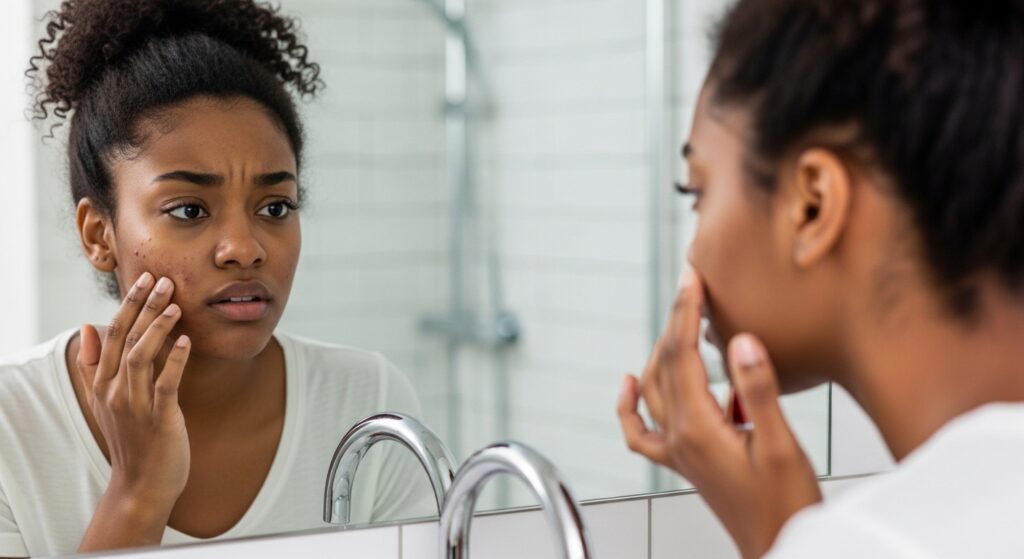
Pregnancy can change the skin in unexpected ways. Hormonal fluctuations may increase oil production, trigger clogged pores, worsen existing breakouts, or cause acne in people who previously had relatively clear skin. Choosing an effective treatment during this period requires more than simply finding a product that clears pimples. We must also consider whether the ingredients are appropriate for use during pregnancy.
When selecting acne treatment with pregnancy safe skincare, we focus on gentle cleansing, carefully chosen active ingredients, adequate hydration, sun protection, and professional guidance when acne becomes persistent or severe. According to the American College of Obstetricians and Gynecologists, certain over-the-counter ingredients, including azelaic acid, benzoyl peroxide, topical salicylic acid, and glycolic acid, may be used during pregnancy when appropriate.
At the same time, pregnancy is not the period for experimenting casually with strong acne products. Some commonly used acne medications, particularly retinoids, require avoidance or medical review. A carefully structured routine can therefore help us manage breakouts while minimizing unnecessary exposure to unsuitable ingredients.
Start by Understanding the Type of Pregnancy Acne
Before choosing a treatment, we should consider what the skin is actually experiencing. Pregnancy acne can range from occasional clogged pores to inflammatory papules, pustules, or deeper lesions.
Mild acne may appear as:
- Blackheads and whiteheads
- Small pimples around the forehead, chin, or cheeks
- Slightly increased oiliness
- Occasional hormonal breakouts
Moderate or severe acne may involve widespread inflammation, painful bumps, persistent lesions, or acne that begins to leave dark marks or scars.
The severity matters because the safest and most effective treatment strategy may differ. Mild breakouts can often be managed with a simplified topical routine, while painful, widespread, or scarring acne deserves assessment by a dermatologist or obstetric healthcare professional.
Choose Pregnancy-Safe Acne Ingredients Carefully
One of the most important steps in building pregnancy safe skincare for acne is learning to read active ingredient labels rather than relying solely on marketing claims such as “natural,” “gentle,” or “clean.”
Azelaic Acid
Azelaic acid is frequently considered when treating acne during pregnancy. The American Academy of Dermatology notes that it is thought to be safe for use during pregnancy, while ACOG also includes it among topical ingredients that may be used.
Azelaic acid can be particularly useful because it may help address several concerns at once. It can support clearer pores, reduce acne-related inflammation, and improve the appearance of post-acne discoloration.
For people prone to dark marks after pimples, this combination can make azelaic acid especially valuable within a pregnancy-conscious routine.
Benzoyl Peroxide
Benzoyl peroxide is another commonly used acne ingredient. ACOG lists topical benzoyl peroxide among over-the-counter ingredients that can be used during pregnancy, while the American Academy of Dermatology recommends discussing its use with an obstetrician or dermatologist and using it in limited amounts.
Benzoyl peroxide can help reduce acne-causing bacteria and inflammatory breakouts.
However, stronger does not necessarily mean better. During pregnancy, skin can become more reactive or dry, so we generally prefer using the lowest effective strength and monitoring irritation rather than immediately reaching for highly concentrated formulas.
Salicylic Acid
Topical salicylic acid can help remove dead skin cells and keep pores from becoming congested.
ACOG lists topical salicylic acid as an ingredient that may be used during pregnancy, while the American Academy of Dermatology advises limited-duration use and consultation with a healthcare professional when appropriate.
We should therefore distinguish controlled topical skincare use from aggressive exfoliation. More frequent application, larger treatment areas, or combining salicylic acid with several other exfoliants can unnecessarily increase irritation.
Glycolic Acid
Glycolic acid is another ingredient ACOG identifies among over-the-counter options that may be used during pregnancy.
It can support gentle exfoliation, smoother texture, and clearer-looking pores. Glycolic acid may also help improve dullness and uneven skin appearance.
Again, moderation matters. Pregnancy-related skin sensitivity can make an exfoliant that was previously well tolerated suddenly feel irritating.
Know Which Acne Ingredients to Avoid During Pregnancy
Choosing safe treatment also means knowing what should be removed from the routine.
Avoid Oral Isotretinoin
Isotretinoin must not be used during pregnancy. It is a retinoid used for severe acne and is associated with a serious risk of birth defects.
Anyone taking isotretinoin who discovers they are pregnant should contact their healthcare provider promptly.
Avoid Topical Retinoids
Topical retinoids commonly used for acne include:
- Tretinoin
- Adapalene
- Tazarotene
Although topical absorption is much lower than oral exposure, major medical sources generally recommend avoiding topical retinoids during pregnancy.
This is particularly important because retinoids can appear not only in prescription acne treatments but also in anti-aging products.
We should inspect ingredient labels carefully rather than assuming a cosmetic product is acceptable simply because acne treatment is not its primary purpose.
Be Careful With Oral Antibiotics and Hormonal Acne Treatments
Some oral acne medications are also inappropriate during pregnancy. ACOG identifies oral tetracyclines and certain hormonal therapies among treatments that should not be used during pregnancy.
The American Academy of Dermatology likewise recommends avoiding medications such as spironolactone during pregnancy.
Prescription acne should therefore be reviewed with the prescribing clinician when pregnancy begins or is being planned.
Build a Simple Pregnancy-Safe Acne Skincare Routine
The most effective pregnancy acne routine does not need ten different products. In fact, an overloaded routine can make acne more difficult to manage by damaging the skin barrier and increasing irritation.
Morning Routine
A practical morning routine may include:
- Gentle cleanser
Wash the face with a mild, non-stripping cleanser and lukewarm water. - Pregnancy-appropriate acne treatment
Depending on individual needs and professional guidance, this may include azelaic acid or another suitable topical treatment. - Lightweight moisturizer
Choose a non-comedogenic moisturizer that supports the skin barrier without feeling excessively greasy. - Broad-spectrum sunscreen
Daily sun protection is particularly important when acne leaves dark marks or when exfoliating ingredients are used.
ACOG recommends washing the face twice daily with a mild cleanser and lukewarm water and choosing oil-free cosmetics when managing pregnancy acne.
Evening Routine
The evening routine can remain equally straightforward:
- Remove makeup and sunscreen.
- Cleanse gently.
- Apply the chosen acne treatment.
- Follow with moisturizer.
When beginning a new active ingredient, we may start slowly rather than using it every night immediately. This allows us to assess tolerance and avoid unnecessary dryness, burning, or peeling.
Protect the Skin Barrier While Treating Acne
A common mistake when acne appears during pregnancy is trying to “dry out” every breakout.
Excessive cleansing, harsh scrubs, alcohol-heavy toners, multiple acids, and repeated spot treatments may leave the skin irritated while doing little to address the underlying breakout cycle.
Instead, an effective pregnancy safe acne skincare routine should maintain a healthy balance between acne control and barrier protection.
Look for Supportive Skincare Ingredients
A gentle moisturizer may contain ingredients such as:
- Ceramides
- Glycerin
- Hyaluronic acid
- Squalane
- Other barrier-supporting emollients and humectants
A compromised barrier can make active acne treatments harder to tolerate. Moisturizing therefore does not work against acne treatment; it may help us continue treatment more consistently.
Introduce Only One New Acne Treatment at a Time
Pregnancy is not the ideal time to introduce several strong products simultaneously.
If we begin using benzoyl peroxide, an exfoliating acid, a new cleanser, and another acne serum within the same week, any irritation that develops becomes difficult to trace.
A better strategy is to simplify first.
Introduce one treatment at a time, observe how the skin responds, and then determine whether anything else is necessary.
This method also reduces the temptation to over-treat acne when improvement does not happen immediately.
Check Every Product Label for Hidden Retinoids
One of the easiest ways to make a pregnancy skincare routine safer is to review every active ingredient.
Retinoids may appear under several names, including:
- Retinol
- Retinal or retinaldehyde
- Tretinoin
- Adapalene
- Tazarotene
- Other vitamin A-derived retinoid ingredients
The exact risk is not identical for every ingredient or formulation, but major medical guidance generally recommends avoiding topical retinoid acne medications during pregnancy.
Rather than trying to distinguish every formulation independently, we can bring questionable products to a dermatologist, pharmacist, obstetrician, or other qualified healthcare professional for review.
Consider Skin Sensitivity During Pregnancy
A skincare routine that worked perfectly before pregnancy may suddenly become uncomfortable.
Hormonal changes can affect oil production, pigmentation, dryness, and skin sensitivity. This means an acne product does not necessarily need to be unsafe to be unsuitable for a particular person’s skin.
Signs that a routine may be too aggressive include:
- Persistent burning
- Significant redness
- Tightness
- Excessive flaking
- Cracking
- Worsening sensitivity
- Increased irritation around the mouth, nose, or eyes
When these symptoms appear, reducing treatment frequency or simplifying the routine may be more useful than adding another acne product.
Avoid Picking and Squeezing Pregnancy Acne
Picking pimples may temporarily feel satisfying, but it increases inflammation and can raise the likelihood of lingering discoloration or scarring.
ACOG specifically recommends avoiding picking or squeezing acne lesions to reduce the possibility of scarring.
Instead, we should allow topical treatment to work consistently while protecting inflamed areas from unnecessary friction.
This becomes particularly important for people whose skin develops post-inflammatory hyperpigmentation easily after acne.
Choose Non-Comedogenic Makeup and Skincare
Pregnancy acne treatment should extend beyond the treatment serum or cream.
Heavy cosmetics, greasy hair products, or pore-clogging facial products may contribute to congestion in acne-prone skin.
Look for labels such as:
- Non-comedogenic
- Oil-free
- Suitable for acne-prone skin
ACOG recommends choosing oil-free cosmetics when dealing with pregnancy acne.
Makeup should also be removed thoroughly before bed rather than left on overnight.
Use Sunscreen to Support Acne and Dark Mark Management
Sunscreen is an important part of pregnancy-safe acne care because breakouts often leave discoloration behind.
Sun exposure can make post-acne marks appear more noticeable, particularly in skin tones that develop hyperpigmentation easily.
A broad-spectrum SPF 30 or higher is a practical daily addition to an acne routine. For sensitive or acne-prone skin, lightweight and non-comedogenic sunscreen formulas may feel more comfortable.
Regular sunscreen use also helps protect skin undergoing exfoliation with ingredients such as glycolic acid.
Do Not Assume “Natural” Means Pregnancy Safe
Botanical or natural products are not automatically better choices during pregnancy.
A product may contain plant extracts, essential oils, exfoliating ingredients, or concentrated compounds that still require consideration.
Instead of relying on the word natural, we should evaluate the entire ingredient list and choose products based on evidence, skin tolerance, and professional guidance when necessary.
The same principle applies to “chemical-free,” “clean,” or “organic” marketing language. These terms do not establish whether an acne treatment is appropriate during pregnancy.
When to See a Dermatologist for Pregnancy Acne
Professional care becomes especially important when acne is:
- Deep or painful
- Rapidly worsening
- Widespread across the face, chest, or back
- Producing scars
- Leaving significant pigmentation
- Not improving with a gentle routine
- Causing substantial distress
- Already being treated with prescription medication
A dermatologist can evaluate acne severity and coordinate treatment with an obstetric healthcare professional when needed.
Prescription treatment does not automatically mean treatment is unavailable during pregnancy. For example, the American Academy of Dermatology notes that topical clindamycin is thought to be safe in pregnancy, although it recommends checking with an obstetrician or dermatologist before using it.
The goal is therefore not to avoid all acne treatment but to choose treatment appropriately.
How to Compare Pregnancy-Safe Acne Products Before Buying
Before adding a new product, we can evaluate it using a simple checklist.
Check the Active Ingredient
Identify the ingredient actually responsible for treating acne.
Review Pregnancy Compatibility
Compare the ingredient with guidance from reputable medical organizations or ask a healthcare professional.
Consider the Strength
Higher concentrations may increase irritation without necessarily producing proportionally better results.
Evaluate the Full Formula
A pregnancy-compatible active ingredient may still be combined with other actives that complicate the routine.
Match the Product to Skin Type
Oily skin, dry skin, sensitive skin, and combination skin may require different formulations.
Avoid Duplicating Active Ingredients
Using salicylic acid in a cleanser, toner, serum, and spot treatment simultaneously may expose the skin to more exfoliation than expected.
A Practical Approach to Choosing Acne Treatment with Pregnancy Safe Skincare
When selecting acne treatment with pregnancy safe skincare, we can follow a straightforward process:
- Identify the type and severity of acne.
- Stop or review products containing retinoids.
- Choose a mild cleanser rather than harsh scrubs.
- Select one appropriate acne active, such as azelaic acid, based on individual needs.
- Introduce treatment gradually.
- Use a non-comedogenic moisturizer.
- Apply sunscreen daily.
- Avoid picking or squeezing lesions.
- Monitor dryness and irritation.
- Seek professional advice for severe, painful, persistent, or scarring acne.
This approach keeps the routine focused and makes it easier to determine which products are actually helping.
Pregnancy-Safe Acne Treatment Requires Consistency, Not Aggression
Acne during pregnancy can be frustrating, but aggressive treatment is rarely the answer.
We achieve better skincare decisions by prioritizing ingredient safety, gentle cleansing, consistent treatment, skin-barrier support, hydration, and sun protection rather than constantly switching products.
Topical options such as azelaic acid, benzoyl peroxide, salicylic acid, and glycolic acid may be considered during pregnancy according to ACOG guidance, while retinoids require avoidance or professional review.
Because pregnancy can also change how skin responds to familiar products, we should use the minimum effective routine and introduce active ingredients carefully.
FAQs about How to Choose Acne Treatment With Pregnancy-Safe Skincare
1. How do we choose a pregnancy-safe acne treatment?
We recommend choosing treatments with ingredients that are generally considered suitable during pregnancy and avoiding products known to carry pregnancy-related risks. A dermatologist or obstetric healthcare professional can help confirm what is appropriate.
2. Which acne-fighting ingredients are commonly considered pregnancy-safe?
Ingredients such as azelaic acid, certain forms of glycolic acid, and limited use of benzoyl peroxide may be considered options in some cases. Individual suitability can vary, so professional guidance is important.
3. Which acne ingredients should be avoided during pregnancy?
Pregnant individuals are generally advised to avoid retinoids, including prescription tretinoin and oral isotretinoin. Some other medications may also be unsuitable depending on the stage of pregnancy.
4. Can we use salicylic acid while pregnant?
Small amounts of topical salicylic acid may sometimes be acceptable, but frequent, high-strength, or large-area use should be discussed with a healthcare professional.
5. What should a pregnancy-safe skincare routine include?
A simple routine may include a gentle cleanser, pregnancy-appropriate acne treatment, non-comedogenic moisturizer, and broad-spectrum sunscreen.
6. Is natural skincare automatically safe during pregnancy?
No. “Natural” does not automatically mean pregnancy-safe. Essential oils, herbal extracts, and concentrated botanical ingredients can still cause irritation or have safety concerns.
7. When should we see a dermatologist for pregnancy acne?
Professional care is recommended when acne becomes severe, painful, cystic, persistent, or begins causing scars or significant pigmentation.
Conclusion
Choosing the right acne treatment with pregnancy safe skincare begins with understanding both acne and ingredient safety. We should focus on gentle, evidence-based options rather than trying every powerful acne treatment available.
A simple routine built around a mild cleanser, an appropriate acne treatment, moisturizer, and broad-spectrum sunscreen can provide a strong foundation. Azelaic acid, benzoyl peroxide, topical salicylic acid, and glycolic acid are among the ingredients identified by ACOG as options that may be used during pregnancy, while oral isotretinoin and topical retinoid medications should be avoided during pregnancy according to major medical guidance.
Most importantly, persistent, painful, scarring, or difficult-to-control pregnancy acne deserves individualized medical attention. By combining a carefully selected routine with professional guidance when needed, we can manage breakouts without making skincare unnecessarily complicated.