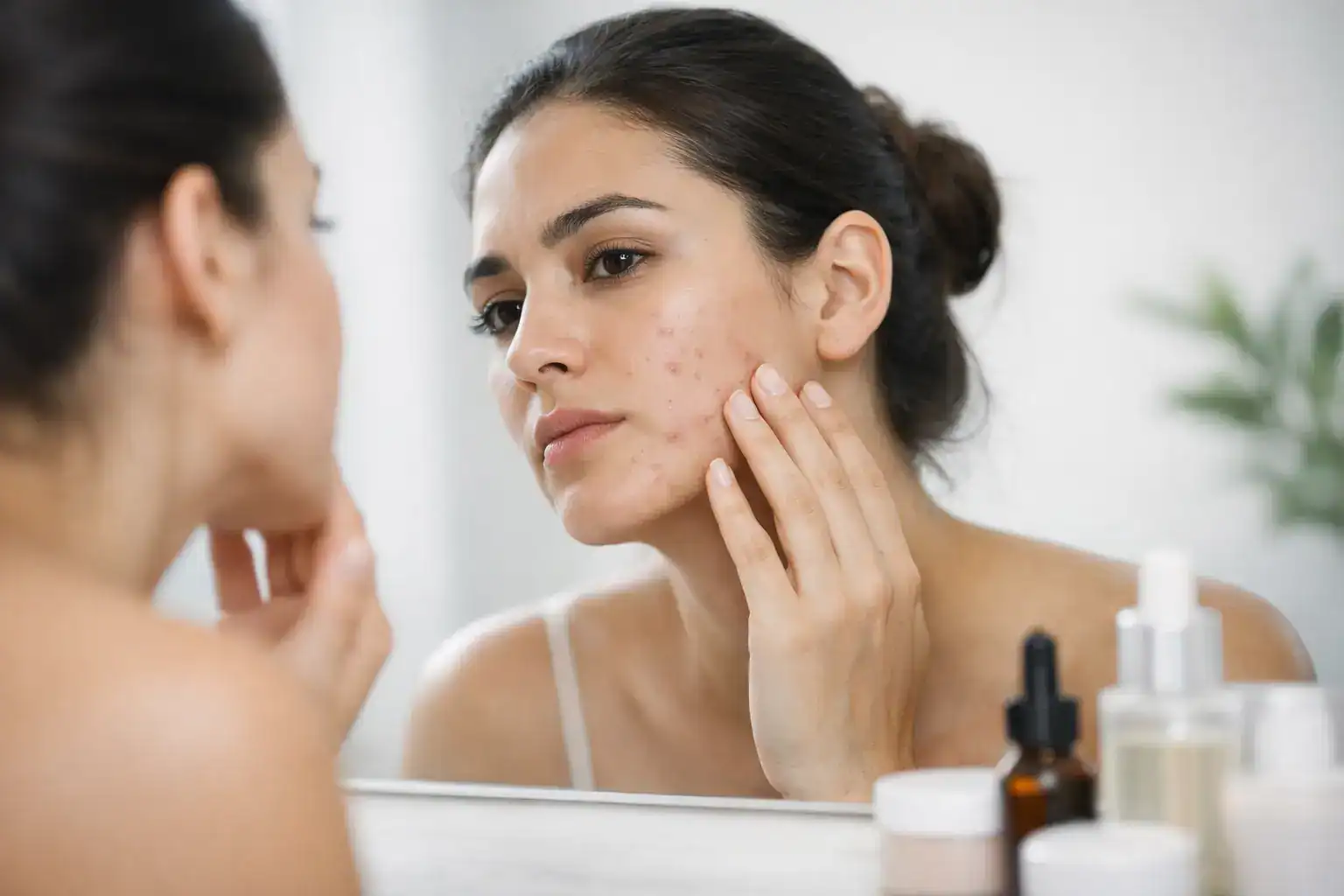
Choosing acne scar treatment for sensitive skin requires careful attention to scar type, skin condition and treatment intensity. A procedure that improves uneven texture may also cause irritation, prolonged redness or pigment changes if it is unsuitable for your skin.
We recommend beginning with a professional assessment rather than selecting a treatment because it is popular. The most useful plan addresses your specific scars, accounts for previous reactions and includes clear instructions for preparation and recovery.
Identify Your Acne Scars Before Choosing Treatment
Different acne scars require different approaches. We should first establish whether the concern is a change in skin texture, lingering discoloration or a combination of both.
Common Acne Scar Types and Post-Acne Marks
- Ice pick scars: Narrow, deep indentations that extend into the skin.
- Boxcar scars: Round or oval depressions with relatively defined edges.
- Rolling scars: Broader depressions that create an uneven, wave-like appearance.
- Raised scars: Thickened areas, including hypertrophic scars and keloids.
- Post-acne marks: Flat areas of discoloration remaining after a breakout.
Flat brown or red marks are different from depressed or raised scars. This distinction matters because treatment aimed at fading discoloration may not significantly improve deeper indentations. A dermatologist can identify these concerns and explain which require separate treatment.
Understand Your Skin Sensitivity Before Booking a Procedure
The phrase sensitive skin does not explain every reaction. Burning after an exfoliant, itching after a fragranced product and persistent facial redness may have different causes.
We recommend describing your symptoms precisely during the consultation. Explain when they appear, how long they last and which products or treatments seem to trigger them.
Details to Share With Your Dermatologist
Bring information about:
- Products that have caused burning, itching, swelling or peeling.
- Previous reactions to chemical peels, lasers or other procedures.
- Diagnosed skin conditions and known allergies.
- Current skincare products, prescriptions and supplements.
- Previous dark marks or raised scars after skin injuries.
- Recent or current acne medication, including isotretinoin.
Photographs of previous reactions can make the discussion more useful. A complete history helps the clinician decide whether further assessment, changes to your routine or additional preparation are needed.
Address Active Acne Before Focusing on Scar Correction
We should consider ongoing breakouts alongside existing scars. Treating old scars while new inflammatory spots continue to develop can make progress harder to maintain.
The American Academy of Dermatology explains that scar treatment typically begins after acne is under control. Your dermatologist may therefore recommend treating active acne before starting procedures intended to improve scarring.
Ask how your acne treatment will fit into the scar plan. This is particularly useful when your current products already cause dryness or irritation. Avoid independently stopping prescribed medication; obtain specific instructions about what to continue or pause.
Compare Acne Scar Treatments for Sensitive Skin
There is no single best acne scar treatment for sensitive skin. We recommend comparing options according to the scars they target, their potential complications and the recovery they require.
Topical Treatments for Mild Changes
A dermatologist may recommend a topical retinoid or salicylic acid for mild scarring. However, these products can be difficult to tolerate when skin is reactive, and they should not be expected to erase deep depressions. Ask whether a topical treatment is appropriate for your concern and how its use should be adjusted to your tolerance.
When considering a product, discuss the complete formulation rather than focusing only on its main ingredient. Request clear guidance on application frequency, moisturising and the symptoms that should prompt a review.
Professional Microneedling
Microneedling uses small needles to create controlled punctures in the skin and stimulate collagen production. It may improve the appearance of depressed acne scars, but suitability depends on your medical history and current skin condition.
Sensitive skin does not automatically rule it out. Equally, describing the procedure as minimally invasive does not mean everyone will tolerate it well. Ask about expected redness, discomfort, recovery and the clinician’s experience with your skin tone.
We recommend professional assessment rather than attempting scar treatment with home devices. The AAD warns that at-home microneedling can damage skin and cause infection, scarring or changes in skin colour.
Chemical Peels
Chemical peels vary in depth and intensity. Some are used for superficial changes, while deeper treatments involve more substantial recovery and risk. A peel that improves surface appearance may have limited benefit for deep scars.
Before agreeing to a peel, ask which concern it will treat and why the selected formulation suits your skin. Avoid assuming that a peel is gentle simply because it is advertised for sensitive skin. Request an explanation of the expected response and how complications would be managed.
Laser Resurfacing
Laser resurfacing can improve acne scar texture, but lasers differ in how they affect the skin. Treatment selection should account for scar depth, skin tone and the risk of pigment changes. PMC
We recommend asking for the exact procedure name and a clear explanation of its suitability. Discuss downtime, discomfort, follow-up appointments and whether a preliminary test area would be useful. A test area may inform planning, but it cannot guarantee that a full treatment will be complication-free.
Targeted Procedures for Deep or Raised Scars
Some scars require treatment directed at their structure. Options may include subcision, punch procedures or treatments for raised scars, such as injections or silicone products. These approaches serve different purposes and are selected according to scar characteristics.
If a clinic proposes the same procedure for every scar, ask how it will address each type. A tailored explanation is more useful than a broad promise of smoother skin.
Choose a Qualified Acne Scar Treatment Provider
When searching for acne scar treatment for sensitive skin near me, we recommend evaluating the consultation as carefully as the treatment menu.
Questions to Ask Before Committing
- Which scar types do we need to treat?
- What makes this procedure suitable for my sensitive skin?
- What experience do you have with my skin tone and reaction history?
- Which complications are possible, and how are they managed?
- How many sessions might be needed before reassessment?
- Who performs the procedure and provides follow-up care?
- What improvement is realistic for my particular scars?
Look for answers that are specific to your assessment. Before-and-after photographs can support the discussion, but they should not replace an explanation of your likely outcome.
Assess the Full Cost and Recovery Commitment
An affordable treatment should fit both your budget and your ability to complete the recommended plan.
We suggest requesting a written estimate covering the consultation, procedures, aftercare products and follow-up visits. Clarify whether quoted prices apply to one session or an entire course.
Also consider practical recovery needs. Ask when you can resume work, exercise, makeup and your usual skincare. If the proposed schedule is difficult to manage, discuss alternatives before purchasing a package.
Plan Gentle Aftercare Before Treatment Starts
Aftercare for sensitive skin should be discussed before the procedure. We recommend obtaining written instructions so that recovery decisions do not depend on guesswork.
Aftercare Priorities to Confirm
- Which cleanser and moisturiser to use.
- Which active ingredients to pause.
- When to resume prescribed products.
- How to protect treated skin from sunlight.
- Which symptoms require contacting the clinic.
The AAD recommends following procedure-specific instructions and using broad-spectrum SPF 30 or higher after acne scar treatment. Picking at treated areas can interfere with healing, so allow crusting or peeling to resolve as instructed.
Set Realistic Expectations for Acne Scar Improvement
We recommend defining success before treatment begins. Your priority may be softer scar edges, a more even surface or less noticeable discoloration.
Scar treatment can make scars less visible, but complete removal is not a realistic promise. Improvement may require several sessions or a combination of approaches, and results vary between individuals.
Agree on a review point and ask how progress will be documented. Photographs taken under consistent lighting are more useful than comparisons made with different angles, filters or makeup.
FAQs about How to Choose Acne Scar Treatment for Sensitive Skin
1. What is the best acne scar treatment for sensitive skin?
The best treatment depends on the type and depth of acne scars, skin sensitivity, and overall skin condition. Gentle options such as professionally supervised chemical peels, microneedling, certain laser treatments, and targeted skincare may be recommended.
2. How do we choose a safe acne scar treatment for sensitive skin?
We recommend starting with a professional skin assessment. A qualified dermatologist can evaluate scar type, sensitivity, pigmentation concerns, and previous reactions before recommending the most suitable treatment.
3. Is microneedling suitable for sensitive skin?
Microneedling may be suitable for some people with sensitive skin when performed by an experienced professional. Treatment intensity should be adjusted carefully to reduce excessive redness, irritation, or inflammation.
4. Can chemical peels be used on sensitive skin?
Yes, but milder chemical peels are generally preferred. Stronger acids may cause irritation, so the type and concentration of the peel should be selected according to individual skin tolerance.
5. Should sensitive skin avoid laser acne scar treatments?
Not necessarily. Some laser treatments can improve acne scars, but sensitive skin may require gentler settings and careful aftercare. A dermatologist should determine whether laser treatment is appropriate.
6. What should we consider before choosing treatment?
Before selecting an acne scar treatment, we should consider scar type, skin sensitivity, skin tone, downtime, potential side effects, treatment cost, and expected results.
7. How can we reduce irritation after acne scar treatment?
We recommend following professional aftercare instructions, using gentle skincare products, keeping the skin moisturised, and applying broad-spectrum sunscreen daily.
Conclusion
Knowing how to choose acne scar treatment for sensitive skin begins with an accurate diagnosis and a detailed discussion of your reaction history. We recommend selecting a qualified provider who explains the treatment’s purpose, expected improvement, possible complications and recovery requirements.
A carefully planned approach gives you a clear basis for deciding whether a treatment suits your scars, your skin and your budget.