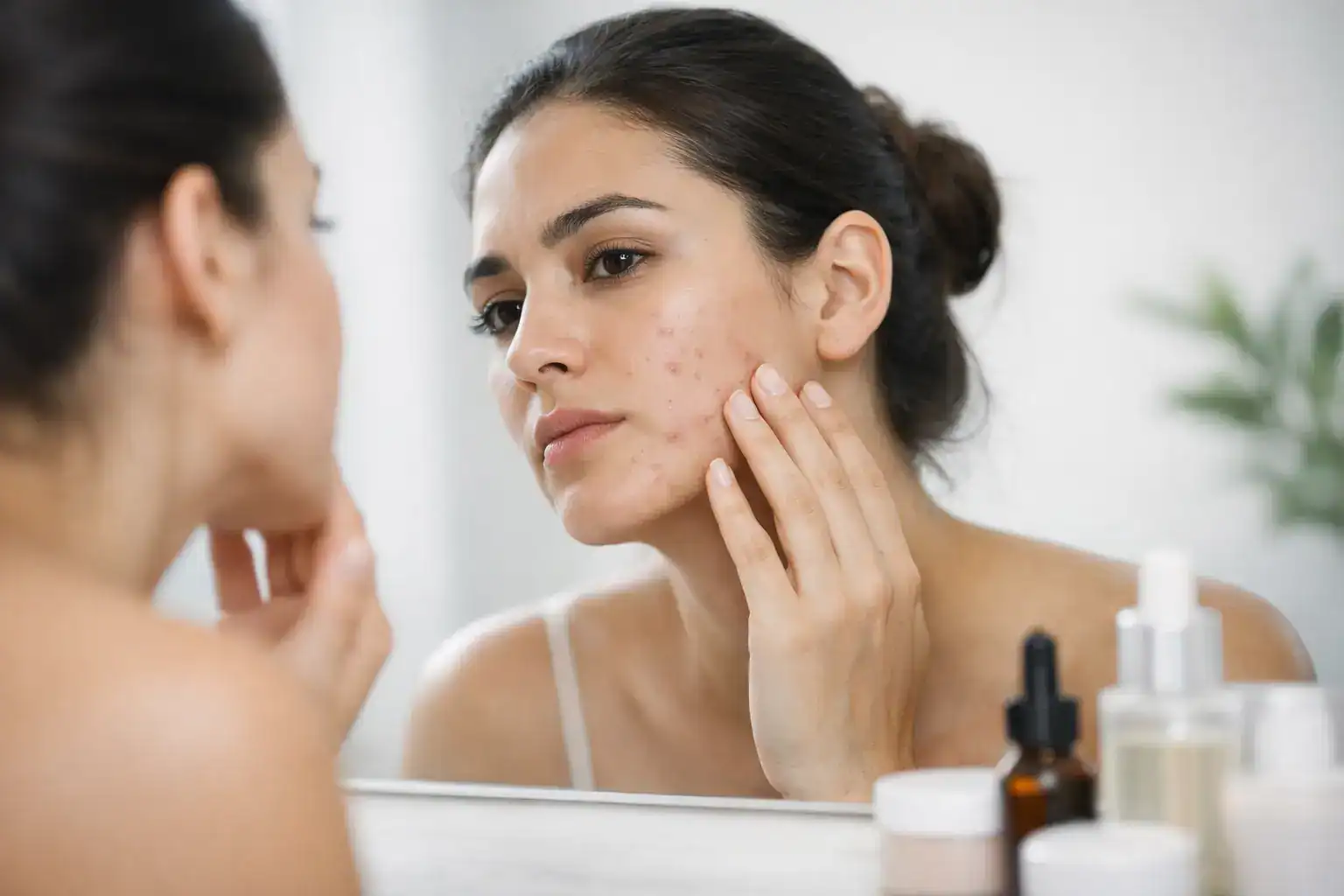
The best acne scar removal treatment depends on the shape, depth and location of your scars, your skin tone and the recovery time you can manage. Laser resurfacing, microneedling, subcision and targeted scar procedures address different problems. Choosing the right approach starts with identifying what needs correcting.
We should approach acne scar removal with a clear goal: making scars less noticeable and improving skin texture. Complete removal is rarely achievable, but a carefully selected treatment plan can produce meaningful improvement. Many people have several scar types, making a combination of treatments more appropriate than a single procedure.
Understanding Acne Scars Before Choosing Treatment
Acne can leave depressions, raised tissue or changes in skin colour. These concerns may appear together, but they do not require identical treatment. A product that fades a dark mark will not necessarily correct a deep indentation.
Common Types of Acne Scars
- Ice pick scars: Narrow, deep openings that extend into the skin.
- Boxcar scars: Round or oval depressions with clearly defined edges.
- Rolling scars: Broad depressions that create an uneven, wave-like surface.
- Raised scars: Firm areas of excess scar tissue, including hypertrophic scars and keloids.
Flat brown, red or purple marks after acne are usually post-inflammatory colour changes, rather than structural scars. Distinguishing discolouration from lost or excess tissue helps us avoid choosing a treatment that targets the wrong concern.
Laser Resurfacing for Acne Scars
Laser resurfacing can improve selected depressed scars and uneven texture. Different laser systems deliver different levels of treatment, so the word “laser” alone tells us little about expected results or recovery.
Ablative lasers remove controlled portions of skin, while non-ablative lasers deliver energy without removing the surface in the same way. Fractional systems treat small zones, leaving surrounding tissue available to support healing.
More intensive resurfacing generally involves greater recovery demands. Redness, pigment changes, infection and additional scarring are possible complications. Skin tone, treatment settings and the clinician’s experience all matter.
Laser resurfacing may help shallow boxcar scars and broader texture irregularities, but deep ice pick scars or tethered rolling scars may need targeted treatment first. We should choose a laser because it suits the scar pattern, rather than assuming the strongest treatment will deliver the best outcome.
Microneedling for Depressed Acne Scars
Professional microneedling uses fine needles to create controlled punctures that stimulate skin repair and collagen production. It can help soften some depressed scars and improve overall texture.
Results develop gradually, and treatment commonly involves several sessions. Microneedling may be considered across different skin tones, although appropriate technique and patient selection remain essential.
We should distinguish professional treatment from home rollers. Needle depth, hygiene and assessment of active acne affect safety. Microneedling also cannot reliably release the deeper bands responsible for every rolling scar or correct every narrow, deep scar.
Subcision for Rolling Acne Scars
Subcision targets depressed scars held down by fibrous bands beneath the skin. A clinician passes a specialised needle or instrument under the scar to release these attachments, allowing the depression to lift.
This makes subcision particularly relevant to tethered rolling scars. Surface treatments alone may have limited benefit when the underlying attachment remains.
Bruising, swelling, tenderness and bleeding can occur. Less common complications include infection and injury to nearby structures. Treatment therefore requires an experienced medical professional.
Subcision may be combined with fillers or resurfacing when the skin needs both release beneath the scar and improvement at the surface. The sequence should follow an individual assessment.
TCA CROSS and Punch Procedures for Deep Scars
Deep, narrow scars often require focused correction rather than treatment across the entire face.
TCA CROSS, or chemical reconstruction of skin scars, involves applying trichloroacetic acid precisely within selected scars. It may be considered for ice pick scars and certain narrow boxcar scars.
Punch excision removes an individual scar and closes the opening, replacing it with a smaller surgical scar. Punch elevation lifts the base of a suitable depressed scar closer to the surrounding skin level.
These procedures do not guarantee an invisible result. Pigment changes, scar widening and new scarring are possible. Concentrated acids should never be used for home scar treatment. Precision is central to both safety and outcome.
Chemical Peels for Mild Texture Changes and Acne Marks
Chemical peels use a controlled chemical solution to exfoliate the skin. Superficial peels may improve mild discolouration and roughness, while deeper peels act further into the skin and require more recovery.
We should avoid treating all peels as interchangeable. Their benefits and risks depend on the solution, depth, skin condition and aftercare.
Important Considerations Before a Chemical Peel
- Confirm whether the concern is pigmentation, shallow texture or deeper scarring.
- Discuss previous reactions, cold sores and current medication.
- Ask about the risk of darker or lighter patches after treatment.
- Understand the healing period and required follow-up care.
A stronger peel is not automatically a better choice. Deep indentations may need a procedure that addresses their structure, while sensitive skin may require a more cautious approach.
Dermal Fillers for Selected Depressed Scars
Dermal fillers add volume beneath suitable depressed scars, bringing them closer to the surrounding skin level. They may be used alone or alongside scar-release procedures.
Some fillers provide temporary improvement and require maintenance. Others last longer, but suitability depends on the material, scar anatomy and treatment goals.
We should ask about the proposed product, how long improvement may last and what follow-up treatment could involve. Fillers are an option for selected depressions, rather than a universal solution for acne scarring.
Treatment for Raised Acne Scars
Raised scars need an approach that reduces excess tissue. Treatments intended to build collagen in depressed scars may be unsuitable.
A dermatologist may consider corticosteroid injections, silicone preparations, laser treatment or other combinations, depending on the scar. Keloids require particular care because they can recur, and surgery alone may not provide lasting control.
How to Choose the Best Acne Scar Removal Treatment
We should begin with a qualified dermatologist who regularly treats acne scars and has experience with our skin tone. A useful consultation connects each recommended procedure to a specific concern.
Questions to Ask Before Starting Treatment
- Which scar types are present?
- What will each proposed procedure address?
- What improvement is realistic?
- How many sessions might be needed?
- What are the recovery requirements and possible complications?
- What will the complete treatment plan cost?
Ask for a written estimate covering consultation, procedures, prescribed aftercare and follow-up. Comparing total costs is more useful than comparing a single advertised session price.
Current acne treatment also matters. Controlling breakouts helps prevent new scars while existing ones are treated.
Acne Scar Treatment for Sensitive and Darker Skin
For sensitive skin, we should discuss irritation, eczema, product reactions and difficulty tolerating previous treatments. For darker skin tones, post-inflammatory hyperpigmentation deserves specific attention.
Neither sensitivity nor darker skin automatically rules out scar treatment. However, procedure selection, preparation and intensity should reflect individual risks. A treatment plan should explain how pigment changes and prolonged irritation will be managed, rather than promising that any procedure is risk-free.
Recovery and Aftercare for Better Results
Aftercare supports healing and helps protect treatment results. We should follow the clinician’s instructions instead of immediately restarting every product in an existing skincare routine.
Essential Aftercare Steps
- Cleanse treated skin as instructed.
- Use recommended moisturisers or wound-care products.
- Apply broad-spectrum, water-resistant SPF 30 or higher when advised.
- Avoid picking, scrubbing or removing peeling skin.
- Restart makeup and active skincare only when permitted.
- Attend follow-up appointments and continue acne management as directed.
Visible healing and final improvement occur on different timelines. Swelling may settle before collagen-related changes become apparent, so early photographs do not necessarily show the final result.
FAQs about Best Acne Scar Removal Treatment
What is the best acne scar removal treatment?
The best acne scar removal treatment depends on the type, depth, and severity of the scars. Common professional options include microneedling, chemical peels, laser resurfacing, subcision, dermal fillers, and TCA CROSS.
Can acne scars be removed permanently?
Many acne scars can be significantly reduced, although complete removal is not always possible. Professional treatments can improve skin texture, tone, and scar depth, making scars much less noticeable.
Which treatment works fastest for acne scars?
Treatments such as laser resurfacing, microneedling, and chemical peels may provide visible improvement after several sessions. The speed of results depends on the scar type and individual skin response.
What is the best treatment for deep acne scars?
Deep scars such as ice pick, rolling, and boxcar scars often require targeted treatments. Dermatologists may recommend TCA CROSS, subcision, laser therapy, microneedling, or a combination approach.
Is acne scar removal treatment safe for sensitive skin?
Yes, but treatment should be carefully selected. People with sensitive skin may require gentler procedures, lower treatment intensities, and appropriate aftercare to minimise irritation.
How many sessions are needed for acne scar treatment?
The number of sessions varies depending on the treatment and severity of scarring. Some people notice improvement after a few sessions, while deeper scars may require multiple treatments.
Should I see a dermatologist for acne scars?
Yes. A qualified dermatologist can identify your scar type and skin condition and recommend the most suitable treatment plan while reducing the risk of irritation, pigmentation changes, or complications.
Conclusion
The best acne scar removal treatment is a plan matched to the scars we actually have. Rolling scars may need subcision, deep ice pick scars may require targeted correction, and broader texture changes may benefit from resurfacing or microneedling.
A thorough assessment, realistic expectations and consistent aftercare provide a stronger foundation for improvement than choosing a procedure by popularity alone.