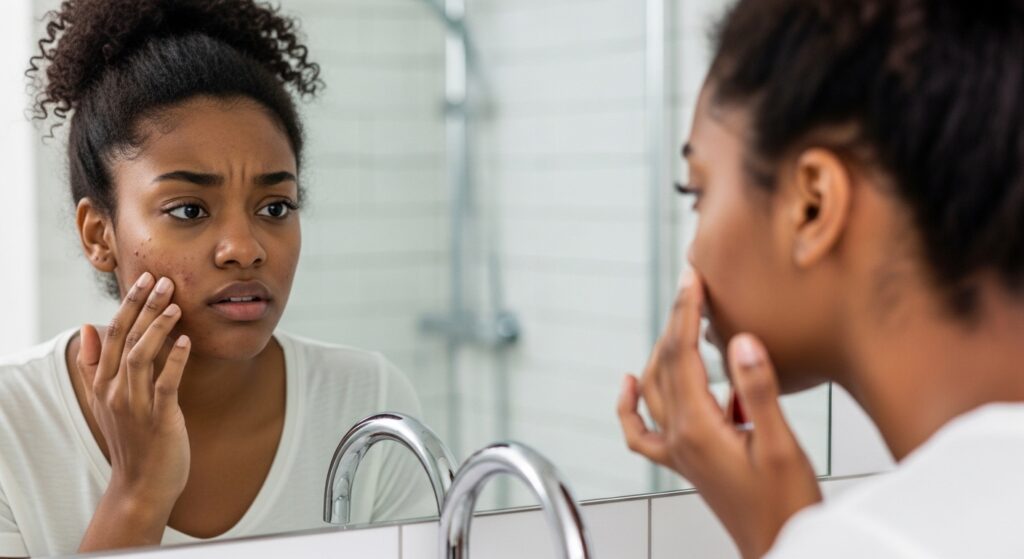
Dark spot treatment for Black skin should improve uneven pigmentation while protecting the skin from irritation. The right approach depends on what caused the marks, how deeply the pigment sits, and whether acne, eczema, or another condition is still creating new spots.
When comparing costs, we need to consider the entire treatment plan: consultation, skincare, prescriptions, procedures, and maintenance. An affordable routine that suits your skin may offer better value than an expensive treatment that causes inflammation or requires repeated correction.
Understanding Dark Spots on Black Skin
Dark spots often develop after breakouts, irritation, scratching, or injury. This is called post-inflammatory hyperpigmentation. Melasma is a different condition that commonly produces patches of pigmentation across the face. Identifying the cause matters because these conditions may require different treatment plans.
We should also distinguish flat discoloration from acne scars. A brown mark and an indented scar can appear together, but improving pigment does not necessarily correct the skin’s texture. Before paying for a procedure, ask which concern it will address and what improvement is realistic.
How Much Does Dark Spot Treatment for Black Skin Cost?
There is no single standard price for treating hyperpigmentation. Location, clinician experience, treatment type, and the number of appointments all affect the final bill.
Because no country or currency is specified, the published figures below are United States benchmarks, not local quotations or prices specific to Black skin.
Dark Spot Treatment Cost Comparison
| Treatment option | What to budget for | Main cost consideration |
|---|---|---|
| Daily skincare | Cleanser, moisturiser, sunscreen, and a suitable treatment product | Products need replacing |
| Prescription treatment | Consultation, medication, and follow-up | Price depends on the medicine and coverage |
| Chemical peels | Assessment, procedure, aftercare, and possible repeat sessions | Peel type and treatment course affect cost |
| Laser treatment | Specialist assessment, procedure, aftercare, and possible additional sessions | Device, treatment area, and settings affect price |
| Maintenance | Continued sun protection and any prescribed ongoing treatment | Pigmentation may return |
The American Society of Plastic Surgeons reports an average of $697 for laser skin treatments and $1,829 for skin resurfacing. These are broad procedure categories; they are not interchangeable and do not establish the cost of a particular dark spot treatment. Request an itemised quotation for your diagnosis and proposed procedure.
Dark Spot Treatment Options for Black Skin
1. Daily Sunscreen and Gentle Skincare
Sun protection is a foundation of hyperpigmentation treatment. The American Academy of Dermatology recommends tinted sunscreen containing iron oxide, with broad-spectrum protection and SPF 30 or higher, for darker skin tones affected by dark spots. Iron oxide adds protection against visible light, which can worsen pigmentation.
Choose a sunscreen that blends comfortably with your complexion and feels suitable for daily wear. A product that sits unused because of its texture or white cast offers poor value, regardless of its price.
We should also keep the supporting routine gentle. Fragrance-free products can help reduce irritation, while burning or stinging may signal that a product is aggravating the skin. For melasma, that irritation can deepen discoloration.
2. Non-Prescription Dark Spot Products
Some dark spots respond to products available without a prescription. Dermatologists identify ingredients such as azelaic acid, vitamin C, glycolic acid, kojic acid, and certain retinoids as options that may help fade pigmentation. Availability and prescription requirements vary by ingredient and location.
When comparing products, we should assess more than the marketing claim. Look at the active ingredient, instructions, package size, and whether the formula suits your skin.
Avoid building an expensive routine around several overlapping brightening products. A simpler approach makes it easier to identify which product helps and which causes irritation. Follow the label or your clinician’s instructions, and seek advice if treatment produces persistent discomfort.
3. Prescription Creams for Persistent Pigmentation
A dermatologist may recommend prescription treatment when the diagnosis or severity warrants it. For melasma, options include hydroquinone, tretinoin-based treatment, or a combination cream containing hydroquinone, tretinoin, and a corticosteroid. These medicines require an appropriate treatment plan and supervision.
Prescription costs should include the consultation and any review appointments, rather than the cream alone. Ask how much to apply, where to apply it, how long the course should last, and when to return for assessment.
We should judge value by suitability and response. A higher price does not establish that a prescription will work better for every person or every type of dark spot.
4. Chemical Peels for Selected Cases
Chemical peels may form part of a dermatologist’s treatment plan for pigmentation. They use a chemical solution to exfoliate the skin, but suitability depends on the diagnosis, skin condition, and procedure selected.
For darker skin tones, professional assessment is especially important because an irritating treatment can worsen pigmentation. The AAD advises that procedures used for melasma should be performed by a board-certified dermatologist.
Before booking, request the price of the full proposed course. Confirm whether the quotation includes preparation products, aftercare, follow-up, and management of an unexpected reaction. A low advertised session price may represent only part of the cost.
5. Laser and Light Treatments
Laser and light treatments may help selected patients, including some people whose melasma has not responded sufficiently to topical care. They require careful selection; they are not an automatic next step for every dark mark.
When comparing clinics, we should ask about the practitioner’s experience treating similar pigmentation in comparable skin tones. Request a clear explanation of the expected benefit, possible pigment changes, recovery requirements, and alternatives.
A procedure’s brand name or advertised speed should not replace an individual assessment. The practical question is whether the proposed treatment is appropriate for your particular skin concern.
What Affects the Total Cost of Hyperpigmentation Treatment?
The Cause and Extent of the Pigmentation
Treating ongoing acne or eczema may be necessary before existing marks can improve reliably. Otherwise, new inflammation can continue producing dark spots while older ones fade.
The area being treated also matters when reviewing a quotation. Ask whether the price covers individual spots, the entire face, or another body area. Compare equivalent treatment plans rather than headline prices.
The Need for Ongoing Care
Some pigmentation problems need continuing management. Melasma can recur, so the treatment budget may extend beyond the initial improvement. Sun protection and a clinician-directed maintenance plan can remain relevant after a course of treatment finishes.
Before committing financially, ask what ongoing care is likely to involve. This helps us distinguish a manageable long-term plan from an introductory price that becomes difficult to sustain.
How to Choose Affordable Dark Spot Treatment
Questions to Ask Before Paying
A useful consultation should clarify both clinical suitability and cost. Ask:
- What is causing the pigmentation?
- Which treatment should we start with, and why?
- What is included in the quoted price?
- How many appointments are proposed?
- What happens if the skin becomes irritated or darker?
- When will the treatment plan be reviewed?
We should also request written instructions and an itemised estimate. These make it easier to compare providers and avoid buying products that duplicate what is already included.
How Long Does Dark Spot Treatment Take?
Improvement requires patience. Treatment speed depends on the underlying condition, pigment depth, and response. For melasma, the AAD advises that results commonly take three to twelve months, sometimes longer.
Progress photographs taken under consistent lighting can make changes easier to assess. Agree on a review point with your clinician so that treatment is evaluated deliberately, rather than replaced whenever a new product appears.
FAQs about Dark Spot Treatment for Black Skin: Cost and Options
1. What causes dark spots on Black skin?
Dark spots are commonly caused by acne scars, sun exposure, hormonal changes, inflammation, and skin injuries. Black skin is particularly prone to post-inflammatory hyperpigmentation due to its higher melanin content.
2. What are the best treatments for dark spots on Black skin?
Effective options include topical creams containing azelaic acid, niacinamide, vitamin C, retinoids, and dermatologist-supervised chemical peels or laser treatments.
3. How much does dark spot treatment cost?
Costs vary depending on the treatment and location. In the United States, topical products may cost $10–$100, chemical peels $100–$300 per session, and laser treatments $200–$600 or more per session.
4. Can dark spots on Black skin be removed permanently?
Dark spots can fade significantly with proper treatment. However, new pigmentation may develop due to acne, sun exposure, or hormonal changes.
5. Are chemical peels safe for dark skin?
Yes, carefully selected chemical peels can be safe for darker skin tones when performed by experienced dermatologists. Incorrect treatment may worsen pigmentation.
6. How long does dark spot treatment take to work?
Visible improvements may appear within 6–12 weeks, although deeper pigmentation can take several months to fade.
7. Is laser treatment suitable for Black skin?
Certain lasers can treat dark spots on Black skin, but improper settings increase the risk of burns and pigmentation changes. Choose a dermatologist experienced with darker skin tones.
8. How can I prevent dark spots from returning?
Use broad-spectrum SPF 30 or higher daily, avoid picking pimples, maintain a gentle skincare routine, and treat underlying skin conditions promptly.
9. What is the most affordable treatment option?
Over-the-counter products containing niacinamide or azelaic acid are often affordable starting points. Consult a dermatologist for persistent or worsening pigmentation.
Conclusion
The best-value dark spot treatment for Black skin starts with an accurate diagnosis, suitable sun protection, and a plan your skin can tolerate. Topical products, prescriptions, peels, and lasers serve different purposes.
We should compare the complete cost of care, practitioner experience, and realistic outcomes before committing. A clear, sustainable treatment plan offers a stronger basis for spending than promises of instant or permanent clearance.