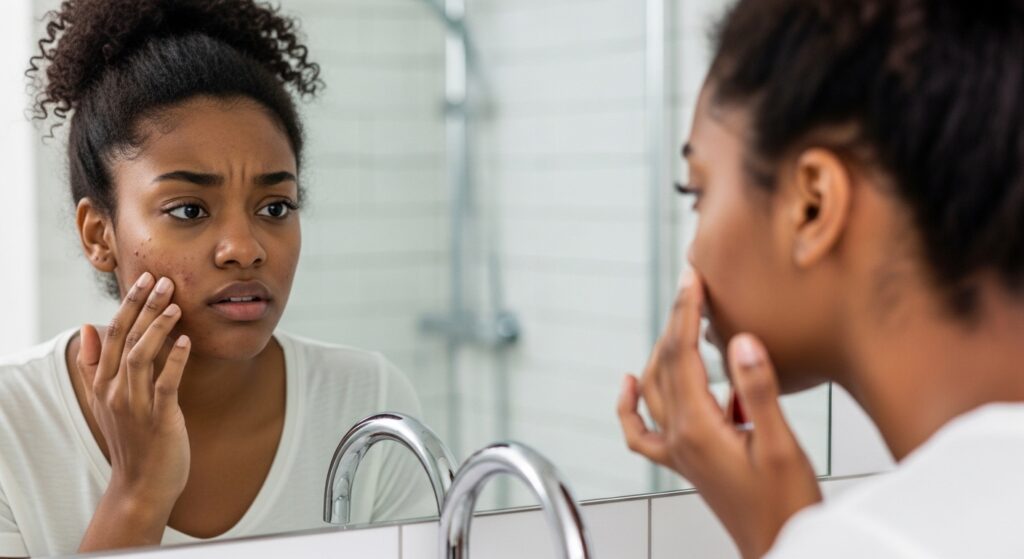
The best dark spot treatment for Black skin combines targeted skincare, daily sun protection, and control of the irritation that causes new marks. An effective routine should help uneven pigmentation fade while preserving the skin’s natural tone and keeping it comfortable.
We recommend choosing treatment according to the cause of the discoloration, skin sensitivity, and whether acne or another condition remains active. A product that suits acne-related marks may not be the right choice for larger patches of melasma. Stronger formulas are also not automatically better: irritation can create additional pigmentation in darker skin.
Identify the Cause Before Choosing a Dark Spot Treatment
Dark spots often develop after inflammation from pimples, eczema, scratching, or irritating products. This discoloration is called post-inflammatory hyperpigmentation. Treating the trigger helps prevent new marks while existing ones gradually fade.
For acne-prone Black skin, treating breakouts and dark spots together is particularly important. Repeated pimples can leave overlapping marks, making progress difficult to assess even when older pigmentation is improving. Picking or squeezing blemishes increases the risk of lasting discoloration and scarring.
Melasma requires a different approach. It commonly produces flat brown or grey-brown patches across the cheeks, forehead, or upper lip. Sun exposure and hormonal changes can contribute, and the condition may return after improvement. Persistent facial patches deserve a proper diagnosis before treatment begins.
Best Ingredients for Dark Spots on Black Skin
We prioritise ingredients with established dermatological uses over products promising instant results. The most suitable option depends on tolerance, the diagnosis, and the rest of the skincare routine.
Azelaic Acid for Uneven Pigmentation
Azelaic acid is an option for treating unwanted pigmentation, including melasma. It may suit people who need an alternative to hydroquinone, although suitability still depends on the individual formula and skin response.
Begin with one targeted treatment rather than several competing serums. Even an ingredient considered relatively gentle can cause discomfort, so persistent burning or irritation should prompt a review of the routine.
Retinoids for Acne and Uneven Skin Tone
Retinoids, including retinol and prescription tretinoin, can improve pigmentation irregularities. They may be useful when dark spots accompany acne or uneven texture.
However, darker skin can develop additional marks when retinoids cause irritation. We recommend starting slowly, using moisturiser, and following the product instructions or prescribing clinician’s advice. Dryness and inflammation are reasons to reassess treatment rather than increase application.
Retinoids should not be used during pregnancy. People with very sensitive, inflamed, or persistently dry skin should discuss alternatives with a dermatologist.
Vitamin C and Kojic Acid for Targeted Brightening
Vitamin C and kojic acid are ingredients used to help improve uneven pigmentation. They may offer alternatives within a carefully selected routine, particularly when a person cannot tolerate another treatment.
We recommend judging a serum by its complete formulation and how the skin responds. An expensive product, a high concentration, or a long ingredient list does not establish that it will be the best choice for a particular person. Dermatology guidance includes these ingredients among options for melasma treatment.
Hydroquinone for Clinician-Supervised Treatment
Hydroquinone is an established treatment for melasma. A dermatologist may prescribe it alone or within a combination cream containing tretinoin and a corticosteroid.
It requires a defined treatment plan and monitoring. Prolonged or inappropriate use can cause problems, including unwanted darkening. We recommend professional guidance before using hydroquinone, particularly when pigmentation is widespread, the diagnosis is uncertain, or previous lightening products have worsened the skin. Availability and prescribing requirements vary by country.
Daily Sunscreen for Dark Spot Treatment
Sun protection is a core part of treating hyperpigmentation. Without it, sunlight can keep darkening existing marks and undermine improvement.
Choose broad-spectrum SPF 30 or higher. A tinted sunscreen containing iron oxides also helps protect against visible light, which can worsen pigmentation in darker skin. A comfortable shade match makes consistent application easier.
What to Look for in Sunscreen
When comparing formulas, prioritise:
- Broad-spectrum protection against UVA and UVB.
- SPF 30 or higher.
- Iron oxides in a tinted formula.
- Water resistance, particularly for outdoor activity.
- A non-comedogenic formula if breakouts are a concern.
Apply sunscreen to exposed skin and reapply according to the label, including after swimming or sweating. Shade and a wide-brimmed hat provide additional protection.
A Simple Routine for Black Skin With Dark Spots
A manageable routine makes it easier to identify irritation and maintain consistent care. We recommend establishing the basics before adding multiple active ingredients.
Morning Skincare Steps
- Cleanse gently: Use a cleanser that leaves the skin comfortable.
- Apply a selected treatment: Follow its instructions and avoid unnecessary layering.
- Moisturise: Choose a formula suited to dryness, sensitivity, or acne.
- Apply sunscreen: Cover exposed areas adequately.
Evening Skincare Steps
- Remove makeup and sunscreen with gentle cleansing.
- Apply the chosen evening treatment as directed.
- Use moisturiser to help limit dryness.
- Keep additional products minimal while assessing tolerance.
For people using a retinoid, gradual introduction and moisturiser can reduce irritation. Starting several treatments simultaneously makes it harder to identify which product causes a reaction.
Professional Treatments for Persistent Hyperpigmentation
Persistent pigmentation may require prescription treatment or a dermatologist-led procedure. For melasma, topical medicines and sun protection commonly form the foundation of care. Chemical peels, microneedling, or selected laser treatments may sometimes be added.
These procedures require individual assessment, particularly in darker skin, where treatment-related inflammation can produce further discoloration. We recommend choosing a dermatologist experienced in treating similar skin tones and asking about expected benefits, recovery, and pigmentation risks before proceeding. Procedures should support a clear diagnosis and treatment plan.
Mistakes That Can Make Dark Spots Worse
Aggressive treatment can delay improvement. Repeated scrubbing, picking acne, or continuing products that cause inflammation can create fresh marks.
Habits and Products to Avoid
- Picking blemishes: This can increase discoloration and scarring.
- Ignoring irritation: Persistent burning or peeling warrants reassessment.
- Unlabelled lightening mixtures: Ingredients and strengths may be unclear.
- Unsupervised steroid creams: Misuse can damage the skin.
- Constantly changing treatments: This complicates assessment of tolerance and results.
Some skin-lightening products have contained undeclared mercury or steroids. Choose clearly labelled products from reputable suppliers and seek professional advice when uncertain about their contents.
How Long Does Dark Spot Treatment Take?
Pigmentation usually improves gradually. According to the American Academy of Dermatology, a spot only a few shades darker than the surrounding skin may take six to twelve months to fade once its cause is removed. Deeper discoloration can last longer, although appropriate treatment may help.
We recommend assessing progress through occasional photographs taken in similar lighting. Track comfort, new breakouts, and changes in pigmentation together. A routine that continually irritates the skin needs adjustment, even if it promises faster results.
FAQs about Best Dark Spot Treatment for Black Skin
1. What is the best treatment for dark spots on Black skin?
The best treatments include skincare products containing vitamin C, niacinamide, azelaic acid, retinoids, and tranexamic acid. These ingredients can help fade hyperpigmentation and promote a more even skin tone.
2. What causes dark spots on Black skin?
Dark spots commonly result from acne scars, sun exposure, hormonal changes, skin irritation, and inflammation. Black skin is particularly prone to post-inflammatory hyperpigmentation due to its higher melanin content.
3. How can I remove dark spots naturally?
Gentle skincare, daily sunscreen, and avoiding picking at pimples can help prevent dark spots from worsening. Natural remedies have limited evidence and may irritate sensitive skin.
4. How long does it take for dark spots to fade?
Visible improvement may occur within 8–12 weeks of consistent treatment. Deeper or stubborn pigmentation may take several months to fade.
5. Is vitamin C good for dark spots on Black skin?
Yes. Vitamin C helps reduce uneven pigmentation, supports skin brightness, and provides antioxidant protection against environmental damage.
6. Can sunscreen prevent dark spots?
Yes. Broad-spectrum SPF 30 or higher helps prevent existing dark spots from becoming darker. Tinted sunscreens containing iron oxides can offer additional protection against visible light.
7. Are chemical peels safe for Black skin?
Chemical peels can be effective when performed by experienced dermatologists. However, inappropriate treatments may cause irritation, burns, or worsening pigmentation.
8. What is the fastest way to treat stubborn dark spots?
Prescription treatments, including hydroquinone or combination creams, may provide faster results under dermatologist supervision. Professional treatments may also help.
9. Can dark spots return after treatment?
Yes. Dark spots can return if acne, irritation, sun exposure, or other underlying causes persist. Consistent skincare and sun protection help maintain results.
Conclusion
We recommend a consistent approach built around the correct diagnosis, daily sunscreen, one suitable targeted treatment, and gentle skincare. Azelaic acid, retinoids, vitamin C, kojic acid, and supervised prescription treatments offer different options. Choosing according to the cause and the skin’s tolerance gives treatment a clearer direction while protecting the natural complexion.