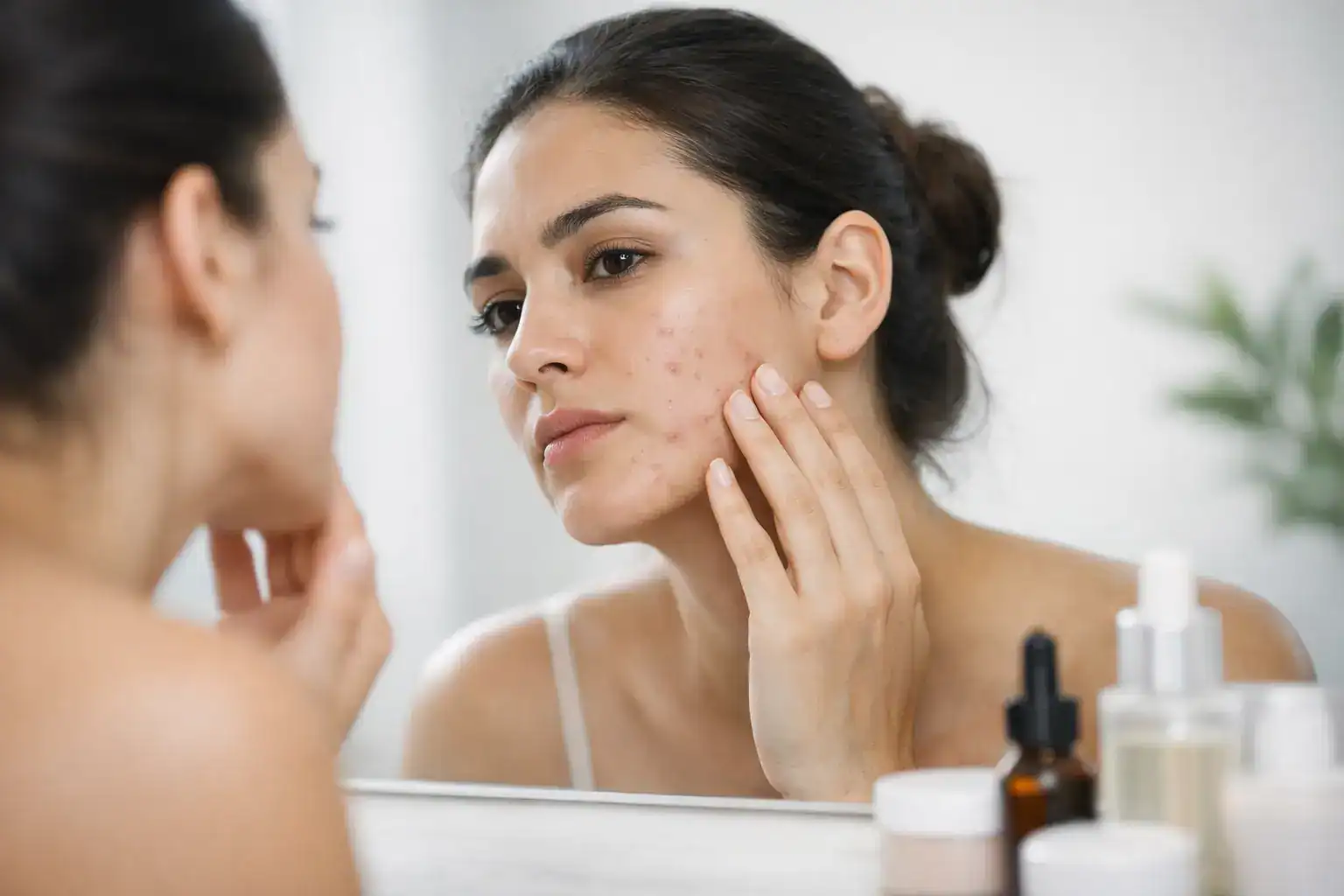
The best dark spot treatment for acne marks combines three priorities: controlling breakouts, fading excess pigment, and protecting the skin from sunlight. Azelaic acid, topical retinoids, and dermatologist-supervised hydroquinone are useful options, but the right choice depends on skin sensitivity, ongoing acne, and the nature of the discoloration.
We recommend treating existing marks and preventing new ones together. A brightening product cannot deliver lasting progress if fresh breakouts continue leaving dark patches. Dermatologists advise addressing acne and the discoloration it causes at the same time.
Identify Dark Acne Marks Before Choosing Treatment
Flat brown, dark brown, or grey patches left after pimples heal are often post-inflammatory hyperpigmentation (PIH). They develop after inflammation triggers changes in skin pigment. These marks can affect any complexion, although they are often more noticeable and persistent in darker skin tones. Sun exposure can deepen their appearance.
We first distinguish discoloration from changes in skin texture. A flat dark mark needs a different approach from an indentation or raised scar. Using a pigment-fading serum on a deep scar may improve its colour without correcting its shape.
Common Changes Left Behind by Acne
- Flat brown marks: Usually indicate excess pigment after inflammation.
- Red or pink marks: May represent post-inflammatory erythema, which involves changes in superficial blood vessels.
- Indented scars: Include ice-pick, rolling, and boxcar scars.
- Raised scars: Include hypertrophic scars and keloids.
Colour changes and true scars can occur together. When both are present, we recommend a treatment plan that addresses pigmentation and texture separately.
Azelaic Acid for Acne and Dark Spots
Azelaic acid is a practical option when dark marks appear alongside continuing breakouts. It treats acne and can also fade the discoloration left after pimples clear. This dual benefit makes it useful for people who want a focused routine rather than several separate treatments.
We recommend selecting a formulation that suits the skin and following its instructions carefully. Availability and strengths vary, and prescription treatment may be appropriate when over-the-counter care provides insufficient improvement.
The aim is consistent treatment that the skin tolerates. Increasing application frequency beyond the directions does not guarantee faster fading. Irritation can undermine progress, particularly in skin that develops pigmentation easily.
Topical Retinoids for Breakouts and Lingering Acne Marks
Topical retinoids can help unclog pores, reduce inflammation, and prevent new breakouts. Certain retinoids also help fade post-acne pigmentation. They are particularly relevant when blackheads, whiteheads, and recurring pimples accompany dark marks.
We recommend choosing a retinoid according to the acne pattern and the skin’s tolerance. Cosmetic retinol products and prescription retinoids differ in strength, formulation, and intended use; they should not be treated as interchangeable.
Dryness and irritation need attention rather than being accepted as proof that treatment is working. A clinician or pharmacist can help establish an appropriate application schedule. Anyone who is pregnant or planning pregnancy should discuss suitable alternatives before using a retinoid.
Hydroquinone for Persistent Dark Acne Marks
Hydroquinone is a pigment-reducing treatment that may be considered for persistent hyperpigmentation. It acts on pigment production and is often used within a supervised treatment plan. However, it does not replace acne treatment when new pimples are still developing.
We recommend professional guidance on the formulation, treatment area, duration, and follow-up. Prolonged or inappropriate use can cause complications, including irritation and, rarely, abnormal darkening called exogenous ochronosis. A treatment review is preferable to repeatedly extending use without assessment.
The goal is to reduce unwanted discoloration while preserving a healthy, even complexion. We favour clearly labelled products and a defined treatment plan over unverified lightening mixtures.
Other Ingredients That May Help Fade Acne Marks
Some people benefit from supporting ingredients alongside their primary treatment. We recommend choosing additions for a specific purpose, rather than buying several products that promise the same result.
Additional Dark Spot Treatment Options
- Vitamin C: May help improve uneven pigmentation.
- Glycolic acid: Can help fade superficial dark spots, although irritation is possible.
- Kojic acid: Targets pigment production but may not suit sensitive skin.
- Niacinamide: May support pigmentation improvement and skin barrier function.
Evidence, formulation quality, and tolerability differ between products. These ingredients do not all have equal effectiveness, and more ingredients do not automatically create a better routine. We recommend introducing products cautiously and avoiding combinations that leave the skin inflamed.
Daily Sunscreen for Dark Spots After Acne
Sun protection is a foundation of dark spot treatment. Without it, exposure can keep pigmentation noticeable while other products attempt to fade it.
We recommend a broad-spectrum sunscreen with SPF 30 or higher. A tinted formula containing iron oxides can add protection against visible light, which can contribute to pigmentation, particularly in darker skin tones. Choose a comfortable formulation that blends well and is suitable for acne-prone skin.
Apply sunscreen before outdoor exposure and reapply every two hours outdoors, including after swimming or sweating. Shade and a wide-brimmed hat provide additional protection.
Build a Simple Routine for Acne Marks
An effective routine should be manageable enough to maintain. We recommend giving every product a clear role and keeping a record of what is being used.
Morning Routine
- Cleanse gently: Choose a cleanser that leaves the skin comfortable.
- Use a suitable treatment: Follow the product directions or prescribed plan.
- Moisturise: Select a formula appropriate for acne-prone skin.
- Apply sunscreen: Make sun protection a daily habit.
Evening Routine
- Remove makeup and sunscreen gently.
- Apply the chosen acne or pigmentation treatment as directed.
- Use moisturiser to support skin comfort.
This is a framework, not an instruction to combine every ingredient discussed. We recommend beginning with a focused plan and adjusting it according to tolerance and results.
Prevent New Breakouts While Existing Marks Fade
Preventing another dark mark is as important as treating an old one. If acne remains active, the routine may need an acne-specific treatment alongside pigment care.
For example, benzoyl peroxide can help mild inflammatory pimples, while salicylic acid can help clogged pores. Their main role is acne control rather than directly bleaching established marks. Painful or persistent acne may require prescription treatment.
We also recommend avoiding squeezing and picking. Treating acne early can reduce the risk of both discoloration and scarring.
Professional Treatments for Stubborn Acne Pigmentation
When topical care is insufficient, a dermatologist may consider chemical peels or selected laser treatments. These require careful assessment, especially for darker complexions.
Procedures can themselves trigger inflammation and worsen pigmentation. The choice should reflect the depth of the discoloration, skin tone, previous reactions, and clinician experience. We recommend asking about expected improvement, possible complications, and aftercare before proceeding.
For indented or raised scars, separate procedures may be needed. A treatment designed for flat pigmentation should not be expected to correct every form of acne scarring.
How Long Do Dark Acne Marks Take to Fade?
Improvement is gradual. Superficial marks that are only a few shades darker than the surrounding skin often fade within six to twelve months once the trigger stops. Deeper pigmentation may persist for years, although appropriate treatment can help accelerate fading.
We recommend tracking progress with photographs taken under similar lighting. Useful signs include lighter existing marks, fewer new spots, and better control of breakouts. Avoid judging the entire treatment plan by day-to-day changes.
When to Seek Dermatologist Advice
Professional assessment is helpful when acne is painful, marks continue accumulating, treatment causes irritation, or the diagnosis is uncertain. A dermatologist can determine whether the concern is pigmentation, scarring, or a combination and tailor treatment accordingly.
Bring a list of current products and previous treatments to the appointment. This helps identify overlapping ingredients and explains what the skin has already tolerated.
FAQs about Best Dark Spot Treatment for Acne Marks
1. What is the best dark spot treatment for acne marks?
The best dark spot treatment for acne marks often includes ingredients such as azelaic acid, retinoids, vitamin C, niacinamide, and glycolic acid. These ingredients can help reduce post-acne hyperpigmentation and improve skin tone.
2. How long does it take to fade dark spots from acne?
Most dark spots caused by acne begin to fade within 6–12 weeks of consistent treatment, although deeper pigmentation may take several months or longer.
3. Can acne dark spots disappear permanently?
Yes, acne-related dark spots can fade completely. However, new breakouts, sun exposure, and skin irritation can cause additional pigmentation.
4. What is the fastest way to remove acne dark spots?
Prescription retinoids, azelaic acid, and dermatologist-supervised chemical peels may help accelerate fading. Treatment effectiveness depends on skin type, pigmentation depth, and severity.
5. Is vitamin C effective for acne marks?
Yes. Vitamin C serums may help brighten uneven skin tone, reduce excess pigmentation, and improve the appearance of post-acne dark spots.
6. Can sunscreen prevent acne dark spots?
Yes. Using a broad-spectrum SPF 30 or higher sunscreen daily helps prevent existing dark spots from becoming darker and supports treatment results.
7. What is the best treatment for acne marks on dark skin?
Azelaic acid, niacinamide, and carefully selected retinoids are commonly used for darker skin tones. Gentle treatment is essential because irritation can worsen hyperpigmentation.
8. When should I see a dermatologist for acne dark spots?
Consult a dermatologist if dark spots persist, worsen, or do not improve after several months of consistent treatment. Professional evaluation can help identify suitable treatment options.
Conclusion
We recommend a focused approach: control acne, choose a suitable pigment treatment, protect the skin from sunlight, and monitor tolerance. Azelaic acid can address both breakouts and marks; retinoids may help recurring acne and pigmentation; supervised hydroquinone may suit persistent discoloration.
The strongest routine is one that matches the skin’s needs and can be maintained consistently. Gradual fading, fewer new marks, and comfortable skin are more useful goals than promises of overnight clearance.