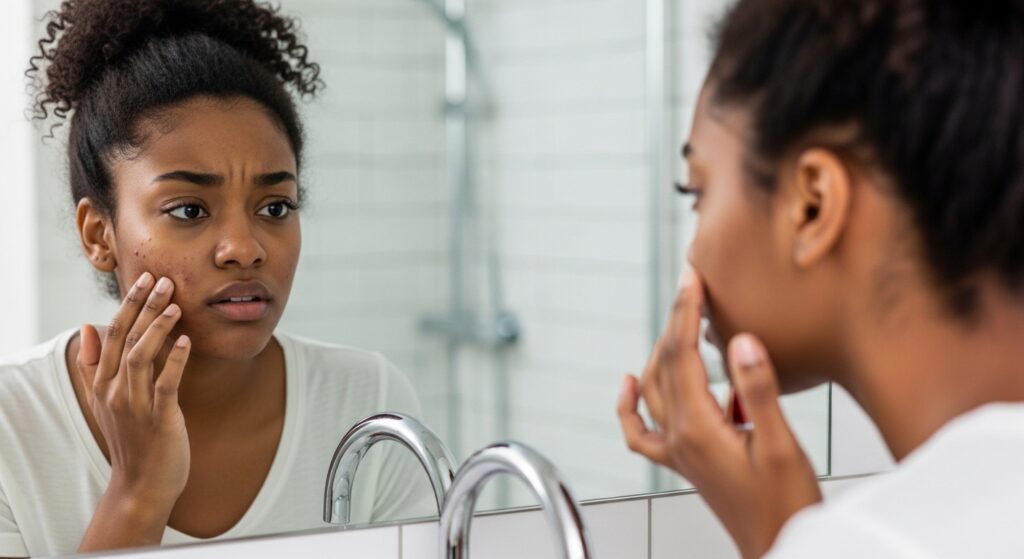
Finding acne treatment with pregnancy safe skincare means choosing products that address breakouts while accounting for pregnancy, skin sensitivity, and budget. An effective routine does not need to include expensive serums or a complete replacement of every product you own. It needs suitable ingredients, clear instructions, and professional guidance when medication is involved.
We approach the cost of pregnancy acne treatment by separating everyday skincare expenses from prescription treatment and consultation fees. This makes it easier to compare options, avoid unnecessary purchases, and build a routine that remains affordable over several months.
Choosing Acne Treatment During Pregnancy
A product labelled “pregnancy safe” still deserves an ingredient review. Suitability depends on the active ingredient, concentration, application area, frequency, and your medical history. Marketing terms such as natural, clean, or organic do not establish pregnancy safety.
Before starting an acne medication, we recommend reviewing the product with an obstetrician or dermatologist. Bring photographs of ingredient labels and mention any existing prescriptions, including treatments used before pregnancy. The American Academy of Dermatology advises discussing acne treatment with these clinicians because pregnancy safety information is limited for several medications.
Pregnancy Acne Treatment Options to Discuss With Your Clinician
The best option depends on whether the main concern is clogged pores, inflamed pimples, painful nodules, or marks left after breakouts. We favour a focused treatment plan over introducing several active ingredients simultaneously.
Azelaic Acid for Acne and Post-Breakout Marks
Azelaic acid is an option clinicians commonly consider during pregnancy. It can treat acne and help fade dark marks that remain after pimples clear, making it useful when both breakouts and uneven pigmentation are concerns. The AAD considers azelaic acid suitable for pregnancy based on available evidence.
When comparing products, check the strength, formulation, quantity, and whether a prescription is required locally. A less expensive tube may offer better value than a premium serum, but only if the formulation suits your skin and treatment plan.
Benzoyl Peroxide for Inflamed Breakouts
Benzoyl peroxide may be considered in limited amounts during pregnancy after discussion with an obstetrician or dermatologist. It should not be treated as an unrestricted ingredient simply because a product is available without a prescription.
Ask your clinician which strength, application area, and frequency are appropriate. This also helps control costs: buying multiple washes and spot treatments containing the same active ingredient can create unnecessary duplication.
Salicylic Acid for Clogged Pores
Salicylic acid may be acceptable for limited use during pregnancy, but concentration and duration matter. The AAD recommends discussing its use with a clinician and specifically flags concentrations above 2% for caution. A routine facial product should not be assumed equivalent to a strong peel or treatment applied over extensive areas.
We recommend checking the complete formula rather than relying on the main ingredient advertised on the packaging.
Prescription Treatment for Persistent Acne
Persistent inflammatory acne may require prescription treatment. Topical clindamycin is one option a clinician may consider during pregnancy. Dermatologists generally combine topical antibiotics with another suitable treatment, such as benzoyl peroxide, to help limit antibiotic resistance. The combination must also be reviewed for pregnancy suitability.
Painful or worsening acne deserves assessment rather than repeated purchases of stronger cosmetic products.
Acne Treatments and Skincare Ingredients to Avoid During Pregnancy
Reviewing an existing routine can be more valuable than buying a new one. Some familiar acne and pigmentation treatments need to be stopped or replaced during pregnancy.
Ingredients That Require Particular Attention
The AAD advises avoiding the following during pregnancy:
- Oral isotretinoin.
- Topical retinoids, including tretinoin, adapalene, and tazarotene.
- Cosmetic retinol products.
- Spironolactone.
- Hydroquinone.
- Tetracycline-class antibiotics, including doxycycline and minocycline.
If you have already used one of these products, contact your prescribing clinician for advice specific to the medication and exposure. Do not replace it with another treatment without checking the ingredients.
How Much Does Pregnancy Safe Acne Treatment Cost?
There is no reliable universal price for pregnancy safe acne treatment. Costs vary by country, currency, retailer, product size, prescription requirements, and healthcare coverage. Without a location and named products, a single quoted price would be misleading.
We recommend calculating both the initial purchase cost and the ongoing monthly cost. A product that lasts three months contributes differently to your budget from one that needs replacing every four weeks.
Main Expenses to Include in Your Budget
| Expense | Purpose | What to compare |
|---|---|---|
| Gentle cleanser | Everyday cleansing | Bottle size, price per millilitre, and expected usage |
| Moisturiser | Skin comfort and hydration | Formula, quantity, and suitability |
| Sunscreen | Daily sun protection | Quantity and replacement frequency |
| Approved acne treatment | Managing breakouts | Active ingredient, strength, and prescribed use |
| Consultation | Diagnosis and treatment planning | Initial fee and follow-up charges |
| Prescription medication | Treating persistent acne | Generic availability and pharmacy price |
Monthly routine cost = the monthly share of each product’s price, plus medication and appointment expenses.
For example, if a cleanser costs 12 currency units and lasts three months, its monthly contribution is approximately four units. This is a budgeting illustration, not a current retail price.
Affordable Pregnancy Acne Skincare Options
A manageable budget begins with a clear shopping list. We suggest allocating money to everyday essentials and the treatment your clinician recommends before considering optional products.
Practical Ways to Reduce Skincare Costs
- Compare unit prices: Check cost per millilitre or gram alongside the shelf price.
- Avoid duplicate treatments: Several products may contain the same active ingredient.
- Ask about generic prescriptions: Confirm that the strength and formulation match the prescription.
- Check consultation arrangements: Ask whether follow-up appointments are included or charged separately.
- Buy from reputable suppliers: Authenticity and proper storage matter more than an unusually low price.
- Review products already owned: Suitable basics may not need replacing.
- Delay optional purchases: Toners, masks, and additional serums can increase spending without being essential to the plan.
An expensive product is not automatically more appropriate for pregnancy. Ingredient suitability and consistent use provide a better basis for comparison than packaging or brand prestige.
Building a Simple Pregnancy Acne Skincare Routine
We organise a routine around cleansing, hydration, sun protection, and one clinician-approved treatment. Keep the application instructions accessible so that using the products does not become complicated.
Morning and Evening Routine Structure
Morning: Use a gentle cleanser as needed, apply moisturiser, and finish with a broad-spectrum sunscreen. The AAD recommends SPF 30 or higher as part of pregnancy skincare.
Evening: Cleanse gently, apply the approved acne treatment according to its instructions, and use moisturiser as directed.
Confirm the order and frequency with your clinician when prescription products are involved. Record any discomfort and avoid increasing treatment frequency simply to obtain faster results.
When Professional Acne Care Is Worth the Cost
A consultation becomes especially valuable when acne is painful, persistent, leaving scars, or difficult to distinguish from another skin condition. A diagnosis can prevent spending on products that do not address the actual problem.
Questions to Ask Before Paying for Treatment
- Which options are appropriate for this stage of pregnancy?
- What is the total cost, including follow-up appointments?
- Is a suitable lower-cost alternative available?
- Which existing skincare products can remain in the routine?
- When should treatment progress be reviewed?
Request written instructions and a clear review plan. This makes both the treatment and its expected expenses easier to manage.
FAQs about Acne Treatment With Pregnancy-Safe Skincare: Cost and Options
1. What acne treatments are generally considered pregnancy-safe?
Common options may include azelaic acid, glycolic acid in appropriate concentrations, topical clindamycin when prescribed, and limited benzoyl peroxide use. A healthcare professional should confirm what is suitable during pregnancy.
2. Which acne ingredients should be avoided during pregnancy?
Pregnant patients are generally advised to avoid oral isotretinoin, topical retinoids such as tretinoin and adapalene, and certain oral antibiotics unless specifically directed otherwise by a medical professional.
3. How much does pregnancy-safe acne treatment cost?
Costs vary depending on the products, severity of acne, location, and whether dermatology appointments are required. Basic over-the-counter routines may cost less, while prescription treatments and specialist consultations may increase the total expense.
4. What is the most affordable pregnancy-safe acne option?
A simple routine with a gentle cleanser, non-comedogenic moisturizer, mineral sunscreen, and an approved acne treatment such as azelaic acid can be a cost-conscious starting point.
5. Can severe acne be treated during pregnancy?
Yes. A dermatologist can recommend pregnancy-compatible prescription options for moderate or severe acne while avoiding medications associated with pregnancy risks.
6. Is salicylic acid safe during pregnancy?
Small amounts of topical salicylic acid are sometimes considered acceptable, but frequent or extensive use should be discussed with an obstetrician or dermatologist.
7. Should we consult a dermatologist before starting treatment?
Yes. Professional guidance helps us choose pregnancy-safe skincare options based on acne severity, skin sensitivity, medical history, and budget.
Conclusion
We recommend building pregnancy acne skincare around reviewed ingredients, a small number of suitable products, and professional assessment when needed. Compare ongoing costs as carefully as purchase prices, and prioritise an appropriate treatment over an expanding collection of cosmetics. A clear, affordable plan makes consistent skincare easier throughout pregnancy.