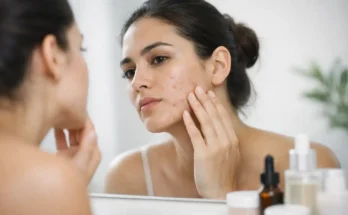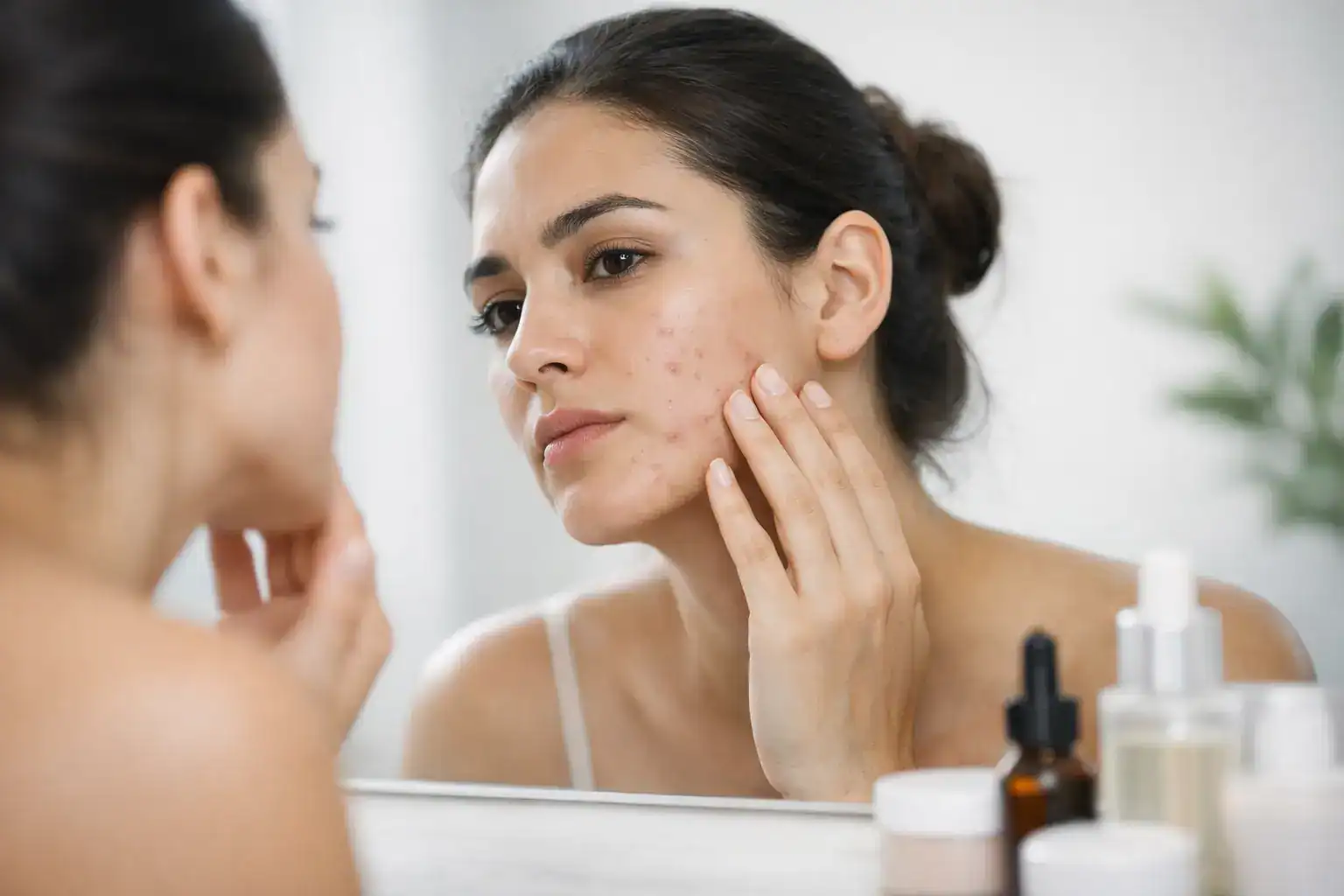
Deep acne scars can remain long after active breakouts have cleared, creating visible depressions, uneven texture, and changes in skin tone. When scars extend into the deeper layers of the skin, creams and basic skincare products usually cannot completely correct the structural damage. Effective acne scar treatment for deep scars often requires professional procedures that stimulate collagen, release scar tissue, resurface damaged skin, or physically improve depressed areas.
When we consider acne scar treatment for deep scars cost and options, there is no single procedure that works for every patient. Treatment depends on the scar type, skin tone, depth of scarring, number of scars, treatment area, desired improvement, and whether several procedures need to be combined.
What Are Deep Acne Scars?
Deep acne scars generally develop when inflammatory acne damages collagen and other supporting structures beneath the skin. During healing, the body may produce insufficient collagen or reorganize tissue unevenly, resulting in depressed scars.
The most common types include:
- Ice pick scars: Narrow, deep scars that extend downward into the skin.
- Boxcar scars: Round or oval depressions with relatively defined edges.
- Rolling scars: Broad depressions caused by fibrous bands pulling the skin downward.
- Mixed acne scars: A combination of ice pick, boxcar, rolling, pigmentation, and textural irregularities.
Correctly identifying the scar type is one of the most important steps before choosing treatment. A procedure that works well for rolling scars may provide limited improvement for very deep ice pick scars.
How Much Does Acne Scar Treatment for Deep Scars Cost?
The cost of acne scar treatment for deep scars varies substantially because professional scar treatment is usually customized.
Depending on the treatment selected, professional procedures may range from a few hundred dollars per session to several thousand dollars for an extensive treatment programme. Surgical scar procedures, combination treatments, advanced laser resurfacing, and multiple treatment sessions can increase the total investment.
Several factors influence the final cost.
Main Factors That Affect Acne Scar Treatment Cost
Before estimating treatment expenses, we consider:
- Type of acne scars
- Depth and severity of scarring
- Number of scars
- Size of the treatment area
- Treatment method selected
- Number of sessions required
- Dermatologist or specialist fees
- Clinic location
- Technology used
- Sedation or anaesthesia when required
- Post-treatment medications or skincare
- Whether multiple treatments are combined
A patient with several shallow rolling scars may require a significantly different treatment plan from someone with widespread deep boxcar and ice pick scars.
Best Acne Scar Treatment Options for Deep Scars
Deep acne scars often respond best to procedures that work beneath the skin rather than relying exclusively on topical products. Dermatologists may recommend one treatment or combine several techniques.
1. Subcision for Deep Rolling Acne Scars
Subcision is commonly used for depressed rolling scars that are tethered to deeper tissue.
During the procedure, a dermatologist inserts a specialised needle or cannula beneath the scar and carefully releases the fibrous bands pulling the skin downward. Once these bands are released, the depressed area can lift and new collagen formation may gradually improve the skin’s appearance.
Subcision may be combined with:
- Microneedling
- Fractional laser treatment
- Dermal fillers
- Platelet-rich plasma treatments
- Other resurfacing procedures
Patients with prominent rolling scars may require more than one session.
2. Laser Treatment for Deep Acne Scars
Laser resurfacing is another widely used option for improving acne-related texture.
Different laser technologies affect the skin in different ways. Ablative lasers remove controlled portions of damaged skin, while fractional lasers create microscopic treatment zones intended to stimulate healing and collagen production.
Laser treatment may help improve:
- Depressed acne scars
- Rough skin texture
- Enlarged-looking pores
- Uneven skin surface
- Certain pigmentation problems
Deep scars may require several treatment sessions or combination therapy.
Laser selection is particularly important for darker skin tones because some resurfacing techniques carry a higher risk of post-inflammatory hyperpigmentation. We recommend discussing skin type, pigmentation history, and previous reactions with an experienced dermatologist before treatment.
3. Microneedling for Deep Acne Scars
Microneedling creates controlled microscopic injuries in the skin using very fine needles. The healing response encourages collagen and elastin production.
Microneedling may gradually soften depressed scars and improve overall skin texture. It is often considered for:
- Rolling scars
- Mild-to-moderate boxcar scars
- Uneven texture
- Multiple shallow depressed scars
Very deep scars may not respond sufficiently to microneedling alone. In those situations, dermatologists may combine microneedling with subcision or another scar-focused procedure.
Several sessions are usually required, with improvement developing gradually as collagen remodels.
4. TCA CROSS for Deep Ice Pick Scars
TCA CROSS, or trichloroacetic acid chemical reconstruction of skin scars, is a targeted procedure frequently used for narrow, deep acne scars.
Rather than applying a chemical peel across the entire face, a qualified professional places a controlled amount of high-strength trichloroacetic acid directly inside selected scars.
The controlled injury stimulates tissue remodelling within the scar.
TCA CROSS may be considered for:
- Ice pick scars
- Narrow boxcar scars
- Small but deep depressions
Multiple sessions may be necessary.
Because inappropriate chemical use can cause burns, pigmentation changes, or worsening scars, strong acids should not be applied to deep acne scars at home.
5. Punch Excision for Very Deep Acne Scars
Some scars are too deep or sharply defined to respond adequately to resurfacing treatments alone.
Punch excision is a minor surgical procedure that removes an individual scar. The opening is then closed so that the deep acne scar is replaced with a smaller, more controlled linear scar.
It may be appropriate for selected:
- Deep ice pick scars
- Deep boxcar scars
- Individual scars with sharply defined edges
After healing, additional resurfacing may sometimes be recommended to improve overall texture.
6. Punch Elevation
Punch elevation is another procedure that may be used for certain depressed boxcar scars.
Instead of completely removing the scarred tissue, the base of the scar is surgically released and raised closer to the level of the surrounding skin.
Once healed, laser resurfacing or another texture-improving treatment may be used to create a smoother appearance.
7. Dermal Fillers for Depressed Acne Scars
Certain depressed scars can be improved using injectable dermal fillers.
Fillers are placed beneath selected scars to provide structural support and temporarily raise depressed areas.
They may work particularly well when combined with subcision for tethered rolling scars.
However, fillers are not suitable for every type of acne scar. Some products also provide temporary improvement and require future maintenance.
The total cost depends on:
- Type of filler
- Amount required
- Number of scars
- Treatment area
- Duration of the product
8. Chemical Peels for Acne Scarring
Professional chemical peels remove controlled layers of damaged skin and encourage regeneration.
Superficial peels may improve discoloration and minor textural concerns, while stronger chemical treatments may produce more noticeable resurfacing.
However, chemical peels alone generally have limited ability to correct very deep structural scars.
For deep acne scarring, they may instead form part of a broader treatment programme.
Which Treatment Works Best for Deep Acne Scars?
The most effective treatment depends on scar morphology rather than simply choosing the most aggressive procedure.
For example:
- Rolling scars may respond well to subcision followed by resurfacing.
- Ice pick scars may require TCA CROSS or punch techniques.
- Boxcar scars may respond to fractional resurfacing, microneedling, punch elevation, or combination treatment.
- Mixed scars commonly require several different techniques.
This is why professional scar assessment is important. Treating every scar with exactly the same procedure may produce disappointing results.
Combination Acne Scar Treatment for Severe Scarring
People with severe acne scars commonly have several scar types at the same time. We therefore often see treatment plans involving multiple procedures rather than one treatment performed repeatedly.
A combination programme might involve:
- Subcision to release deep tethered scars.
- TCA CROSS for selected ice pick scars.
- Microneedling or fractional laser treatment for broader textural improvement.
- Fillers for persistent depressed areas.
- Pigmentation treatment once structural healing is complete.
Combination therapy can address acne scars at different depths while targeting separate causes of uneven texture.
How Many Acne Scar Treatment Sessions Are Needed?
The number of treatments depends on the procedure and scar severity.
Some surgical approaches may provide substantial improvement after one procedure, while collagen-stimulating treatments usually require multiple sessions.
Microneedling, laser resurfacing, and TCA CROSS are commonly performed as a series of treatments spaced apart to allow proper skin healing.
Patients should also understand that collagen remodelling continues after the visible recovery period. Improvement may therefore develop gradually rather than immediately.
Can Deep Acne Scars Be Completely Removed?
It is more realistic to think about improving acne scars rather than completely erasing them.
Professional treatments can soften scar edges, raise depressed areas, improve texture, stimulate collagen production, and make scars significantly less noticeable. However, results vary according to scar depth, age, skin characteristics, and the procedure used.
Setting realistic expectations before treatment helps patients evaluate results more accurately.
Acne Scar Treatment for Deep Scars on Dark Skin
People with darker skin tones can successfully undergo acne scar treatment, but procedure selection requires additional consideration.
Darker skin contains more active melanin, which may increase susceptibility to post-inflammatory hyperpigmentation after aggressive procedures.
We therefore consider:
- Skin tone and Fitzpatrick skin type
- Previous pigmentation problems
- History of keloid or abnormal scar formation
- Strength of treatment
- Laser wavelength and settings
- Post-procedure sun protection
An experienced dermatologist can determine which treatment approach provides the appropriate balance between scar improvement and pigmentation risk.
What About Acne Scar Creams and Home Treatments?
Topical products can support healthy skin and improve certain forms of discoloration, but they generally cannot release fibrous scar bands or replace significant tissue loss caused by deep acne scars.
Useful skincare ingredients may include:
- Retinoids
- Azelaic acid
- Alpha hydroxy acids
- Salicylic acid
- Vitamin C
- Niacinamide
- Broad-spectrum sunscreen
These products may improve texture, pigmentation, active acne, and overall skin appearance.
However, they should not be expected to produce the same structural changes as professional procedures for deep scars.
Control Active Acne Before Treating Scars
Before undergoing extensive scar treatment, active inflammatory acne should generally be controlled.
Continuing breakouts can create new scars while existing scars are being treated.
A dermatologist may recommend acne management using:
- Topical retinoids
- Benzoyl peroxide
- Antibiotic treatments when appropriate
- Hormonal treatments for eligible patients
- Oral isotretinoin in selected cases
- A structured skincare routine
The treatment plan should consider both current acne activity and existing scar damage.
How to Choose an Acne Scar Treatment Provider
Deep acne scar treatment should be performed by a properly qualified professional with experience in scar management.
Before starting treatment, we recommend asking about:
- The exact type of scars present
- Recommended procedures
- Why each procedure is appropriate
- Number of expected sessions
- Total estimated treatment cost
- Recovery time
- Possible complications
- Pigmentation risks
- Expected level of improvement
- Alternatives if the initial treatment is unsuccessful
Before-and-after photographs of patients with similar skin tones and scar patterns may also help establish realistic expectations.
Recovery After Deep Acne Scar Treatment
Downtime varies widely depending on the procedure.
Microneedling may produce temporary redness and sensitivity, while more aggressive laser resurfacing or surgical techniques may involve longer healing periods.
After treatment, patients may be advised to use:
- Gentle cleansers
- Moisturisers
- Broad-spectrum sunscreen
- Prescribed healing ointments
- Pigmentation-control products where appropriate
Direct sun exposure should usually be minimised during recovery because healing skin can be more susceptible to pigmentation changes.
Picking, scratching, or removing crusting prematurely can also interfere with proper healing.
Is Acne Scar Treatment Worth the Cost?
The value of acne scar treatment depends on the severity of the scars, individual expectations, treatment plan, and achievable improvement.
Instead of comparing treatments only by the cost per session, we recommend considering the entire treatment strategy.
A lower-cost procedure that does not address the correct scar type may ultimately be less useful than a more targeted approach requiring fewer sessions.
The best value usually comes from correctly diagnosing the scar type first and selecting procedures accordingly.
Questions to Ask Before Paying for Acne Scar Treatment
Before committing to treatment, consider asking:
- What type of acne scars do I have?
- Which treatment is best suited to each scar type?
- How many sessions might I need?
- What is the estimated total treatment cost?
- Does the quoted price include follow-up care?
- What level of improvement is realistic?
- How much downtime should I expect?
- Could this procedure cause pigmentation changes in my skin tone?
- Would combination treatment provide better results?
These questions make it easier to compare treatment options based on suitability rather than price alone.
Choosing the Right Acne Scar Treatment for Deep Scars
Effective treatment for deep acne scars begins with identifying exactly what is causing the visible depression. Rolling scars, boxcar scars, and ice pick scars often require different approaches, and patients with severe scarring may benefit from a carefully planned combination of treatments.
Options such as subcision, fractional laser resurfacing, microneedling, TCA CROSS, punch excision, punch elevation, dermal fillers, and professional chemical resurfacing can address different aspects of acne scarring.
Because acne scar treatment for deep scars cost and options vary significantly between individuals, the most useful first step is a professional skin assessment. A personalised treatment plan can identify which scars require release, resurfacing, collagen stimulation, filling, or surgical correction while providing a clearer estimate of the number of sessions, expected recovery, and overall treatment cost.
FAQs about Acne Scar Treatment for Deep Scars Cost and Options
How much does acne scar treatment for deep scars cost?
The cost of acne scar treatment for deep scars depends on the type of scar, treatment method, number of sessions required, provider expertise, and clinic location. Professional procedures generally cost more than topical treatments but may provide greater improvement for deeper scars.
What are the best treatment options for deep acne scars?
Common options include fractional laser resurfacing, microneedling, radiofrequency microneedling, chemical peels, subcision, dermal fillers, and TCA CROSS. Some patients may benefit from combining several treatments.
Which treatment works best for ice pick scars?
TCA CROSS, punch techniques, and certain laser treatments are commonly considered for deep ice pick scars. The most appropriate option depends on scar depth and skin type.
Can deep acne scars be completely removed?
Deep acne scars may not disappear completely, but professional treatment can often significantly improve their depth, texture, and overall appearance.
How many sessions are needed?
Many treatments require multiple sessions. Microneedling and laser procedures, for example, may be performed over several appointments depending on scar severity and treatment response.
Is laser treatment more expensive than microneedling?
Laser resurfacing is often more expensive per session than traditional microneedling because of the technology and clinical expertise involved.
How do we choose the right acne scar treatment?
We recommend having the scars assessed by a qualified dermatologist or experienced skin specialist. Scar type, skin tone, budget, downtime, and treatment goals should all be considered before creating a treatment plan.
Conclusion
Deep acne scars usually require more than ordinary skincare because the damage extends beneath the surface of the skin. Modern dermatological treatments can significantly improve depressed scars by releasing tethered tissue, stimulating collagen production, resurfacing damaged skin, or surgically correcting individual scars.
When comparing acne scar treatment for deep scars cost and options, we should focus on the type and severity of the scars, treatment suitability, expected number of sessions, recovery time, pigmentation risk, and total treatment plan rather than choosing a procedure based only on price.
With an appropriately selected treatment strategy and realistic expectations, deep acne scars can often become noticeably smoother, softer, and less prominent over time.