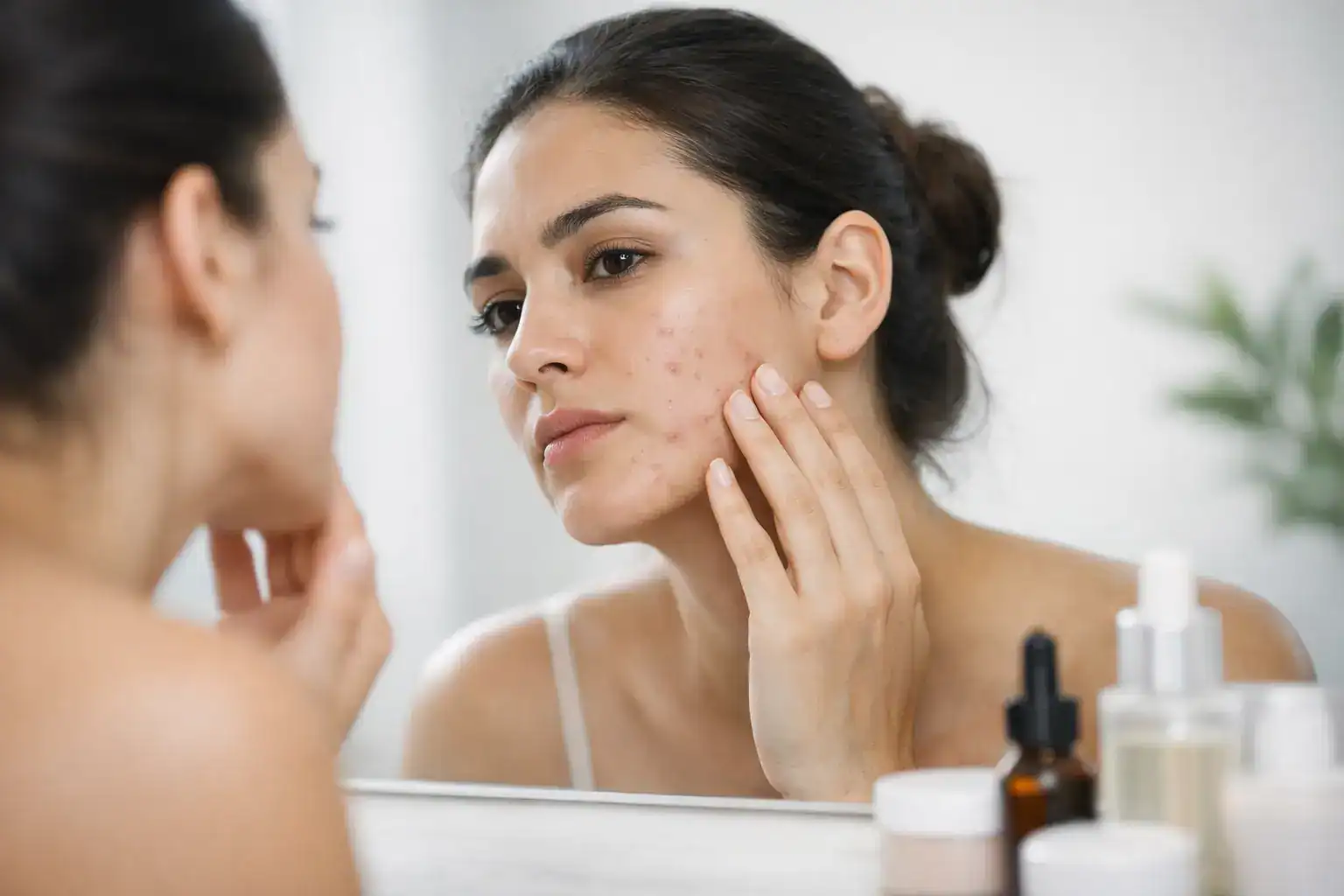
Acne scar treatment for boxcar scars can improve depressed areas of skin, soften defined edges, and create a more even facial texture. The right approach depends on scar depth, skin tone, the number of scars, and the budget available for a complete treatment plan.
When we compare treatment options, we need to consider more than the price of one appointment. A lower-cost procedure may require several sessions, while a targeted surgical treatment may address individual deep scars more directly. Understanding these differences helps us make informed decisions about boxcar scar treatment costs and expected results.
Understanding Boxcar Acne Scars Before Choosing Treatment
Boxcar scars are round or oval depressions with clearly defined edges. They develop when acne-related inflammation damages the skin’s supporting collagen. Unlike rolling scars, which have sloping edges, boxcar scars often resemble small indentations with relatively steep sides.
Their depth matters. Shallow scars may respond to treatments that improve surface texture, while deeper depressions may require procedures that lift or remove individual scars. A person can also have boxcar, rolling, and ice-pick scars together, making a combined approach appropriate.
We should also distinguish textural scars from dark marks. A flat brown mark left after acne is a pigmentation change; a boxcar scar involves an actual depression. Improving skin colour alone will not necessarily correct the indentation.
Acne Scar Treatment Options for Boxcar Scars
A useful treatment discussion starts with the specific problem each procedure addresses. Is the main concern shallow unevenness, a few deep pits, underlying tethering, or widespread texture changes?
Fractional Laser Resurfacing
Fractional laser resurfacing treats selected areas of skin to encourage remodelling and improve scar texture. Dermatologists may use ablative or non-ablative devices, depending on the treatment goals and the patient’s skin.
Laser treatment can help blend scar edges into surrounding skin. However, deeper boxcar scars may need a targeted procedure before resurfacing. Recovery and risks vary with the device and treatment intensity; darker skin requires particular attention to the possibility of pigmentation changes.
When comparing laser quotations, we should ask which device will be used, whether the price covers a small area or the whole face, and how many sessions the dermatologist anticipates.
Microneedling
Professional microneedling creates controlled punctures that stimulate collagen production. It can reduce the visibility of depressed acne scars and is often delivered as a series of treatments.
The American Academy of Dermatology identifies microneedling as an option for all skin tones. Nevertheless, suitability, technique, and aftercare remain important. A professional assessment is preferable to trying to reproduce scar treatment with a home device.
For budgeting, we should compare the likely course of treatment rather than a promotional first-session price. Ask whether numbing, follow-up appointments, and recommended aftercare are included.
Radiofrequency Microneedling
Radiofrequency microneedling combines needle treatment with radiofrequency energy to encourage collagen and elastin production. Dermatologists may include it in a plan for depressed acne scars, sometimes alongside other procedures.
A higher price does not automatically mean that this option is better for every boxcar scar. The important question is whether the treatment addresses the depth and structure of the scars being assessed. We should request an explanation of its expected benefit compared with conventional microneedling or laser resurfacing.
Punch Elevation and Punch Excision
For selected deep boxcar scars, a dermatologist may recommend punch elevation or punch excision. Punch elevation raises the scar base toward the surrounding skin level. Punch excision removes an individual scar, after which the wound is repaired.
These techniques target specific depressions rather than treating the entire skin surface. They can leave a new, smaller surgical scar, and additional resurfacing may be considered to improve blending.
We should clarify whether the quotation is based on the number of scars, the treatment area, or the appointment itself. A plan for three isolated scars may differ substantially from one involving numerous depressions.
Chemical Peels and TCA CROSS
Chemical peels vary in strength and depth. Superficial peels may improve colour irregularities and mild surface roughness, but they should not be presented as a reliable way to eliminate deep boxcar depressions.
TCA CROSS is a focal technique in which a clinician applies trichloroacetic acid to selected atrophic scars. It differs from a general facial peel and is not suitable for every scar. Potential complications include pigmentation changes and further scarring, making careful selection essential.
We should ask whether the proposed peel targets pigmentation, scar texture, or both. This prevents paying for a treatment that addresses a different concern from the one that matters most.
Subcision and Dermal Fillers
Subcision releases fibrous strands that tether a depressed scar to underlying tissue. It may be considered when tethering contributes to the indentation, rather than automatically being recommended for every boxcar scar.
Dermal fillers add volume beneath selected depressions. Many provide temporary improvement, meaning maintenance costs should be included in the financial discussion. These procedures may form part of a broader treatment plan. dermnetnz.org
How Much Does Acne Scar Treatment for Boxcar Scars Cost?
There is no single price that accurately represents boxcar acne scar treatment across different countries, clinics, and treatment plans. Without a location and clinical assessment, a numerical estimate could be misleading.
A useful quotation should specify the procedure, treatment area, expected session count, and any additional charges. We should also distinguish a provisional estimate from a fixed package price.
Main Factors That Affect Boxcar Scar Treatment Costs
The total expense can depend on:
- Scar number and depth: Multiple deep scars may require more extensive treatment.
- Treatment area: A small section of one cheek differs from full-face treatment.
- Procedure selected: Resurfacing, injections, and individual scar surgery involve different resources.
- Session count: The first appointment may represent only part of the planned course.
- Clinician and facility fees: Charges vary between practices and locations.
- Aftercare and follow-up: Prescriptions, wound care, and review visits may be billed separately.
- Maintenance: Temporary treatments can create recurring costs.
We should request an itemised written estimate before committing. This makes comparisons more meaningful than judging clinics by an advertised starting price.
Comparing Treatment Costs Without Sacrificing Suitability
The cheapest session is not always the most economical treatment plan. If a procedure is poorly matched to deep scars, repeated appointments may add expense without delivering the hoped-for improvement.
We can compare quotations using these questions:
- Which scars will this procedure treat?
- What improvement is realistic for their depth?
- How many sessions are initially planned?
- When will progress be reassessed?
- Which fees are excluded from the quotation?
- What happens if additional treatment is recommended?
A staged plan can make spending more manageable. It also creates an opportunity to review healing and results before purchasing further procedures.
Recovery, Skin Tone, and Treatment Planning
Recovery time belongs in the cost discussion. Time away from work, travel to appointments, and restrictions during healing can affect the practical affordability of treatment.
We should disclose current and recent acne medications, previous procedures, a history of unusual scarring, and any tendency to develop pigmentation changes. Active acne generally needs to be controlled before scar treatment begins, helping reduce the formation of additional scars.
For darker skin tones, treatment selection should account for post-inflammatory hyperpigmentation. Laser resurfacing and deeper chemical peels can carry particular pigmentation risks, so clinician experience with similar skin tones matters.
Practical Questions Before Booking Treatment
Before proceeding, we should establish:
- The expected recovery period.
- The prescribed skincare routine during healing.
- When makeup and usual skincare can resume.
- Which symptoms require contacting the clinic.
- Whether follow-up care is included.
- How results will be documented and compared.
Expected Results From Boxcar Scar Treatment
The realistic goal is less noticeable scarring and improved texture. Complete removal of every depression should not be assumed. Acne scars are usually permanent, although their appearance can improve with appropriate treatment.
We should agree on priorities before treatment: softening the deepest scars, improving overall texture, or reducing the contrast between scars and surrounding skin. Clear goals make it easier to assess whether a proposed plan offers worthwhile value.
Here is a concise, SEO-friendly FAQ section under 300 words:
FAQs about Acne Scar Treatment for Boxcar Scars Cost and Options
1. What is the best treatment for boxcar acne scars?
The best acne scar treatment for boxcar scars depends on scar depth, skin type, and overall skin condition. Common options include microneedling, fractional laser resurfacing, chemical peels, subcision, dermal fillers, and punch techniques.
2. How much does boxcar scar treatment cost?
The cost of boxcar scar treatment varies depending on the procedure, provider, location, and number of sessions required. Treatments such as chemical peels may be less expensive, while laser resurfacing or combination procedures may cost more.
3. Can boxcar scars be completely removed?
Boxcar scars may not always disappear completely, but professional treatment can significantly improve their depth, texture, and overall appearance.
4. Is laser treatment effective for boxcar scars?
Yes. Fractional laser treatment can stimulate collagen production and improve uneven skin texture. Deeper scars may require laser therapy combined with other treatments.
5. How many sessions are needed?
Many patients require several sessions. The exact number depends on the severity and depth of the scars, the treatment selected, and individual skin response.
6. Is microneedling good for boxcar scars?
Microneedling may help improve mild to moderate boxcar scars by stimulating natural collagen and skin remodeling.
7. How do we choose the right treatment?
We recommend consulting a qualified dermatologist who can assess scar type, skin tone, medical history, and treatment goals before developing a personalized acne scar treatment plan.
Conclusion
The best approach to acne scar treatment for boxcar scars cost and options begins with identifying scar depth and selecting procedures that address it. Shallow texture changes and deep individual depressions may require different methods.
We can make a stronger financial decision by requesting an itemised quotation, understanding the likely treatment course, and accounting for recovery and maintenance. A personalised, clearly explained plan provides a sounder basis for treatment than price alone.