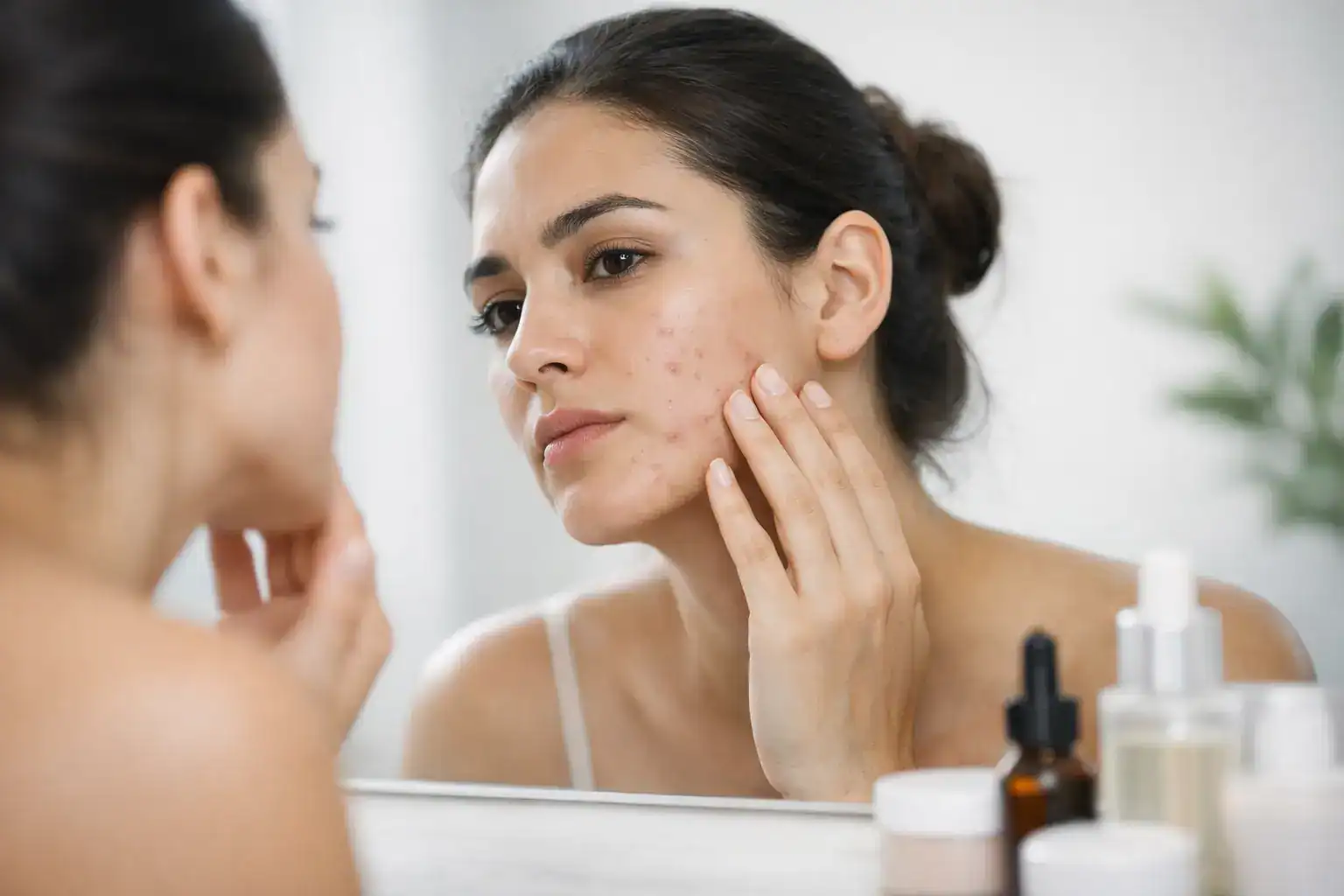
Choosing the right acne scar treatment requires more than selecting the newest procedure or buying a product that promises smoother skin. Acne scars vary considerably in depth, shape, colour, location, and severity, which means the treatment that works well for one person may provide limited improvement for another.
When we evaluate acne scarring, we consider the type of scar, skin tone, severity of damage, active acne, treatment goals, recovery time, cost, and risk of pigmentation changes. In many cases, the best results come from combining different treatments rather than relying on a single procedure.
Understanding these factors can help us make informed decisions and choose an acne scar treatment that offers realistic, gradual, and sustainable improvement.
Identify the Type of Acne Scar First
Before choosing treatment, we should determine what type of acne scar is present. Different scars develop because acne inflammation damages the skin in different ways.
Atrophic Acne Scars
Atrophic scars appear as depressions or indentations in the skin. They develop when the skin does not produce enough collagen while healing.
The major types include:
- Ice pick scars: Deep, narrow scars that look like small punctures.
- Boxcar scars: Round or oval depressions with relatively defined edges.
- Rolling scars: Broad, shallow depressions that create an uneven or wave-like skin texture.
Because these scars have different structures, they may require different procedures.
For example, treatments that stimulate collagen may improve rolling or shallow boxcar scars, while very deep ice pick scars may require more targeted professional procedures.
Raised Acne Scars
Some acne scars develop because the skin produces excessive collagen during healing.
These scars may appear as:
- Hypertrophic scars
- Keloid scars
Raised scars require a different treatment strategy from depressed scars. Procedures designed to stimulate additional collagen are not necessarily the first choice for these scars.
Dark Marks After Acne
Dark or red marks left after acne are often mistaken for permanent scars.
Post-inflammatory hyperpigmentation (PIH) creates brown, grey, or dark areas after inflammation, while post-inflammatory redness can leave pink or red marks.
These changes are different from true scars because the skin’s structure may remain intact. Treatments that target pigmentation may therefore be more appropriate than procedures designed to repair depressed scars.
Consider the Severity and Depth of the Scarring
The severity of acne scarring has a major influence on treatment selection.
Very mild scars may respond to topical skincare, chemical exfoliation, or less aggressive professional treatments. Moderate or severe scars usually require procedures that reach deeper layers of the skin.
When assessing severity, we look at:
- Scar depth
- Number of scars
- Size of the affected area
- Scar type
- Skin texture
- Presence of pigmentation
- Previous treatment response
Someone with a few shallow scars will typically need a different treatment plan from someone with widespread deep boxcar, rolling, and ice pick scars.
Treat Active Acne Before Aggressive Scar Procedures
One of the most important considerations when choosing acne scar treatment is whether active acne is still developing.
Treating scars while new inflammatory breakouts continue can create a cycle in which old scars improve while new scars develop.
For this reason, we generally focus on controlling persistent acne before beginning aggressive scar-remodelling procedures.
An acne management plan may involve appropriate skincare, topical medication, oral treatment, lifestyle adjustments, or dermatologist-directed therapy depending on the severity and underlying cause of the breakouts.
Once active acne is adequately controlled, scar treatment can be planned more effectively.
Compare the Main Acne Scar Treatment Options
Different acne scar treatments work through different mechanisms. Some remove damaged surface cells, while others stimulate collagen, release scar tissue, fill depressions, or target specific scars.
Microneedling
Microneedling uses very fine needles to create controlled micro-injuries in the skin. These injuries stimulate the natural healing process and may encourage collagen production.
It is commonly considered for:
- Rolling scars
- Shallow boxcar scars
- Uneven skin texture
- Mild to moderate atrophic scarring
Several treatment sessions may be needed, and results usually develop gradually as collagen remodels.
Professional microneedling should be distinguished from aggressive at-home needling, which may increase the risk of infection, irritation, or pigmentation problems when performed incorrectly.
Chemical Peels
Chemical peels use controlled chemical exfoliation to remove or renew specific layers of the skin.
Depending on the formulation and strength, they may help improve:
- Mild acne scars
- Uneven texture
- Post-acne pigmentation
- Superficial skin irregularities
Different acids and peel depths have different effects. Stronger peels require professional assessment because deeper treatment can increase the risk of irritation, prolonged recovery, and pigmentation changes.
Laser Resurfacing
Laser treatments can improve acne scars by resurfacing damaged skin or stimulating collagen formation.
Depending on the technology used, laser therapy may be considered for:
- Depressed scars
- Uneven texture
- Certain pigmentation concerns
- Widespread acne scarring
Ablative lasers typically remove portions of damaged skin and may produce more noticeable resurfacing with greater downtime. Non-ablative treatments generally work deeper in the skin while leaving more of the surface intact, often resulting in shorter recovery periods but potentially requiring additional sessions.
Subcision
Subcision is frequently considered for rolling acne scars that appear tethered to deeper tissue.
During the procedure, a healthcare professional uses a specialised needle or instrument beneath the scar to release fibrous bands pulling the skin downward.
Once these bands are released, the depressed area may lift and collagen formation during healing can provide additional improvement.
Subcision is sometimes combined with microneedling, lasers, fillers, or other treatments.
Dermal Fillers
Dermal fillers may be used to raise selected depressed acne scars by adding volume underneath the affected area.
They may provide noticeable improvement relatively quickly, although results depend on the filler and treatment approach.
Some fillers provide temporary correction and require maintenance, while other techniques may provide longer-lasting effects.
TCA CROSS
TCA CROSS, or trichloroacetic acid chemical reconstruction of skin scars, is a targeted procedure often used for deep ice pick scars and certain narrow boxcar scars.
A concentrated chemical solution is carefully applied inside individual scars to stimulate remodelling.
Because the treatment involves a strong chemical agent and requires precise application, it should be performed by a trained professional.
Punch Techniques
Very deep or sharply defined scars may not respond sufficiently to surface treatments.
Dermatologists may consider techniques such as:
- Punch excision
- Punch elevation
- Other minor surgical scar-correction procedures
These treatments physically address individual deep scars before additional resurfacing procedures are considered.
Choose Treatment According to Skin Tone
Skin tone is an important consideration when selecting acne scar treatment.
People with medium to deeply pigmented skin may have a greater tendency to develop post-inflammatory hyperpigmentation after irritation or aggressive procedures.
This does not mean darker skin cannot be treated successfully. It means treatment settings, procedure selection, pre-treatment preparation, and aftercare should be carefully adapted to the individual’s skin.
We should look for a dermatologist or qualified provider who has experience treating acne scars in people with a similar skin tone.
Consider Downtime and Recovery
Treatment intensity often affects recovery time.
Some procedures cause relatively mild redness that settles quickly, while deeper resurfacing treatments may involve several days or longer of visible healing.
Before choosing a treatment, we should consider:
- Work commitments
- Social activities
- Upcoming events
- Sun exposure
- Ability to follow aftercare instructions
- Tolerance for temporary redness, swelling, peeling, or crusting
A highly effective procedure may not be the most practical option if the required recovery period cannot be accommodated.
Look at Cost Per Treatment and Total Treatment Cost
When comparing acne scar treatment costs, we should consider the complete treatment plan rather than the price of one session.
A relatively inexpensive procedure requiring numerous sessions may ultimately cost more than a treatment requiring fewer appointments.
Costs may depend on:
- Type of treatment
- Number of sessions
- Size of the treatment area
- Scar severity
- Provider experience
- Clinic location
- Combination treatments
- Follow-up care
We should also be cautious about choosing treatment solely because it is the cheapest option. Acne scar procedures can affect skin texture and pigmentation, making practitioner skill particularly important.
Ask Whether Combination Treatment Is Needed
Acne scarring is often mixed.
A person may have rolling scars, boxcar scars, ice pick scars, enlarged pores, and pigmentation simultaneously. One procedure is unlikely to treat every concern equally well.
A combination plan might involve subcision for tethered rolling scars, targeted treatment for deep ice pick scars, microneedling or laser treatment for broader texture problems, and appropriate skincare for pigmentation.
This tailored approach allows each scar type to be treated according to its underlying structure.
Review the Provider’s Experience Before Treatment
The professional performing the treatment can be as important as the procedure itself.
Before proceeding, we should consider whether the provider:
- Has appropriate medical training and qualifications
- Regularly treats acne scars
- Has experience with our skin type
- Explains potential risks and realistic outcomes
- Provides appropriate pre-treatment and aftercare instructions
- Can identify different scar types correctly
- Offers alternatives rather than recommending the same procedure for every patient
A professional consultation should include an examination of the skin and discussion of expected improvement rather than unrealistic promises of completely flawless skin.
Understand That Acne Scar Improvement Takes Time
Most true acne scars cannot be erased overnight.
Many treatments work by stimulating collagen remodelling, which occurs gradually. Even after the skin has recovered from a procedure, improvement may continue over the following weeks or months.
Multiple sessions may also be necessary.
We should therefore evaluate acne scar treatment according to progressive improvement rather than expecting every scar to disappear after one appointment.
Protect the Skin During Acne Scar Treatment
Daily skincare plays an important supporting role during scar treatment.
A simple routine may include:
- Gentle cleansing
- Appropriate moisturising
- Broad-spectrum sunscreen
- Dermatologist-recommended active ingredients
- Avoiding unnecessary picking or squeezing of acne
- Following professional aftercare instructions
Sun protection is particularly important because UV exposure can make post-acne pigmentation more noticeable and may interfere with recovery after some procedures.
We should also avoid combining multiple strong exfoliating ingredients without professional guidance, especially around procedural treatments.
When Should We See a Dermatologist for Acne Scars?
Professional assessment is particularly useful when scars are deep, widespread, raised, painful, emotionally distressing, or accompanied by persistent acne.
A dermatologist can determine whether visible marks are true scars, pigmentation, redness, or a combination of concerns.
Professional evaluation becomes especially important when we are considering stronger treatments such as lasers, deep chemical peels, subcision, TCA CROSS, injections, or surgical scar procedures.
How to Select the Best Acne Scar Treatment Plan
A practical treatment decision should bring several factors together rather than focusing on one procedure.
Before starting treatment, we should ask:
- What type of acne scars do we have?
- Are the scars shallow or deep?
- Is active acne under control?
- Is pigmentation also present?
- Which treatments are appropriate for our skin tone?
- How much downtime can we accept?
- How many sessions may be required?
- What improvement can realistically be expected?
- What are the possible side effects?
- Is a combination approach likely to produce better results?
Clear answers to these questions make it easier to compare treatment options and avoid unnecessary procedures.
Why Personalised Acne Scar Treatment Matters
Acne scars are structural changes in the skin, and their appearance can vary substantially from one area of the face to another. A treatment plan should therefore reflect the actual scar pattern rather than being based exclusively on a popular procedure.
When several scar types are present, we may achieve better results by treating each problem individually and then improving the overall skin texture.
Personalised planning can also help reduce unnecessary irritation and minimise the risk of pigmentation problems, particularly in skin that responds strongly to inflammation.
FAQs about How to Choose Acne Scar Treatment
1. How do I choose the right acne scar treatment?
The best acne scar treatment depends on your scar type, skin tone, scar depth, budget, and desired recovery time. A dermatologist can assess your skin and recommend the most suitable option.
2. What are the main types of acne scars?
Acne scars commonly include ice pick scars, boxcar scars, rolling scars, and raised scars. Each type may respond differently to treatment.
3. Which treatment is best for deep acne scars?
Deep scars may require treatments such as microneedling, laser resurfacing, subcision, chemical peels, fillers, or combination therapy.
4. Can skincare products remove acne scars?
Topical products containing retinoids, azelaic acid, vitamin C, or exfoliating acids may improve discoloration and mild texture, but deeper scars usually require professional procedures.
5. Is laser treatment suitable for every skin tone?
Not necessarily. Certain laser treatments carry a higher risk of pigmentation changes in darker skin tones. A qualified dermatologist should select appropriate settings and technologies based on your skin type.
6. How many acne scar treatment sessions are needed?
The number of sessions varies depending on the treatment and severity of the scars. Some people notice improvement after a few sessions, while deeper scars may require a longer treatment plan.
7. Should active acne be treated before acne scars?
Usually, yes. Controlling active breakouts can help prevent new scars from forming while existing scars are being treated.
8. What should I ask before choosing a treatment?
Ask about expected results, potential side effects, downtime, treatment costs, suitability for your skin tone, and whether combination acne scar treatments may provide better results.
Conclusion
Knowing how to choose acne scar treatment starts with correctly identifying the scar type and understanding the depth, severity, skin tone, active acne status, treatment risks, downtime, cost, and expected results.
Microneedling, chemical peels, laser resurfacing, subcision, dermal fillers, TCA CROSS, and minor surgical techniques can all have a role in acne scar management, but they are not interchangeable. The most suitable treatment depends on the individual characteristics of the scars and the skin being treated.
For mixed or significant acne scarring, we should consider a professional skin assessment before beginning treatment. A personalised plan that addresses each scar type, controls ongoing acne, protects the skin from excessive irritation, and allows adequate time for collagen remodelling offers a more structured path toward smoother, more even-looking skin.