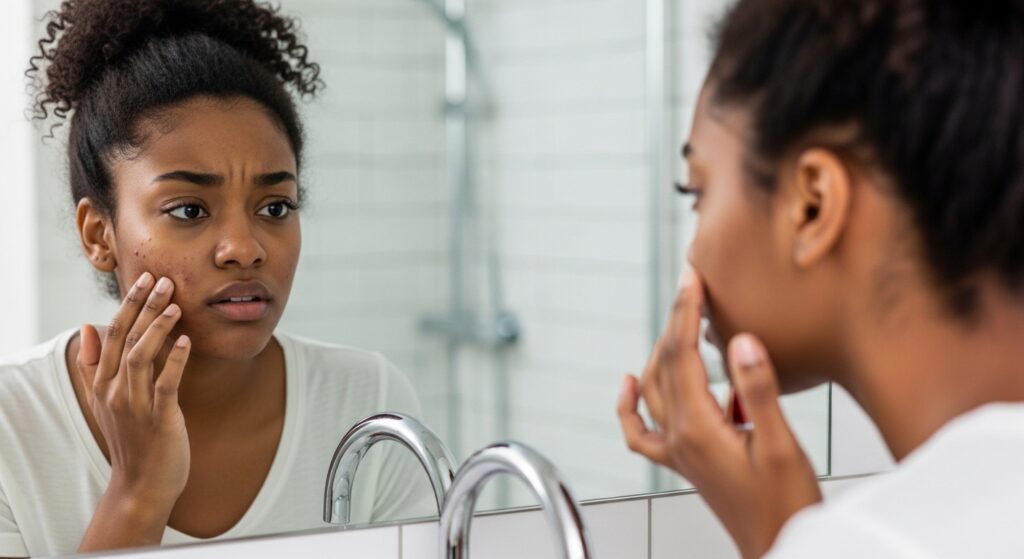
Finding affordable acne treatment for Black skin near me means looking for care that addresses breakouts, respects your skin’s sensitivity, and fits a budget you can maintain. A useful treatment plan should also consider the dark marks that may remain after spots heal.
We recommend approaching affordability through the complete cost of care: consultation fees, medication, daily skincare, and follow-up appointments. An inexpensive product offers little value if it irritates your skin or does not suit your acne. A manageable routine, supported by an appropriate assessment, provides a better foundation for consistent treatment.
Understanding Acne and Dark Marks on Black Skin
Acne can affect every skin tone, but darker skin requires particular attention to post-inflammatory hyperpigmentation. These flat, dark marks develop after inflammation and may remain after the original breakout disappears. They differ from acne scars, which change the skin’s texture through indentations or raised areas.
We encourage treating active acne early while avoiding unnecessary irritation. Picking spots, scrubbing aggressively, and using irritating products can contribute to further discoloration. Treatment should address both current breakouts and the conditions that allow new marks to develop.
Black skin can also be oily, dry, sensitive, or a combination of these. Choosing treatment by skin colour alone overlooks these differences. We recommend considering the type of breakout, your previous reactions to products, and whether dark marks or scarring are present.
How to Find Affordable Acne Treatment Near You
A local search should help you compare qualified providers and understand their fees. We recommend checking professional credentials through the relevant medical regulator and asking whether the clinician regularly treats acne in darker skin tones.
Local Services Worth Comparing
Depending on availability in your area, we suggest investigating:
- Public hospital dermatology clinics: Ask about referral requirements, consultation charges, and waiting times.
- Teaching hospitals: Check whether dermatology outpatient appointments are available and how registration works.
- Primary care clinics: Ask whether a doctor can assess your acne and arrange specialist referral when necessary.
- Private dermatology practices: Request consultation and follow-up prices before booking.
- Licensed teledermatology services: Compare fees and ask whether your symptoms require an in-person examination.
These services will not necessarily offer the same prices or appointment options. We recommend contacting each provider directly rather than assuming that a particular clinic type is always cheaper.
Questions to Ask Before Booking
A short conversation can make costs easier to compare:
- What does the initial consultation fee include?
- Are follow-up appointments charged separately?
- Can prescriptions be supplied as lower-cost generics?
- Are laboratory tests likely to be needed?
- Does the clinician have experience treating acne and pigmentation in Black skin?
- Can the treatment plan accommodate a fixed monthly budget?
We also recommend asking whether proposed procedures are essential to acne management or optional additions. This helps you understand what you are paying for before committing.
Affordable Acne Treatment Options for Black Skin
Treatment selection depends on acne severity, skin tolerance, medical history, and pregnancy status. We recommend discussing suitable options with a qualified clinician or pharmacist instead of combining several strong products independently.
Common Ingredients Used in Acne Care
- Benzoyl peroxide: Used to reduce acne-causing bacteria and help manage inflammatory breakouts.
- Topical retinoids: Medicines such as adapalene help prevent clogged pores and treat acne.
- Salicylic acid: An option for managing clogged pores, including blackheads and whiteheads.
- Azelaic acid: Can help treat acne and address the dark spots left after breakouts.
These ingredients appear in dermatology treatment guidance, but they serve different purposes and can cause irritation. We recommend selecting an appropriate treatment rather than assuming every ingredient belongs in the same routine.
When Prescription Treatment May Be Necessary
Persistent or more severe acne may need prescription combinations or oral medication. Dermatologists may consider antibiotics, hormonal treatment for suitable patients, or isotretinoin for severe acne. The choice requires an individual assessment, including possible side effects and monitoring.
When antibiotics are prescribed for acne, treatment guidance supports combining them with other appropriate acne therapies, including benzoyl peroxide, to help limit antibiotic resistance. We recommend following the prescribed plan rather than using leftover antibiotics or extending treatment independently.
Building a Budget-Friendly Skincare Routine
We recommend keeping daily skincare simple enough to repeat consistently. A clear purpose for every product makes it easier to control spending and identify what may be causing irritation.
Daily Essentials to Prioritise
A practical routine usually centres on:
- A gentle cleanser that removes dirt and excess oil without harsh scrubbing.
- An appropriate acne treatment used according to its label or prescription.
- A non-comedogenic moisturiser to support comfortable, hydrated skin.
- Broad-spectrum sunscreen with SPF 30 or higher for daily sun protection.
Gentle cleansing and avoiding picking are important parts of acne care. Products labelled non-comedogenic are formulated to reduce the likelihood of clogged pores, although individual reactions can still occur.
For people concerned about dark marks, a suitable tinted sunscreen containing iron oxide can also provide protection against visible light that contributes to pigmentation. We recommend choosing a comfortable formulation and shade so regular use is practical.
How to Reduce Acne Treatment Costs
The lowest advertised price does not always reflect the full expense. We recommend comparing a treatment plan over several months, including repeat consultations, prescription refills, and any required monitoring.
Practical Ways to Keep Spending Manageable
- Ask about generic medicines: Compare the prescribed ingredient, strength, and formulation with the pharmacist.
- Set a monthly budget: Tell the clinician what you can sustain before prescriptions are finalised.
- Request an itemised estimate: Separate consultation, medication, testing, and procedure charges.
- Avoid duplicate products: Check whether several purchases contain the same active ingredient.
- Clarify insurance coverage: Where applicable, confirm eligible services and personal payment obligations.
- Plan follow-up costs: Ask when reassessment is needed and what it will cost.
We also suggest keeping a written list of products you already own. Bringing it to an appointment can help the clinician identify unnecessary purchases and simplify your routine.
Avoiding Irritation and Unnecessary Spending
A stronger product or more complicated routine is not automatically better. We recommend introducing treatment according to professional advice and reporting significant irritation rather than pushing through worsening discomfort.
Harsh scrubs, picking, and frequently changing treatments can interfere with acne management. In darker skin, irritation may also create additional pigmentation concerns. We favour a consistent approach that allows the clinician to assess both improvement and tolerability.
Before purchasing a peel, laser package, or other cosmetic procedure, we recommend asking about the intended benefit, total price, practitioner qualifications, and experience with darker skin. A clear explanation should help you decide whether the service matches your priorities.
When to Seek a Dermatologist’s Assessment
We recommend arranging specialist care for deep, painful breakouts, acne that produces scars, or symptoms that persist despite appropriate treatment. These concerns may require therapies beyond non-prescription products.
An appointment is also an opportunity to distinguish acne from other conditions that can produce similar bumps. We suggest bringing your medication list, skincare products, and photographs showing changes over time. Explain which concern matters most to you: pain, frequent breakouts, pigmentation, scarring, or treatment cost.
FAQs about Affordable Acne Treatment for Black Skin Near Me
1. What is the best acne treatment for Black skin?
The best treatment depends on the type and severity of acne. Common options include benzoyl peroxide, salicylic acid, topical retinoids, and azelaic acid. A dermatologist can recommend treatments that address acne while minimizing irritation and discoloration.
2. How can I find affordable acne treatment for Black skin near me?
Look for local dermatology clinics, community health centers, or teledermatology services that offer affordable consultations and acne treatment plans. Ask about consultation fees and payment options before booking.
3. Is Black skin more likely to develop dark spots after acne?
People with darker skin tones may be particularly concerned about post-inflammatory hyperpigmentation (PIH), which can leave dark marks after acne heals. Treating acne early and avoiding picking or squeezing pimples can help reduce this risk.
4. Can acne and dark spots be treated at the same time?
Yes. Depending on your skin, treatments such as azelaic acid and topical retinoids may help manage acne while also improving post-acne discoloration.
5. Are inexpensive over-the-counter acne products effective?
They can be effective for mild acne. Products containing salicylic acid or benzoyl peroxide are commonly used, but starting gradually may help reduce dryness and irritation.
6. When should I see a dermatologist for acne?
Consider professional care if you have painful cysts, persistent breakouts, scarring, significant dark spots, or acne that does not improve with appropriate over-the-counter treatment.
7. How do I choose an acne specialist for Black skin?
Look for a dermatologist experienced in treating skin of color, particularly acne, hyperpigmentation, and acne scarring. Ask about treatment costs, follow-up visits, and lower-cost options during your consultation.
Conclusion
The best approach to affordable acne treatment for Black skin near you combines qualified assessment, transparent pricing, and a routine you can sustain. We recommend comparing local services, discussing generic options, and prioritising essential care before purchasing additional products or procedures.
A practical plan should fit your skin, your symptoms, and your budget. With clear expectations and appropriate follow-up, we can make better-informed choices about treatment and avoid spending on products that do not serve a defined purpose.