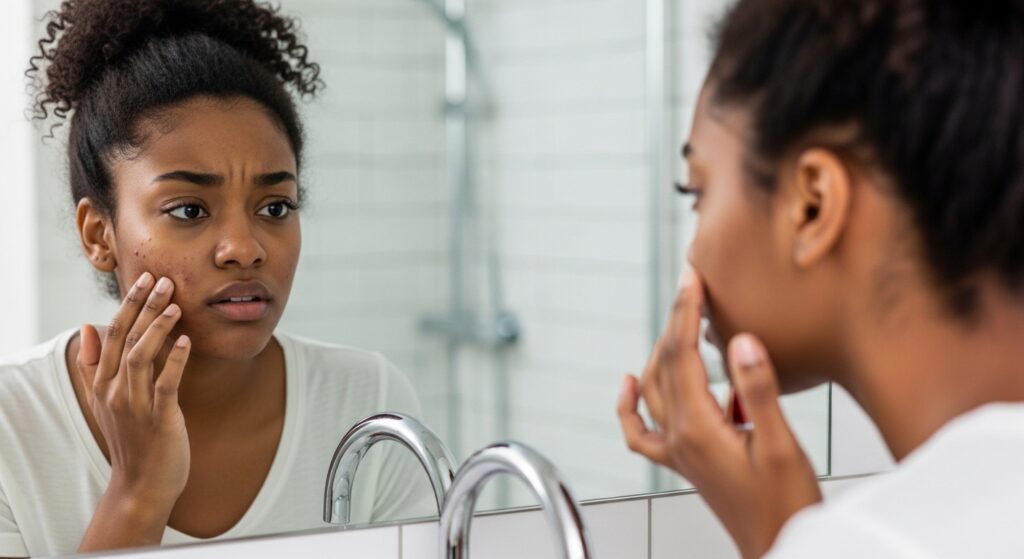
Hormonal acne can be persistent, painful, and difficult to control with ordinary skincare alone. For many women, breakouts are closely linked to hormonal fluctuations that increase oil production, inflammation, and clogged pores. These breakouts commonly appear around the chin, jawline, lower cheeks, neck, and mouth, and they may worsen before menstruation, during pregnancy, after stopping birth control, or during perimenopause.
When hormonal acne continues despite regular cleansing and over-the-counter products, a dermatologist can help identify the underlying pattern and recommend a treatment plan that targets both active breakouts and future flare-ups. At our practice, we focus on evidence-based options that may include topical medications, oral treatments, hormonal therapies, professional procedures, and supportive skincare.
How Dermatologists Identify Hormonal Acne in Women
Before recommending treatment, we first consider the appearance, location, timing, and severity of the breakouts.
Hormonal acne may present as:
- Deep, tender cysts or nodules
- Recurrent pimples along the jawline and chin
- Breakouts that appear around the menstrual cycle
- Acne that begins or continues into adulthood
- Persistent oily skin
- Blackheads and whiteheads alongside inflammatory pimples
- Acne that returns after previous treatment
- Breakouts associated with hormonal changes or certain medical conditions
Some women may also experience irregular periods, increased facial hair, scalp hair thinning, or other symptoms that suggest an underlying hormonal imbalance. When appropriate, additional medical evaluation may be recommended.
Dermatologist Recommended Treatments for Hormonal Acne
Treatment depends on the severity of acne, skin sensitivity, medical history, pregnancy plans, and whether hormonal factors appear to be contributing to breakouts.
1. Topical Retinoids
Topical retinoids are among the most commonly recommended treatments for acne because they help prevent dead skin cells and oil from blocking pores.
Examples include:
- Adapalene
- Tretinoin
- Tazarotene
- Trifarotene
Retinoids can help improve blackheads, whiteheads, inflammatory acne, and uneven skin texture. They may also help reduce the appearance of post-acne marks over time.
Because retinoids can initially cause dryness, peeling, or irritation, we generally recommend introducing them gradually and using a gentle moisturizer alongside treatment.
Prescription retinoids are not suitable during pregnancy, so women who are pregnant or planning pregnancy should discuss alternative treatments with a qualified healthcare professional.
2. Benzoyl Peroxide for Inflammatory Breakouts
Benzoyl peroxide is frequently recommended when hormonal acne includes red, inflamed pimples. It reduces acne-causing bacteria and can help control inflammation.
It is available in cleansers, creams, and gels in different concentrations.
Many women benefit from combining benzoyl peroxide with another acne treatment rather than using it as the only therapy. Lower concentrations may provide effective treatment with less dryness or irritation for sensitive skin.
Benzoyl peroxide may bleach towels, pillowcases, and clothing, so careful application is important.
3. Azelaic Acid for Acne and Dark Marks
Azelaic acid can be especially useful for women dealing with both acne and post-inflammatory hyperpigmentation.
It may help:
- Reduce clogged pores
- Calm inflammation
- Improve acne-related discoloration
- Support a more even skin tone
- Reduce acne-causing bacteria
Azelaic acid is often considered when stronger acne treatments are poorly tolerated. It may also be discussed as an option for women who require pregnancy-compatible acne care, although treatment decisions during pregnancy should always be made with a healthcare professional.
4. Spironolactone for Hormonal Acne in Women
For persistent hormonal acne, dermatologists may prescribe spironolactone.
Spironolactone works by reducing the effect of androgen hormones on the skin. Androgens can stimulate sebaceous glands to produce more oil, which contributes to clogged pores and breakouts.
Spironolactone may be particularly helpful for women with:
- Jawline acne
- Chin acne
- Premenstrual breakouts
- Persistent adult acne
- Deep hormonal cysts
- Acne that has not responded adequately to topical treatment
The appropriate dosage varies from person to person.
Potential side effects can include increased urination, dizziness, breast tenderness, menstrual changes, or changes in potassium levels. A dermatologist will determine whether monitoring or additional medical evaluation is appropriate.
Spironolactone should generally be avoided during pregnancy because of potential risks to fetal development.
5. Combined Oral Contraceptives
Certain combined birth control pills are approved or commonly used for acne treatment because they can reduce androgen activity.
Hormonal contraceptives may help women whose acne:
- Worsens around menstruation
- Is associated with oily skin
- Appears primarily around the jawline and lower face
- Persists despite topical treatment
They may be used alone or alongside topical medications such as retinoids or benzoyl peroxide.
However, birth control pills are not suitable for every woman. Medical history, smoking status, migraine history, blood clot risk, blood pressure, and other factors should be reviewed before treatment.
6. Topical Clascoterone
Clascoterone is a prescription topical medication that targets androgen activity directly within the skin.
Because hormonal acne is often influenced by androgen hormones, topical anti-androgen therapy may help reduce excessive oil production and inflammation.
It can be considered for suitable patients who require additional treatment beyond conventional topical acne medications.
A dermatologist can determine whether clascoterone fits appropriately into an individualized acne treatment plan.
7. Oral Antibiotics for Moderate to Severe Inflammatory Acne
When acne becomes significantly inflamed, dermatologists may sometimes prescribe oral antibiotics such as doxycycline for a limited period.
Antibiotics are usually combined with treatments such as benzoyl peroxide and topical retinoids rather than used alone.
This approach helps treat inflammatory acne while reducing concerns surrounding antibiotic resistance.
Because antibiotics do not directly correct hormonal triggers, they are generally considered part of a broader acne treatment strategy rather than a permanent solution for hormonal acne.
8. Isotretinoin for Severe or Resistant Acne
For severe cystic acne, acne that causes scarring, or acne that has not improved sufficiently with other treatments, dermatologists may consider oral isotretinoin.
Isotretinoin can significantly reduce:
- Sebum production
- Clogged pores
- Acne-causing bacteria
- Skin inflammation
It is one of the most effective medications available for severe acne, but it requires careful medical supervision.
Pregnancy must be strictly avoided during isotretinoin treatment because the medication can cause severe birth defects. Appropriate pregnancy-prevention measures and monitoring are required where applicable.
Other potential side effects and laboratory monitoring requirements should also be discussed before starting treatment.
Professional Treatments Dermatologists May Recommend
Medication is often the foundation of hormonal acne treatment, but professional procedures may provide additional benefits for selected patients.
Chemical Peels
Chemical peels containing ingredients such as salicylic acid or glycolic acid may help remove dead skin cells, unclog pores, improve skin texture, and reduce superficial discoloration.
They are often used as supportive treatments rather than replacements for prescription acne medication.
Corticosteroid Injections for Painful Cysts
Large, painful acne cysts may sometimes be treated with a small corticosteroid injection performed by a dermatologist.
This can reduce inflammation relatively quickly and may help lower the risk of prolonged swelling or scarring.
Cysts should never be squeezed or punctured at home because this can increase inflammation, infection risk, and permanent scarring.
Light and Laser-Based Treatments
Certain light or laser treatments may be incorporated into acne management for carefully selected patients. Their usefulness depends on the type of acne, skin tone, treatment goals, and whether scarring or pigmentation is also present.
These procedures are generally most effective when used as part of a comprehensive treatment plan.
Best Skincare Routine for Hormonal Acne
A strong acne treatment plan can be undermined by irritating skincare. We recommend keeping the routine simple, consistent, and non-comedogenic.
Morning Routine
A dermatologist-guided morning routine may include:
- Gentle facial cleanser
- Benzoyl peroxide or another prescribed treatment
- Lightweight non-comedogenic moisturizer
- Broad-spectrum sunscreen with SPF 30 or higher
Sunscreen is particularly important because acne medications can increase sensitivity and untreated sun exposure may make post-acne dark marks more noticeable.
Evening Routine
An evening routine may include:
- Gentle cleanser
- Topical retinoid or prescribed medication
- Non-comedogenic moisturizer
Women with sensitive skin may benefit from applying moisturizer before and after a retinoid to reduce irritation.
Ingredients Women With Hormonal Acne Should Use Carefully
Hormonal acne does not usually improve faster when many strong products are layered together.
Using too many exfoliating acids, scrubs, retinoids, drying cleansers, and spot treatments simultaneously can damage the skin barrier.
We generally recommend avoiding excessive use of:
- Harsh facial scrubs
- Strong alcohol-based toners
- Multiple exfoliating acids used together
- Heavy pore-clogging oils
- Aggressive extraction tools
- Frequent picking or squeezing
- Overly fragranced products on sensitive skin
A damaged skin barrier can cause additional redness, burning, dryness, and inflammation, making acne management more difficult.
How Long Does Hormonal Acne Treatment Take to Work?
Hormonal acne treatment requires consistency.
Topical acne medications often need several weeks before noticeable improvement occurs, while hormonal treatments may take longer to produce their full benefit.
Temporary dryness or mild irritation may occur when starting certain medications, particularly retinoids.
Stopping treatment too early can make it difficult to determine whether a medication is effective.
We generally assess progress over time and adjust the treatment plan according to the skin’s response, tolerance, and remaining acne severity.
When Hormonal Acne May Need Further Medical Evaluation
Persistent acne can sometimes be associated with broader hormonal conditions.
Women should consider medical evaluation when acne occurs alongside symptoms such as:
- Irregular menstrual cycles
- Excessive facial or body hair
- Unexplained hair thinning
- Sudden severe acne
- Difficulty becoming pregnant
- Significant unexplained weight changes
Conditions such as polycystic ovary syndrome (PCOS) can sometimes involve acne alongside other hormonal symptoms.
Acne alone does not confirm a hormonal disorder, so diagnosis should be based on appropriate medical assessment rather than symptoms alone.
Can Diet Affect Hormonal Acne?
Diet is not the only cause of acne, but certain dietary patterns may influence breakouts in some individuals.
Research has suggested that high-glycemic eating patterns may worsen acne in some people. Some individuals also report changes in acne with certain dairy products, although responses vary considerably.
Rather than following highly restrictive diets, we recommend focusing on balanced nutrition that includes:
- Vegetables
- Fruits
- Whole grains
- High-quality protein
- Healthy fats
- Adequate hydration
Any suspected food trigger should be evaluated carefully rather than assuming one particular food causes hormonal acne in everyone.
How to Prevent Hormonal Acne From Returning
Hormonal acne often behaves as a chronic condition, which means maintenance treatment may be necessary even after the skin becomes clearer.
Long-Term Strategies for Maintaining Clearer Skin
We commonly recommend:
- Continuing maintenance acne medication as directed
- Cleansing gently twice daily
- Using non-comedogenic cosmetics
- Removing makeup before sleeping
- Avoiding frequent touching or picking
- Washing pillowcases regularly
- Using sunscreen daily
- Managing medication changes with medical guidance
- Attending follow-up appointments when acne remains active
Consistent maintenance can help reduce the frequency and severity of future breakouts.
When to See a Dermatologist for Hormonal Acne
Professional evaluation is particularly important when hormonal acne becomes painful, persistent, or emotionally distressing.
We recommend consulting a dermatologist when:
- Acne leaves scars
- Deep cysts appear frequently
- Over-the-counter products are not working
- Breakouts are worsening
- Acne suddenly develops in adulthood
- Dark marks continue accumulating
- Acne significantly affects confidence or quality of life
Early treatment is particularly valuable when scarring is developing because acne scars are generally more difficult to treat than active acne.
Choosing the Right Dermatologist Recommended Hormonal Acne Treatment
There is no single treatment that works equally well for every woman. The most effective approach depends on whether acne is mild, moderate, severe, cystic, inflammatory, hormonally driven, or associated with another medical condition.
For some women, a combination of topical retinoids, benzoyl peroxide, and supportive skincare may be sufficient. Others may require spironolactone, hormonal contraception, oral medications, or professional treatments.
Pregnancy plans, medication interactions, skin sensitivity, medical history, and previous acne treatments should all be considered before selecting therapy.
Why Combination Treatment Often Works Better
Hormonal acne develops through several mechanisms at the same time, including increased oil production, abnormal pore blockage, inflammation, and microbial activity.
For this reason, dermatologists frequently combine treatments that address different parts of the acne process.
For example, a treatment plan might combine:
- A retinoid to prevent clogged pores
- Benzoyl peroxide to reduce acne-causing bacteria
- Spironolactone to reduce androgen-related oil production
- Sunscreen to reduce worsening of post-acne pigmentation
Using complementary treatments can provide more comprehensive acne control than relying on a single product.
FAQs about Dermatologist Recommended Hormonal Acne Treatment for Women
1. What treatment do dermatologists recommend for hormonal acne?
Dermatologists may recommend topical retinoids, benzoyl peroxide, azelaic acid, oral contraceptives, or spironolactone, depending on acne severity, medical history, and individual needs.
2. How can I tell if my acne is hormonal?
Hormonal acne often appears around the chin, jawline, and lower face. Breakouts may worsen around menstrual periods or other hormonal changes. A dermatologist can help determine the underlying cause.
3. Is spironolactone effective for hormonal acne in women?
Spironolactone is commonly prescribed for women with hormonal acne because it can reduce the effects of androgen hormones that contribute to excess oil production and breakouts. It requires medical supervision.
4. Can birth control pills help hormonal acne?
Certain combined oral contraceptives can improve hormonal acne by regulating hormones that influence oil production. They are not suitable for everyone, so a healthcare professional should assess individual risks and benefits.
5. How long does hormonal acne treatment take to work?
Results vary depending on the treatment and severity of acne. Some treatments may require several weeks to a few months before noticeable improvement occurs.
6. Can hormonal acne return after treatment?
Yes. Hormonal acne can recur, particularly when hormonal circumstances change or treatment is discontinued. A dermatologist may recommend a long-term maintenance routine to help control future breakouts.
7. When should women see a dermatologist for hormonal acne?
Consider professional care when acne is persistent, painful, causing scars, affecting confidence, or not improving with over-the-counter products. A dermatologist can recommend a personalized treatment plan and assess whether other medical factors may be contributing.
Conclusion
Evidence-based options may include topical retinoids, benzoyl peroxide, azelaic acid, spironolactone, combined oral contraceptives, clascoterone, oral antibiotics, isotretinoin, and selected professional treatments.
We recommend treating hormonal acne early and consistently, particularly when breakouts are painful, persistent, or causing scars. A dermatologist can identify the most appropriate combination of treatments while helping reduce unnecessary irritation and long-term skin damage.
With appropriate treatment, supportive skincare, and ongoing maintenance, many women can achieve meaningful improvement in hormonal acne while reducing future breakouts, pigmentation, and scarring.

