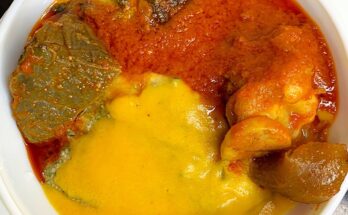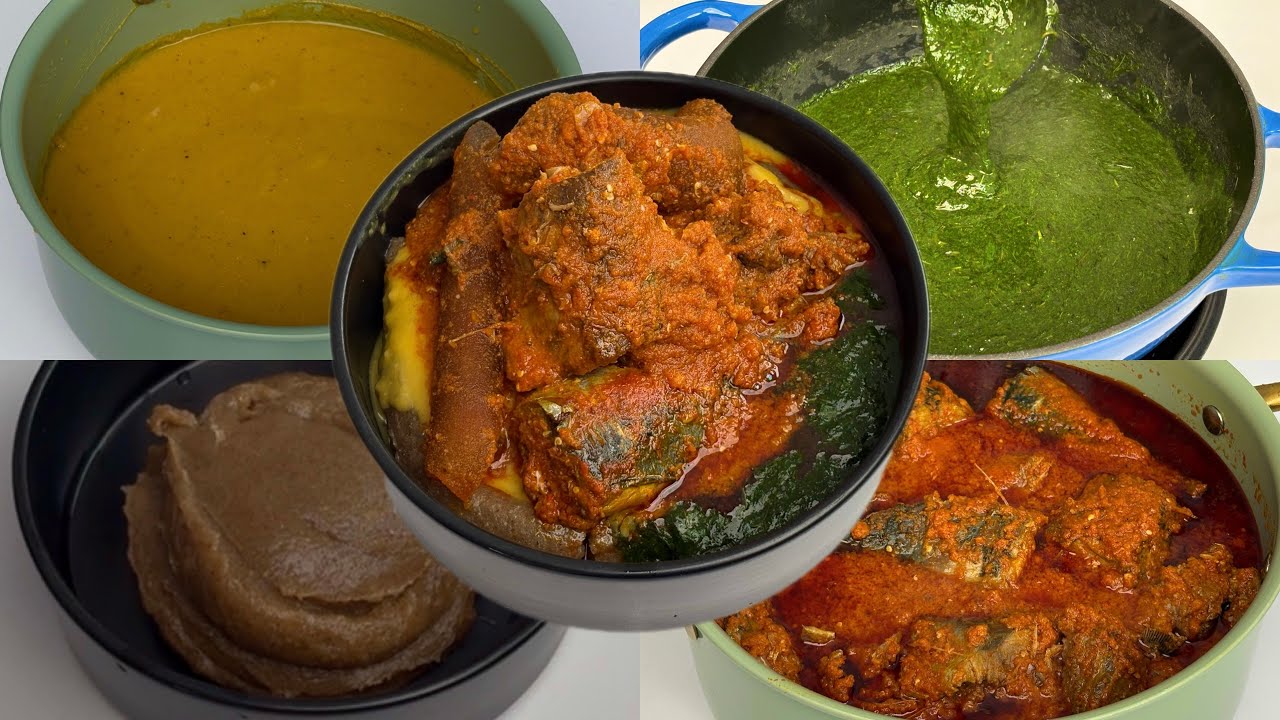
Amala and Ewedu is one of the most popular traditional meals in Nigeria, especially among the Yoruba people of southwestern Nigeria. This satisfying combination brings together smooth, stretchy Amala, naturally silky Ewedu soup, rich stew, and assorted meat to create a deeply flavourful meal.
When we prepare Amala and Ewedu properly, texture is just as important as taste. The Amala should be smooth, soft, and free from lumps, while the Ewedu should have its characteristic slippery consistency without becoming watery. A well-seasoned Nigerian stew completes the dish and gives it the bold flavour many people associate with a traditional Amala meal.
In this Amala and Ewedu recipe, we explain the ingredients, preparation method, serving ideas, and important tips needed to make this classic Nigerian dish at home.
What Is Amala and Ewedu?
Amala is a Nigerian swallow traditionally prepared from yam flour known as elubo. The flour is gradually added to boiling water and stirred vigorously until it develops a smooth, thick, stretchy consistency.
Its distinctive dark brown colour comes naturally from the processing and drying of yam before it is ground into flour. Depending on the flour used, Amala can vary slightly in colour and texture.
Ewedu soup is prepared primarily from jute leaves. The fresh leaves are cooked until tender and traditionally beaten with a small broom called ijabe. Modern preparation methods may use a blender instead.
Ewedu has a naturally slippery texture that pairs perfectly with Nigerian swallows. It is often served alongside gbegiri, pepper stew, beef, goat meat, tripe, cow skin, or other assorted meats.
Ingredients for Amala and Ewedu
Before we begin cooking, we gather all the ingredients needed for both parts of the meal.
Ingredients for the Amala
- 2 cups yam flour (elubo)
- About 3 cups water
- Extra yam flour if needed for adjusting consistency
Ingredients for Ewedu Soup
- 2 generous bunches fresh Ewedu leaves (jute leaves)
- 1–2 tablespoons ground crayfish
- 1 teaspoon iru (locust beans)
- Seasoning to taste
- Salt to taste
- Small quantity of water
- Potash or kaun, optional
The amount of water used for Ewedu should be controlled carefully because excessive water can make the soup too thin.
How to Prepare Ewedu Leaves
Preparing the leaves correctly makes the cooking process much easier.
We begin by separating the fresh Ewedu leaves from their stems. Tough stems should be discarded because they can affect the smooth texture of the finished soup.
Next, we wash the leaves thoroughly in clean water. Since fresh vegetables may contain soil or debris, washing them several times helps ensure that they are properly cleaned.
After washing, we allow the excess water to drain before cooking.
How to Make Ewedu Soup Step by Step
Step 1: Boil a Small Amount of Water
We place a pot over medium heat and add a small quantity of water. The goal is to create enough moisture to soften the leaves without turning the soup into a watery broth.
If we choose to use kaun, only a very small amount is required.
Step 2: Add the Ewedu Leaves
Once the water starts boiling, we add the cleaned Ewedu leaves.
We allow them to cook for approximately 5 to 8 minutes, or until they become soft and tender.
Ewedu cooks relatively quickly, so prolonged cooking is unnecessary.
Step 3: Blend or Beat the Ewedu
Traditionally, Ewedu is beaten directly inside the pot using an ijabe broom until the leaves break down into a smooth, slightly viscous consistency.
Alternatively, we can transfer the cooked leaves into a blender and pulse briefly. We avoid over-blending because Ewedu should retain some natural texture rather than becoming completely pureed.
An immersion blender can also make this process easier.
Step 4: Season the Soup
We return the blended or beaten Ewedu to the pot if necessary.
Then we add:
- Ground crayfish
- Iru
- Seasoning
- A small amount of salt
We stir everything together and allow the soup to simmer briefly.
Once the flavours are properly combined, we remove the Ewedu from the heat.
How to Make Amala Step by Step
Making smooth Amala requires steady stirring and careful control of the flour-to-water ratio.
Step 1: Bring the Water to a Boil
We pour approximately three cups of water into a clean pot and bring it to a rolling boil.
Before adding the flour, we can reserve a little hot water in a separate bowl. This becomes useful if we need to soften the Amala later.
Step 2: Add the Yam Flour Gradually
We reduce the heat slightly and begin sprinkling the yam flour into the boiling water.
Rather than pouring all the flour into the pot at once, we add it gradually while stirring continuously with a wooden turning stick.
Continuous stirring helps prevent lumps.
Step 3: Turn the Amala Thoroughly
As we add more flour, the mixture begins to thicken.
We continue turning and folding the Amala firmly until the flour completely absorbs the water.
If the mixture becomes too soft, we add a small quantity of yam flour.
If it becomes too firm, we add a little reserved hot water.
Step 4: Allow the Amala to Cook
Once the desired consistency is achieved, we make a small opening in the centre and add a little hot water.
We cover the pot and allow the Amala to steam over low heat for about 2 to 3 minutes.
This helps ensure that the flour cooks properly.
Step 5: Turn Until Smooth
We uncover the pot and turn the Amala vigorously again.
The finished Amala should look smooth, stretchy, soft, and completely free from lumps.
We serve it immediately while hot.
How to Serve Amala and Ewedu
Traditionally, we serve a portion of freshly prepared Amala on a plate alongside generous servings of Ewedu.
However, Ewedu becomes even more satisfying when combined with a rich Nigerian pepper stew.
A typical serving may include:
- Amala
- Ewedu soup
- Nigerian pepper stew
- Gbegiri
- Beef
- Goat meat
- Cow skin
- Tripe
- Cow foot
- Assorted meat
The stew provides richness and heat, while Ewedu adds its signature smooth texture.
When Gbegiri soup is added, the combination becomes one of the most recognised Yoruba meals commonly served in traditional restaurants and local food establishments.
Tips for Making Smooth Amala Without Lumps
Perfect Amala depends largely on technique.
First, we make sure the water is properly boiling before adding the yam flour.
Secondly, the flour should be introduced gradually rather than dumped into the pot at once. Adding too much flour immediately can create dry pockets that become difficult to break apart.
Continuous stirring is equally important.
We should also avoid making the Amala excessively hard. Good Amala should be firm enough to hold its shape but soft enough to scoop easily.
If it becomes too thick, a small quantity of hot water can help loosen it.
Tips for Making Perfect Ewedu Soup
Fresh jute leaves usually give us the best flavour and texture.
We should avoid adding excessive water because Ewedu naturally releases moisture as it cooks.
The leaves also do not require prolonged boiling. Cooking them only until tender helps preserve their characteristic texture.
When using a blender, short pulses are preferable to prolonged blending.
For additional traditional flavour, iru and crayfish are particularly useful. The locust beans contribute a distinctive savoury aroma, while crayfish adds depth to the soup.
What to Serve With Ewedu Besides Amala
Although Amala is perhaps the most famous accompaniment for Ewedu, the soup can also be enjoyed with several other Nigerian swallows.
Popular alternatives include:
- Pounded yam
- Eba
- Semo
- Fufu
- Wheat swallow
However, the combination of Amala, Ewedu, Gbegiri, and stew remains a classic choice.
How to Store Leftover Amala and Ewedu
If we have leftover Ewedu, we allow it to cool completely before transferring it into a clean airtight container.
It can be refrigerated and reheated gently when needed.
Amala is generally best eaten freshly prepared because refrigeration may change its texture.
If we need to keep it temporarily, we can wrap individual portions carefully while they are still warm to help prevent them from drying out.
For the best eating experience, freshly prepared Amala is recommended.
Common Mistakes to Avoid When Making Amala and Ewedu
One common mistake is adding too much yam flour too quickly. This can produce extremely firm Amala or create stubborn lumps.
Another mistake is failing to stir consistently during preparation.
With Ewedu, excessive water is one of the main problems. The soup should have a smooth, slightly thick and slippery consistency rather than resemble vegetable water.
Overcooking Ewedu can also reduce its freshness and affect the final texture.
Finally, seasoning should be balanced. Since Ewedu is usually eaten with heavily seasoned stew and assorted meat, we do not need to overwhelm the vegetable soup with excessive seasoning.
Why Amala and Ewedu Is a Classic Nigerian Meal
Amala and Ewedu has remained an important part of Yoruba cuisine because of its simple ingredients, distinctive textures, and ability to pair with richly flavoured soups and proteins.
The softness of freshly prepared Amala works naturally with the smooth Ewedu, while pepper stew introduces richness, spice, and colour.
Adding Gbegiri creates another layer of creaminess, while assorted meat makes the dish even more filling.
It is a meal that can be enjoyed at home, at celebrations, in traditional restaurants, and during family gatherings.
FAQs about Amala and Ewedu Recipe
What is Amala made from?
Traditional Amala is made from yam flour called elubo. Yam is peeled, dried, and processed into flour before being cooked with hot water to create the familiar Nigerian swallow.
What is Ewedu made from?
Ewedu soup is primarily made from jute leaves. Crayfish, locust beans, seasoning, salt, and a small quantity of water may be added for flavour.
Can we make Ewedu without potash?
Yes. Potash is optional when making Ewedu. The soup can still develop a desirable texture when fresh leaves are cooked and blended or beaten correctly.
Can we blend Ewedu instead of using an ijabe broom?
Yes. A blender or immersion blender provides a convenient alternative. We simply blend briefly so that the soup retains its traditional texture.
What soup goes best with Amala?
Ewedu and Gbegiri are among the most traditional options. Amala can also be enjoyed with different Nigerian soups and stews depending on personal preference.
Why is my Amala lumpy?
Lumps often appear when yam flour is added too quickly or when the mixture is not stirred continuously. Adding the flour gradually while turning vigorously usually produces a smoother result.
Why is my Ewedu watery?
Too much cooking water is usually responsible. Since Ewedu does not require much liquid, we begin with a small quantity and only add more when necessary.
Conclusion
Preparing an authentic Amala and Ewedu recipe at home becomes straightforward once we master the two essential elements: smooth Amala and properly textured Ewedu soup.
We cook fresh jute leaves until tender, blend or beat them to achieve their characteristic silky consistency, and season them simply with ingredients such as crayfish and iru. For the Amala, we gradually combine yam flour with boiling water while stirring continuously until it becomes smooth and stretchy.
For a complete traditional experience, we serve the meal with Nigerian pepper stew, Gbegiri, and assorted meat. The combination of soft Amala, slippery Ewedu, creamy Gbegiri, spicy stew, and tender meat creates the bold textures and flavours that make this dish one of Nigeria’s most celebrated traditional meals.