Ofada Rice and Ayamase Sauce is one of Nigeria’s most distinctive and flavour-packed meals. Known for its earthy aroma, rich pepper sauce, assorted meats, boiled eggs, and unmistakable traditional character, this dish remains a favourite at Nigerian parties, restaurants, family gatherings, and special celebrations.
In this Ofada Rice and Ayamase Sauce recipe, we prepare the rice until perfectly tender while creating a deeply flavoured green pepper sauce enriched with bleached palm oil, locust beans, assorted meat, onions, and boiled eggs. When prepared correctly, the result is a satisfying combination of fragrant local rice and a spicy, savoury sauce with layers of authentic Nigerian flavour.
Whether we are preparing a weekend family meal or recreating the classic Nigerian party experience at home, this recipe provides everything needed to make delicious Ofada rice with Ayamase sauce from scratch.
What Is Ofada Rice?
Ofada rice is a locally grown Nigerian rice traditionally associated with communities in Ogun State, particularly the town of Ofada. Unlike highly polished imported rice, Ofada rice is generally less processed and has a distinctive aroma, slightly chewy texture, and naturally earthy flavour.
The unique character of the rice makes it especially suitable for intensely flavoured Nigerian sauces. Although it can be served with different stews, its most famous pairing is undoubtedly Ayamase sauce, sometimes referred to as designer stew or Ofada sauce.
Properly cooked Ofada rice should be tender without becoming excessively soft or sticky. Washing the rice carefully is also important because some varieties may contain small particles or husks that need to be removed before cooking.
What Is Ayamase Sauce?
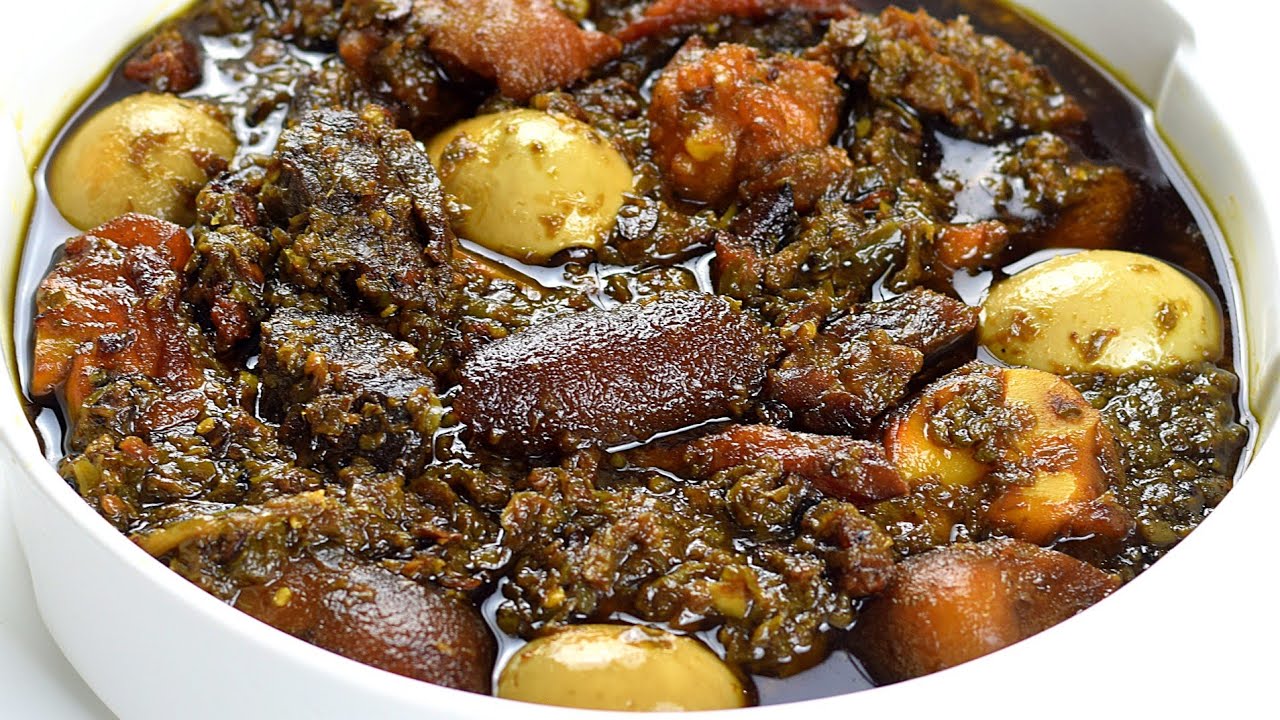
Ayamase sauce is a traditional Nigerian pepper sauce made primarily with green peppers, onions, palm oil, fermented locust beans, seasoning, and assorted proteins.
Its deep colour and intense flavour come from the combination of blended green peppers and carefully bleached palm oil. The sauce is traditionally spicy, although the level of heat can be adjusted according to preference.
One ingredient that significantly distinguishes Ayamase from ordinary Nigerian stew is iru, also known as fermented locust beans. Iru gives the sauce its characteristic savoury aroma and rich traditional taste.
Combined with assorted meats, boiled eggs, and the flavours released during slow frying, Ayamase becomes a robust sauce capable of transforming a simple bowl of rice into an impressive Nigerian meal.
Ingredients for Ofada Rice and Ayamase Sauce
Before we begin cooking, we prepare all the ingredients so the process remains smooth and organised.
Ingredients for the Ofada Rice
- 3 cups Ofada rice
- Water for washing and cooking
- Salt to taste
Ingredients for Ayamase Sauce
- 8–10 green bell peppers
- 4–6 green Scotch bonnet peppers, depending on preferred heat level
- 2 medium onions
- 1½–2 cups palm oil
- 2 tablespoons iru or fermented locust beans
- 500–700 g assorted meat
- 4–6 boiled eggs
- 1–2 tablespoons ground crayfish, optional
- Meat stock as needed
- Seasoning cubes or powder to taste
- Salt to taste
Beef, tripe, cow skin, goat meat, offal, or other preferred Nigerian meat combinations can be used for the assorted meat.
How to Prepare Ofada Rice
Cooking excellent Ofada rice begins with proper cleaning because locally processed rice may contain more natural residue than commercially polished rice.
Step 1: Sort and Wash the Rice
We carefully sort through the Ofada rice, removing any stones, husks, or unwanted particles.
Next, we rinse the rice several times with clean water. Washing thoroughly helps remove excess starch and impurities while preserving the natural character of the grains.
Step 2: Boil the Ofada Rice
We place the washed rice in a pot and add enough water to cook it properly.
The rice is allowed to boil over medium heat until the grains become tender. Depending on the particular variety, Ofada rice may require slightly more or less cooking time than conventional long-grain rice.
If excess water remains after the rice becomes tender, we drain it carefully.
We then cover the pot and allow the rice to steam briefly on low heat. This helps produce tender, well-separated grains.
How to Make Authentic Ayamase Sauce
Preparing Ayamase sauce requires patience because much of its flavour develops while the pepper mixture fries in palm oil.
Step 1: Prepare the Assorted Meat
We wash and season the assorted meats with onions, seasoning, and salt.
The meat is cooked until tender, and we reserve some of the meat stock because it can be used later to enhance the flavour of the sauce.
For a richer texture, the cooked meat may be lightly fried or grilled before adding it to the stew.
Step 2: Blend the Green Peppers
We wash the green bell peppers, Scotch bonnet peppers, and one onion.
The ingredients are blended together. We avoid adding excessive water because too much liquid will increase the cooking time.
The blended mixture can be placed in a pot and cooked briefly to reduce excess moisture. This allows the pepper sauce to fry more effectively when added to the palm oil.
How to Bleach Palm Oil for Ayamase
Bleached palm oil gives Ayamase its characteristic colour, aroma, and flavour.
We pour the palm oil into a clean, dry pot and cover it tightly. The oil is heated carefully until its bright red colour becomes considerably lighter.
Because palm oil produces strong fumes during this process, good kitchen ventilation is essential. We should avoid leaning over or opening the pot while the oil is extremely hot.
Once properly heated, we turn off the heat and allow the oil to cool significantly before continuing.
Hot palm oil should always be handled carefully.
Frying the Ayamase Pepper Sauce
Once the bleached oil has cooled to a manageable cooking temperature, we return the pot to medium heat.
We add sliced onions and fry briefly until aromatic.
Next, we add the iru or fermented locust beans. The iru should fry for a short period so its distinctive savoury flavour can infuse the palm oil.
We then carefully add the reduced green pepper mixture.
The mixture is fried over medium heat, stirring occasionally. This stage should not be rushed.
As the sauce cooks, excess moisture evaporates and the pepper gradually absorbs the flavoured palm oil. The raw pepper taste disappears and the sauce develops a richer, deeper aroma.
Adding Meat and Seasoning to Ayamase
Once the pepper mixture has fried properly, we add the cooked assorted meat.
We season with salt, seasoning cubes or powder, and ground crayfish if desired.
A small quantity of the reserved meat stock can also be added. However, we avoid adding too much liquid because authentic Ayamase sauce should remain rich rather than watery.
We stir everything together and allow the sauce to simmer until the meats absorb the pepper flavour.
Finally, we add the boiled eggs and gently coat them with the sauce.
The Ayamase is allowed to simmer for several additional minutes over low heat before being removed from the stove.
How to Know When Ayamase Sauce Is Ready
A properly prepared Ayamase sauce should have a rich appearance and pronounced aroma.
We know the sauce is ready when the pepper no longer tastes raw, the oil begins separating slightly from the cooked pepper mixture, and the ingredients have developed a deep savoury flavour.
The sauce should not taste overwhelmingly of palm oil. Instead, the flavours of the peppers, onions, iru, meat, and seasonings should complement one another.
Tips for Making the Best Ofada Rice and Ayamase Sauce
Several simple techniques can significantly improve the final result.
- Wash Ofada rice thoroughly: Local rice should be carefully cleaned before cooking.
- Avoid watery pepper puree: Excess water makes the sauce take considerably longer to fry.
- Use good-quality palm oil: Palm oil contributes heavily to the traditional taste of Ayamase.
- Do not omit iru unnecessarily: Fermented locust beans provide an important part of the sauce’s characteristic flavour.
- Cook the pepper thoroughly: Proper frying eliminates the raw vegetable taste and creates deeper flavour.
- Adjust Scotch bonnet carefully: Ayamase is traditionally spicy, but we can reduce the quantity when cooking for people with a lower tolerance for heat.
- Use assorted meats: Different cuts provide contrasting textures and make the sauce more satisfying.
- Allow the sauce to simmer: A short final simmer helps the meat and eggs absorb the sauce.
How to Serve Ofada Rice and Ayamase Sauce
Traditionally, Ofada rice and Ayamase sauce can be served in leaves, particularly uma leaves, which contribute to its familiar Nigerian presentation.
We spoon a generous portion of hot Ofada rice onto the plate or leaf and top it with Ayamase sauce, ensuring each serving contains pieces of assorted meat and, where desired, a boiled egg.
The dish can also be accompanied by fried plantain for a sweet contrast to the spicy sauce.
For a full Nigerian-style presentation, we may serve it with:
- Fried ripe plantain
- Boiled eggs
- Assorted meat
- Fried beef
- Ponmo
- Tripe
- Goat meat
- Chilled water or a preferred drink
Because the sauce itself is extremely flavourful, very few additional side dishes are required.
Common Mistakes to Avoid When Making Ayamase Sauce
One common mistake is failing to reduce excess water from the blended peppers. When the mixture contains too much liquid, the peppers boil rather than fry, resulting in a sauce with less concentrated flavour.
Another mistake is using too much meat stock. Although stock adds flavour, excessive liquid can turn Ayamase into a thin stew.
We should also avoid undercooking the peppers. Properly fried Ayamase should have a developed, savoury taste rather than the sharp flavour of raw peppers.
Finally, excessive seasoning can overpower the natural flavours of the iru, assorted meat, peppers, and palm oil. Seasoning should therefore be added gradually and adjusted near the end of cooking.
Can We Make Ayamase Sauce Less Spicy?
Yes. Although traditional Ayamase is known for its heat, we can easily control the spice level.
To make a milder version, we use more green bell peppers and fewer Scotch bonnet peppers. Bell peppers provide body, colour, and flavour without introducing excessive heat.
For those who enjoy very spicy Nigerian food, additional Scotch bonnet peppers can be included.
The goal is to maintain the distinctive green pepper flavour while achieving a heat level suitable for everyone being served.
How to Store Ofada Rice and Ayamase Sauce
Leftover Ofada rice and Ayamase sauce should be stored separately in airtight containers.
The rice can be refrigerated and reheated with a small sprinkle of water to help restore moisture.
Ayamase sauce can also be refrigerated and reheated over low to medium heat. Because the sauce contains palm oil and meat, the oil may solidify slightly when chilled. This is normal and will melt again during reheating.
For longer storage, the sauce can be divided into smaller portions before freezing. Portioning makes it easier to thaw only the quantity required for a meal.
Always ensure previously cooked food is reheated thoroughly before serving.
Why Ofada Rice and Ayamase Sauce Remains a Nigerian Favourite
The appeal of Ofada Rice and Ayamase Sauce lies in the contrast between the two components. The rice has an earthy, distinctive aroma and pleasantly firm texture, while Ayamase provides spice, richness, savoury depth, and the strong traditional flavour of fermented locust beans.
It is also a highly adaptable meal. We can prepare it with simple beef and eggs for an everyday dish or load the sauce with goat meat, tripe, ponmo, offal, and other proteins for a more elaborate celebration.
The combination represents some of the qualities people appreciate most about Nigerian cooking: bold seasoning, satisfying textures, traditional ingredients, and generous portions.
Best Proteins for Ofada Sauce
Although there is no requirement to use every type of meat available, combining several proteins creates the classic assorted-meat experience.
Popular choices include beef, goat meat, tripe, cow skin, liver, kidney, and other offal. Boiled eggs are particularly popular because they absorb the flavourful sauce while adding a softer texture to the meal.
We can select proteins according to preference, availability, and dietary requirements without changing the fundamental preparation method.
FAQs about Ofada Rice and Ayamase Sauce Recipe
What is Ofada Rice?
Ofada rice is a locally grown Nigerian rice variety known for its distinctive aroma, slightly chewy texture, and rich, earthy flavour. It is traditionally served with spicy sauces such as Ayamase.
What is Ayamase Sauce?
Ayamase sauce, also called Ofada sauce or Designer Stew, is a popular Nigerian pepper sauce made with green bell peppers, hot peppers, onions, palm oil, assorted meats, and traditional seasonings.
Do I Need to Wash Ofada Rice Before Cooking?
Yes. We recommend washing Ofada rice thoroughly several times to remove excess starch, dirt, and impurities before cooking.
Why Is Palm Oil Bleached for Ayamase Sauce?
Bleaching the palm oil changes its colour and develops the distinctive flavour associated with authentic Ayamase sauce. It should be done carefully in a well-ventilated kitchen.
Can I Make Ayamase Sauce Less Spicy?
Yes. We can reduce the amount of hot peppers and use more green bell peppers to create a milder sauce without losing its characteristic flavour.
What Meat Can We Use for Ayamase Sauce?
We can use beef, tripe, cow skin, goat meat, assorted offal, or a combination of preferred meats.
Can Ofada Rice and Ayamase Sauce Be Stored?
Yes. Store leftovers separately in airtight containers in the refrigerator. The sauce can also be frozen for longer storage.
What Can We Serve With Ofada Rice?
Ofada rice is traditionally enjoyed with Ayamase sauce, boiled eggs, fried plantains, and assorted meats for a satisfying Nigerian meal.
Conclusion
Preparing an authentic Ofada Rice and Ayamase Sauce recipe at home becomes straightforward when each component receives proper attention. We begin by carefully washing and cooking the locally grown rice until tender, then build the Ayamase sauce with green peppers, Scotch bonnet, bleached palm oil, iru, onions, assorted meats, seasoning, and boiled eggs.
The most important part of the process is allowing the pepper mixture enough time to cook and fry thoroughly. This develops the concentrated flavour and rich texture that distinguish authentic Ayamase from an ordinary pepper stew.
When served together, the aromatic Ofada rice and spicy, deeply savoury Ayamase create one of Nigeria’s most memorable traditional meals. With quality ingredients, careful seasoning, and patient cooking, we can prepare a delicious Ofada rice and Ayamase sauce worthy of a Nigerian celebration, restaurant menu, or satisfying family meal.