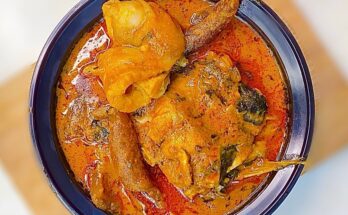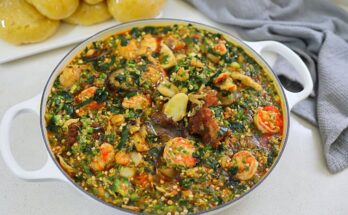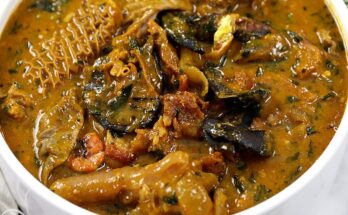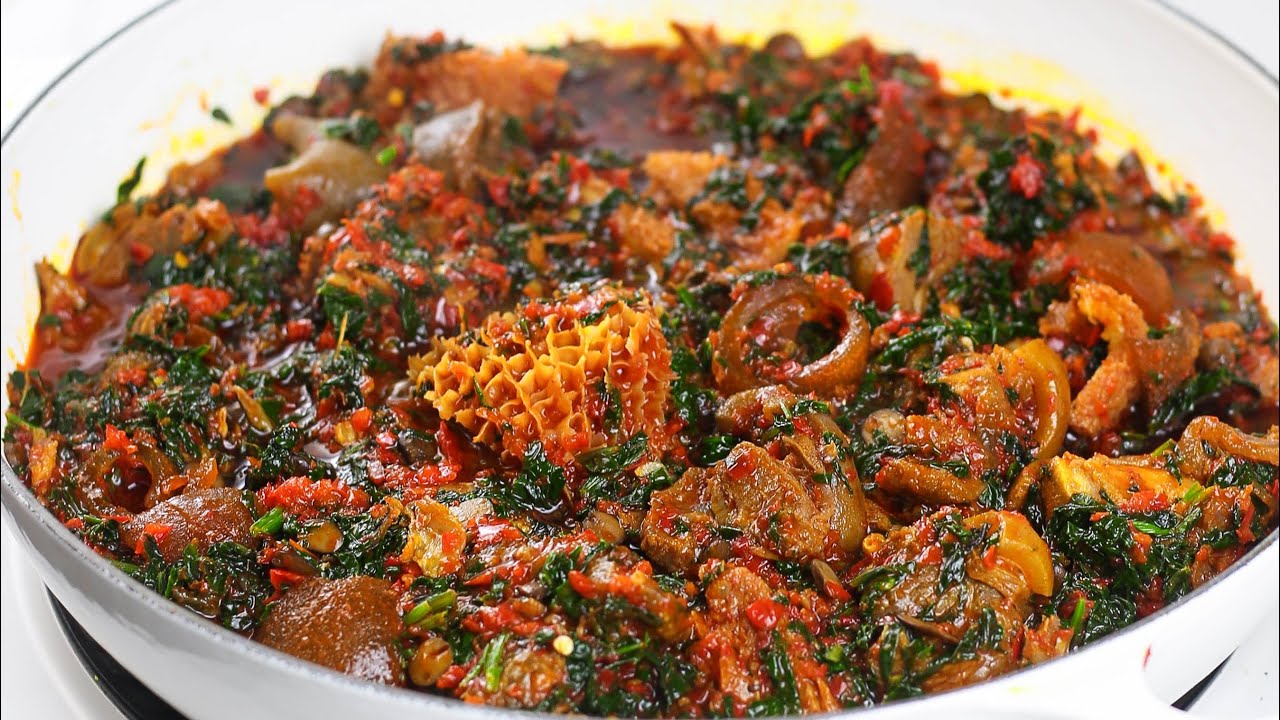
Efo Riro is a rich, deeply flavoured Nigerian vegetable soup known for its colourful appearance, savoury pepper base, assorted meats, seafood, and generous amount of leafy greens. Popular among the Yoruba people of southwestern Nigeria, this traditional dish has become a favourite in homes and restaurants across the country.
When we prepare an authentic Efo Riro recipe, we aim for a balanced combination of fresh vegetables, palm oil, peppers, onions, traditional seasonings, meat, and fish. The result should be thick rather than watery, aromatic without being overpowering, and packed with enough flavour to complement Nigerian staples such as pounded yam, eba, amala, semovita, fufu, and rice.
This recipe provides a straightforward way to make delicious Nigerian Efo Riro at home while maintaining its traditional taste.
What Is Efo Riro?
Efo Riro literally refers to a stirred or mixed vegetable soup. Unlike vegetable soups that depend heavily on water or stock, Efo Riro gets much of its distinctive character from a properly cooked pepper sauce.
The foundation usually consists of red bell peppers, Scotch bonnet peppers, onions, palm oil, locust beans, crayfish, meat, fish, and leafy vegetables.
Traditional Yoruba cooking may use vegetables such as efo shoko or efo tete, depending on availability. However, spinach is widely used as a practical substitute and produces excellent results when prepared correctly.
The secret to good Efo Riro is avoiding excessive liquid. The vegetable should remain the dominant ingredient while absorbing the rich flavours of the pepper sauce, meats, fish, and seasonings.
Ingredients for Efo Riro
Before we begin cooking, we should prepare all the ingredients. Having everything ready makes it easier to control the cooking process and prevents the vegetables from becoming overcooked.
Main Ingredients
- Fresh spinach or Nigerian leafy vegetables – about 700 g to 1 kg
- Red bell peppers (tatashe) – 3 large
- Scotch bonnet peppers (ata rodo) – 2 to 4, depending on preferred heat
- Onions – 2 medium-sized
- Palm oil – ½ to ¾ cup
- Assorted meat – about 500 g to 700 g
- Stockfish – cleaned and softened
- Smoked or dried fish – cleaned and deboned
- Ground crayfish – 2 to 3 tablespoons
- Iru (locust beans) – 1 to 2 tablespoons
- Meat stock – about ½ to 1 cup
- Seasoning cubes or powder – to taste
- Salt – to taste
We can use beef, goat meat, cow skin, tripe, or other preferred assorted meats. Combining different proteins creates the complex flavour associated with traditional Nigerian Efo Riro.
How to Prepare the Vegetables for Efo Riro
Proper vegetable preparation is important because excess water can make Efo Riro thin and dilute its flavour.
We begin by carefully picking and washing the vegetables to remove sand and dirt. After washing, we drain them thoroughly before slicing them into manageable pieces.
If we are using frozen spinach, we should thaw it completely and squeeze out as much excess water as possible.
For fresh spinach, we can wash and drain it well without boiling it beforehand. This allows the vegetable to retain more texture and colour during cooking.
How to Prepare the Pepper Mixture
The pepper mixture forms the flavour base of this Efo Riro recipe.
We blend the red bell peppers, Scotch bonnet peppers, and one onion until moderately smooth. We should avoid adding too much water while blending because we want the sauce to reduce quickly.
The quantity of Scotch bonnet pepper can be adjusted according to personal preference. Efo Riro should have some warmth, but the heat should not overpower the flavours of the meat, seafood, locust beans, and vegetables.
How to Cook Efo Riro Step by Step
Once the ingredients have been prepared, we can begin cooking the soup.
1. Cook the Assorted Meat
We place the cleaned assorted meat in a pot and season it with onions, salt, and preferred seasoning.
We add a small amount of water and cook until the meat becomes tender.
If we are using tougher ingredients such as tripe or certain cuts of goat meat, we may need to cook them longer. We reserve some of the meat stock because it will contribute additional flavour to the soup.
2. Prepare the Fish and Stockfish
We wash the stockfish thoroughly and cook or soak it until tender.
Smoked or dried fish should also be cleaned carefully. We remove bones where necessary and set the fish aside.
Handling the fish gently prevents it from breaking into very small pieces during cooking.
3. Heat the Palm Oil
We place a clean pot over medium heat and add the palm oil.
The oil should become hot, but we do not need to bleach it. Overheating palm oil can change its flavour and remove some of the distinctive character we want in traditional Efo Riro.
4. Fry the Onions and Locust Beans
We add sliced onions to the warm palm oil and fry briefly until fragrant.
Next, we add the iru or fermented locust beans.
Iru contributes a characteristic savoury aroma to traditional Yoruba Efo Riro. Although it can be omitted when unavailable, including it provides a more authentic flavour.
5. Cook the Pepper Sauce
We pour the blended pepper mixture into the palm oil and stir thoroughly.
We allow the sauce to cook over medium heat until it reduces considerably and the raw pepper taste disappears.
This step is extremely important.
If the pepper mixture is not cooked long enough, the finished soup may taste raw or watery. We continue cooking until the sauce becomes noticeably thicker and the oil begins to appear around the edges.
6. Add Meat, Fish, and Seasonings
Once the pepper sauce has reduced, we add the cooked assorted meat, stockfish, smoked fish, and a moderate quantity of reserved meat stock.
We then add ground crayfish, seasoning, and salt as required.
We stir carefully and allow everything to simmer so the proteins can absorb the rich pepper sauce.
At this stage, we taste the sauce before adding additional salt because stockfish, smoked fish, seasoning, and meat stock may already contain considerable salt.
7. Add the Vegetables
Finally, we add the drained vegetables.
We stir thoroughly so that the greens become evenly coated with the pepper sauce.
The vegetables will release some moisture as they cook, so additional water is usually unnecessary.
We cook for only a few minutes after adding the vegetables. Overcooking may cause the greens to become too soft and lose their fresh colour.
Once everything is properly combined and the soup has reached the desired consistency, we remove it from the heat.
Tips for Making the Best Efo Riro
Several simple techniques can significantly improve the taste and consistency of homemade Efo Riro.
Use Enough Vegetables
Efo Riro is primarily a vegetable soup, so the finished dish should contain plenty of leafy greens. Using too little vegetable can turn the recipe into pepper stew rather than authentic Efo Riro.
Control the Amount of Liquid
We should add meat stock gradually. Too much stock can create watery Efo Riro.
The pepper sauce should already be thick before we add the vegetables.
Cook the Pepper Properly
Allowing the pepper mixture enough time to fry and reduce creates a deeper, richer flavour.
We should not rush this stage.
Use Quality Palm Oil
Palm oil contributes colour, aroma, richness, and flavour. A good-quality palm oil can make a noticeable difference in the finished soup.
Do Not Overcook the Vegetables
The vegetables are added toward the end because they require relatively little cooking.
A brief cooking time helps maintain their colour and texture.
Combine Meat and Seafood
A mixture of assorted meat, stockfish, smoked fish, and crayfish gives Efo Riro its characteristic layers of flavour.
We can adjust the combination according to preference and availability.
What to Eat With Efo Riro
One of the advantages of Efo Riro is its versatility. We can serve it with several Nigerian foods depending on the occasion.
Popular combinations include:
- Efo Riro and pounded yam
- Efo Riro and amala
- Efo Riro and eba
- Efo Riro and fufu
- Efo Riro and semovita
- Efo Riro and white rice
- Efo Riro and boiled yam
For a classic Yoruba meal, amala and Efo Riro make an excellent combination. Pounded yam is another popular choice because its mild flavour allows the rich vegetable soup to stand out.
How to Store Leftover Efo Riro
Leftover Efo Riro should be allowed to cool before being transferred into a clean, airtight container.
We can refrigerate the soup for short-term storage or freeze portions when we want to keep them for longer.
Dividing the soup into smaller containers before freezing is particularly convenient because we can reheat only the amount needed for each meal.
When reheating Efo Riro, we warm it thoroughly over medium-low heat and stir occasionally. If the soup has become very thick, a small amount of water or stock can be added, but we should avoid diluting the sauce unnecessarily.
Common Mistakes to Avoid When Cooking Efo Riro
Even a simple Efo Riro recipe can produce disappointing results when certain steps are overlooked.
One common mistake is adding too much water. The soup should be rich and thick enough to cling to the vegetables and proteins.
Another mistake is adding the vegetables before the pepper sauce has cooked properly. Once the vegetables enter the pot, they release moisture and need only a short cooking time. Therefore, the sauce should already have developed most of its flavour beforehand.
We should also avoid overwhelming the soup with seasoning cubes. Crayfish, locust beans, smoked fish, stockfish, meat stock, onions, and peppers already provide considerable natural flavour.
Finally, we should avoid cooking the vegetables for too long. Fresh-looking vegetables with some texture make Efo Riro more appetising.
Why This Nigerian Efo Riro Recipe Works
This method concentrates flavour at every stage.
We cook the meats separately to create a savoury stock, reduce the pepper mixture before adding the vegetables, introduce traditional flavourings such as crayfish and iru, and add the leafy greens only when the sauce is nearly finished.
The result is a balanced Nigerian vegetable soup with tender meat, flavourful fish, vibrant vegetables, and a rich palm-oil pepper sauce.
The recipe is also easy to customise. We can increase the quantity of peppers for additional heat, use different combinations of meat and fish, or choose whichever suitable leafy vegetable is readily available.
Serving the Perfect Efo Riro
For the best experience, we serve Efo Riro warm with our preferred swallow or side dish.
A generous portion of vegetable soup alongside freshly prepared pounded yam, amala, eba, or fufu creates a satisfying Nigerian meal suitable for everyday dining, family gatherings, and special occasions.
When served with white rice, Efo Riro also becomes an excellent alternative to conventional Nigerian stews.
FAQs about Efo Riro Recipe
1. What is Efo Riro?
Efo Riro is a popular Nigerian vegetable soup, particularly associated with Yoruba cuisine. It is prepared with leafy vegetables, peppers, palm oil, seasonings, and various proteins.
2. What vegetables are best for Efo Riro?
Traditional Efo Riro is commonly prepared with efo shoko (Lagos spinach). Spinach, kale, or other suitable leafy greens can also be used when traditional vegetables are unavailable.
3. What ingredients are needed for Efo Riro?
Common ingredients include leafy vegetables, red bell peppers, scotch bonnet peppers, onions, palm oil, locust beans (iru), crayfish, seasoning, meat, and fish.
4. How long does it take to cook Efo Riro?
Efo Riro typically takes about 30–45 minutes, depending on the type of meat or protein used and whether it has been cooked beforehand.
5. Can I make Efo Riro without meat?
Yes. You can prepare vegetarian Efo Riro by leaving out meat, fish, and crayfish and using suitable plant-based seasonings and proteins.
6. Why is my Efo Riro watery?
Excess water can come from the vegetables or pepper mixture. Drain washed vegetables properly and cook the pepper sauce until excess moisture reduces before adding the greens.
7. What can I eat with Efo Riro?
Efo Riro pairs well with pounded yam, eba, amala, fufu, semovita, rice, or boiled yam.
8. How should leftover Efo Riro be stored?
Allow it to cool, place it in an airtight container, and refrigerate promptly. For longer storage, Efo Riro can also be frozen.
Conclusion
A well-prepared Efo Riro recipe combines fresh leafy vegetables, peppers, palm oil, assorted meat, fish, crayfish, and traditional seasonings into one deeply satisfying dish. The most important techniques are reducing the pepper sauce properly, controlling the amount of liquid, balancing the seasonings, and adding the vegetables toward the end of cooking.
By following these steps, we can prepare authentic Nigerian Efo Riro with the thick consistency, vibrant vegetables, savoury aroma, and bold flavour that make this Yoruba vegetable soup so popular.
Whether we serve it with pounded yam, amala, eba, fufu, semovita, boiled yam, or rice, Efo Riro remains one of the most versatile and flavourful dishes in Nigerian cuisine.