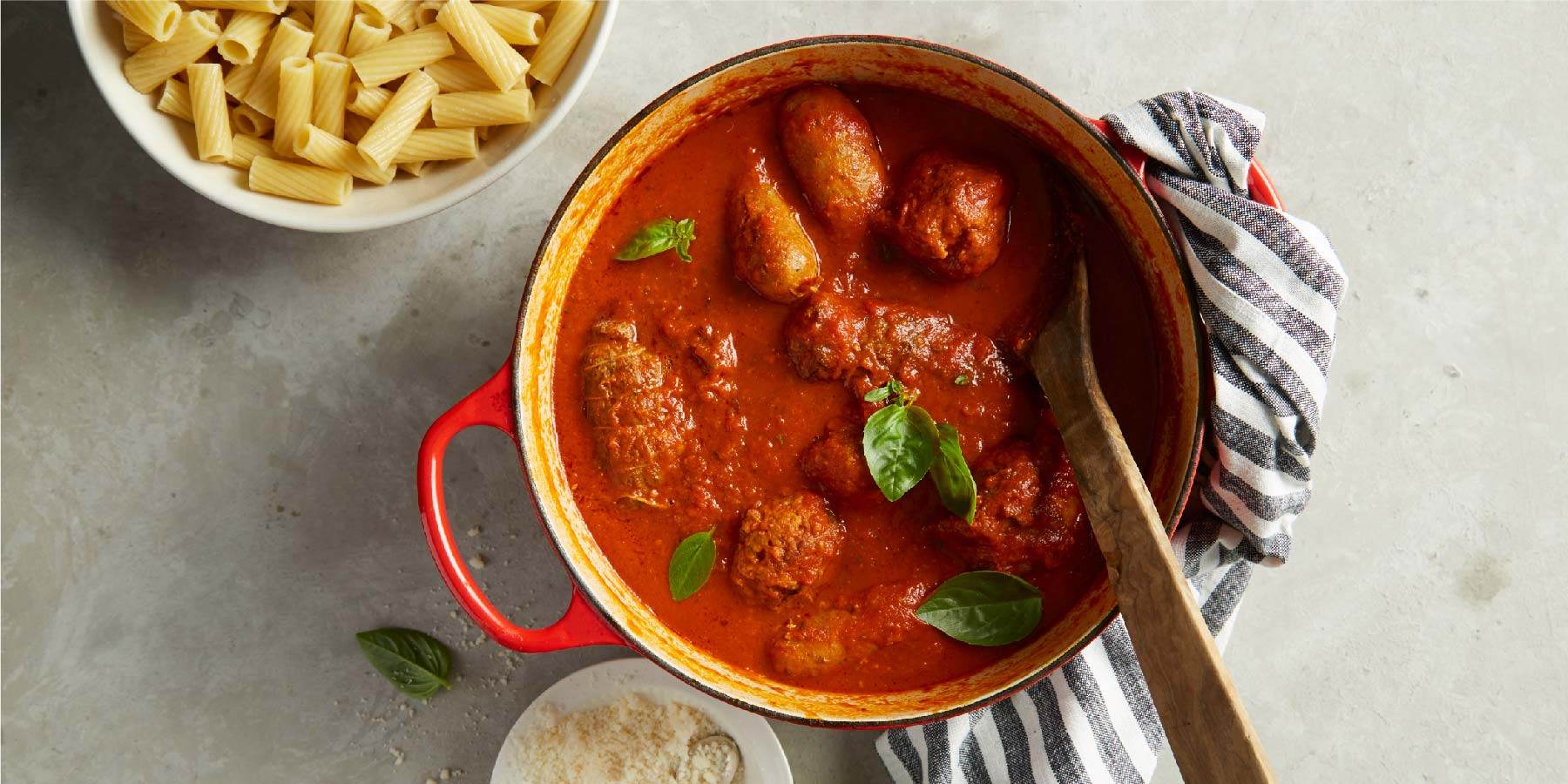
Sunday Gravy Recipe: Sunday Gravy isn’t just food—it’s an event, a ritual, a celebration of family and tradition. Originating from Southern Italian-American kitchens, this hearty, slow-cooked tomato sauce filled with various meats is a staple for many households, particularly on Sundays when families gather for a big meal. It’s more than just a sauce; it’s a rich, soul-warming dish that brings everyone to the table.
Unlike the thinner tomato sauces you might find during the week, Sunday Gravy simmers for hours, allowing layers of flavor to develop. Each Italian family often has its unique version, passed down through generations. Some prefer meatballs, others swear by braciole, and nearly all include Italian sausages and pork ribs. The secret is in the slow simmer, giving the tomatoes time to marry with the meat juices and spices, creating a deep, complex flavor.
Whether you’re looking to recreate a nostalgic childhood memory or start your own Sunday tradition, this step-by-step guide will help you master the art of Sunday Gravy. So roll up your sleeves, clear your schedule, and get ready to fill your kitchen with the irresistible aroma of simmering sauce and savory meats.
Ingredients You’ll Need
To make authentic Sunday Gravy, the ingredient list might look a bit long—but trust the process. Each component plays a vital role in building that iconic, savory depth.
Meats:
- 1 lb Italian sausage (mild or spicy)
- 1 lb pork ribs or pork shoulder, cut into chunks
- 1 lb beef short ribs or chuck
- 6-8 homemade or store-bought meatballs
Vegetables and Aromatics:
- 1 large onion, finely chopped
- 6 cloves garlic, minced
- 2 tablespoons olive oil
- Fresh basil and parsley (a few sprigs each)
Tomato Products and Seasonings:
- 2 cans (28 oz each) whole peeled San Marzano tomatoes
- 1 small can tomato paste
- 1 teaspoon sugar (optional, to cut acidity)
- Salt and freshly ground black pepper to taste
- Crushed red pepper flakes (optional, for heat)
Pasta Pairing Options:
- Rigatoni
- Ziti
- Spaghetti
- Pappardelle
The secret here isn’t just in using the right meat, but in building layers of flavor at each stage of cooking. Use quality tomatoes—San Marzano if possible—as they bring the right sweetness and richness to the sauce. Fresh herbs will elevate the dish far beyond what dried ones can do.
Step-by-Step Instructions
Step 1: Prepare Your Meats
Start by browning your meats in a large, heavy-bottomed pot—this is the foundation of your gravy’s flavor.
- Heat olive oil in the pot over medium heat.
- Add Italian sausages and cook until browned on all sides. Remove and set aside.
- Repeat the process with pork ribs and beef chunks.
- If you’re adding meatballs, brown them last, being careful not to overcrowd the pot.
Why brown the meat first? That deep caramelization—those crispy brown bits left in the pan—adds a huge amount of flavor to your sauce. Don’t rush this part. You’re not cooking the meat all the way through at this stage, just getting a nice sear.
Step 2: Create the Flavor Base
Once all your meats are browned and set aside, it’s time to lay down the base of your sauce.
- In the same pot, lower the heat slightly and add more olive oil if needed.
- Sauté the chopped onions until translucent—about 5 minutes.
- Add the minced garlic, cooking just until fragrant (about 1 minute).
- Stir in tomato paste, cooking it out for 2-3 minutes until slightly darkened. This helps concentrate its flavor and reduce acidity.
At this point, your kitchen will start to smell amazing. That mixture of garlic, onion, and tomato paste is the scent of something great in progress.
Step 3: Simmer the Tomato Sauce
Now that your base is ready, it’s time to add the star of the show: the tomatoes. This is where your sauce begins to take shape.
- Add the two cans of San Marzano tomatoes to the pot. Use your hands or a spoon to crush the whole tomatoes directly into the sauce. You want a chunky texture—not too smooth.
- Stir in about half a can of water per tomato can to loosen up the sauce.
- Add salt, pepper, and a pinch of sugar to balance the acidity if needed.
- Add fresh basil and parsley sprigs for that herbaceous touch.
Once everything is in the pot, bring the mixture to a gentle boil. Then, reduce the heat to a low simmer. This is where the magic happens. Let the tomatoes start to break down and blend with the aromatics.
Let it simmer uncovered for about 30 minutes before adding any of the meat back in. Stir occasionally and scrape the bottom of the pot to keep anything from burning.
This stage is all about patience. Don’t rush it. Let the tomatoes release their natural sweetness and mix with that flavorful fond left by the meats. You’re building layers of rich, complex flavor.
Step 4: Add Meats to the Sauce
Now that your tomato base has had a chance to develop some depth, it’s time to bring the meat back into the party.
- Gently nestle the browned pork, beef, sausage, and meatballs back into the sauce.
- Make sure the meat is mostly submerged in the sauce. Add a bit more water or a splash of red wine if needed.
- Bring the pot back to a light simmer, cover it loosely with a lid, and cook for 2.5 to 3 hours.
Check the pot every 30-45 minutes. Stir gently to keep the meat from sticking to the bottom, and taste-test the sauce along the way. You’ll notice it getting thicker, richer, and more savory with each passing hour.
The meats should become incredibly tender—so tender they’re falling apart with a fork. That’s how you know you’ve nailed it. The fat and collagen from the pork and beef melt into the sauce, giving it that silky, almost buttery mouthfeel.
Some people like to remove the meat before serving to keep it separate, while others love it all mixed together. Either way, you’ve now got a pot of Sunday Gravy ready to rock your taste buds.
Step 5: Final Touches and Serving
After hours of simmering, your sauce is nearly complete—but there’s one last step that makes it truly sing: seasoning and presentation.
- Taste the sauce. Add more salt and pepper if needed. Some folks like to finish with a pinch of red pepper flakes for heat or a drizzle of good-quality olive oil.
- Remove the herb stems and any bones that have separated from the meat.
- Boil a large pot of salted water and cook your pasta of choice to al dente. Classic choices include rigatoni, ziti, or spaghetti.
- Toss the pasta in a bit of the gravy before plating. This helps the sauce cling better and flavors each bite.
When serving, ladle extra sauce over the pasta, then pile on a piece of sausage, pork, meatball—whatever your heart desires. Finish with a generous grating of Parmigiano-Reggiano or Pecorino Romano.
This dish isn’t just about the food—it’s about the experience. Picture this: your table is filled with family, the air is rich with the scent of simmered tomatoes and meats, glasses of wine clinking in the background—it’s a celebration of comfort and tradition.
Tips for the Perfect Sunday Gravy
Let’s be honest—Sunday Gravy isn’t exactly a quick weeknight dinner. It’s a labor of love, and like any slow-cooked dish, the details matter. Here are some tried-and-true tips to make sure your gravy is top-tier every time:
1. Use a variety of meats.
The secret to a flavorful sauce is diversity. Each type of meat adds its own unique taste. Sausage brings spice, pork adds richness, and beef deepens the flavor. Don’t be afraid to mix it up with braciole, veal, or even oxtail if you’re feeling adventurous.
2. Don’t rush the browning process.
Getting a good sear on the meat before it goes into the sauce is crucial. It’s not just about looks—it’s about flavor. Those browned bits (fond) stuck to the bottom of the pan? That’s culinary gold.
3. Simmer low and slow.
This isn’t a fast-cook recipe. You want to let everything bubble gently for hours. It’s during this time that all the flavors come together and the sauce thickens beautifully.
4. Stir occasionally, but gently.
You don’t want the meats to fall apart prematurely. Use a wooden spoon and be careful when mixing. This helps keep everything intact and distributes the flavors evenly.
5. Make it a day ahead.
Yes, Sunday Gravy tastes even better the next day. The extra time allows the flavors to meld even more. Store it in the fridge overnight, and gently reheat it when you’re ready to serve.
6. Freeze leftovers like a pro.
This recipe makes a big batch—perfect for freezing. Portion the sauce and meat separately in airtight containers. It can keep well for up to 3 months. Defrost overnight in the fridge, then reheat slowly on the stove.
Cooking Sunday Gravy is like orchestrating a symphony—you need the right instruments (ingredients), the right tempo (simmering time), and a touch of passion. With these tips, you’ll hit every note perfectly.
Common Mistakes to Avoid
Even the best cooks can run into trouble when making Sunday Gravy. Avoid these common pitfalls to keep your sauce from going off the rails:
1. Using poor-quality tomatoes.
Your gravy is only as good as your base. Always opt for San Marzano or high-quality imported Italian tomatoes. They’re sweeter, less acidic, and richer in flavor.
2. Overcrowding the pot.
If you pile in all your meats at once, you risk steaming them instead of searing. Brown in batches so each piece gets a proper crust.
3. Skipping the browning step.
It might be tempting to toss everything into the sauce raw, but trust us—searing is essential. It deepens the flavor and locks in the juices.
4. Using too much tomato paste.
A little goes a long way. Too much paste can make your sauce overly thick and metallic-tasting. One small can is usually more than enough.
5. Not seasoning properly.
This is a big one. You need to season at every step—while browning the meat, in the tomato base, and at the end. Taste as you go and adjust accordingly.
6. Cooking it too fast.
Boiling the sauce too aggressively can cause it to burn or become overly acidic. Keep the heat low and let it do its thing slowly.
Remember, great Sunday Gravy isn’t rushed—it’s built layer by layer. Avoid these errors, and you’ll end up with a rich, balanced sauce worthy of any Nonna’s table.
Nutritional Value and Portion Suggestions
Sunday Gravy is undeniably hearty, but that doesn’t mean it has to be overindulgent. With a few smart choices, you can enjoy this dish without going overboard.
Portion Control:
- A standard serving includes 1 cup of sauce with 1-2 pieces of meat and about 2 ounces (dry weight) of pasta.
- Pair it with a light salad or steamed vegetables to balance the meal.
Estimated Nutritional Breakdown (per serving):
| Nutrient | Approximate Value |
|---|---|
| Calories | 600–750 kcal |
| Protein | 35–45 g |
| Carbohydrates | 50–60 g |
| Fat | 30–35 g |
| Fiber | 5–7 g |
| Sugar | 8–12 g |
Healthy Swaps:
- Use lean ground turkey or chicken sausage instead of pork.
- Swap traditional pasta for whole wheat or gluten-free alternatives.
- Load up the sauce with extra veggies like bell peppers, mushrooms, or spinach.
Sunday Gravy isn’t meant to be diet food—but with a few thoughtful tweaks, it can fit into a balanced lifestyle while still being totally satisfying.
FAQs about Sunday Gravy Recipe
1. Can I make Sunday Gravy in a slow cooker?
Yes, absolutely! After browning your meats and building the sauce base, transfer everything into a slow cooker. Cook on low for 6–8 hours. It won’t reduce as much as stove-top cooking, so consider simmering it uncovered for 30 minutes before serving to thicken it up.
2. What’s the difference between Sunday Gravy and spaghetti sauce?
Sunday Gravy is a meat-based tomato sauce, slow-cooked with multiple types of meat like pork, sausage, and meatballs. Spaghetti sauce is usually quicker and meatless or made with ground meat like in Bolognese. Gravy is richer, thicker, and more complex in flavor.
3. Can I skip some of the meats?
Sure! While using multiple meats adds depth, you can make a simpler version with just one or two proteins, like sausage and meatballs. It will still be delicious, though less complex in flavor.
4. How long does Sunday Gravy last in the fridge?
It will keep for about 4–5 days in an airtight container. The flavors get better as it sits. For longer storage, freeze it in portions for up to 3 months.
5. What wine pairs best with Sunday Gravy?
A bold red wine pairs beautifully. Go for a Chianti, Zinfandel, or Cabernet Sauvignon. These wines can stand up to the robust flavors of the sauce and the meats.
Conclusion
Sunday Gravy isn’t just a recipe—it’s a rite of passage in Italian-American kitchens and a delicious tradition that brings families together. It’s rich, hearty, and deeply satisfying, with every bite soaked in generations of culinary love. When you set a pot of Sunday Gravy on the stove, you’re doing more than cooking dinner—you’re creating memories, starting conversations, and honoring a timeless ritual that spans continents and generations.
From the initial sizzle of meat hitting hot oil to the bubbling, fragrant sauce simmering slowly on the stove, every step is intentional. Every ingredient—from the sweet San Marzano tomatoes to the rustic meats—has a purpose. This is comfort food at its finest, made for long tables and loud conversations.
So go ahead—embrace the process. Let the sauce take its time. Gather your favorite people, pour a glass of red wine, and dive into a bowl of pasta drenched in that luscious, meaty gravy. Because at the end of the day, Sunday Gravy isn’t just food—it’s love in a pot.