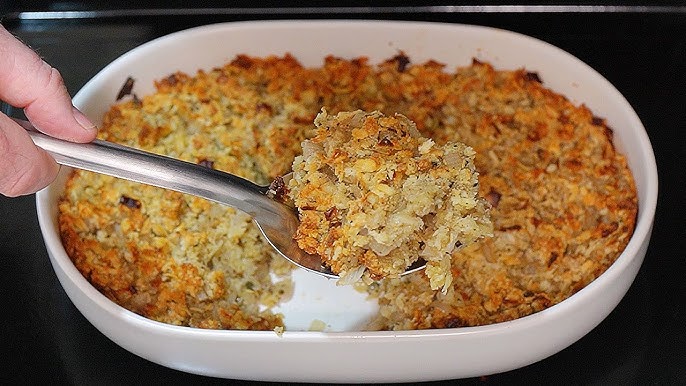
Sage Stuffing Recipe: Few side dishes deliver the same comforting flavor and rich aroma as a classic Sage Stuffing. With its buttery texture, fragrant herbs, crispy golden edges, and soft savory center, this traditional stuffing recipe transforms any meal into a memorable feast. Whether we are preparing it for a holiday dinner, Sunday roast, or comforting family gathering, mastering homemade sage stuffing guarantees a flavorful addition to the table.
This complete guide covers everything needed to create the perfect sage stuffing recipe from scratch, including ingredients, preparation methods, baking techniques, flavor variations, storage tips, and serving suggestions.
What Is Sage Stuffing?
Sage stuffing is a seasoned bread mixture traditionally made with dried bread cubes, onions, celery, butter, broth, and aromatic sage. The combination creates a deeply savory dish with earthy herbal notes and a deliciously moist texture.
The herb sage is the signature ingredient that gives this stuffing its warm, classic flavor. Its earthy aroma blends perfectly with roasted meats, vegetables, and rich gravies, making sage stuffing a timeless favorite.
Ingredients You’ll Need for Sage Stuffing
To create a rich and flavorful homemade stuffing, we need fresh ingredients and high-quality herbs.
Main Ingredients
- 1 loaf crusty bread or French bread
- ½ cup unsalted butter
- 1 large onion, finely chopped
- 3 celery stalks, chopped
- 2 teaspoons dried sage
- 1 teaspoon poultry seasoning
- 1 teaspoon dried thyme
- ½ teaspoon black pepper
- 1 teaspoon salt
- 2 large eggs
- 2 to 3 cups chicken broth or vegetable broth
- 2 tablespoons fresh parsley, chopped
Optional Add-Ins
- Cooked sausage
- Dried cranberries
- Chopped apples
- Mushrooms
- Pecans or walnuts
- Garlic
- Fresh rosemary
These additions create unique variations while preserving the traditional sage stuffing flavor.
How to Prepare Bread for Sage Stuffing
The bread texture determines the final consistency of the stuffing. Slightly stale bread absorbs broth better without becoming mushy.
Best Bread Types for Stuffing
- French bread
- Italian bread
- Sourdough
- White sandwich bread
- Brioche for richer flavor
How to Dry the Bread
- Cut bread into cubes.
- Spread cubes on a baking sheet.
- Bake at 300°F for 15–20 minutes.
- Allow bread to cool completely.
The cubes should feel dry but not hard.
Step-by-Step Sage Stuffing Recipe
Step 1: Prepare the Bread
Cut 6 cups of bread into small cubes and leave them out overnight to dry slightly. You can also toast them in the oven at 300°F for 10 minutes. Dry bread helps the stuffing absorb flavor without becoming soggy.
Step 2: Cook the Vegetables
In a large skillet, melt ½ cup butter over medium heat. Add 1 chopped onion and 2 chopped celery stalks. Cook for about 5–7 minutes until soft and fragrant. Stir occasionally to prevent burning.
Step 3: Add the Sage Seasoning
Mix in 2 teaspoons dried sage, 1 teaspoon thyme, ½ teaspoon salt, and ½ teaspoon black pepper. Let the herbs cook for 1 minute to release their aroma and create the classic savory stuffing flavor.
Step 4: Combine Everything
Place the bread cubes in a large bowl. Pour the cooked vegetable mixture over the bread and toss gently. Gradually add 1½ cups chicken or vegetable broth until the bread is moist but not overly wet. Add 1 beaten egg for a richer texture if desired.
Step 5: Bake the Stuffing
Transfer the mixture into a greased baking dish. Cover with foil and bake at 350°F (175°C) for 25 minutes. Remove the foil and bake another 10–15 minutes until the top becomes golden brown and slightly crisp. Serve warm alongside roasted chicken or turkey.
Tips for Perfect Sage Stuffing
Use Quality Sage
Fresh or high-quality dried sage creates the authentic flavor that defines classic stuffing.
Avoid Overly Wet Stuffing
Too much broth can make the stuffing dense. Add liquid slowly and mix carefully.
Balance Soft and Crispy Texture
Covering the stuffing first traps moisture, while uncovering later creates crispy edges.
Use Homemade Broth
Rich homemade broth enhances the savory depth of the stuffing dramatically.
Best Variations of Sage Stuffing
Sausage Sage Stuffing
Add cooked Italian sausage for a hearty and flavorful twist.
Apple Sage Stuffing
Mix diced apples into the stuffing for subtle sweetness and freshness.
Vegetarian Sage Stuffing
Use vegetable broth and add mushrooms for deep earthy flavor.
Cranberry Sage Stuffing
Dried cranberries provide sweetness that balances the savory herbs beautifully.
Why Sage Is Essential in Stuffing
Sage delivers a warm, earthy flavor that perfectly complements butter, onions, and roasted dishes. Its aromatic profile creates the nostalgic taste associated with traditional holiday meals.
Unlike many herbs, sage maintains its flavor during baking, allowing the stuffing to remain richly seasoned throughout cooking.
How to Make Sage Stuffing Ahead of Time
Sage stuffing is ideal for meal prep and holiday planning.
Prepare One Day Ahead
- Assemble the stuffing.
- Cover tightly.
- Refrigerate overnight.
- Bake before serving.
Freezing Instructions
- Freeze unbaked stuffing for up to 2 months.
- Thaw overnight in the refrigerator before baking.
This method preserves flavor and texture effectively.
What to Serve with Sage Stuffing
Sage stuffing pairs wonderfully with classic comfort dishes.
Best Main Dishes
- Roast chicken
- Turkey
- Pork roast
- Beef roast
- Baked ham
Perfect Side Dishes
- Mashed potatoes
- Roasted carrots
- Green beans
- Cranberry sauce
- Gravy
The savory herb flavor complements both meats and vegetables beautifully.
Common Mistakes to Avoid
Using Fresh Bread
Fresh bread becomes mushy. Always dry the bread first.
Adding Too Much Liquid
Excess broth creates soggy stuffing instead of fluffy texture.
Skipping the Herbs
The herbs are essential for authentic stuffing flavor.
Overmixing
Gentle mixing keeps the stuffing light and airy.
How to Store Leftover Sage Stuffing
Refrigeration
Store leftovers in an airtight container for up to 4 days.
Reheating
Bake at 350°F until heated through. Add a splash of broth if the stuffing appears dry.
Freezing Leftovers
Freeze in portions for easy future meals.
Nutritional Benefits of Sage Stuffing
Although stuffing is considered comfort food, it also contains valuable nutrients.
Key Nutrients
- Fiber from bread and vegetables
- Antioxidants from sage and herbs
- Vitamins from celery and onions
- Protein from eggs and broth
Using fresh ingredients improves both flavor and nutritional quality.
FAQs about Sage Stuffing Recipe
1. What is sage stuffing made of?
Sage stuffing is usually made with bread cubes, fresh or dried sage, onions, celery, butter, broth, salt, pepper, and sometimes eggs for binding.
2. Can we use dried sage instead of fresh sage?
Yes. We can use dried sage, but we should use less because it has a stronger flavor. Usually, 1 teaspoon dried sage can replace 1 tablespoon fresh sage.
3. What type of bread is best for sage stuffing?
The best bread is slightly stale bread, such as white bread, sourdough, French bread, or rustic country bread. Dry bread absorbs broth better without becoming mushy.
4. Can sage stuffing be made ahead of time?
Yes. We can prepare the stuffing mixture ahead and refrigerate it for up to 24 hours before baking. Add a little extra broth if it seems dry before baking.
5. How do we keep sage stuffing moist?
To keep stuffing moist, we should add enough broth so the bread is soft but not soggy. Covering it while baking also helps keep it tender, then uncovering it at the end gives a golden top.
Final Thoughts
A well-made Stuffing recipe delivers rich flavor, irresistible aroma, and comforting texture that elevate any meal. The combination of butter, onions, celery, herbs, and perfectly toasted bread creates a timeless side dish suitable for holidays and everyday dinners alike.
By using quality ingredients, balancing moisture carefully, and baking until golden brown, we achieve the ideal homemade sage stuffing every time.