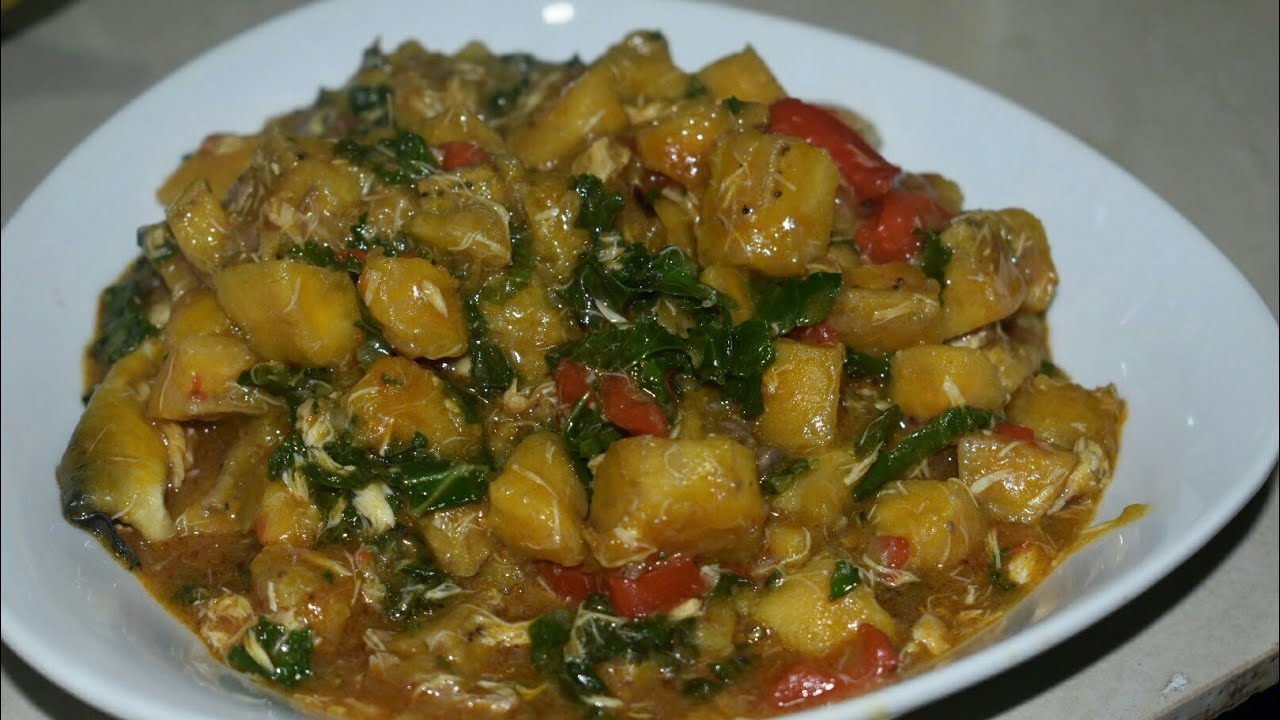
Plantain porridge, also known as plantain pottage, is a rich, comforting Nigerian meal made by cooking plantains in a flavourful sauce of palm oil, peppers, onions, seasonings, and vegetables. It is simple enough for an everyday family meal yet satisfying enough to serve as a complete lunch or dinner.
In this Nigerian plantain porridge recipe, we combine plantains with traditional ingredients to create a thick, colourful, and delicious dish. We can prepare it with unripe plantains, ripe plantains, or a combination of both, depending on the flavour and texture we prefer. Unripe plantains produce a firmer and less sweet porridge, while ripe plantains provide natural sweetness and a softer texture.
For an even richer meal, we can add smoked fish, dried fish, fresh fish, meat, or other proteins. The beauty of this recipe is its flexibility. With a few basic ingredients and straightforward cooking steps, we can prepare a delicious pot of homemade plantain porridge without complicated techniques.
What Is Plantain Porridge?
Plantain porridge is a popular West African dish, particularly in Nigeria, where plantains are used in numerous traditional meals. Unlike fried plantain, this recipe involves peeling and cutting the plantains before simmering them directly in a seasoned sauce until tender.
As the plantains cook, some of their starch mixes with the cooking liquid, helping to produce the slightly thick consistency associated with a good porridge. Palm oil gives the dish its characteristic colour and richness, while peppers, onions, crayfish, fish, and leafy vegetables create additional layers of flavour.
The finished dish should be soft, moist, well-seasoned, and slightly thick rather than watery.
Ingredients for Nigerian Plantain Porridge
Before cooking, we gather all the ingredients so the preparation process remains simple and organised.
Main Ingredients
- 4 medium plantains
- 2–3 tablespoons palm oil
- 1 medium onion, chopped
- 2 fresh tomatoes, chopped or blended, optional
- 2–3 fresh peppers, blended or finely chopped
- 2 tablespoons ground crayfish
- 1 medium smoked or dried fish
- 2 cups water or stock, plus more if needed
- 1 seasoning cube or seasoning powder
- Salt to taste
- 1 handful sliced ugu leaves, spinach, or another leafy vegetable
- 1 teaspoon ground pepper, optional
We can use completely unripe plantains, ripe plantains, or combine the two. Using both is especially useful when we want a porridge that has some sweetness without becoming excessively soft.
How to Choose the Best Plantains for Plantain Porridge
The type of plantain we choose affects both the flavour and final texture.
Unripe plantains have green skins and firm flesh. They are starchy rather than sweet and hold their shape particularly well during cooking.
Semi-ripe plantains are beginning to turn yellow but are still firm. They provide a pleasant balance between sweetness and starchiness.
Ripe plantains have yellow skins that may contain dark spots. They are softer and naturally sweeter. They cook faster, so we should avoid excessive stirring when using them.
For a balanced Nigerian plantain porridge, we can combine two unripe plantains with two ripe or semi-ripe plantains.
How to Make Plantain Porridge Step by Step
Making Nigerian plantain porridge is simple and requires only a few ingredients. For the best flavour, we can combine ripe and unripe plantains to achieve a balance of sweetness and texture.
Step 1: Prepare the Plantains
Peel 3–4 plantains and cut them into medium-sized pieces. Rinse briefly and place them in a cooking pot.
Step 2: Add the Base Ingredients
Add enough water or meat stock to slightly cover the plantains. Then add:
- 1 chopped onion
- 2–3 tablespoons of palm oil
- Ground crayfish
- Chopped fresh pepper
- Seasoning cubes or powder
- Salt to taste
Step 3: Cook the Plantains
Cover the pot and cook over medium heat for about 15–20 minutes, or until the plantains begin to soften. Stir occasionally to prevent them from sticking to the bottom.
Step 4: Add Protein
Add cooked fish, smoked fish, dried fish, or any preferred protein. Allow everything to simmer together for another 5–10 minutes so the flavours blend properly.
Step 5: Add Vegetables
Add chopped scent leaves, spinach, or ugu leaves. Stir gently and cook for another 2–3 minutes. Avoid overcooking the vegetables.
Step 6: Adjust the Consistency
Lightly mash a few pieces of plantain inside the pot to naturally thicken the porridge. Add a little water if it becomes too thick.
Step 7: Serve
Remove from the heat and serve your plantain porridge warm. The result should be soft, creamy, flavourful, and richly coated with the seasoned palm oil sauce.
How to Make Plantain Porridge with Ripe Plantains
When using only ripe plantains, we follow essentially the same cooking method but reduce the cooking time.
Ripe plantains soften considerably faster than unripe ones. Therefore, we should check them regularly and stir gently.
We also avoid adding too much liquid because ripe plantains naturally become softer as they cook. A smaller quantity of cooking liquid helps us achieve a rich porridge rather than a loose sauce.
The result is a slightly sweet, savoury plantain porridge that pairs particularly well with spicy peppers and smoked fish.
How to Make Unripe Plantain Porridge
For a completely savoury version, we can prepare the recipe entirely with green, unripe plantains.
Because unripe plantains are firmer, they may require slightly more water and a longer cooking time. We simmer them until a fork can easily pass through the pieces.
Unripe plantain also contains more starch, which helps the cooking liquid thicken naturally.
Adding crayfish, smoked fish, onions, peppers, palm oil, and vegetables creates a flavourful meal even without the sweetness found in ripe plantains.
Best Protein Options for Plantain Porridge
Plantain porridge can be prepared without meat or fish, but protein makes the meal more substantial.
Some excellent additions include:
- Smoked fish
- Dried fish
- Fresh mackerel
- Tilapia
- Catfish
- Beef
- Goat meat
- Chicken
- Prawns or shrimp
- Stockfish
When using meat, we usually cook it separately until tender before adding it to the plantain porridge. We can also use the meat stock instead of ordinary water to increase the flavour of the dish.
When using delicate fresh fish, we add it carefully and avoid excessive stirring so the pieces do not break apart.
Tips for Making the Best Plantain Porridge
A few simple techniques can significantly improve the finished dish.
Do Not Add Too Much Water
We should start with a moderate amount of liquid. More water can always be added during cooking if necessary, but removing excess water is more difficult.
Balance Ripe and Unripe Plantains
Combining ripe and unripe plantains gives us an excellent contrast of sweetness, firmness, and creaminess.
Use Enough Pepper
Plantain, especially when ripe, has natural sweetness. Pepper provides contrast and keeps the porridge savoury.
The exact quantity can be adjusted according to our preferred spice level.
Mash Only a Few Pieces
Lightly crushing one or two cooked plantain pieces creates the ideal porridge consistency while leaving most pieces intact.
Add Vegetables Last
Ugu or spinach should be added towards the end of cooking. Overcooking the vegetables can make them excessively soft and dull their fresh colour.
Allow the Plantains to Absorb the Sauce
Rather than simply boiling the plantains separately, we cook them directly in the seasoned liquid. This allows every piece to absorb the flavours of the onions, peppers, crayfish, fish, seasoning, and palm oil.
What Vegetables Can We Use in Plantain Porridge?
Ugu, also known as fluted pumpkin leaves, is one of the best choices for Nigerian plantain porridge. Its flavour complements the rich palm oil sauce beautifully.
When ugu is unavailable, we can use:
- Spinach
- Kale
- Scent leaves
- Basil in small quantities
- Other tender leafy greens
Scent leaves can provide a stronger aromatic flavour, so we should use them moderately.
Can We Make Plantain Porridge Without Palm Oil?
Yes. Although palm oil gives traditional Nigerian plantain porridge its familiar flavour and appearance, the dish can also be prepared with another cooking oil.
Vegetable oil, sunflower oil, or olive oil can be used when preferred. However, the final taste will differ from the classic palm-oil version.
When making authentic-style Nigerian plantain porridge, red palm oil remains the preferred choice.
How to Get the Perfect Plantain Porridge Consistency
Good plantain porridge should not resemble plantain floating in soup.
As the dish finishes cooking, the liquid should become noticeably thicker and coat the plantain pieces.
If our porridge appears too watery, we can remove the lid and simmer it gently for several additional minutes. Mashing one or two plantain pieces can also help.
If it becomes too thick before the plantains are completely cooked, we add a small amount of hot water or stock and continue simmering.
The goal is a moist, creamy, slightly thick consistency.
What to Serve with Plantain Porridge
Plantain porridge is satisfying enough to serve as a complete meal without side dishes.
However, we can serve it with additional:
- Grilled fish
- Fried fish
- Boiled eggs
- Grilled chicken
- Avocado
- Fresh vegetables
A cold drink or water also pairs well with a spicy bowl of porridge.
How to Store Leftover Plantain Porridge
Once the porridge has cooled, we transfer leftovers into an airtight food container and refrigerate promptly.
When reheating, the porridge may appear thicker because the plantains continue absorbing moisture during storage. We can add a small splash of water before reheating.
We warm it gently on the stovetop while stirring occasionally until thoroughly heated. It can also be reheated in a microwave using a microwave-safe container.
For the best texture and flavour, plantain porridge is particularly enjoyable when served freshly prepared.
Common Mistakes to Avoid When Making Plantain Porridge
One common mistake is adding excessive water. Too much liquid prevents the dish from achieving its characteristic thick texture.
Another mistake is stirring ripe plantains too vigorously. Because ripe plantains soften quickly, aggressive stirring can turn the entire dish into a mash.
We should also avoid adding leafy vegetables too early. Vegetables cook rapidly and are better added shortly before serving.
Finally, we should taste the dish before adding additional salt. Smoked fish, stock, crayfish, and seasoning can already contribute significant savouriness.
Why This Nigerian Plantain Porridge Recipe Works
This recipe keeps the preparation simple while preserving the flavours expected from a traditional Nigerian plantain porridge.
We cook the plantains directly in the seasoned sauce so they absorb flavour from the beginning. Crayfish and smoked fish add depth, palm oil provides richness, peppers create heat, and fresh vegetables complete the dish.
We can also customise the recipe easily. For a sweeter porridge, we use more ripe plantain. For a firmer and more savoury meal, we increase the proportion of unripe plantain. For additional richness, we include our preferred fish or meat.
FAQs about Plantain Porridge Recipe
1. What is plantain porridge?
Plantain porridge is a popular Nigerian dish made by cooking ripe or unripe plantains in a seasoned sauce containing peppers, onions, palm oil, spices, and sometimes vegetables, fish, or meat.
2. Should I use ripe or unripe plantain for plantain porridge?
You can use either. Unripe plantain gives the dish a firmer texture and less sweetness, while ripe plantain produces a softer and naturally sweeter porridge. A combination of both also works well.
3. How long does plantain porridge take to cook?
Plantain porridge usually takes about 25–40 minutes, depending on the ripeness and size of the plantain pieces.
4. Can I make plantain porridge without palm oil?
Yes. Although palm oil gives Nigerian plantain porridge its traditional colour and flavour, you can substitute it with vegetable or another cooking oil.
5. What vegetables can I add to plantain porridge?
Popular choices include spinach, ugu (fluted pumpkin leaves), scent leaves, and kale. Add the vegetables toward the end of cooking to preserve their freshness.
6. Can I add fish or meat?
Yes. Smoked fish, dried fish, mackerel, chicken, beef, or crayfish can be added for extra flavour and protein.
7. How can I make plantain porridge thicker?
Allow the porridge to simmer uncovered and gently mash a few pieces of cooked plantain into the sauce. This creates a naturally thicker and creamier consistency.
8. How should leftover plantain porridge be stored?
Allow it to cool before placing it in an airtight container and refrigerating it. Reheat thoroughly before serving.
Conclusion
A homemade plantain porridge recipe does not require complicated ingredients or cooking techniques. With plantains, palm oil, onions, pepper, crayfish, fish, seasonings, and fresh vegetables, we can prepare a colourful and satisfying Nigerian meal in one pot.
The key is to cook the plantains until tender, maintain the right amount of liquid, season the sauce properly, and allow the ingredients to blend together. Whether we choose unripe plantain porridge, ripe plantain porridge, or a combination of both, the result is a hearty dish packed with traditional Nigerian flavour.
For anyone searching for an easy way to prepare Nigerian plantain porridge, this recipe offers a straightforward method that can be adjusted to suit different tastes, preferred proteins, and spice levels while still delivering a rich and comforting meal.